The Machine-to-Machine Economy Just Got Real: Pine Labs Launches P3P Agentic Payment Protocol
For all the hype surrounding artificial intelligence, digital assistants have always hit a hard brick wall at checkout. They can browse, negotiate, and compare items seamlessly, but the moment an MPIN or two-factor authentication prompt pops up, the autonomous workflow breaks down entirely. Merchant commerce platform Pine Labs officially shattered that barrier by launching the Pine Labs Payment Protocol (P3P). It is India’s first autonomous, agentic payment system, allowing AI software agents to complete financial transactions with zero human intervention at the point of sale.
The protocol operates by extending existing payment architectures—specifically the Unified Payments Interface (UPI) frameworks like One-Time Mandates and Reserve Pay. Instead of requiring a user to manually authorize every single transaction, consumers can pre-approve spending rules and limits upfront. Once that initial boundary is set, the AI agent is free to execute payments in the background whenever specific, pre-defined market conditions are met.
How It Works and Early Retail Adopters
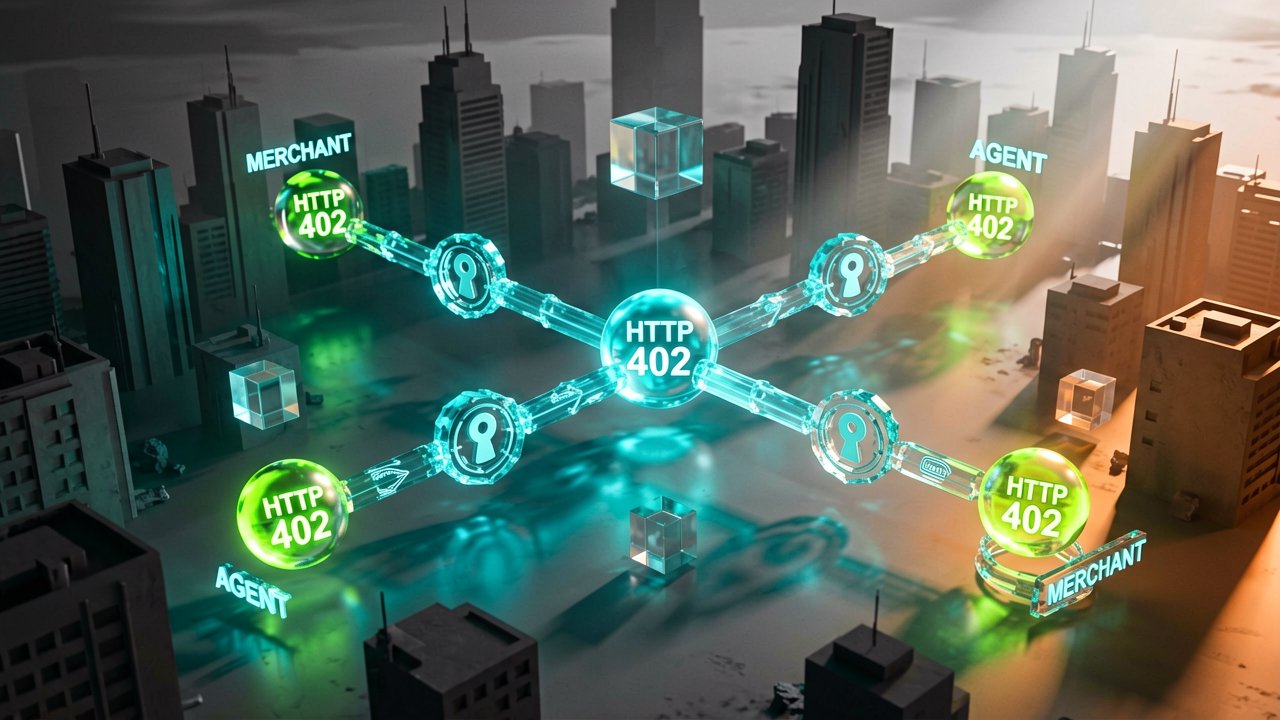
To ensure this machine-to-machine commerce does not turn into a wild west of unauthorized spending, Pine Labs paired the protocol with identity verification and delegated authorization layers handled by Grantex. This system enforces strict spending limits and generates an auditable, cryptographic trail for every automated decision. Furthermore, the architecture integrates the HTTP 402 "Payment Required" standard, creating a structured, native web language for agent-to-agent negotiations.
The tech is already active in production. Digital gold platform Gullak has deployed P3P to allow users to set simple rule-based instructions, like automatically buying a set amount of gold the fraction of a second prices dip below a certain threshold. Similarly, electronics retail chain Vijay Sales is currently running a proof-of-concept, enabling consumer AI agents to continuously track inventory and immediately snap up targeted home appliances or smartphones the moment a promotional discount drops.

Expanding Beyond UPI
While the initial rollout leverages India's massive UPI rails, the ambitions here are decidedly international. Pine Labs is actively working with global card networks to expand these mandate-driven, agent-to-agent transactions to card-based systems. This framework turns traditional payment processing on its head, shifting our role from active transaction signers to macro-level edge managers of our own autonomous financial networks.
Beneath the Surface of the Hype: The true brilliance of Pine Labs’ P3P protocol lies not just in the engineering feat of automating payments, but in how it subtly bypasses a long-standing psychological and structural roadblock in consumer fintech. Historically, every major evolutionary leap in payments—from plastic credit cards to mobile wallets—has centered entirely on human interaction, requiring a conscious effort to swipe, tap, or input a PIN. By completely shifting the user's role from a reactive approver to a proactive rule-setter, P3P fundamentally changes our relationship with digital money, turning personal capital into a dynamic asset class navigated by algorithmic logic.
Industry insiders point out that this framework represents a dramatic architectural pivot for a company like Pine Labs, which built its empire on physical Point-of-Sale terminal infrastructure across Asia. Transitioning from hardware-dependent merchant processing to invisible, intent-driven software infrastructure reveals a broader strategic realization within fintech: the physical checkout counter is losing its monopoly on consumer intent. As artificial intelligence models become the primary search engines and personal assistants for daily life, the platforms controlling the secure pipelines through which these agents spend money will hold the keys to the next decade of commercial transaction fees.
The Delicate Balance of Delegated Trust
However, handing financial keys to autonomous software agents introduces complex questions around consumer liability and structural risk. If a predictive model misinterprets a data feed and mistakenly purchases massive batches of inventory at unfavorable rates, current legal and banking frameworks offer no clear consensus on who bears the financial brunt of that programmatic error. While early applications like Gullak’s automated gold purchasing run within rigidly sandboxed spending limits, scaling this machine-to-machine architecture across global supply chains will require insurance providers and central banks to completely rewrite consumer protection guidelines for algorithmic negligence.

This dynamic introduces a fascinating regulatory paradox for watchdog agencies accustomed to analyzing transaction histories for human fraud markers. Machine-to-machine transactions will naturally happen at speeds and volumes that human compliance teams cannot monitor in real time. Regulatory frameworks will need to evolve from auditing individual, post-factum transactions to certifying the foundational safety boundaries of the AI agents themselves, demanding a new breed of algorithmically literate financial policy.
Chasing Global Interoperability
The long-term viability of agentic commerce depends entirely on the absolute erosion of digital borders. While India’s foundational digital public infrastructure provided the ideal testing ground for P3P, local protocols must eventually integrate with legacy, fragmented clearinghouses across Europe and the Americas to achieve scale. Pine Labs' ongoing efforts to build card-network mandates show that the ultimate goal is a universal financial translator, allowing an agent running on an American server to securely execute a micro-payment instantly on a local merchant rail anywhere in the world.
As this seamless interoperability approaches reality, it will trigger an unprecedented shift in retail marketing strategies, which have historically relied on impulse buys and emotional brand loyalty. In a marketplace where consumer agents make purchasing decisions purely based on cold, optimized cryptographic variables like unit pricing, shipping speed, and historical durability data, traditional advertising models will rapidly lose their grip. Businesses will find themselves forced to optimize their digital presence not for human eyes, but for the structured, ruthlessly efficient data parsers of automated buying bots.
Reading Between the Lines: The grand vision of frictionless, machine-to-machine commerce assumes a level of technological harmony that rarely survives the messy realities of the real world. While industry cheerleaders paint a picture of autonomous agents effortlessly saving consumers money on consumer electronics and gold, they gloss over a glaring economic contradiction: merchants generally despise hyper-efficient consumer tooling. The retail industry spends billions annually optimizing for friction, impulse buys, and confusing upsell funnels that trick human brains into spending more. Introducing a ruthlessly logical software bot designed to systematically exploit the narrowest margin gaps is an existential threat to merchant profitability, suggesting that early corporate adoption might be far more combative than current press releases imply.
Furthermore, the reliance on pre-approved spending rules raises critical security vulnerabilities regarding prompt injection and agent manipulation. If an adversarial actor can trick a consumer’s personal AI agent into misinterpreting a merchant's pricing data or product descriptions, the agent could theoretically be induced to drain its pre-authorized UPI mandate on worthless digital assets or overpriced goods. Unlike traditional credit card fraud, where a human can claim they never authorized the swipe, these transactions will be perfectly valid from a cryptographic standpoint, signed with legitimate keys by an authorized digital representative. This shifts the point of failure from the payment gateway to the notoriously fragile security architecture of large language models.
The Real Bottleneck Is Legal, Not Technical
We must also look closely at the scalability of the HTTP 402 "Payment Required" standard and international clearing frameworks. Translating India’s instantaneous, state-backed public infrastructure into the heavily financialized, privately owned credit card systems of the West is not a simple matter of code compatibility. Legacy global networks thrive on settlement delays, interchange fees, and complex chargeback mechanisms that are completely antithetical to the micro-second, high-volume transactional cadence required by autonomous software bots. The friction isn't located in the API; it is hardcoded into the business models of global banking conglomerates.
Ultimately, the rollout of P3P may inadvertently accelerate a digital divide between tech-literate consumers who can deploy optimization algorithms and everyday buyers who continue to pay retail premiums. If autonomous agents lock up limited inventory the millisecond a discount drops—as seen in the Vijay Sales proof-of-concept—ordinary human shoppers will find themselves structurally locked out of flash sales and competitive pricing. This turns what was marketed as a tool for financial democratization into an exclusive playground for high-frequency consumer arbitrage, altering the landscape of retail equity.
"We have spent decades teaching humans to think like computers just to navigate online checkout screens, only to invent autonomous agents that pay bills for us. It is a comforting thought until your household AI gets into a bidding war with a smart refrigerator and accidentally spends your entire rent budget on artisanal oat milk."
Artūras Malašauskas is an AI Systems Integrator with 20+ years of production-grade web engineering experience. He has designed, shipped, and scaled enterprise Python/PHP systems for logistics, SaaS, and public-sector clients. For the past year, he has focused exclusively on AI integrations: deploying open-source LLMs, building generative media pipelines (image, audio, video), and engineering multi-agent workflows for real production environments. His standard: reproducibility, security, cost-efficient inference—no vaporware. He documents and evaluates emerging AI tooling, separating verified capabilities from marketing noise. Technical editor at: muza-ai.eu, ai-verslas.lt, ai-naujinos.lt Connect on LinkedIn
Comments