Fractal Analytics Surges After Unveiling Cogentiq E-Commerce Engine
The enterprise AI race just found its latest retail battleground, and investors are buying the hype. On June 11, 2026, global enterprise AI player Fractal Analytics saw its stock price climb following the official release of Cogentiq E-Commerce, an AI-native profit engine aimed squarely at maximizing digital retail margins. According to market trackers at HDFC SKY, the company's shares gained momentum right after the announcement hit the stock exchanges, proving that Wall Street's appetite for intelligent automation hasn't lost its edge.
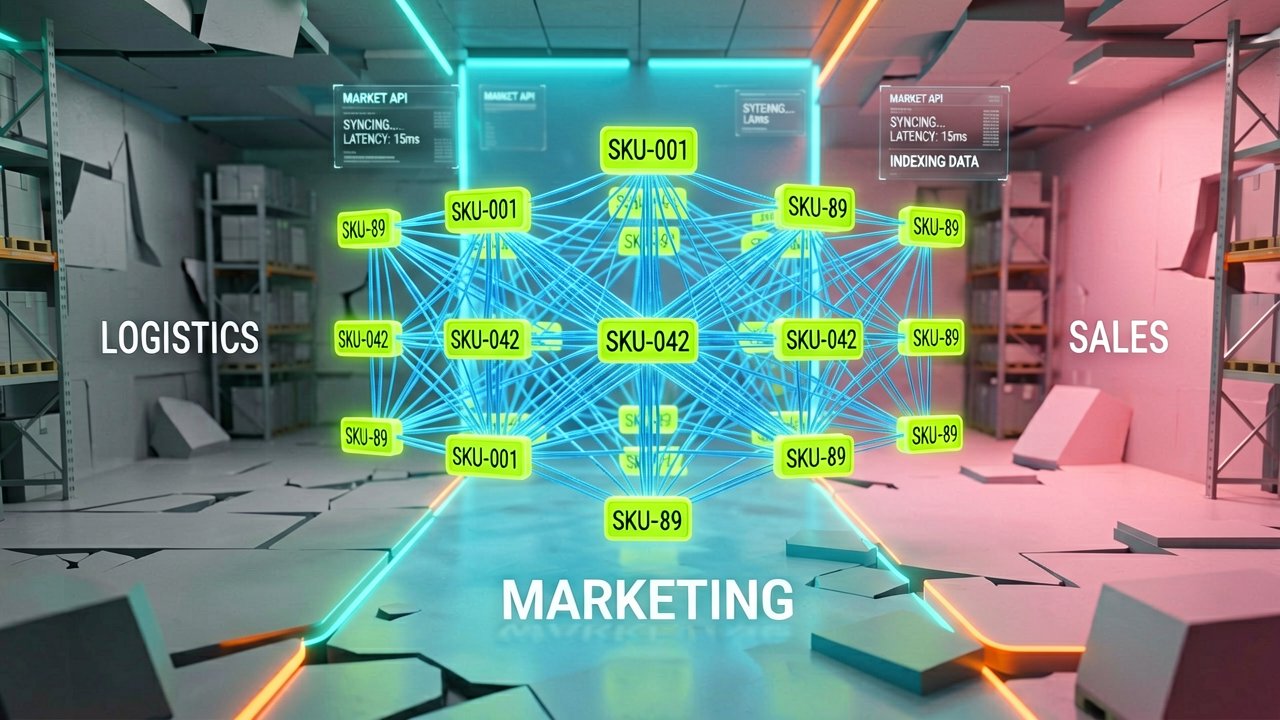
Instead of relying on the traditional, sluggish cycle of gathering analytics and waiting for human review, the new platform flips the script. It actively tracks more than 70 market-driven profit signals—including stock availability, real-time pricing shifts, keyword visibility, and media spend allocation—for every single SKU in a brand's digital arsenal. By deploying directly via a marketplace API on platforms like Amazon, it condenses complex cross-functional decisions that used to take teams several days down to a matter of mere minutes.
Closing the Gap Between Insight and Action
The rollout highlights a broader paradigm shift in how consumer goods companies manage their digital shelf presence. In an environment where a brief logistics hiccup or an unoptimized ad budget can tank daily revenues, automation is becoming less of a luxury and more of an operational baseline. As detailed in coverage by Business Standard, company leadership noted that modern e-commerce simply moves too fast for conventional human-in-the-loop sequences, meaning future retail winners will be defined entirely by the velocity of their decision-making.
Behind the algorithmic curtain, the market's enthusiastic reaction to Fractal's latest offering underscores a deeper structural crisis brewing within multi-channel retail. For the past decade, consumer packaged goods giants have operated under a fragmented model where data sits trapped in functional silos. Logistics teams manage warehouse inventory, marketing divisions control ad spend, and sales managers adjust pricing. Because these systems rarely talk to each other in real-time, brands frequently waste media budgets promoting items that are completely out of stock, or they inadvertently spark localized price wars that erode profit margins.

Industry insiders have long pointed out that this fragmented approach is a losing battle when competing on hyper-fast marketplaces like Amazon or Walmart. Traditional business intelligence tools can only highlight mistakes after they have already occurred, serving as an autopsy rather than a cure. By transforming these isolated metrics into active, interconnected decision loops, enterprise platforms are shifting away from passive reporting toward automated execution. This change targets the root operational inefficiencies that drain multi-channel profitability.
The Realities of Automated Autonomy
However, handing total control over to an AI engine introduces a unique set of challenges that seasoned operational teams view with a healthy dose of skepticism. The primary hurdle isn't the sophistication of the underlying machine learning models, but rather the messiness of the external data feeds they rely on. E-commerce platforms regularly alter their backend application programming interfaces without warning, and competitive scraping bots constantly distort traffic metrics. If an automated system ingests flawed inventory data, it risks executing rapid-fire, cascading pricing errors before an enterprise team even notices the glitch.
To mitigate these autonomous risks, early adopters are establishing strict guardrails and fallback protocols. Instead of granting the platform complete freedom across an entire product line, companies initially implement automated pricing and ad adjustments within narrow, highly regulated parameters. This allows data engineers to audit the system's decisions during periods of peak market volatility. Over time, as the algorithms prove they can handle sudden traffic spikes and complex competitive maneuvers, the boundaries are gradually expanded.
Ultimately, the financial momentum generated by this rollout demonstrates that enterprise valuation is increasingly tied to practical, execution-oriented AI rather than theoretical technological potential. Wall Street is moving past the initial wave of generic generative AI hype and is now demanding specialized software that directly impacts net margins. For the broader digital shelf ecosystem, this shift signals a clear trajectory where the ultimate competitive advantage will no longer be determined by the size of a brand's data lake, but by the speed and autonomy of its decision-making pipeline.

The Mirage of Frictionless Automation
Reading Between the Lines: The market's euphoric response to this automated shelf-management paradigm ignores a fundamental paradox baked into the current e-commerce ecosystem. While software suites promise to maximize gross margins by instantly reacting to real-time signals, they operate under the assumption that competitor algorithms will remain static. In reality, as more consumer brands deploy autonomous, algorithmic repricers and ad-allocation engines on the same digital marketplaces, we enter an era of automated feedback loops. When two opposing AI engines optimize against each other's live changes, the result is rarely perfect equilibrium; instead, it frequently triggers erratic micro-flashes in pricing and rapid budget depletion that human oversight must eventually fix.
Furthermore, there is a distinct contradiction between the industry's desire for algorithmic autonomy and the increasingly protective behavior of the platforms where these tools operate. Marketplaces like Amazon are notorious for changing their algorithms, shifting search rankings, and altering data-sharing policies to favor their own private-label products or proprietary ad networks. An external AI platform is only as effective as the transparency of the APIs it connects to. If a major marketplace decides to restrict third-party data access under the guise of consumer privacy, even the most sophisticated predictive models risk being blindfolded overnight.
This reality forces enterprise leadership to confront a difficult question regarding the true ownership of their brand equity. When a platform automates everything from keyword bidding to discount structures, it subtly strips away the long-term, qualitative creative strategies that traditionally built brand loyalty in exchange for short-term transactional efficiency. If every retail brand eventually optimizes their digital shelf using identical, hyper-efficient mathematical formulas, product presentation becomes completely homogenized. In trying to beat the competition at the margin game, brands run the risk of turning their unique products into generic commodities defined solely by an algorithm's temporary logistical advantage.
"The dream of modern retail is an enterprise that runs itself while the executive team plays golf, but the reality looks a lot more like a Roomba trapped in a corner—exceptionally efficient at spinning in circles until it encounters a slightly uneven rug."
Artūras Malašauskas is an AI Systems Integrator with 20+ years of production-grade web engineering experience. He has designed, shipped, and scaled enterprise Python/PHP systems for logistics, SaaS, and public-sector clients. For the past year, he has focused exclusively on AI integrations: deploying open-source LLMs, building generative media pipelines (image, audio, video), and engineering multi-agent workflows for real production environments. His standard: reproducibility, security, cost-efficient inference—no vaporware. He documents and evaluates emerging AI tooling, separating verified capabilities from marketing noise. Technical editor at: muza-ai.eu, ai-verslas.lt, ai-naujinos.lt Connect on LinkedIn
Comments