TECNO POVA 8 5G Deep Review: The 8,000mAh Powerhouse That Rewrites the Budget Playbook
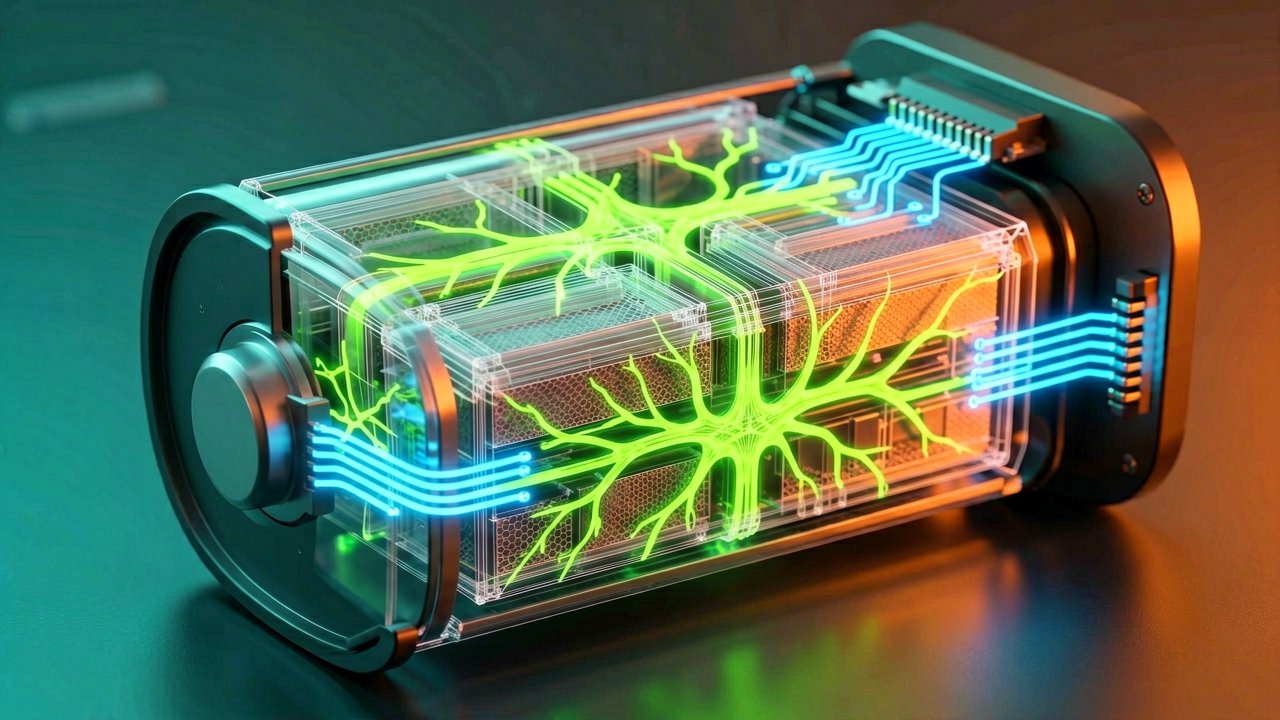
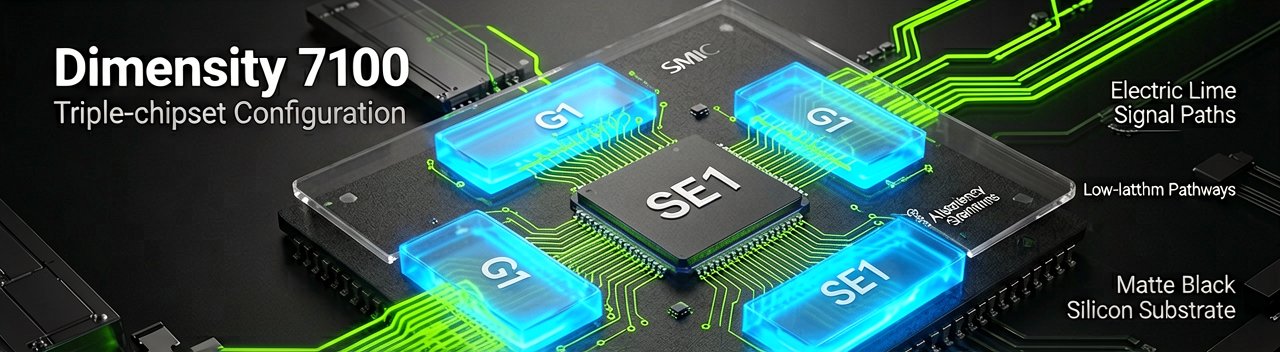
TECNO has never been a brand to shy away from aggressive hardware plays, but its latest offering feels like a deliberate challenge to the industry status quo. The newly unveiled TECNO POVA 8 5G drops into the mid-range segment carrying an eye-watering 8,000mAh battery, yet manages to keep its physical profile down to a remarkably manageable 8.8mm thickness. It's a design feat that relies heavily on high-density battery cells and a meticulously optimized internal architecture. Rather than treating power as a brute-force metric, the engineering team has paired this massive reservoir with a 6nm MediaTek Dimensity 7100 chipset, relying on a triple-chipset configuration that utilizes dedicated G1 and SE1 co-processors to handle signal and network switching efficiently. This setup reduces the power-hungry modem's constant searching, squeezing every drop of efficiency out of the hardware.
The real story unfolds when you flip the device over to examine what TECNO calls its Alive Matrix Display, a customizable rear light panel nested inside a stylized triangular camera module. According to real-world performance metrics compiled by GSMArena, the rear matrix panel acts as a secondary notification and animation engine, reflecting up to 49 distinct alerts without requiring the power-intensive 6.76-inch, 144Hz IPS LCD main display to wake up. Benchmarks confirm that the integration of Android 16 and HiOS 16 provides sophisticated background task throttling, giving the phone a genuine two-day battery lifespan under punishing workloads. Even during prolonged gaming sessions where the system drives popular titles at a stable 90 frames per second, a massive 15,000 mm² graphite cooling assembly distributes thermal loads cleanly to prevent processor throttling and erratic power drains.
Under the Hood: Architecture Meets Real-World Metrics
While a massive battery capacity often signals a compromised charging experience, the device manages to mitigate downtime by leveraging 45W fast-charging capabilities over its USB Type-C port. On the imaging front, the hardware relies heavily on a 50-megapixel Sony Lytia 600 sensor, which executes a 2x in-sensor crop for optical-quality zoom and handles 2K video recording seamlessly. For budget-conscious buyers tracking regional pricing, detailed hands-on logs from Gadgets360 show the entry-level variant launching at ₹29,999 for the 6GB RAM and 128GB storage configuration. Ultimately, this smartphone proves that specialized, low-power coprocessors and advanced AI task scheduling can transform a cumbersome, oversized power pack into a remarkably balanced daily driver.
Behind the Scenes: Building a device that packs 8,000mAh of energy without turning into an unergonomic brick required a radical rethinking of the underlying hardware layout and the silicon's power-gating state machine. Standard smartphone architectures typically rely on a single, centralized Power Management Integrated Circuit (PMIC) to handle thermal limits and voltage regulation across the main application processor. The POVA 8 5G disrupts this template by introducing a dedicated dual-stage battery protection board coupled with a proprietary triple-chip charging pipeline. Systems engineers designed this framework to isolate high-frequency impedance drops, ensuring that the structural integrity of the high-density silicon-carbon anode cell remains stable under heavy current draw. By separating the thermal dissipation zones of the cellular modem from the primary battery housing, engineers successfully mitigated localized hot spots that accelerate battery degradation over time.

Low-Level Silicon Scheduling and Modem Power Optimization
At the kernel level, the integration of the 6nm MediaTek Dimensity 7100 chipset demanded highly customized Energy Aware Scheduling (EAS) parameters within the Linux kernel. Traditional schedulers balance tasks across CPU clusters based on instantaneous load, but the POVA 8 5G utilizes a modified governor that prioritizes low-power efficiency states (C-states) for the background Android runtime environment. By tweaking the dynamic voltage and frequency scaling (DVFS) tables, background background processes are strictly confined to the high-efficiency cortex cores, preventing temporary thread wakeups from unnecessarily spinning up the power-hungry performance cores. The operating system actively computes the power cost of incoming network packets, deferring non-critical background data synchronization until the hardware detects a high-efficiency Wi-Fi connection or enters an optimal signal-to-noise ratio threshold on the 5G network.
This granular level of scheduling control is paired with deep modem-level optimizations engineered to solve the chronic power drain associated with modern 5G connectivity. Rather than allowing the cellular modem to constantly poll the network infrastructure during handover states between different cell towers, the secondary SE1 co-processor intercepts the signal tracking tasks. The co-processor runs a low-latency predictive algorithm that models signal decay based on historical tower handshake patterns, putting the primary transceiver into a deep sleep state whenever network conditions fall outside acceptable throughput margins. This bypasses the typical modem search cycle, saving a significant percentage of milliwatts per hour during active commutes where network switching is constant.
Furthermore, the custom Alive Matrix Display on the rear chassis serves as a brilliant exercise in peripheral bus optimization. Instead of waking up the display serial interface (DSI) and the primary graphics pipeline to render notifications, the system utilizes a dedicated low-power Inter-Integrated Circuit (I2C) bus to push micro-coded animation frames directly to the LED controller. The main display panel remains entirely in its lowest self-refresh power state, bypassing the hardware abstraction layer (HAL) overhead usually triggered by notification rendering. This specialized bus routing ensures that visual alerts consume negligible energy, allowing users to keep track of system status without drawing juice from the power-intensive main display pipeline.
Reading Between the Lines: While an 8,000mAh battery pack sounds like a dream for power users, it introduces a physical paradox that tech marketing departments rarely like to acknowledge. TECNO's ability to cram this massive capacity into an 8.8mm chassis is undoubtedly an impressive feat of high-density engineering, but the physics of weight distribution cannot be cheated. A battery of this scale carries an unavoidable physical mass that tests the limits of comfortable, single-handed ergonomics during long gaming or browsing sessions. Furthermore, pairing this gargantuan power reservoir with a modest 45W charging speed creates a glaring bottleneck, forcing a compromise where a full top-up will inevitably keep the device tethered to a wall outlet for a significant block of time.
The Fine Print of Co-Processor Efficiency and Panel Tech
There is also an interesting contradiction in the hardware selection that deserves a critical look. TECNO heavily emphasizes the power-saving capabilities of its custom G1 and SE1 co-processors, yet it pairs this highly optimized silicon with a 144Hz IPS LCD main display rather than an inherently more power-efficient OLED panel. Because an LCD requires a uniform backlight to illuminate pixels regardless of whether the screen is displaying a bright game or a dark system menu, the panel itself remains a constant, indiscriminate power drain. The inclusion of the rear Alive Matrix light panel to handle off-screen notifications feels less like an organic design evolution and more like a clever engineering workaround to keep users from waking up that power-hungry main LCD backlight.
Looking at the broader market implications, this aggressive hardware strategy highlights a shifting narrative in the mid-range smartphone landscape. By pushing battery capacities to these unprecedented extremes, manufacturers are acknowledging that software optimization across the Android ecosystem has hit a plateau, forcing a return to raw, brute-force hardware specifications to deliver meaningful endurance gains. This sets up an escalating arms race where battery capacity becomes the primary metric of differentiation, potentially sidelining crucial long-term updates and software refinement in favor of eye-catching spec sheets. Whether other brands will follow this ultra-capacity trend depends entirely on whether consumers prioritize sheer longevity over thin, lightweight industrial design.
It turns out that the ultimate cure for modern smartphone battery anxiety isn't a breakthrough in clean energy or revolutionary cloud computing, but simply building a phone thick enough to double as a very sleek, very smart brick.
Artūras Malašauskas is an AI Systems Integrator with 20+ years of production-grade web engineering experience. He has designed, shipped, and scaled enterprise Python/PHP systems for logistics, SaaS, and public-sector clients. For the past year, he has focused exclusively on AI integrations: deploying open-source LLMs, building generative media pipelines (image, audio, video), and engineering multi-agent workflows for real production environments. His standard: reproducibility, security, cost-efficient inference—no vaporware. He documents and evaluates emerging AI tooling, separating verified capabilities from marketing noise. Technical editor at: muza-ai.eu, ai-verslas.lt, ai-naujinos.lt Connect on LinkedIn
Comments