Silicon, Neural Engines, and the 2027 Horizon: Inside Microsoft’s Next-Gen Xbox Strategy
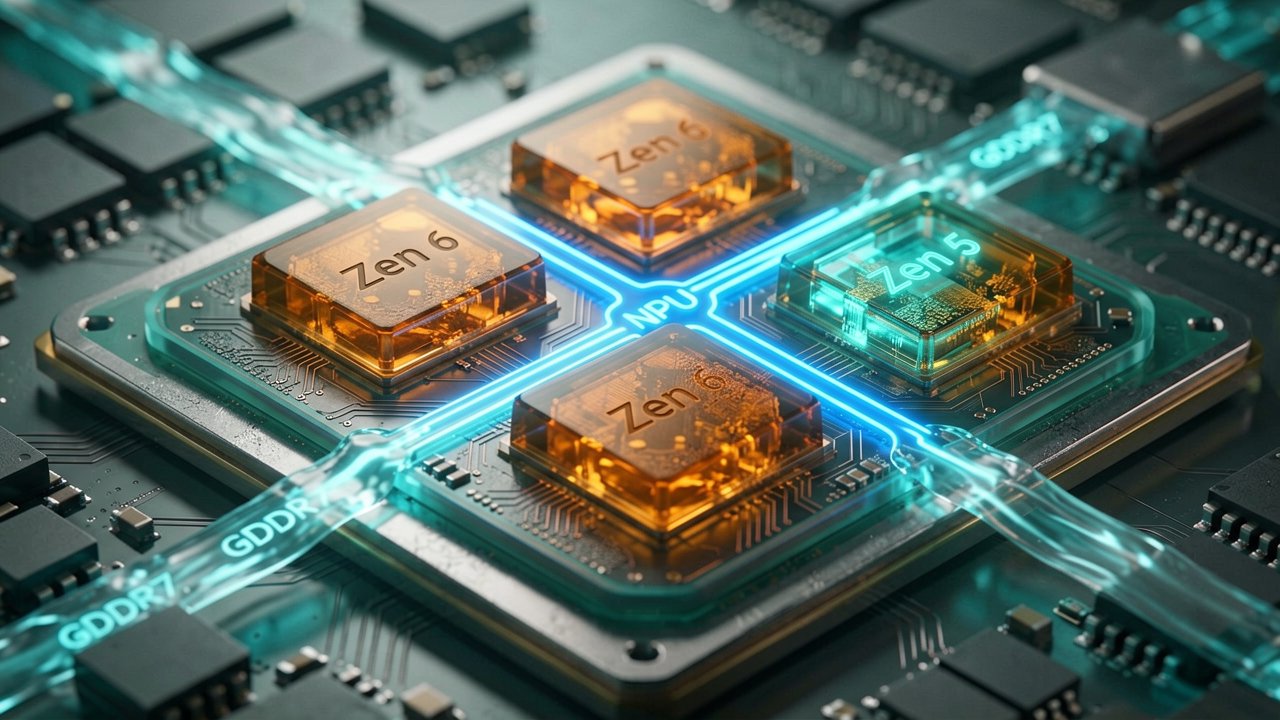
The console wars aren't just about raw teraflops anymore; they’re shifting directly to the silicon layer where artificial intelligence takes the wheel. During a recent earnings call, AMD CEO Dr. Lisa Su spilled the beans on Microsoft's timeline, confirming that the development of a semi-custom system-on-a-chip (SoC) is progressing rapidly to anchor a next-generation Xbox launch in 2027. According to reporting by Wccftech, this acceleration represents an aggressive push by Redmond to establish a commanding hardware footprint early in the generation. Rather than just relying on standard generational brute force, Microsoft is fundamentally engineering this upcoming machine from the substrate up to integrate deep, real-time machine learning into everyday gaming experiences.
Industry insiders and early architectural leaks point to a sophisticated dual-die blueprint utilizing a blend of high-performance Zen 6 CPU cores alongside AMD’s bleeding-edge RDNA 5 graphics architecture. As noted by ExtremeTech, these leaked specifications suggest a powerhouse setup boasting up to 70 RDNA 5 compute units backed by a unified 48GB pool of ultra-fast GDDR7 memory. But the true crown jewel of this architecture isn't the graphic compute power; it's the dedicated Neural Processing Unit (NPU) slated to sit alongside the primary processor. This dedicated hardware accelerator is built specifically to offload complex neural networking tasks from the CPU and GPU, enabling sub-millisecond AI processing directly on the console chassis without cannibalizing the system's frame-rate budget.
From Silicon Architecture to Predictive Performance
By delegating neural rendering workloads to an on-chip NPU, Microsoft isn't just seeking minor fidelity gains; they're aiming for a massive paradigm shift in performance metrics. Instead of relying purely on native hardware rasterization, the 2027 Xbox is positioned to utilize hardware-accelerated AI upscaling and predictive frame generation that can comfortably outpace the rendering limits of traditional silicon. This means the system can theoretically upscale games from lower internal baselines up to pristine, high-refresh-rate resolutions while keeping power consumption and heat generation remarkably low. Beyond mere graphics, this deep AI integration will fundamentally reshape runtime environments, allowing developers to allocate dedicated NPU cycles toward complex physics simulations, infinitely more reactive non-player character behavior, and dynamic, context-aware audio landscapes that adapt to the player's movements in real time.
Silicon Pipeline Optimization and Deep Hardware Co-Design
Behind the Scenes: The architectural evolution of the 2027 Xbox requires a fundamental overhaul of how the memory subsystem communicates with the compute units. At the systems engineering level, traditional unified memory architectures frequently bottleneck when simultaneous graphics rendering and neural network inferences compete for the same buses. To resolve this, Microsoft and AMD engineers are deploying a specialized, high-bandwidth interconnect fabric that allows the dedicated Neural Processing Unit to access a localized cache pool without causing cache invalidation routines in the L3 cache of the Zen 6 cores. This separation ensures that complex inference loops, such as real-time asset generation, do not stall the primary graphics pipeline or introduce micro-stuttering during intense rendering workloads.
A primary optimization focus centers on low-level matrix math acceleration, where the NPU uses highly efficient INT4 and INT8 quantized data types for machine learning operations. Operating at lower precision levels dramatically reduces memory bandwidth pressure and power consumption while maintaining the fidelity required for advanced upscaling algorithms. Systems software engineers are writing custom low-overhead APIs that allow game engines to bypass heavy abstraction layers, directly scheduling asynchronous compute jobs to the NPU's matrix execution lanes. This direct hardware access enables the console to execute millions of tensor operations per frame, providing predictive frame generation that matches the precision of hardware-heavy desktop configurations.
Beyond graphics upscaling, the architectural integration extends deep into runtime procedural asset handling and memory management. The console leverages specialized hardware-accelerated decompression pipelines that feed directly into the NPU, bypassing the main CPU registers entirely. When a game engine demands high-fidelity textures or geometry, the AI coprocessor can dynamically predict and reconstruct missing high-frequency details from highly compressed data streams in real time. This technical approach effectively multiplies the perceived speed of the internal solid-state drive, allowing massive world spaces to stream into memory without visible pop-in or artificial loading boundaries.
On the compute side, the Zen 6 architecture introduces advanced instruction sets specifically tailored to coordinate with the RDNA 5 vector registers. Thread scheduling is managed via an aggressive, hardware-level predictive branch algorithm that uses small machine learning models embedded within the processor's control logic to optimize instruction flow. By anticipating cache misses and pre-fetching critical game logic before the execution pipeline requests it, the hardware maintains a near-flawless execution budget, which stabilizes frame pacing even under extreme simulation stress.
The Friction Between Marketing Hype and Silicon Reality
Reading Between the Lines: Silicon promises are cheap until they hit the production line, and Microsoft's bold pivot to an AI-first console raises as many red flags as it does frames per second. While the tech industry is currently drunk on the narrative that machine learning can solve every hardware bottleneck, systems engineers know that upscaling is not a magic wand. There is a distinct, often ignored contradiction in building a console around an NPU to save on silicon costs while stuffing the board with expensive GDDR7 memory. If the AI is truly doing the heavy lifting of reconstructing frames from lower internal resolutions, the reliance on a massive, ultra-fast memory bus feels less like an elegant architectural choice and more like a safety net for when the neural models inevitably fall short.

We must also look at the historical precedent of console launch windows and developer adoption. Microsoft can design the most elegant asynchronous compute pipelines in the world, but if multiplatform developers refuse to optimize for them, the hardware remains expensive silicon weight. For the first two years of its life, this 2027 Xbox will inevitably be shackled by cross-generation development and parity clauses with competing hardware platforms that may not feature the same NPU architecture. History shows that game engines favor the lowest common denominator, meaning those specialized matrix execution lanes might sit idle in major triple-A titles while developers rely on traditional, brute-force rasterization methods that work predictably across all ecosystems.
Furthermore, the reliance on quantized INT4 and INT8 data types for real-time inference brings a hidden compromise in visual stability. While lowering precision keeps the thermal envelope tightly managed, it introduces artifacting, ghosting, and temporal shimmering that can ruin the visual presentation of fast-paced games. Tech marketing campaigns love to showcase pristine, slow-moving vistas upscaled by neural networks, but the reality of a chaotic multiplayer shooter running at a simulated 120 frames per second often exposes the severe limitations of predictive frame generation. Microsoft is gambling heavily that consumers will accept artificial, hallucinated pixels over native, mathematically accurate rendering, a bet that could alienate purists who demand absolute visual fidelity.
Ultimately, this architectural shift shifts the burden of performance from hardware engineers to overworked game software developers. Writing low-level assembly to bypass abstraction layers and manually schedule NPU cycles requires a highly specialized skill set that many overstretched studios simply cannot afford to prioritize during tight production schedules. If the development tools provided by Redmond are not exceptionally robust out of the gate, we risk seeing a repeat of the early PlayStation 3 era, where immensely powerful, non-traditional architecture was held back by the sheer complexity of its own development environment.
Designing a console around AI upscaling to save on actual graphics hardware is a bit like replacing your car’s engine with a smaller one and hoping a really smart GPS will convince you that you're still going eighty miles an hour.
Artūras Malašauskas is an AI Systems Integrator with 20+ years of production-grade web engineering experience. He has designed, shipped, and scaled enterprise Python/PHP systems for logistics, SaaS, and public-sector clients. For the past year, he has focused exclusively on AI integrations: deploying open-source LLMs, building generative media pipelines (image, audio, video), and engineering multi-agent workflows for real production environments. His standard: reproducibility, security, cost-efficient inference—no vaporware. He documents and evaluates emerging AI tooling, separating verified capabilities from marketing noise. Technical editor at: muza-ai.eu, ai-verslas.lt, ai-naujinos.lt Connect on LinkedIn
Comments