HP and Ferrari Shift AI PCs into Hyperdrive with an Ultra-Premium, Racetrack-Inspired Masterpiece
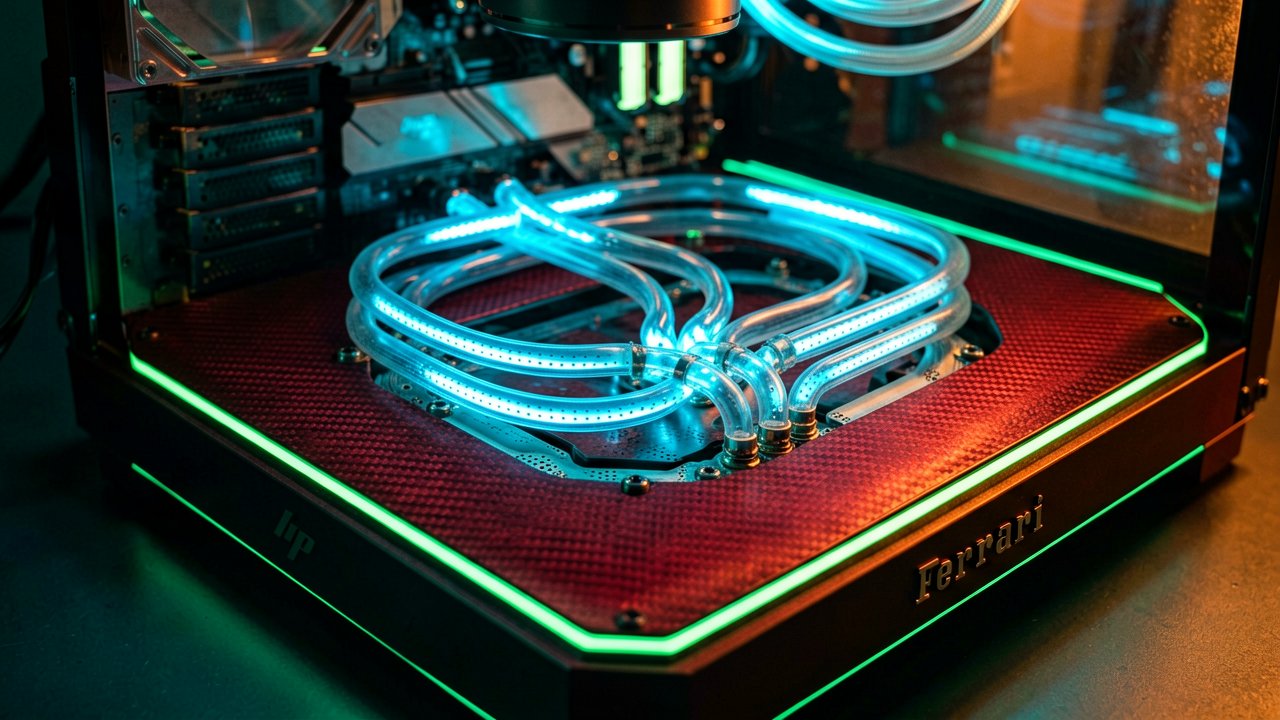
Tech collaborations often feel like a lazy exercise in badge engineering, but the newly unveiled HP Limited Edition Scuderia Ferrari AI PC proves that when two design powerhouses lock themselves in a room for two years, something genuinely extraordinary can happen. Announced on June 4, 2026, ahead of the legendary Monaco Grand Prix, this luxury notebook is the first consumer hardware project born from the title partnership between HP and Maranello. It targets an unapologetic niche of deep-pocketed tech enthusiasts and automotive collectors who view their personal computers as sculpture rather than mere appliances.
The machine is covered in a zirconium bead-blasted Rosso Magma finish—the very same three-dimensional metallic red that defined the drop-dead gorgeous Ferrari Daytona SP3. Rather than burying the laptop's inner workings behind dull sheets of aluminum, the industrial designers at the Ferrari Design Studio and HP opted for a transparent underside made from carbon fiber and Corning Gorilla Glass. This structural choice leaves the intricate cooling loop entirely visible, serving as a clever, visceral homage to the clear glass engine bays of legendary supercars.
Supercar Aesthetics Meet Silicon Valley Subtlety
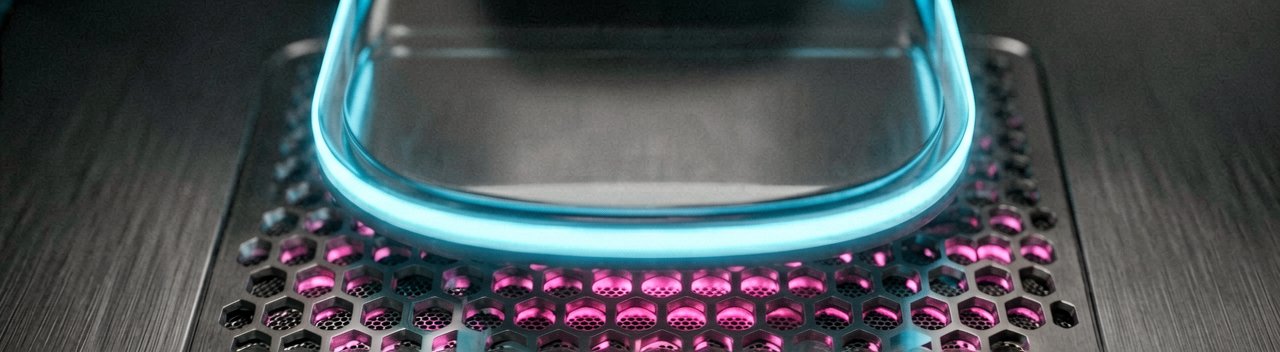
Every single touchpoint on this chassis feels deliberately engineered to mimic the tactile thrill of a racing cockpit. Interaction is guided by a philosophy of immediate precision, featuring a full-glass palm rest and an invisible, seamless haptic trackpad that remains completely hidden until a light bar illuminates its boundaries on contact. To handle internal thermals, the teams engineered a CNC three-dimensional louvered vent design incorporating over 2,000 calibrated micro-perforations in the glass surface, mirroring the advanced fluid dynamics criteria used by Scuderia Ferrari on the tarmac.
The premium experience continues right down to the accessories packed inside the bespoke presentation box. Each system ships with a custom sleeve manufactured by Italian luxury furniture maker Poltrona Frau, utilizing the exact same high-grade leather upholstery found inside factory-spec Ferrari road cars. For users planning to take this machine into corporate environments, it comes reinforced with enterprise-grade HP Wolf Security for Business to keep local data heavily locked down.
Elite Workstation Hardware Hidden Under the Hood
This laptop is not just a pretty face meant to sit idly on a desk, as the computing power underneath the red paint matches its aggressive styling. It packs a top-tier Intel Core Ultra X7 358H processor paired with newly minted Intel Arc B390 graphics, alongside a massive 64GB of lightning-fast LPDDR5x RAM and a 1TB NVMe SSD. The dedicated Neural Processing Unit pumps out an impressive 180 total TOPS of computing throughput, providing more than enough muscle to crunch complex, localized AI workloads or drive high-intensity creative applications without breaking a sweat.
Visual duties are handled beautifully by a 14-inch, 120Hz 3K Tandem OLED touchscreen display that fires up to a blazing 700 nits of brightness. Per-key customizable RGB backlighting allows owners to cycle through four distinct animated lighting modes designed around Ferrari’s official typographic layout. For complete hardware specifications and breakdown data, you can view the official listing on the HP Store.
Pricing, Global Availability, and Extreme Rarity
True to the legendary Italian philosophy of building "one less car than the market demands" to maintain strict exclusivity, production is strictly capped at just 4,999 individually serialized and numbered units worldwide. The product will officially go on sale through the main HP Newsroom retail portals starting June 12, 2026. Given the premium materials and rigorous collaborative engineering involved, it arrives with a steep sticker price of $5,599 in the United States, with limited allocations distributed across selective international markets including the United Kingdom, Italy, Germany, France, Japan, Spain, Switzerland, and Australia.
Under the Hood of a Deep-Tech Alliance
Behind the Scenes of the Design Lab: This collaboration represents a massive operational shift away from the standard licensing deals that typically define tech-automotive crossovers. Historically, a computer manufacturer would simply purchase the rights to slap a prancing horse logo onto a pre-existing chassis, spray-paint it red, and call it a day. For this project, HP and Ferrari established a dedicated, cross-functional engineering pipeline that bridged HP’s labs in Houston and Taipei with the Ferrari Design Studio in Maranello. The two-year development cycle was plagued by complex engineering bottlenecks, particularly regarding the transparent carbon fiber and glass underside, which required dozens of iterations to meet structural rigidity standards while maintaining thermal efficiency.
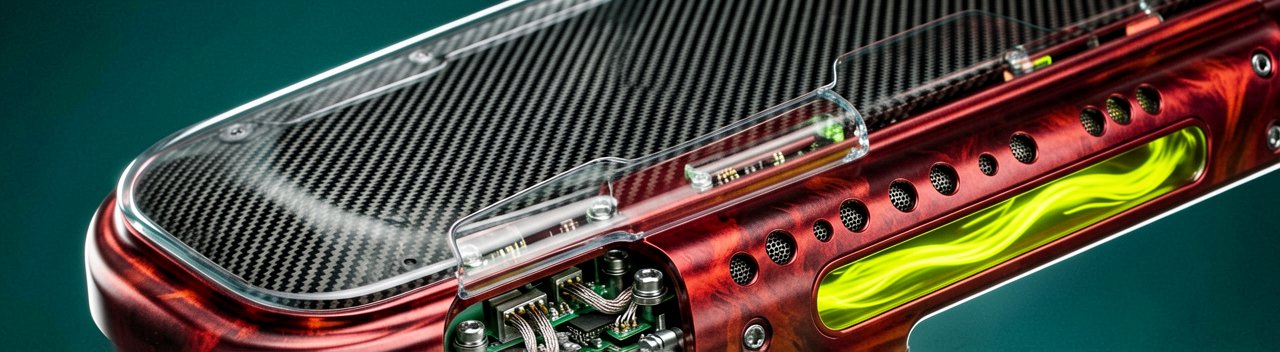
The true tension in the engineering rooms came from balancing the weight of high-end materials against mobile usability. Carbon fiber is notoriously difficult to manufacture at the precise tolerances required for laptop chassis hinges, often interfering with Wi-Fi and 5G cellular antennas. Designers had to meticulously weave microscopic copper shielding into the carbon layers to preserve wireless signal integrity without ruining the visual aesthetic of the exposed components. This uncompromising attention to detail explains the hardware's premium pricing, signaling a deliberate move by HP to capture the hyper-luxury creator market currently dominated by bespoke workstation builders.
From a strategic standpoint, this machine serves as a physical manifestation of a multi-year title partnership aimed at proving AI's tangible value. Ferrari’s racing division has increasingly relied on edge computing and localized machine learning models to simulate race strategies and analyze real-time telemetry on the pit wall. By equipping this consumer laptop with a heavy-hitting 180-TOPS NPU architecture, HP is actively trying to rewrite the narrative around consumer AI PCs. Instead of pitching AI as a tool for simple cloud-based chatbots or image generation, they are marketing local silicon capable of processing complex data sets, massive code repositories, and on-device telemetry simulation.
Industry analysts view this launch as a high-stakes gamble to elevate the prestige of Windows-based hardware in design studios worldwide. For over two decades, creative professionals and luxury-minded buyers have defaulted to the ecosystem of a certain Cupertino rival due to perceived superior industrial design. By blending Ferrari’s legendary automotive heritage with extreme hardware specifications, HP is attempting to disrupt that status quo. The hyper-limited run of 4,999 units is not meant to drive massive quarterly revenue, but rather to serve as a halo product that shifts consumer perception of the entire HP portfolio.
The Price of Prestige Versus Practical Performance
Reading Between the Lines of the Spec Sheet: Strip away the mesmerizing Rosso Magma paint and the prestige of the Maranello logo, and a stark contradiction emerges between luxury branding and the brutal reality of silicon lifecycles. Consumers are being asked to shell out an astronomical $5,599 for a laptop powered by an Intel Core Ultra X7 processor and Arc graphics—components that, while highly capable today, will inevitably face technological obsolescence within three to four years. Unlike a classic Ferrari Daytona SP3, which appreciates in value as a timeless piece of mechanical art, silicon inevitably succumbs to the unforgiving march of Moore’s Law, turning today’s hyper-car PC into tomorrow’s expensive paperweight.
Furthermore, the industry-wide marketing hype surrounding local AI processing power deserves a healthy dose of skepticism. HP loudly touts the machine's 180 total TOPS of computing throughput as a game-changer for localized machine learning, yet the current consumer software ecosystem remains profoundly fragmented. Very few mainstream applications outside of niche video rendering suites and developer tools can actually saturate an NPU of this magnitude. Paying a massive premium for localized AI muscle today means investing in a future where the software developers have yet to catch up with the hardware engineers.
There is also a glaring irony in targeting this device at corporate environments via the inclusion of enterprise-grade Wolf Security. It is difficult to envision a buttoned-up corporate compliance officer approving a fleet of neon-lit, glass-bottomed laptops modeled after Formula One race cars. Ultimately, this device sits in an uneasy limbo: it is far too flashy for the traditional boardroom, yet its extreme price tag puts it well out of reach for the vast majority of everyday creative professionals who could actually push the hardware to its absolute thermal limits.
Purchasing a five-thousand-dollar laptop because it shares genetic material with a Scuderia race car is the ultimate tech-enthusiast indulgence. It ensures that while your software updates will inevitably slow down in five years, you can at least boast that your spreadsheet crashes happen with the absolute finest fluid dynamics Maranello engineering has to offer.
Artūras Malašauskas is an AI Systems Integrator with 20+ years of production-grade web engineering experience. He has designed, shipped, and scaled enterprise Python/PHP systems for logistics, SaaS, and public-sector clients. For the past year, he has focused exclusively on AI integrations: deploying open-source LLMs, building generative media pipelines (image, audio, video), and engineering multi-agent workflows for real production environments. His standard: reproducibility, security, cost-efficient inference—no vaporware. He documents and evaluates emerging AI tooling, separating verified capabilities from marketing noise. Technical editor at: muza-ai.eu, ai-verslas.lt, ai-naujinos.lt Connect on LinkedIn
Comments