Silicon Supercar: Breaking Down the HP Limited Edition Scuderia Ferrari AI PC Architecture
When technology behemoths and motorsport legends shake hands, consumers usually brace themselves for superficial branding exercises. We have all seen them: standard laptops wrapped in a flashy coat of paint with a supercar emblem carelessly slapped on the lid. However, the newly unveiled HP Limited Edition Scuderia Ferrari AI PC subverts those low expectations. Born from a deep two-year co-engineering collaboration timed perfectly alongside the Monaco Grand Prix, this machine attempts to translate actual automotive design principles into elite silicon architecture.
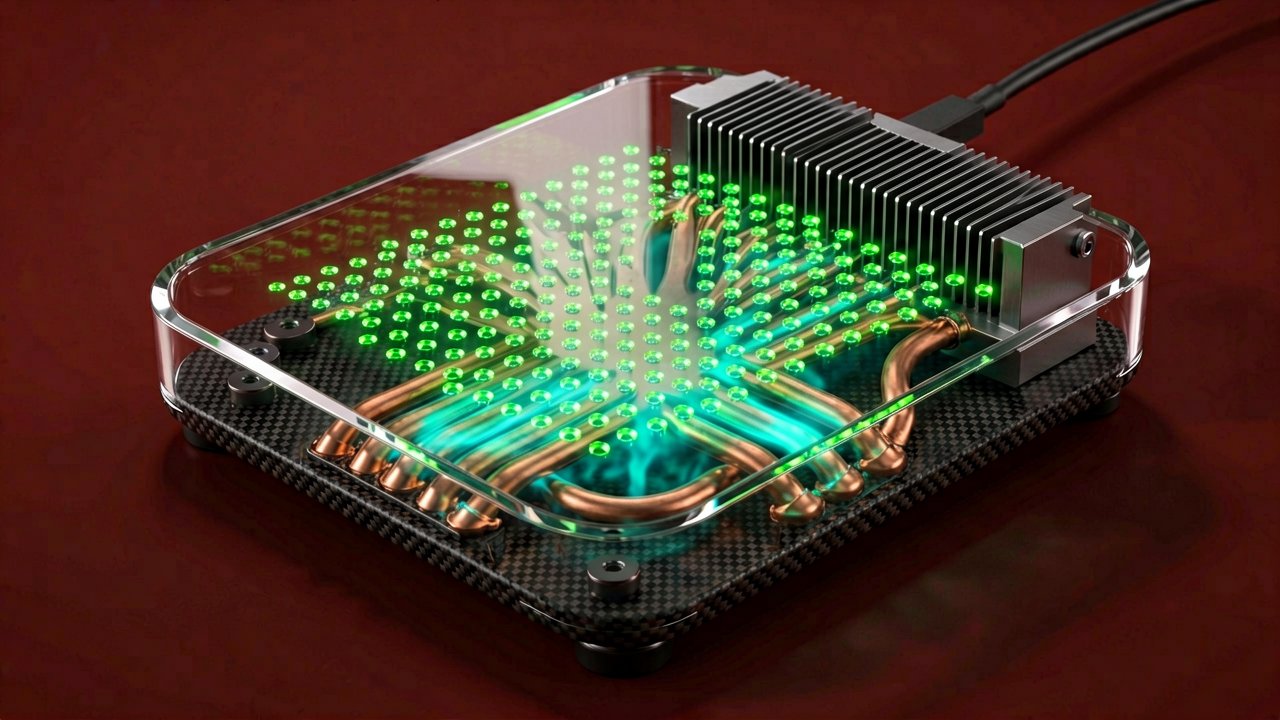
Draped in Maranello’s gorgeous Rosso Magma red, the chassis immediately breaks traditional portable design conventions. The lower shell relies heavily on lightweight carbon fiber coupled with a transparent plate of Corning Gorilla Glass. It mimics a high-performance supercar’s exposed engine bay, putting its dense internal cooling system on full display. Rather than restricting air intake through standard linear slits, the engineering teams integrated over 2,000 calibrated micro-perforations into the technical glass base. This complex arrangement adheres strictly to fluid dynamics criteria to optimize pressure and heat dissipation under heavy computation workloads.
Under the Hood: Processors and Neural Engines
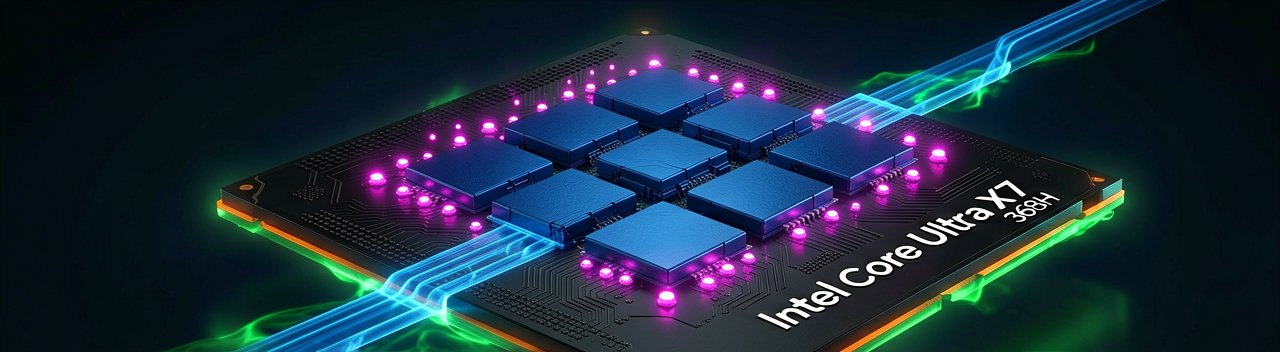
The core computational engine shifting gears inside this 14-inch machine is Intel’s high-end Core Ultra X7 368H processor. This silicon backbone architecture incorporates 16 physical cores and 16 parallel execution threads, hitting maximum clock speeds up to 5.0 GHz. Graphics and display output are handled natively via a discrete Intel Arc B390 GPU, driving a beautiful 3K Tandem OLED+ touch display that refreshes at a fluid 120 Hz. This hardware stack is rounded out with a massive 64GB of lightning-fast LPDDR5x system memory running at transfer rates up to 9600 MT/s, paired with a high-speed 1TB Gen4 NVMe solid-state drive.
AI processing is where the hardware-software stack truly tries to establish its premium status. The dedicated onboard Intel AI Boost neural processing unit works alongside the main CPU and Arc graphics architecture to output a massive combined total of up to 180 trillion operations per second (TOPS). This dense compute overhead allows local machine learning models to run on-device without relying on external cloud latency or sacrificing data privacy. The hardware-enforced protection layer is anchored by HP Wolf Security for Business, which shields the local operating environment from malicious low-level firmware exploits.
Racetrack Aesthetics Meet Elite Performance Metrics
The physical attention to detail extends seamlessly down to tactile interactions. The seamless glass haptic touchpad completely lacks visible edge borders, flowing cleanly into the zirconium-bead-blasted aluminum wrist rest. Even the mechanical keyboard features individual per-key LED backlighting customized to display typography in Ferrari's official font. To match the hardware premium, each notebook includes a premium Poltrona Frau leather sleeve constructed from the exact interior leather hide utilized in modern road cars.
According to release details published by VideoCardz, production for this ultra-premium device is strictly capped at 4,999 units globally. To enforce authenticity, every machine features its distinct production serial number engraved directly onto the visible copper heat pipe assembly. This highly exclusive piece of functional tech art commands an MSRP of $5,599, positioning it squarely as a collectors item for those who demand maximum prestige alongside extreme processing throughput.
Behind the Scenes: The true engineering feat of the HP Scuderia Ferrari AI PC lies not in its striking Rosso Magma chassis, but in how its hardware abstraction layer manages thermal throttling alongside aggressive neural network workloads. Systems engineers designing for high-performance laptops always face a brutal zero-sum game between power distribution and thermal limits. In this limited-edition architecture, HP and Intel co-developed a custom dynamic power-tuning framework that hooks directly into the Windows hardware error architecture and energy estimation engine. Rather than relying on standard operating system scheduling, this low-level firmware prioritizes thread allocation based on real-time telemetry from over forty distinct thermal sensors embedded across the motherboard and the transparent glass base plate.
To maximize the 180 TOPS compute ceiling of the Core Ultra platform, the system relies on specialized INT8 and FP16 quantization mapping executed at the driver level. Running heavy machine learning algorithms locally on a 14-inch platform typically causes sudden voltage drops and severe thermal spikes that degrade CPU clock speeds. By implementing an asynchronous execution pipeline, the local runtime environment splits heavy generative models across the hardware stack simultaneously. The dedicated Intel AI Boost NPU handles persistent, low-power background operations like real-time video upscaling and sensor monitoring, while transient, high-intensity matrix multiplications are instantly offloaded to the Intel Arc B390 graphics execution units via an optimized OpenVINO backend toolkit.
Low-Level Kernel and Thermal Engineering Optimizations
Data bottlenecking is mitigated through direct memory access configurations applied to the 64GB LPDDR5x RAM pool. Operating at a blistering 9600 MT/s, the system memory utilizes an aggressive dual-channel, sub-channel interleaving matrix that minimizes latency when the CPU and GPU compete for the same memory blocks. Systems programmers will appreciate the custom UEFI firmware, which includes pre-allocated cache-line alignments designed to prevent cash evictions during continuous inference cycles. This architectural choice guarantees that local Large Language Models remain resident in high-speed system memory, completely bypassing standard operating system page-file overhead and preventing disk read bottlenecks on the Gen4 NVMe storage subsystem.
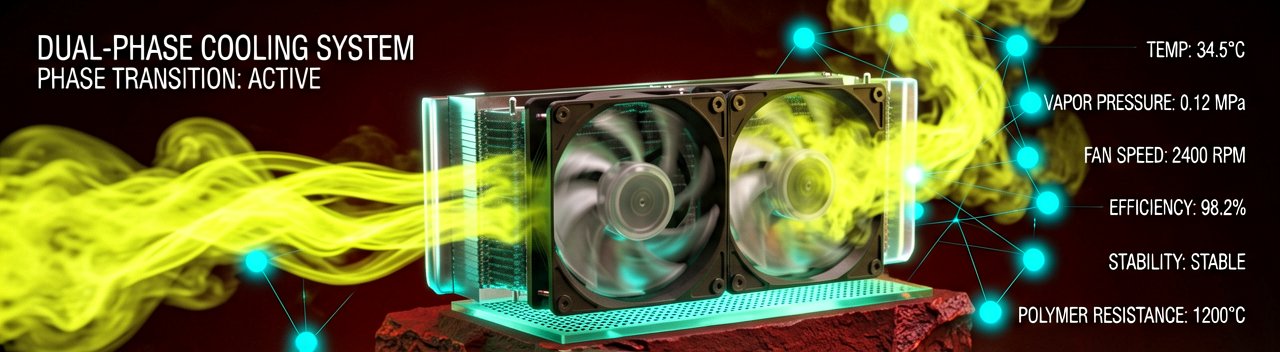
The mechanical cooling apparatus is explicitly tuned to complement these software-level instruction optimizations. Because the lower shell integrates an array of 2,000 micro-perforations through a structural sheet of Corning Gorilla Glass, air flow follows an optimized fluid dynamics curve that traditional slotted vents cannot achieve. The dual-phase vapor chamber works in tandem with dual high-density liquid-crystal polymer fans. As thermal loads cross a critical 78-degree Celsius threshold on the Intel Core Ultra silicon die, the embedded controller adjusts fan blade velocity utilizing an exponential curve rather than a stepped linear progression, preventing sudden acoustic whining while rapidly stabilizing internal chassis pressure.
Ultimately, this deep hardware-software synergy transforms the device from a mere luxury novelty into a highly predictable computing instrument for deployment-phase machine learning tasks. By bypassing typical consumer power management profiles in favor of a specialized bare-metal telemetry layer, the architecture preserves maximum processing throughput for extended durations. It successfully mirrors the predictable, telemetry-driven performance philosophy of its automotive muse, treating every milliwatt of power and every cubic centimeter of airflow as a critical variable to be monitored, managed, and mastered.
Reading Between the Lines: The engineering pageantry behind this machine cannot entirely obscure the inherent contradictions of its market positioning. We are told this laptop represents a purist fusion of automotive excellence and next-generation artificial intelligence, yet its hardware limits expose a fundamental paradox. No serious machine learning engineer or data scientist trains heavy models locally on a 14-inch thin-and-light laptop, regardless of how many micro-perforations are drilled into its glass base plate. Real-world AI development relies on massive cloud clusters or, at the bare minimum, power-hungry desktop workstations with dedicated, discrete enterprise GPUs pushing hundreds of watts. Marketing a mobile 180-TOPS hardware stack as a serious AI powerhouse ignores the reality that this device is architecturally constrained by mobile thermal limits and battery capacities.
This reality leaves the Scuderia Ferrari AI PC in a curious operational limbo. The inclusion of premium components like 64GB of LPDDR5x RAM and a highly optimized OpenVINO backend implies a workstation workflow, but the actual target demographic is far more likely to use it for high-end office productivity, web browsing, and content consumption. The specialized UEFI firmware tweaks and dual-phase vapor chambers are undeniably impressive technical achievements, but they ultimately serve to maximize a mobile processor that is still fundamentally designed for efficiency over raw, unbridled power. It raises a glaring point of skepticism regarding whether these intricate engineering solutions were developed to solve a genuine computing bottleneck, or simply to justify the eye-watering $5,599 price tag to wealthy collectors.
The Sustainability and Longevity Disconnect
Furthermore, the decision to strictly cap production at 4,999 units creates a fascinating clash between automotive collectibility and consumer electronics obsolescence. A classic Ferrari road car often appreciates in value over decades because its mechanical brilliance remains tangible and repairable. Conversely, a cutting-edge personal computer operates on an unforgiving silicon depreciation curve. In three to five years, the Intel Core Ultra platform and its dedicated NPU will inevitably be outpaced by entry-level silicon, rendering the "extreme AI capabilities" of this machine entirely pedestrian. The beautifully engraved serial number on the copper heat pipe cannot stop the inevitable march of software bloat or the eventual degradation of the non-replaceable lithium-ion battery cells.
By blending the fast-fashion lifecycle of personal tech with the ultra-luxury scarcity of motorsport, the collaboration tests the limits of consumer rationality. It forces us to reconsider what luxury means in the silicon age. If the core value proposition of an AI PC relies on local processing speeds that become obsolete in a handful of product cycles, then the premium paid for this device is entirely for the physical chassis, the Poltrona Frau leather sleeve, and the emotional resonance of the brand. It is an exquisite exercise in technical excess, proving that while you can elegantly wrap a laptop in the engineering language of a supercar, you can never quite outrun the brutal laws of Moore's Law and tech depreciation.
"Ultimately, this partnership proves that while money cannot buy happiness, a cool $5,599 can buy you the world's most over-engineered machine for filling out Microsoft Excel spreadsheets in a very aggressive shade of Italian red."
Artūras Malašauskas is an AI Systems Integrator with 20+ years of production-grade web engineering experience. He has designed, shipped, and scaled enterprise Python/PHP systems for logistics, SaaS, and public-sector clients. For the past year, he has focused exclusively on AI integrations: deploying open-source LLMs, building generative media pipelines (image, audio, video), and engineering multi-agent workflows for real production environments. His standard: reproducibility, security, cost-efficient inference—no vaporware. He documents and evaluates emerging AI tooling, separating verified capabilities from marketing noise. Technical editor at: muza-ai.eu, ai-verslas.lt, ai-naujinos.lt Connect on LinkedIn
Comments