Helix Rising: KKR Mobilizes $10 Billion Blueprint with Nvidia and Vistra to Redefine AI Infrastructure
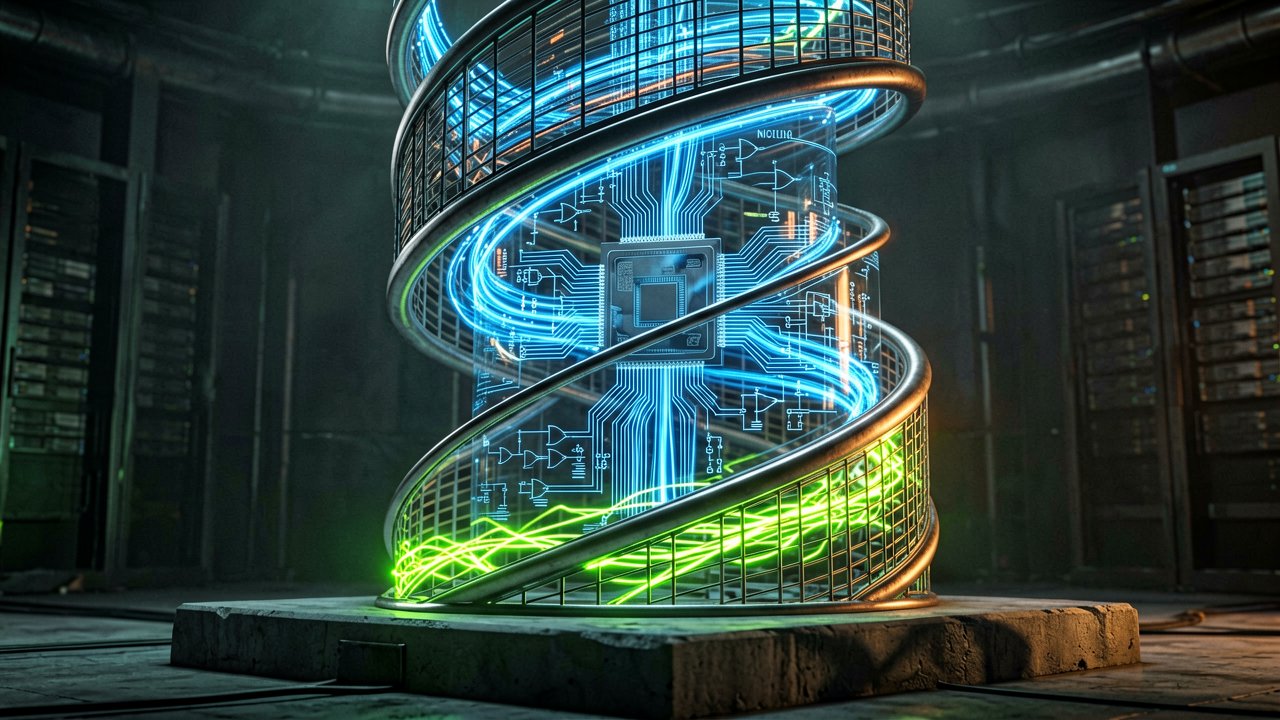
The global race to fund the physical machinery behind artificial intelligence took a massive leap forward on June 11, 2026, when private equity giant KKR officially launched Helix Digital Infrastructure. Armed with over $10 billion in committed, long-duration capital, this new standalone company isn't just another investment fund; it's a structural powerhouse engineered to tackle the severe bottlenecks choking modern data center expansion. By bringing together the world's most dominant AI chipmaker and one of America's largest power producers under one corporate roof, Helix aims to offer a unified solution for tech hyperscalers desperately hunting for ready-made data centers, reliable grid capacity, and optimized hardware architectures.
As detailed in the official launch announcement carried by Business Wire, KKR is spearheading the venture alongside a formidable lineup of anchor investors. The Kuwait Investment Authority is injecting substantial sovereign wealth into the entity, while tech titan Nvidia and power utility giant Vistra are stepping in as core strategic stakeholders. To steer this capital-intensive machine, KKR has tapped former Amazon Web Services chief Adam Selipsky to serve as chief executive officer, leveraging his cloud-scaling experience alongside KKR’s global head of digital infrastructure, Waldemar Szlezak, who assumes the role of chief investment officer.
A Vertical Answer to the AI Power Crisis
Building out the next generation of computing clusters has become a logistical nightmare for Silicon Valley. Hyperscalers can buy all the silicon they want, but finding the physical land, securing the massive amounts of electrical power required to run them, and stitching the networks together has increasingly strained regional grids and triggered major component shortages. Helix changes the equation by behaving less like a passive landlord and more like a full-stack utility partner.
The division of labor within the venture highlights exactly how KKR plans to streamline operations for its clients. Nvidia isn't just providing first-look access to its premium silicon; it's actively lending its architectural expertise to help Helix design high-efficiency data centers tailored for modern "AI factories." On the other side of the equation, Vistra—which boasts a massive 50-gigawatt generation portfolio across 18 states—will act as Helix’s preferred power provider, ensuring that these energy-hungry clusters can actually plug into a reliable source of juice without stalling out in decades-long utility queues.
Wall Street’s New Industrial Empire
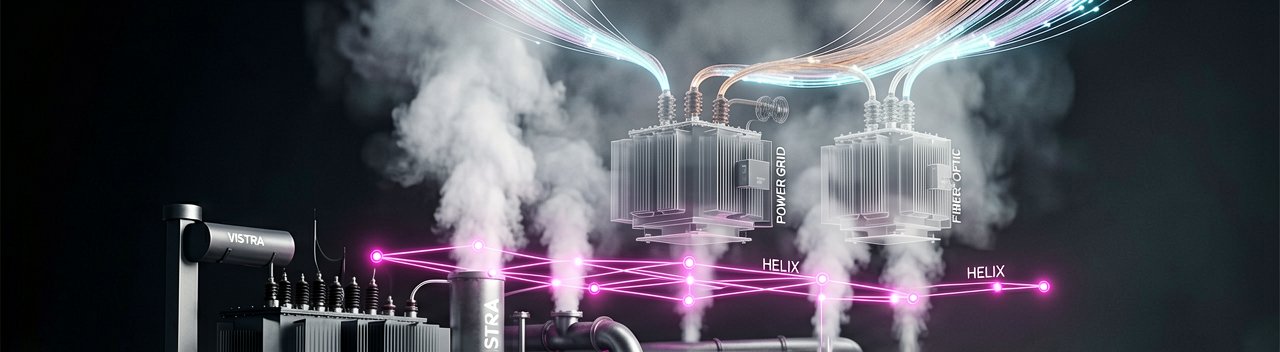
The launch of Helix marks a distinct shift in how the tech industry’s physical backbone gets financed. Capital expenditures for generative computing have grown too large for traditional bank debt, allowing alternative asset managers like KKR to step in as the new heavy industry builders. It's a highly competitive landscape, illustrated clearly just days prior when rival firms Apollo and Blackstone announced their own massive $35 billion financing program to build out custom infrastructure for Anthropic.
By leveraging its own balance sheet and $100 billion infrastructure platform, KKR is banking on a vertically integrated business model to win over hyperscale customers who need to reduce deployment complexity immediately. Helix is structured to keep expanding, with the founders leaving the door open for additional institutional investors to swell its coffers once the initial founding commitments close. For an AI ecosystem that has spent years constrained by power and permitting, this multi-billion-dollar alliance represents the heavy-duty industrial scaffolding the market has been waiting for.
Behind the Scenes of the Power-Silicon Convergence
The Quiet Crisis of the Megawatt: While public attention remains fixated on the raw processing capabilities of next-generation silicon, the real battle for AI supremacy has quietly shifted from chip design to grid capacity. The sheer electrical volume required to sustain these massive compute clusters is staggering, pushing regional utility grids to their absolute breaking point. Hyperscalers are no longer just looking for empty warehouse space with fiber-optic connections; they are hunting for guaranteed, uninterruptible power on a gigawatt scale. This infrastructure bottleneck explains why the Helix alliance is being treated as a paradigm shift on Wall Street, as it bypasses the traditional, agonizingly slow process of negotiating independent power purchase agreements by binding a major utility provider directly into the corporate foundation.
For Vistra, this joint venture represents a massive strategic pivot toward becoming the premier tech-industrial utility provider in North America. By aligning directly with KKR and Nvidia, Vistra effectively secures a locked-in, high-margin customer base for its generation fleet, particularly its nuclear and natural gas assets, which offer the reliable baseline power that intermittent renewable sources cannot yet guarantee for 24/7 data center operations. This arrangement shields the utility from standard wholesale market volatility while granting Helix projects immediate, priority access to the electrical grid, effectively shaving years off the typical data center development timeline.
The addition of former AWS chief Adam Selipsky to lead Helix underscores a broader trend of veteran cloud executives migrating into the alternative asset management sector. During his tenure at Amazon, Selipsky watched the infrastructure problem mutate from a software optimization challenge into a brutal geopolitical and industrial scramble for land and energy. His appointment signals that Helix is not being run as a passive real estate investment trust, but rather as an aggressive, operationally focused technology company designed to pre-emptively build the exact environments hyperscalers will need three to five years down the line.
From Nvidia's perspective, this partnership acts as a crucial defensive moat against its own customers' hardware ambitions. As tech giants like Google, Microsoft, and Amazon ramp up development on their own in-house custom AI chips, Nvidia is leveraging its architectural expertise to build tightly integrated "AI factories" directly into the Helix footprint. By embedding its proprietary software and networking stacks natively into the physical blueprint of these new data centers, Nvidia makes it incredibly friction-heavy for a tenant to later swap out its hardware for competing silicon, effectively anchoring its market dominance at the structural level.
This $10 billion escalation also highlights a massive historical irony in the evolution of the tech industry. For decades, Silicon Valley prided itself on an "asset-light" business model, outsourcing manufacturing and physical infrastructure to maintain massive profit margins and rapid agility. Generative artificial intelligence has completely inverted that philosophy, forcing the tech sector to return to an era of heavy industrial capitalism reminiscent of early 20th-century railroad expansions. Success in this new landscape is measured in concrete poured, transformers secured, and copper laid, turning private equity firms like KKR into the gatekeepers of digital innovation.
Reading Between the Lines: The Fragile Geometry of the Tech-Power Alliance
The Illusion of Frictionless Scaling: Wall Street is treating the creation of Helix as a done deal that solves the AI infrastructure crisis, but this optimism ignores a fundamental contradiction at the heart of the venture. KKR and its partners are attempting to build a fast-moving, multi-billion-dollar digital empire on top of an American electrical grid that is notoriously slow, heavily regulated, and fundamentally local. While having Vistra as an anchor partner guarantees access to power generation, it does not magically build transmission lines or erase the multi-year backlogs in regional interconnection queues. The physical reality of stringing high-voltage wires across state lines remains a regulatory quagmire that billions of dollars in private equity capital cannot easily bypass.
Furthermore, this partnership exposes a glaring vulnerability in Nvidia’s current market strategy. By investing directly in the real estate and power infrastructure housing its own chips, Nvidia is subtly shifting from a high-margin silicon designer into a capital-intensive infrastructure financier. This moves the company closer to the cyclical, low-margin world of industrial utilities. If the explosive demand for generative AI begins to plateau, or if hyperscalers successfully transition to more energy-efficient models that do not require massive, centralized "AI factories," Helix could find itself holding incredibly expensive, specialized real estate that is deeply over-spec'd for traditional cloud computing needs.
There is also the looming specter of public and political backlash over resource hoarding. Data centers are already drawing intense scrutiny from local communities and environmental regulators for consuming disproportionate amounts of clean water and electricity, often driving up utility rates for residential consumers. By binding a massive power producer like Vistra to a private data center venture, Helix risks becoming a lightning rod for critics who argue that tech monopolies are cannibalizing the public energy grid for corporate experiments. When a single data center cluster begins consuming enough power to run a medium-sized American city, the debate moves out of the financial pages and straight into the halls of local government, where private equity handshakes hold very little sway.
Ultimately, the Helix venture proves that the tech industry's biggest bottleneck is no longer a lack of imagination or software sophistication, but the cold, unyielding limits of physics and heavy industry. Silicon Valley spent twenty years convincing the world that everything could be abstracted into the cloud, only to realize that the cloud is actually a massive network of cooling towers, copper wiring, and concrete slabs that require an unprecedented amount of fossil and nuclear fuel to stay alive. The success of this $10 billion gamble will not be measured by the elegance of its algorithms, but by how effectively a group of financiers and chipmakers can navigate the decidedly unglamorous world of industrial engineering and local zoning boards.
"We spent the last two decades being told that the digital economy would finally liberate humanity from the messy, heavy constraints of the physical world—only to find out that the ultimate destination of the internet is a massive, hyper-expensive extension cords race where the person with the biggest plug wins."
Artūras Malašauskas is an AI Systems Integrator with 20+ years of production-grade web engineering experience. He has designed, shipped, and scaled enterprise Python/PHP systems for logistics, SaaS, and public-sector clients. For the past year, he has focused exclusively on AI integrations: deploying open-source LLMs, building generative media pipelines (image, audio, video), and engineering multi-agent workflows for real production environments. His standard: reproducibility, security, cost-efficient inference—no vaporware. He documents and evaluates emerging AI tooling, separating verified capabilities from marketing noise. Technical editor at: muza-ai.eu, ai-verslas.lt, ai-naujinos.lt Connect on LinkedIn
Comments