Core AI Disrupts Prop-Tech with the Commercial Launch of HomeGPT
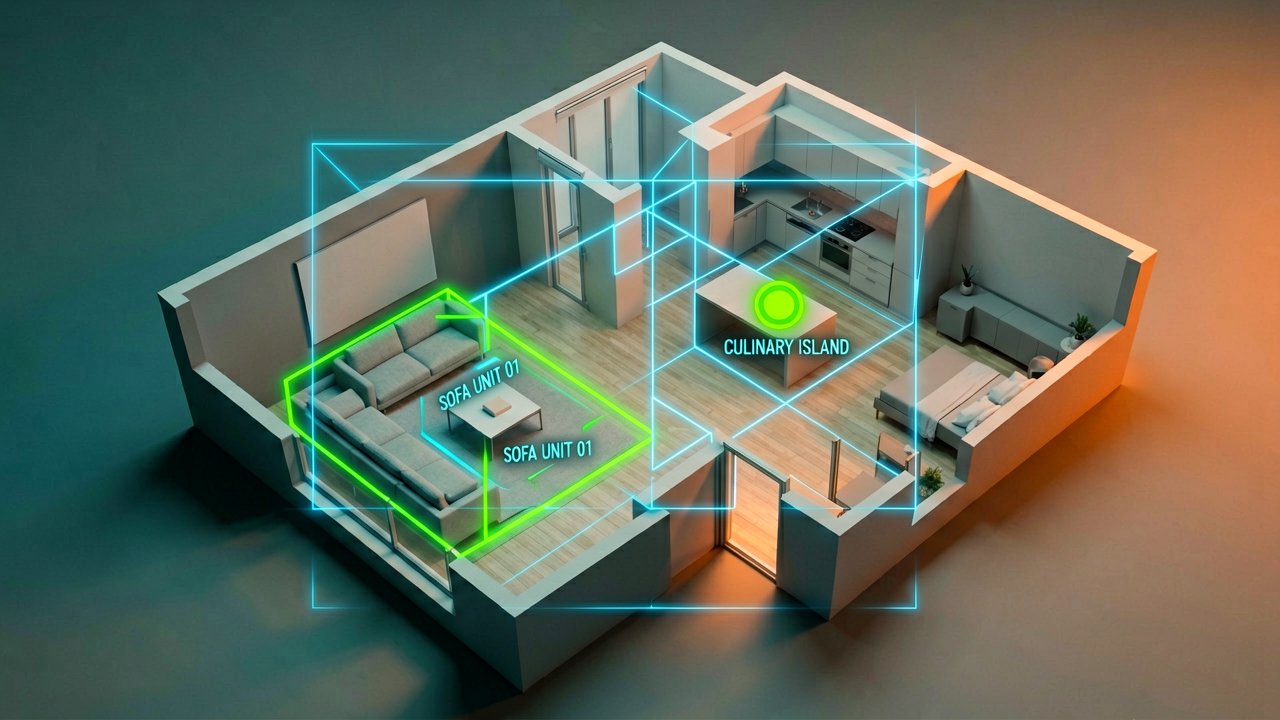
In a bold bid to change how we conceptualize living spaces, Core AI Holdings Inc. officially rolled out its AI-driven interior planning and renovation platform, HomeGPT, on June 11, 2026. The application uses proprietary multimodal artificial intelligence infrastructure to turn simple, single-property snapshots into fully interactive, hyper-personalized 3D floor plans and landscapes. It is a noticeable push to bring advanced spatial intelligence directly into the hands of casual consumers, DIY renters, and real estate professionals alike.
The consumer rollout follows an incredibly aggressive three-month open beta testing phase spanning North America, Japan, and South Korea. According to commercial data reported by Investing.com, the app saw its active user base explode from a modest 2,000 testers to more than 130,000 individuals who collectively generated roughly 380,000 design tasks. Core AI also managed a striking 210% increase in paid conversion metrics compared to its earlier baseline software iterations, showing a clear appetite for automated home styling tools despite broader tech market volatility.
Monetization Strategy and Features
From an operational standpoint, the platform avoids the dry, non-interactive layouts of past home design software by focusing heavily on direct object manipulation and automated commercial integration. Users can test over 45 distinct design aesthetics, ranging from minimalist Japandi to complex Victorian, while an integrated "Shop the Look" feature matches furniture pieces generated by the AI to real-world retail options. As detailed by Benzinga , the firm is monetizing the service via a hybrid subscription-plus-credit model to steady its financial footing, especially coming hot on the heels of a fresh $5.4 million registered direct offering aimed at scaling its underlying AI infrastructure.
The Architectural Engine and the Problem of "Hallucinated" Furniture
Behind the Blueprint: While early reporting has naturally focused on the consumer-facing aesthetics of HomeGPT, the real tech battle is happening under the hood. For years, generative AI applications struggled with spatial logic, routinely generating couches that clipped through walls or dining tables that ignored the laws of physics. Core AI’s architecture attempts to bridge this gap by enforcing strict geometric constraints on its multimodal models, essentially preventing the software from recommending structural adjustments that would compromise real-world building integrity.
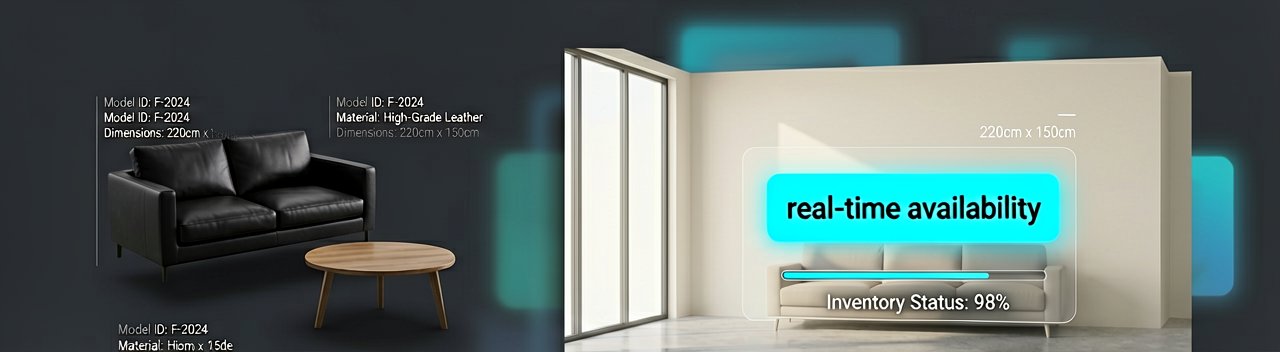
Industry engineers point out that combining diffusion models with hard mathematical physics engines is incredibly difficult to execute in real time. Early beta testers noted that while the initial versions frequently "hallucinated" furniture that couldn't possibly fit into small urban apartments, the late-stage engine updates introduced precise spatial boundaries. This transition from purely artistic generation to practical, mathematically sound layout planning is what caught the attention of enterprise real estate developers looking to scale virtual staging operations.
The Real Estate Play and Retail Subscriptions
The broader strategy here extends far beyond helping suburban homeowners pick a new paint color for their living room. By integrating e-commerce infrastructure directly into the rendering loop, Core AI is positioning itself as an automated middleman for the multi-billion-dollar home furnishings sector. For independent furniture retailers, the platform provides an unexpected digital lifeline, allowing them to index their catalogs into the AI's selection matrix without building proprietary, expensive augmented reality applications from scratch.
However, legacy design professionals view the rapid rise of automated spatial engines with a mix of skepticism and caution. Several boutique interior designers argue that while an AI can easily optimize a floor plan for maximum foot traffic or match a trendy color palette, it completely lacks the capacity to understand the personal, emotional nuances of a family's lifestyle. There is a growing worry that widespread adoption of automated design platforms will lead to an era of hyper-homogenized domestic architecture, where every living room feels like a variation of the same algorithmic aesthetic.
Looking ahead, the long-term viability of HomeGPT hinges entirely on how effectively it maintains its paid conversion rates post-launch. Tech platforms that rely heavily on generative novelty often see a sharp drop in user retention once the initial excitement fades, meaning Core AI must continuously secure deep-tier partnerships with major global retailers to keep its catalog fresh. The firm’s recent multi-million-dollar capital injection suggests investors believe the data gathered from consumer home preferences will be valuable enough to sustain the platform through the inevitable fluctuations of the consumer prop-tech market.

The Hidden Cost of Algorithmic Domesticity
Reading Between the Lines: The tech industry’s rush to declare the democratization of interior design overlooks a fundamental friction between algorithmic perfection and human chaos. Core AI pitches HomeGPT as a tool for personalized living, yet the underlying mechanics inevitably push users toward a sterile, optimized aesthetic. By training models on massive datasets of already-viral internet interiors, these platforms do not expand creativity; they establish a feedback loop that codifies whatever minimalist trend is currently dominant, threatening to turn unique homes into carbon copies of commercial showrooms.
There is also a glaring contradiction in the platform’s business model that deserves closer scrutiny. Core AI boasts about the app’s capability to maximize tight urban spaces, yet the monetization relies entirely on prompting users to buy more physical goods through its "Shop the Look" marketplace. A software engine explicitly optimized to drive furniture sales faces an inherent conflict of interest when tasked with advising a consumer on how to declutter or live sustainably within a small footprint.
Furthermore, the transition from software novelty to enterprise utility remains highly speculative. While a $5.4 million direct offering provides immediate runway, scaling real-time 3D rendering for hundreds of thousands of users is notoriously capital-intensive. If conversion rates falter once the initial hype cycles down, the platform may be forced to rely less on design accuracy and more on aggressive, ad-driven product placement to appease institutional investors.
The long-term risk isn't just financial volatility, but the quiet erosion of domestic privacy. To get a truly accurate layout, users must feed high-resolution video and spatial data of their private sanctuaries directly into Core AI's cloud servers. The corporate incentive to monetize this hyper-specific behavioral data—knowing exactly what brand of television you own, your room dimensions, and your socioeconomic taste markers—will almost certainly outweigh the revenue generated by simple subscription fees.
We are rapidly approaching a future where your living room will tell you exactly what chair it wants, order it using your saved credit card, and silently judge you for putting down a coffee mug without a coaster.
Artūras Malašauskas is an AI Systems Integrator with 20+ years of production-grade web engineering experience. He has designed, shipped, and scaled enterprise Python/PHP systems for logistics, SaaS, and public-sector clients. For the past year, he has focused exclusively on AI integrations: deploying open-source LLMs, building generative media pipelines (image, audio, video), and engineering multi-agent workflows for real production environments. His standard: reproducibility, security, cost-efficient inference—no vaporware. He documents and evaluates emerging AI tooling, separating verified capabilities from marketing noise. Technical editor at: muza-ai.eu, ai-verslas.lt, ai-naujinos.lt Connect on LinkedIn
Comments