AI-Driven Surgical Navigation Transforms Hip Replacement Efficiency, Says DePuy Synthes Launch
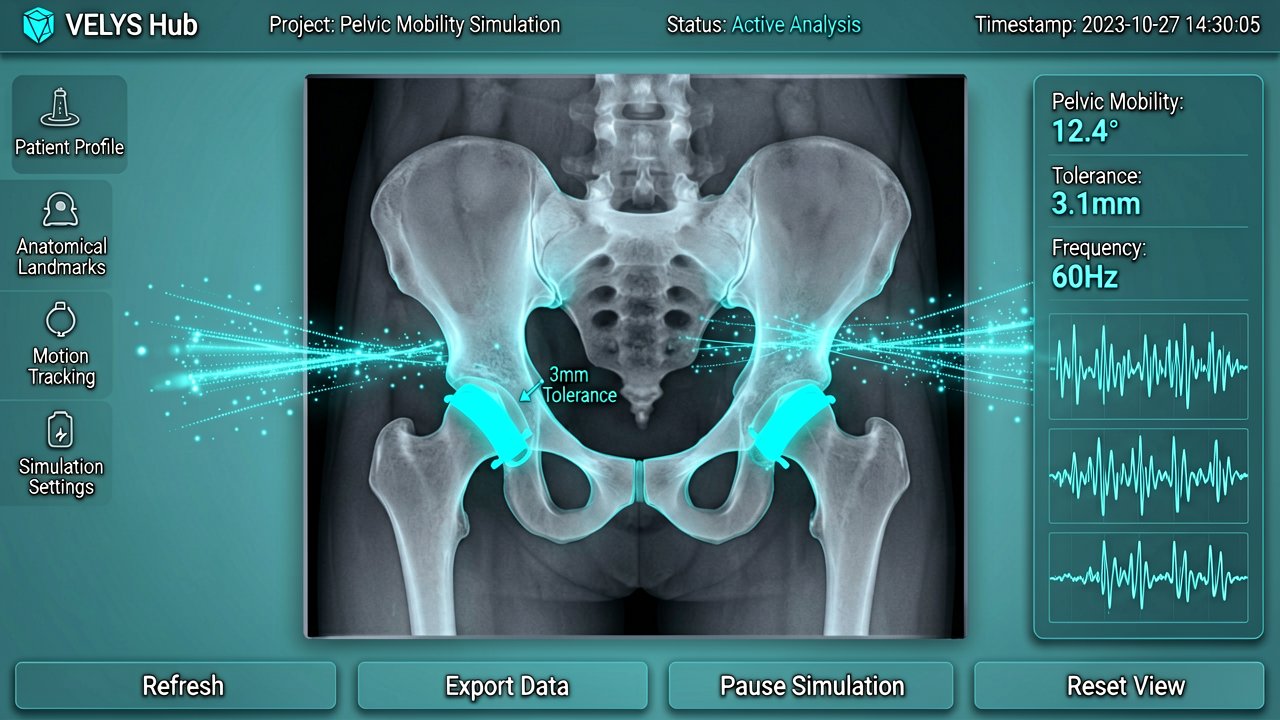
The orthopedic market is undergoing a significant digital transformation as artificial intelligence transitions from predictive modeling to real-time, intraoperative application. Johnson & Johnson MedTech’s subsidiary, DePuy Synthes, has advanced this shift by launching its next-generation VELYS Hip Navigation system with AI Assistance in the United States. Designed to operate via the unified VELYS Hub, this software upgrade directly addresses the operational bottlenecks of total hip arthroplasty (THA) by automating anatomical image interpretation and standardizing landmark identification without requiring invasive tracking pins or arrays.
From a market analysis perspective, this rollout intensifies the ongoing arms race in digital surgery platforms, where medical device conglomerates are racing to tie implants to proprietary enabling technologies. Historically, automated surgical navigation systems have faced pushback from surgeons due to complex setups and added operative time. Clinical data accompanying this launch reveals that the integration of machine learning models reduces manual workflow time by 57%—bringing landmarking and analysis down from an average of 5.33 minutes to just 2.27 minutes. This dramatic time savings provides hospital networks with an immediate economic incentive by optimizing operating room throughput.
Strategic positioning within the orthopedic sector increasingly depends on ecosystem retention. By embedding AI-driven software like the VELYS Hip Navigation system directly into existing fluoroscopic workflows, DePuy Synthes lowers the barrier to adoption for specialized surgeons. The technology's ability to offer precise, real-time feedback on cup placement, leg length, and offset calculation counteracts long-standing surgical outliers like component malpositioning and postoperative leg discrepancies. Ultimately, this launch shows that medical device manufacturers are shifting away from standalone hardware solutions toward highly integrated, data-driven software intelligence.
Market Context and Ecosystem Integration
The introduction of AI assistance into hip navigation builds directly upon the broader VELYS Digital Surgery platform, which already spans robotic-assisted solutions for total knee arthroplasty and specialized active robotics for spine surgery. By anchoring multiple orthopedic procedures to the centralized VELYS Hub, Johnson & Johnson MedTech creates a cohesive ecosystem that discourages hospital groups from mixing hardware from competing vendors. This consolidation strategy is crucial as healthcare systems face increasing pressure to improve reproducible clinical outcomes while lowering per-procedure costs.
Technological Differentiation and Clinical Impact
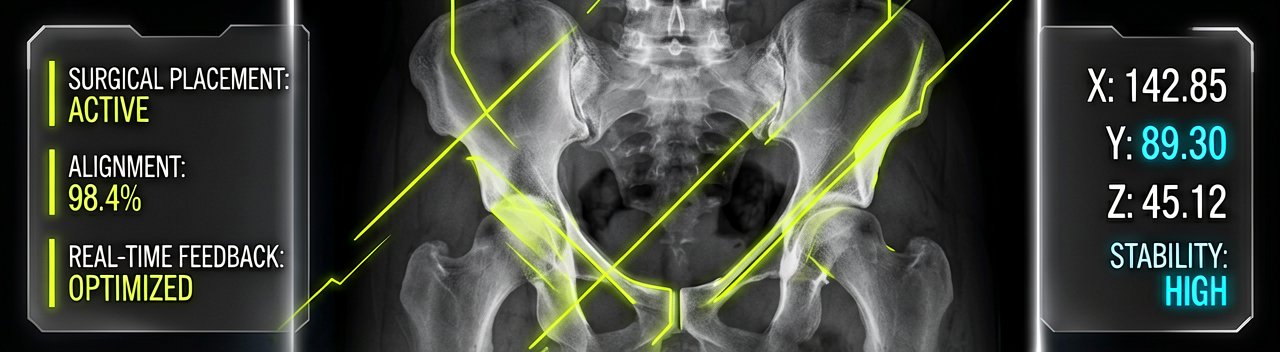
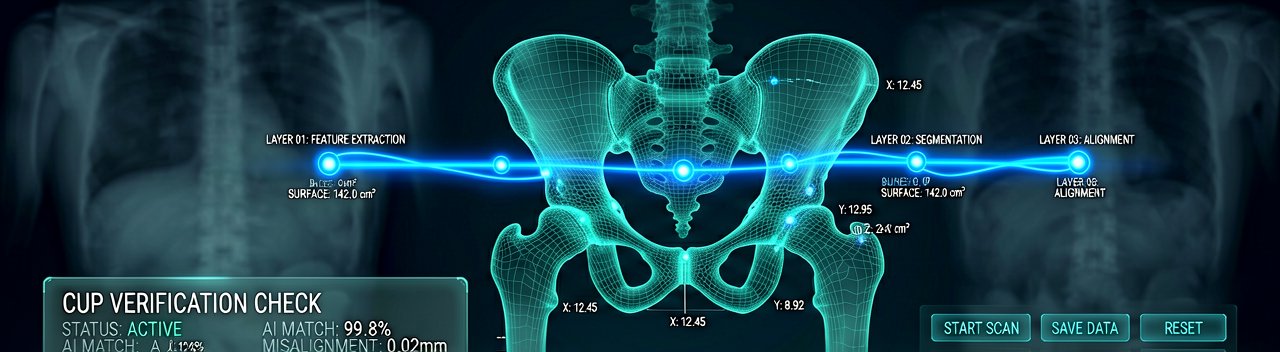
Unlike traditional navigation platforms that require specialized pre-operative CT scans or the mechanical fixation of reference pins into the patient's bone, this software functions entirely through non-invasive digital overlays on standard fluoroscopic images. The underlying machine learning algorithms rapidly place anatomical landmarks during critical stages such as the cup verification check. This provides specialized orthopedic surgeons with immediate actionable data regarding implant configuration and pelvic mobility. By keeping surgical accuracy within 3 millimeters and 3 degrees without complicating the actual physical workflow, the system successfully bridges the historic gap between digital tool precision and practical operating room efficiency.
Behind the Scenes of the Digital Orthopedic Arms Race
The sudden acceleration of artificial intelligence in total hip arthroplasty marks a critical turning point for hospital procurement strategies and surgeon workflows alike. For over a decade, computer-assisted surgery relied heavily on optical tracking technologies that, while precise, introduced cumbersome setups, increased infection risks due to bone pins, and added thousands of dollars in single-use hardware costs per case. By eliminating these physical tracking arrays in favor of pure algorithmic image analysis, medical device manufacturers are addressing the long-standing friction that kept early navigation platforms from achieving mainstream clinical adoption.
From the perspective of hospital administrators, this technological shift arrives amid severe macroeconomic pressures, including persistent nursing shortages and a pressing need to maximize operating room throughput. Traditional surgical navigation systems frequently disrupted the fluid rhythm of the scrub team, requiring specialized technical representatives to calibrate equipment intraoperatively. The automated processing engineered into modern software platforms shifts the technical burden away from human operators, allowing ambulatory surgical centers to accelerate their procedural pipelines and capture a higher volume of outpatient joint replacements.
For specialized orthopedic surgeons, the true value of real-time digital assistance lies in mitigating the hidden variables of patient anatomy, such as pelvic tilt and spinal-pelvic mobility. When a patient transitions from a supine positioning on the operating table to a standing position post-surgery, the pelvis naturally rotates, which can drastically alter the functional orientation of the newly implanted acetabular cup. Advanced navigation software uses predictive modeling to simulate these biomechanical shifts before the final components are permanently impacted, substantially lowering the incidence of postoperative dislocation and leg-length discrepancy.
This software-centric evolution also fundamentally redefines the vendor-hospital relationship, transforming traditional hardware companies into long-term digital service partners. By anchoring multiple surgical specialties to a unified data architecture, healthcare conglomerates ensure that clinical data collected during a hip replacement can actively inform future product iterations and personalized patient care pathways. As predictive software continues to mature, the physical orthopedic implant will increasingly be viewed as just one component of a broader, data-driven surgical subscription ecosystem.
Reading Between the Lines: The Reality of the Automated Operating Room
While industry press releases routinely celebrate the democratization of surgical precision through artificial intelligence, a deeper examination reveals a more complicated economic and operational reality. The promise of shaving three minutes off an intraoperative landmarking sequence ignores the broader, systemic bottlenecks that plague modern healthcare facilities. Substracting time from image interpretation does not inherently translate to higher profitability if the surrounding hospital infrastructure—ranging from anesthesia turnaround times to sterile processing delays—remains stuck in legacy inefficiencies.
Furthermore, the aggressive push toward hardware-free, fluoroscopy-based AI navigation introduces an underlying technological contradiction. By eliminating invasive tracking pins and relying strictly on standard X-ray imaging, these systems drastically lower the barrier to entry for surgeons, yet they simultaneously increase the patient's and the surgical team's cumulative radiation exposure. Every real-time verification check requires additional intraoperative imaging, creating a subtle but persistent trade-off between achieving perfect implant alignment and minimizing the total biological dose of radiation delivered during the procedure.
This paradigm shift also exposes an emerging tension regarding clinical skill degradation and the automation paradox in specialized medicine. As machine learning algorithms take over the cognitive load of calculating component positioning, leg length, and femoral offset, future generations of orthopedic residents risk becoming overly reliant on digital validation rather than developing intuitive, tactile surgical judgment. If a software glitch or an atypical anatomical anomaly causes the system to misread a fluoroscopic baseline, a surgeon who has grown accustomed to algorithmic hand-holding may find it increasingly difficult to identify the error manually.
Ultimately, the rapid adoption of digital platforms like the VELYS ecosystem serves as a brilliant defense mechanism for legacy medical device giants looking to protect their core implant market share. By bundling high-tech navigation software with high-volume implant contracts, manufacturers effectively lock hospital networks into long-term commercial agreements that make switching vendors financially prohibitive. The true innovation here may not be the optimization of the surgical workflow itself, but rather the creation of a highly sophisticated digital moat designed to keep nimbler, low-cost implant competitors entirely out of the operating room.
"We are rapidly approaching an era where the surgeon acts as the human interface for a highly sophisticated software suite, proving that while artificial intelligence can flawlessly calculate the perfect hip replacement, it still requires a human hand to hold the hammer when it is time to smash the implant into place."
Artūras Malašauskas is an AI Systems Integrator with 20+ years of production-grade web engineering experience. He has designed, shipped, and scaled enterprise Python/PHP systems for logistics, SaaS, and public-sector clients. For the past year, he has focused exclusively on AI integrations: deploying open-source LLMs, building generative media pipelines (image, audio, video), and engineering multi-agent workflows for real production environments. His standard: reproducibility, security, cost-efficient inference—no vaporware. He documents and evaluates emerging AI tooling, separating verified capabilities from marketing noise. Technical editor at: muza-ai.eu, ai-verslas.lt, ai-naujinos.lt Connect on LinkedIn
Comments