Revolutionizing Farming: ePropelled's New Drone Propulsion Unit Boosts Agricultural Efficiency
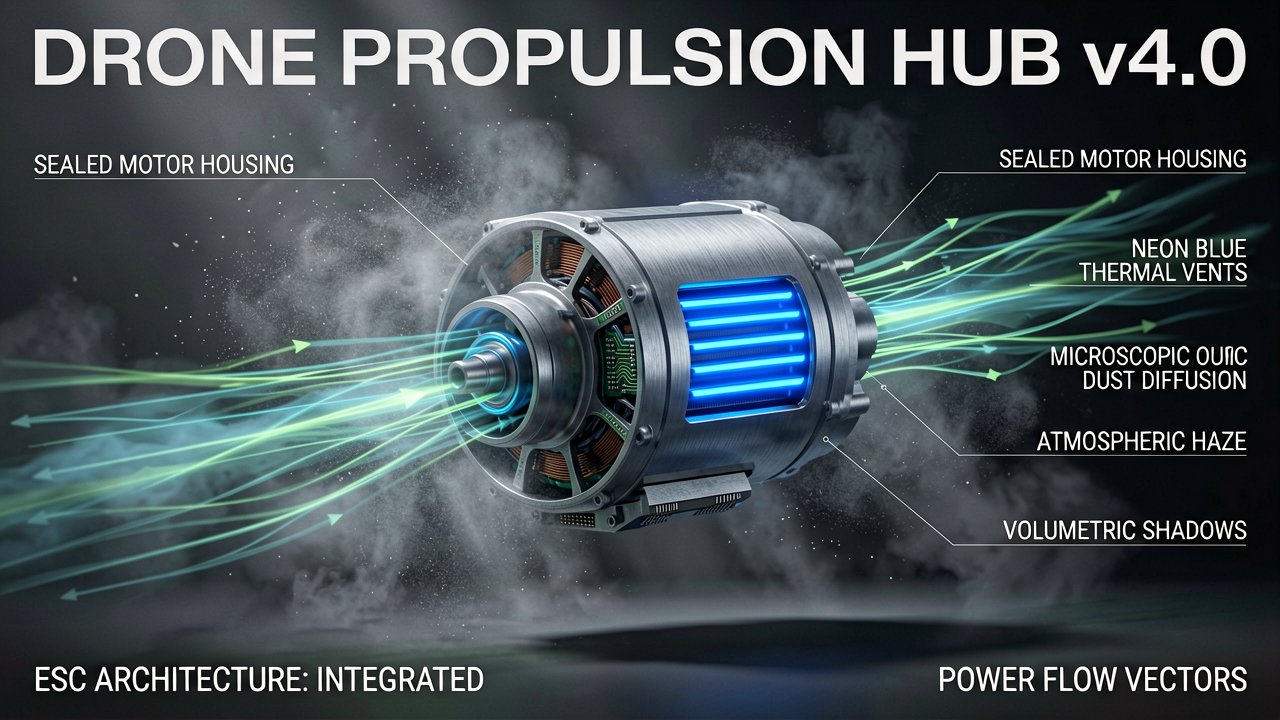
The global agricultural drone landscape is undergoing a critical transformation as commercial operators demand greater hardware reliability and higher payload capacities. In response to this evolving market need, technology developer ePropelled has launched a fully integrated propulsion and power solution designed specifically for agricultural unmanned aerial vehicles (UAVs). This product debut targets a highly mature commercial drone sector, addressing long-standing hurdles in heavy-lift drone engineering and component integration.
By consolidating high-efficiency brushless motors, advanced electronic speed controllers (ESCs), and intelligent power management software into a single architecture, the system reduces engineering friction for original equipment manufacturers (OEMs). Rather than sourcing separate propulsion elements that require extensive calibration, operators can deploy a single unified platform. Industry analysis published by Future Farming underscores how this hardware consolidation improves flight consistency and directly maximizes chemical spraying precision in the field.
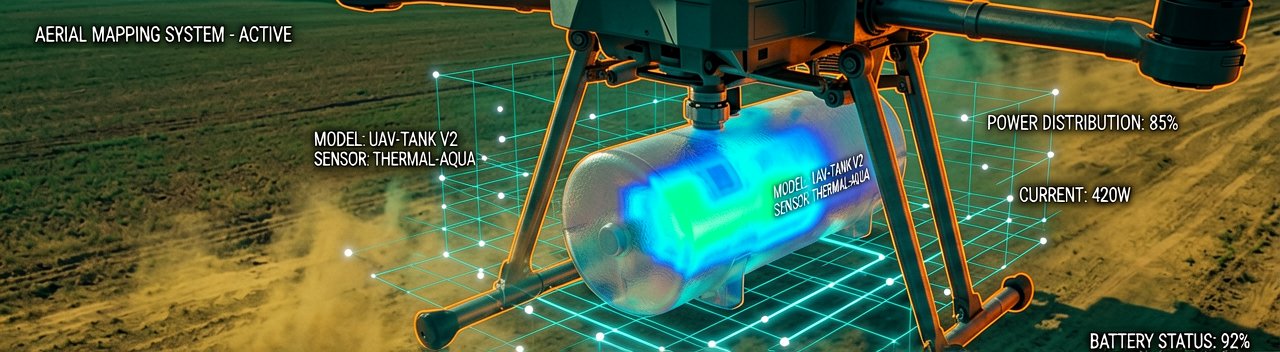
This technical optimization arrives during a period of rapid market acceleration, with the worldwide agricultural drone industry projected to exceed $4 billion as farming operations scale up automated workflows. Driven by widespread labor shortages, escalating chemical input costs, and shifting environmental mandates, the hardware ecosystem is shifting away from generic drone components toward application-specific systems. Advanced thermal management and elevated thrust density enable these modern platforms to carry heavy chemical tanks safely through harsh, dust-filled farming environments.
Strategic Shift Toward System-Level Integration
The agricultural sector requires UAV hardware capable of enduring sustained, high-load flights while maintaining continuous micro-adjustments for precise chemical distribution. Fragmented component architectures often introduce communication lag between the flight controller, the ESC, and the motor, increasing hardware failure risks during intensive field applications. Relying on integrated power management ensures superior system diagnostic tracking, which reduces unexpected operational downtime during peak harvesting and planting seasons.
Global Dynamics and Evolving Commercial Frameworks
Adoption patterns vary across the globe, but the overarching trend points to automated precision farming becoming a standard operational practice. Large-scale autonomous spraying operations are driving the market in North America, while strict pesticide-reduction policies shape equipment demand throughout Europe. Meanwhile, fast-growing agricultural markets like India are leveraging targeted government subsidies to accelerate smallholder drone adoption, demonstrating a clear global mandate for robust, highly efficient propulsion units.
Engineering Resiliency for the Modern Field
What Most Reports Miss: The actual challenge of deploying unmanned aerial vehicles in agriculture is not software capability or GPS accuracy, but the severe physical degradation caused by the field environment itself. Traditional commercial multirotors frequently suffer premature component failure due to the corrosive nature of liquid fertilizers and the pervasive dust kicked up during low-altitude flights. By developing a sealed, application-specific platform, ePropelled shifts the engineering focus from delicate consumer-grade electronics to ruggedized industrial hardware. This shift ensures that internal components remain isolated from the fine particulate matter and chemicals that typically corrode open-air brushless motors.
Furthermore, standard off-the-shelf electronics speed controllers often struggle with the rapid thermal spikes generated during heavy-payload operations, such as carrying massive liquid tanks over uneven topography. According to technical specifications highlighted by Future Farming, the advanced thermal management built into this system prevents overheating during continuous, high-thrust tasks. For large-scale operators, this translates directly to uninterrupted service during tight agronomic windows, where a hardware delay of even forty-eight hours can compromise crop protection schedules.
From a manufacturing standpoint, this architecture provides immediate relief to original equipment manufacturers (OEMs) who have historically wrestled with complex hardware integration. Instead of spending months calibrating disparate motors and power systems, builders can leverage a unified platform to shorten their time-to-market. As noted by the commercial drone experts at ARPAS-UK, streamlining the core propulsion architecture allows drone designers to focus their resources on secondary high-value features, such as multi-spectral sensors and automated obstacle avoidance systems.
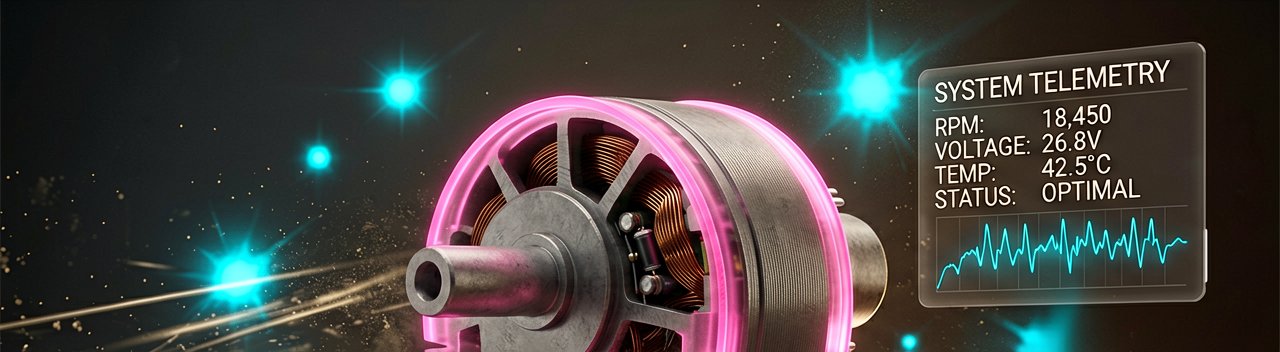
The broader impact of this technological shift extends well beyond basic aerial spraying efficiency, laying the groundwork for more advanced autonomous farm machinery. Because the integrated software offers continuous, real-time diagnostic telemetry, fleet managers can implement predictive maintenance schedules rather than waiting for a mid-flight component failure. Over time, this smart power architecture is expected to transition into ground-based agricultural robotics, standardizing a highly reliable, data-driven framework across the entire automated farming landscape.
Skepticism and Scalability in Autonomous Ag-Tech
Reading Between the Lines: The celebration surrounding integrated propulsion units overlooks a glaring contradiction in the ag-tech supply chain. While consolidating motors, controllers, and software into a closed proprietary loop simplifies initial assembly for drone builders, it fundamentally disrupts the right-to-repair dynamic that defines agricultural communities. Farmers and remote operators have spent decades fixing their own machinery in the field, yet highly integrated, software-locked electronic architectures often mean a single point of failure requires replacing an entire module or waiting for specialized factory service. For a commercial operation managing tight seasonal windows, a proprietary black-box system can introduce the very operational vulnerabilities it claims to eliminate.
Furthermore, the industry's rush toward heavier payloads and larger aircraft faces strict regulatory headwinds that hardware optimization alone cannot solve. Aviation authorities worldwide maintain rigid weight categories and strict licensing requirements for unmanned aircraft exceeding certain thresholds. While technology developers like ePropelled push the limits of power density to support heavier chemical payloads, operators frequently find themselves restricted by bureaucratic backlogs rather than battery or motor constraints. Consequently, the commercial viability of these high-capacity platforms relies heavily on regulatory modernization lagging far behind technological breakthroughs.
Ultimately, the long-term success of integrated power systems will be decided by battery chemistry rather than propulsion efficiency. Even the most sophisticated brushless motors cannot escape the physical weight limitations of current lithium-ion technology, where heavy lifting exponentially depletes flight times. Until energy storage achieves a parallel breakthrough, agricultural drone fleets will remain tethered to frequent battery-swapping routines and field-side generator charging. Manufacturers are delivering impressive incremental gains in thrust and telemetry, but the dream of truly autonomous, long-range farm surveillance and spraying remains limited by the physics of the battery pack.
"We have successfully engineered drones that can survive the harshest chemical downpours and carry massive payloads across vast acreage, only to discover that the ultimate bottleneck isn't the hardware design at all—it's waiting for the aviation regulators to grant a permit, and finding a field-safe charging outlet that doesn't require a diesel generator."
Artūras Malašauskas is an AI Systems Integrator with 20+ years of production-grade web engineering experience. He has designed, shipped, and scaled enterprise Python/PHP systems for logistics, SaaS, and public-sector clients. For the past year, he has focused exclusively on AI integrations: deploying open-source LLMs, building generative media pipelines (image, audio, video), and engineering multi-agent workflows for real production environments. His standard: reproducibility, security, cost-efficient inference—no vaporware. He documents and evaluates emerging AI tooling, separating verified capabilities from marketing noise. Technical editor at: muza-ai.eu, ai-verslas.lt, ai-naujinos.lt Connect on LinkedIn
Comments