Democratizing Industrial Automation: How ABB's PickMaster Lite Lowers the Barrier to Entry for High-Speed Picking
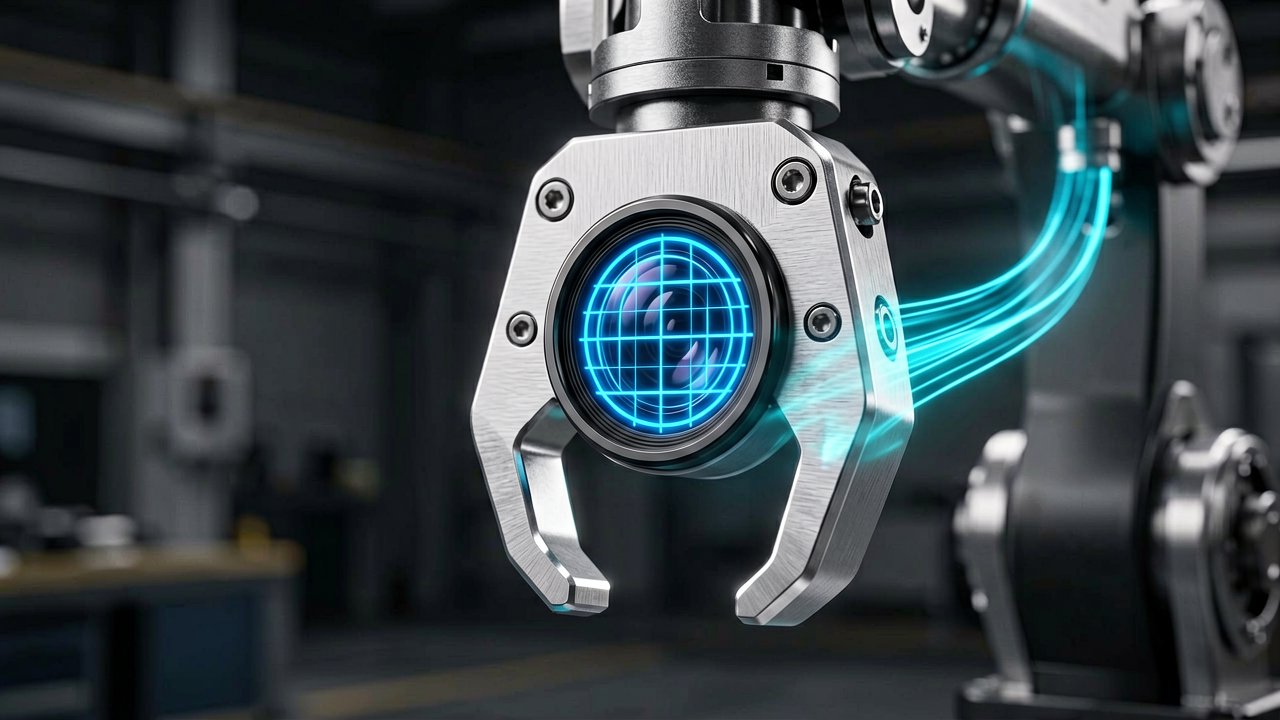
The industrial manufacturing sector faces a distinct dual challenge: an intense shortage of skilled automation programmers and an immediate requirement for rapid, cost-effective factory deployment. Addressing this bottleneck, ABB Robotics launched PickMaster® Lite, a streamlined, vision-guided picking software tailored specifically for packaging original equipment manufacturers (OEMs) and system integrators. By isolating the essential functionalities required for standard high-speed 2D picking and packing tasks, the platform addresses a growing industry shift away from overly complex, hyper-customized setups toward accessible, modular, and fast-to-deploy automation architectures.
By moving away from conventional programmable logic controller (PLC) configurations and expert-level code, PickMaster Lite uses a task-based, no-code interface with pre-configured templates and guided workflows. Data from ABB reveals that this structural modification decreases engineering effort by 30% and shortens system commissioning and deployment time by 25%. Importantly, this reduction in development friction does not come at the expense of high-speed sorting performance; the simplified infrastructure optimizes communication paths to deliver up to 15% higher throughput compared to traditional, unoptimized custom programming implementations.
This software rollout highlights a broader strategic push within modern logistics and industrial engineering to democratize advanced technologies. Industrial leaders are focused on reducing the total cost of ownership (TCO) and mitigating deployment risks for value-oriented, high-volume production lines. Integrating with the Design World validated RobotStudio platform enables systems engineers to construct exact digital twins, simulate spatial floor layouts, and optimize robotic tool paths prior to hardware installation, securing predictable performance in consumer goods, electronics, and pharmaceutical operations.
Addressing the Labor Gap with Intuitive No-Code Frameworks
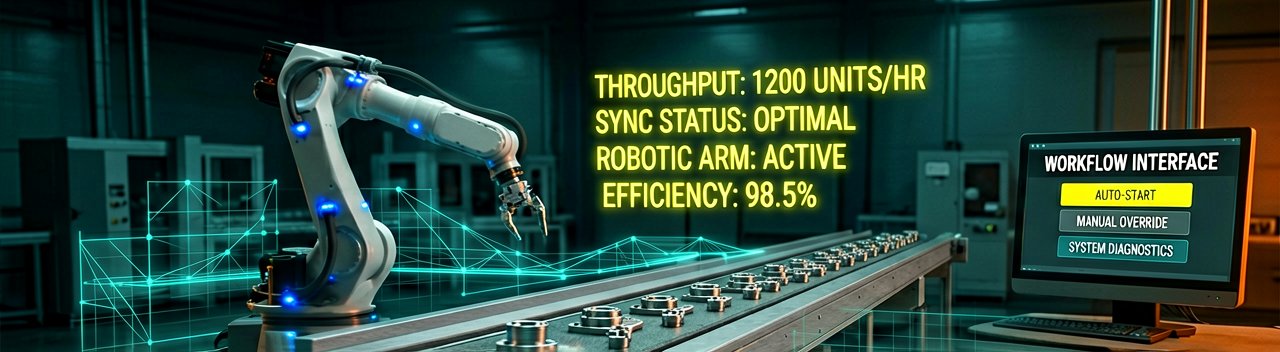
The core innovation behind PickMaster Lite lies in its removal of structural barriers that previously mandated specialized robotics expertise. Systems integrators can manage recipe selections, coordinate conveyor tracking, and adjust camera calibrations directly through preferred control systems via an operational portal built on ABB's Ability Zenon data management framework, as reported by Control Automation. This minimizes operational risk, allowing standard floor operators to maintain, troubleshoot, and adapt picking cells when product packaging dimensions or sorting parameters change on the line.
Scalability Paths Within the Factory Ecosystem
From an architectural standpoint, the software offers an entry-level position within a larger, scalable ecosystem. Rather than locking manufacturers into rigid, basic functionality, PickMaster Lite functions as a foundation that can scale seamlessly into more complex iterations, such as PickMaster Twin or full-scale PickMaster enterprise suites, when production lines require advanced 3D vision or multi-robot collaboration. This scalable trajectory allows cost-sensitive businesses to deploy immediate automation assets today while securing a clear, code-compatible pathway for future factory expansion.
Behind the Scenes of the No-Code Shift
Behind the hardware rollout lies a deep cultural friction within industrial engineering departments. For decades, factory automation relied entirely on proprietary, highly complex languages that required specialized field engineers. This approach gave system integrators a protective moat but created severe bottlenecks for the manufacturers who purchased the systems. When a line required a new product packaging layout, production ground to a halt while companies waited days for an expensive programmer to arrive. By shifting to a task-based, visual paradigm, the software changes the power dynamic on the factory floor, transferring line configuration capabilities directly to everyday operators.
This transition introduces distinct financial considerations for equipment manufacturers. System integrators traditionally relied on substantial engineering hours to generate profit margins on new factory installations. A software suite that slashes commissioning times by a quarter forces these integrators to shift their business models away from custom code creation and toward modular machine building and long-term service contracts. While some traditional firms resist this change, forward-looking suppliers are utilizing the expedited setup times to handle a larger volume of client projects without expanding their engineering teams.
The engineering behind this lightweight framework relies heavily on standardizing camera communications. High-speed picking depends on perfect synchronization between conveyor belts, industrial cameras, and robotic arms, an interaction where even a millisecond of latency can cause a robot to miss a fast-moving item. By focusing exclusively on standard 2D vision profiles, the framework cuts out the heavy computational processing required by complex 3D depth sensors. This lean architecture allows the processing engine to run efficiently on standard industrial PCs, eliminating the need for expensive, specialized vision processing hardware.
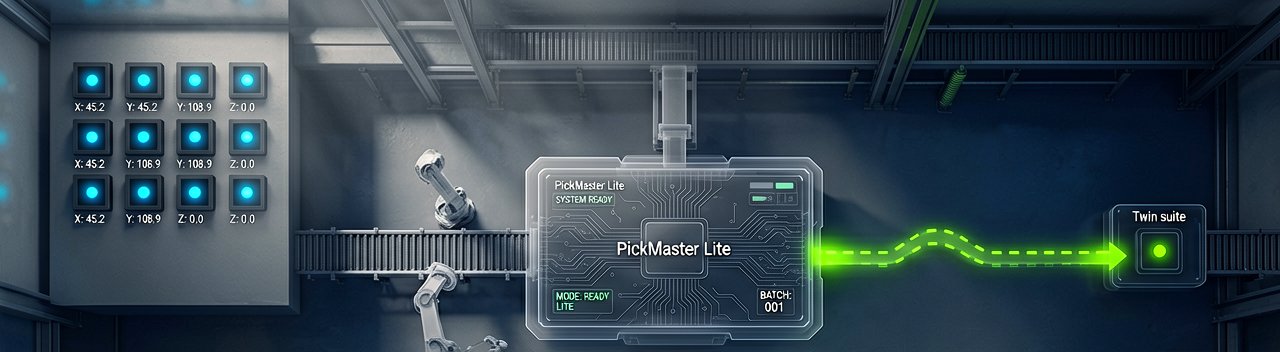
This launch reflects a broader trend among global robotics manufacturers to build comprehensive software ecosystems that mirror modern consumer electronics. Major automation brands are shifting from selling pure industrial machinery to acting as platform providers, using intuitive software to create brand loyalty early in a factory's upgrade cycle. For factory owners, the ability to build and test a cell virtually before purchasing a single piece of steel removes the traditional financial risks of automation, making advanced robotics viable for smaller, regional production facilities.
Reading Between the Lines of the Low-Code Automation Promise
While the marketing narrative surrounding simplified software platforms promises a rapid democratization of industrial automation, experienced systems engineers remain understandably cautious. The claim that no-code interfaces can entirely replace specialized programming expertise overlooks the chaotic reality of the factory floor. Industrial environments are inherently unpredictable, filled with fluctuating ambient lighting that confuses vision sensors, irregular product shapes that complicate mechanical gripping, and physical vibration that disrupts conveyor tracking. Stripping away complex custom programming capabilities may accelerate initial deployments, but it often leaves floor technicians without the deep configuration tools required to troubleshoot edge-case failures when a production line goes down.
This dynamic creates a distinct contradiction between short-term cost savings and long-term operational resilience. By restricting access to core structural code, manufacturers trade tailored flexibility for rapid deployment. A pre-configured template works efficiently as long as production parameters remain strictly within standard boundaries, but it struggles when a factory needs to introduce highly specialized, multi-stage sorting logic or integrate legacy hardware from different generations. Consequently, early operational savings can easily be wiped out if a company has to bring in specialized third-party consultants to bypass the simplified software layer just to implement a non-standard factory modification.
Furthermore, the push toward simplified, lightweight applications highlights an ongoing battle for control within factory ecosystems. Software platforms that link seamlessly with proprietary virtual simulation environments essentially function as sophisticated digital ecosystems designed to lock clients in over the long term. Once a manufacturer builds their entire deployment workflow, virtual testing protocols, and operator training around one vendor's simplified ecosystem, the financial and logistical barriers to switching to a competitor's hardware become almost insurmountable. The true industry shift here is less about simplifying engineering for the end-user, and more about moving the competitive battleground from robotic arm mechanics to software interface dominance.
Ultimately, the successful adoption of these streamlined automation tools will depend on a realistic assessment of factory labor dynamics rather than idealistic software promises. Training an operator to use a visual interface is significantly easier than teaching them advanced robot languages, but it does not instantly transform them into automation engineers. True operational efficiency requires balancing simplified software interfaces with a solid foundational understanding of mechanical systems, ensuring that when the line inevitably stops, the solution involves more than just restarting an application or checking a digital dashboard.
Industrial automation software has finally evolved to the point where setting up a million-dollar robotic picking cell is nearly as straightforward as assembling flat-pack office furniture, though factories may soon discover that dealing with a slightly misaligned conveyor sensor remains just as frustrating as discovering a missing wooden dowel at two o'clock in the morning.
Artūras Malašauskas is an AI Systems Integrator with 20+ years of production-grade web engineering experience. He has designed, shipped, and scaled enterprise Python/PHP systems for logistics, SaaS, and public-sector clients. For the past year, he has focused exclusively on AI integrations: deploying open-source LLMs, building generative media pipelines (image, audio, video), and engineering multi-agent workflows for real production environments. His standard: reproducibility, security, cost-efficient inference—no vaporware. He documents and evaluates emerging AI tooling, separating verified capabilities from marketing noise. Technical editor at: muza-ai.eu, ai-verslas.lt, ai-naujinos.lt Connect on LinkedIn
Comments