Amazon’s AI-Powered Warehouse Fleet Signals a New Era in European Logistics

Amazon has unveiled an advanced, conversation-capable generation of its Proteus autonomous mobile robot at its "Delivering the Future" event in Dartford, England. This deployment anchors a massive €10 billion expansion strategy targeted at expanding and modernizing its European fulfillment network. By transitioning from a dock-isolated model currently used at 25 locations in the United States to a floor-wide, goal-directed intelligence system, Amazon is significantly reshaping the standard for automated e-commerce infrastructure. According to reporting from Reuters, this initiative matches an aggressive acceleration in global infrastructure spending, with Amazon forecasting capital investments to jump over 50 percent to $200 billion to bolster its AI infrastructure and logistics capabilities.
The upgraded Proteus robot introduces a fundamental shift in warehouse human-machine interaction by executing tasks directly from natural language instruction. Instead of relying on hardcoded programmatic controls or isolated safety zones, employees can verbally issue high-level operational goals. As detailed by Amazon, the robot autonomously calculates task priority, path routing, and optimal timing while safely navigating spaces shared with human workers. This multi-system production ecosystem is scheduled to officially arrive in European fulfillment centers in the first half of 2027, operating alongside 25,000 new jobs that the company expects to introduce across its regional network.
Multi-Platform Automation and Strategic Scaling
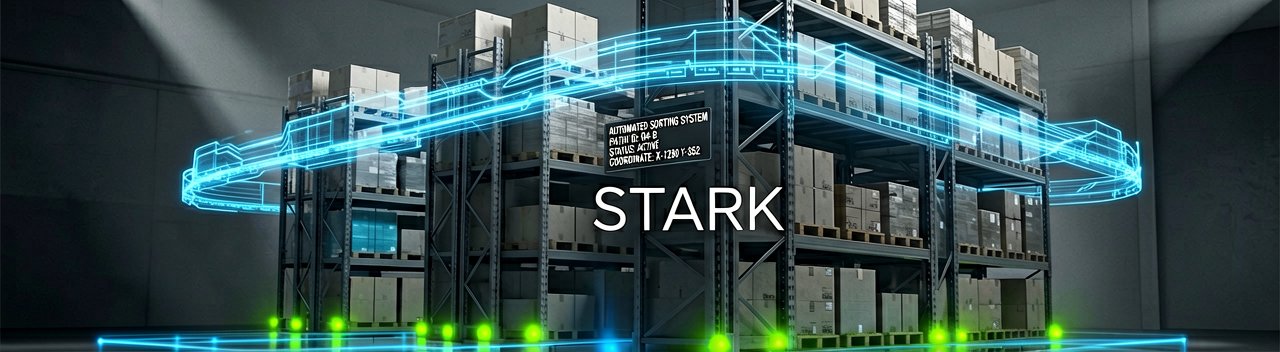
The European operational rollout relies on three separate robotic architectures engineered to function in unison across dense fulfillment environments. Alongside the verbal-responsive Proteus model, Amazon is rolling out STARK, a specialized robotic tote-handling system first piloted in Barcelona, which is scheduled to reach 15 European sites by 2027. Furthermore, the company is deploying Vulcan, its first autonomous picking robot equipped with a physical sense of touch. Per coverage from Euronews via Yahoo News, these technologies target physically demanding or repetitive lifting tasks to accelerate inventory processing speeds and expand immediate product availability for regional markets.
Next-Day Delivery Infrastructure Dominance
This massive robotics investment acts as the infrastructure core supporting an aggressive rapid-delivery push across the continent. Amazon is leveraging these automated sorting and handling speeds to launch more than 25 express-delivery sub-same-day fulfillment sites this year, focusing heavily on major economies including Germany and the United Kingdom. Industry analysis from Retail Systems highlights that this layout allows the rapid-delivery service, Amazon Now, to expand into new metro hubs like Manchester and Birmingham. By closely pairing local inventory proximity with autonomous floor-sorting networks, Amazon is building a highly optimized regional supply chain designed to block out competing European e-commerce providers.

An Engine of Continuous Optimization
Behind the Automation Curve: The sudden acceleration of Amazon’s European robotics footprint reveals a deeper corporate strategy to shift warehouse operations from fixed automation to fully fluid, dynamic environments. Over the past decade, logistics infrastructure relied heavily on structured, highly predictable spaces where humans and machines were kept strictly separated by steel safety cages. The introduction of natural-language-processing models on the warehouse floor breaks down these physical boundaries. This spatial synthesis allows the retailer to reclaim valuable real estate previously lost to dedicated safety zones, creating a denser, more cost-efficient storage footprint across high-cost European real estate markets.
Labor organizations across France, Germany, and the United Kingdom are closely monitoring this technological shift, viewing the corporate narrative of job creation with caution. While Amazon maintains that these advanced tools eliminate strenuous repetitive strain and improve overall workplace safety, labor unions argue that algorithmic pacing increases psychological stress on workers. The capability of a machine to understand and execute verbal instructions means that human operators must continuously adapt to a machine-determined tempo. This evolving dynamic shifts the worker's role from a physical handler to an active monitor, fundamentally altering the collective bargaining landscape regarding warehouse performance metrics and workplace surveillance.
From an engineering standpoint, deploying natural language controls within an industrial environment presents a massive computational challenge. Fulfillment centers are naturally loud, filled with the continuous hum of conveyor belts, sorted packages, and heavy machinery, which creates severe acoustic interference. To achieve a dependable level of operational accuracy, the software must process localized voice commands through advanced noise-filtering arrays. It must also interpret variations in regional accents and languages spoken across European facilities without relying on constant cloud-connectivity, which could cause dangerous processing delays during high-speed floor operations.
This localized autonomy represents a massive leap past early automated guided vehicles that depended on magnetic floor tape or rigid grid matrices to navigate. If an obstacle blocked those legacy systems, entire fulfillment lines would stall until a technician cleared the path manually. By incorporating spatial intelligence, these updated units continuously re-route around unexpected blockages, human workers, or misplaced inventory totes. This steady, uninterrupted flow directly addresses the core operational bottleneck of peak holiday shopping seasons, where even a brief system slowdown can cause widespread delays in regional delivery networks.
Ultimately, this €10 billion infrastructure expansion serves as a defensive wall built to protect Amazon's market share against rising cross-border e-commerce platforms. Competitors utilizing lean, ultra-fast-fashion supply chains have quickly captured market share by relying on direct international shipping networks. By embedding advanced robotics deep into local European fulfillment hubs, Amazon is betting heavily that the sheer speed of local, next-day and same-day delivery will outperform the low pricing models of international air-freight networks. This massive logistical transformation positions the company to maintain its dominance over European consumer habits for the next decade.
The Friction Between Automation and Reality
Reading Between the Lines: The corporate narrative surrounding this massive capital injection positions autonomous robots as the ultimate remedy for labor friction and operational bottlenecks. However, this optimistic framing overlooks a fundamental engineering contradiction at the heart of automated logistics. While voice-activated robots excel in pristine, controlled testing environments, the actual floor of a high-volume fulfillment center is a chaotic ecosystem of torn cardboard, misaligned pallets, and unpredictable human movements. Replacing rigid, predictable conveyor systems with thousands of independent, self-routing agents introduces an exponential number of potential failure points that could easily paralyze a facility during a high-velocity peak season.
Furthermore, Amazon's public commitment to creating 25,000 new European jobs alongside this rollout sits uncomfortably with the explicit financial rationale for spending billions on robotics. Industrial automation is fundamentally designed to reduce reliance on human labor, lower long-term payroll liabilities, and diminish the disruptive power of organized labor. Promising massive employment growth while simultaneously deploying machinery capable of replacing human pickers and sorters suggests a calculated public relations balancing act. This strategy appears designed to soothe skeptical European regulators who are increasingly hostile toward tech giants that dominate local commerce without providing stable, long-term employment.
The transition to voice-commanded floor units also exposes an unspoken vulnerability in data security and workplace privacy. For an autonomous machine to accurately capture and process verbal commands amidst industrial noise, it must maintain an active, highly sensitive acoustic monitoring field. This shift effectively places a network of mobile microphones throughout the workplace, capturing not just operational directives but also the casual conversations, complaints, and organizing efforts of the warehouse workforce. European data protection authorities, particularly under strict GDPR frameworks, will likely scrutinize this pervasive audio data collection, transforming an operational upgrade into a major regulatory battlefield over employee surveillance.
Finally, the massive energy demands of running a decentralized fleet of AI-driven robots directly conflicts with corporate sustainability pledges. Processing natural language algorithms locally on edge-computing hardware inside thousands of mobile units requires a substantial increase in power consumption. When multiplied across dozens of massive fulfillment hubs, this automated network significantly expands the infrastructure's overall carbon footprint. This creates a difficult paradox for a company striving to meet ambitious net-zero emission targets while aggressively filling its facilities with power-hungry silicon intelligence.
It seems the ultimate promise of the frictionless, fully automated warehouse remains just out of reach; for all the sophisticated AI models and natural-language processing deployed on the floor, the entire multi-billion-euro apparatus can still be completely brought to its knees by a single, improperly discarded piece of shrink-wrap.
Artūras Malašauskas is an AI Systems Integrator with 20+ years of production-grade web engineering experience. He has designed, shipped, and scaled enterprise Python/PHP systems for logistics, SaaS, and public-sector clients. For the past year, he has focused exclusively on AI integrations: deploying open-source LLMs, building generative media pipelines (image, audio, video), and engineering multi-agent workflows for real production environments. His standard: reproducibility, security, cost-efficient inference—no vaporware. He documents and evaluates emerging AI tooling, separating verified capabilities from marketing noise. Technical editor at: muza-ai.eu, ai-verslas.lt, ai-naujinos.lt Connect on LinkedIn
Comments