The 700-Watt Threshold: Deconstructing JinkoSolar’s Efficiency Leap
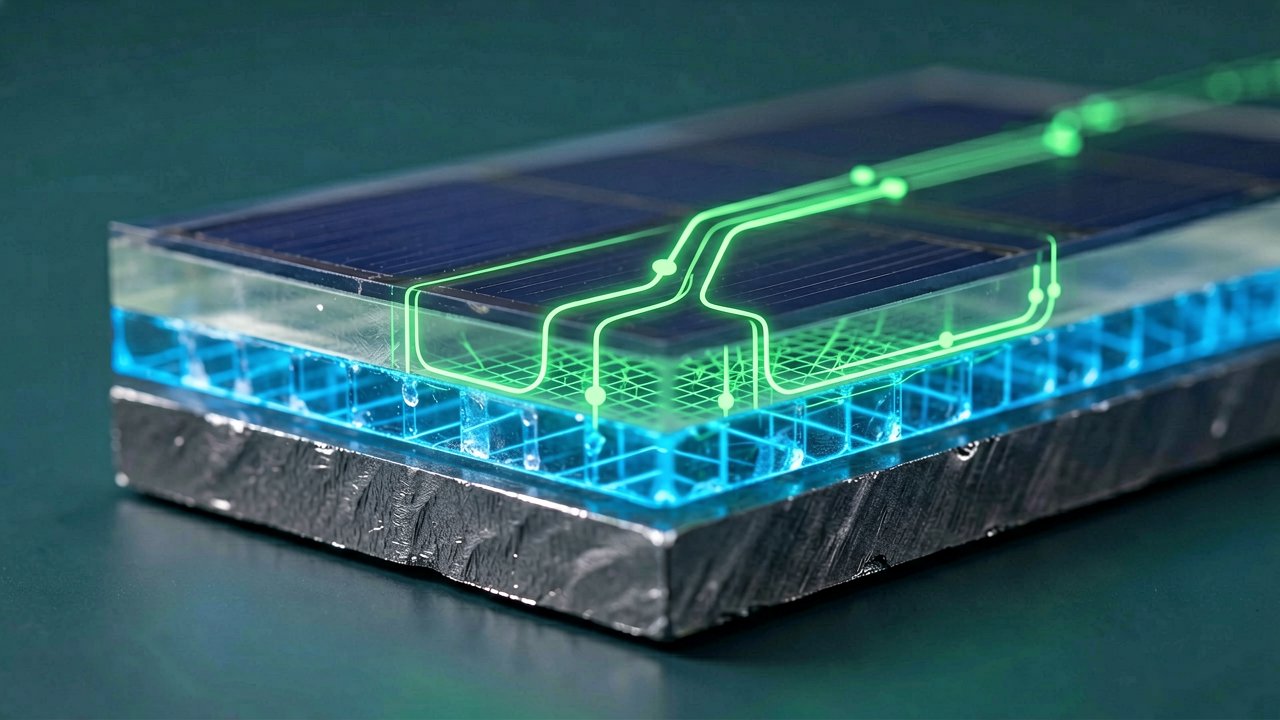
The solar industry has spent years chasing the elusive balance between raw power output and real-world module footprint, often sacrificing one to optimize the other. With the unveiling of the Tiger Neo 5.0 module series at the SNEC 2026 trade show in Shanghai, JinkoSolar has effectively upended that compromise. By squeezing an unprecedented 700 W of power output out of a commercial-scale panel, the manufacturer has established a new benchmark for tunnel oxide passivated contact (TOPCon) architectures. What is particularly notable is not just the raw wattage, but the staggering 25.91% module efficiency rating that accompanies it, proving that commercial single-junction silicon technology still has room to run before hitting its theoretical limits.
This leap forward matters because it addresses a fundamental pain point for both utility-scale developers and premium commercial-and-industrial (C&I) installers. Historically, pushing a module toward the 700 W territory required bloating the physical dimensions to impractical proportions, which inevitably bloated racking costs and labor time. Instead, the engineering behind this new series bridges the gap by upgrading the core parameters of its predecessor, the 670 W Tiger Neo 3.0, as detailed by coverage from pv magazine. By achieving this power spike within a highly comparable form factor, the system maximizes spatial density, allowing developers to generate more power per square meter without escalating structural balance-of-system costs.
The Architecture Behind the Efficiency
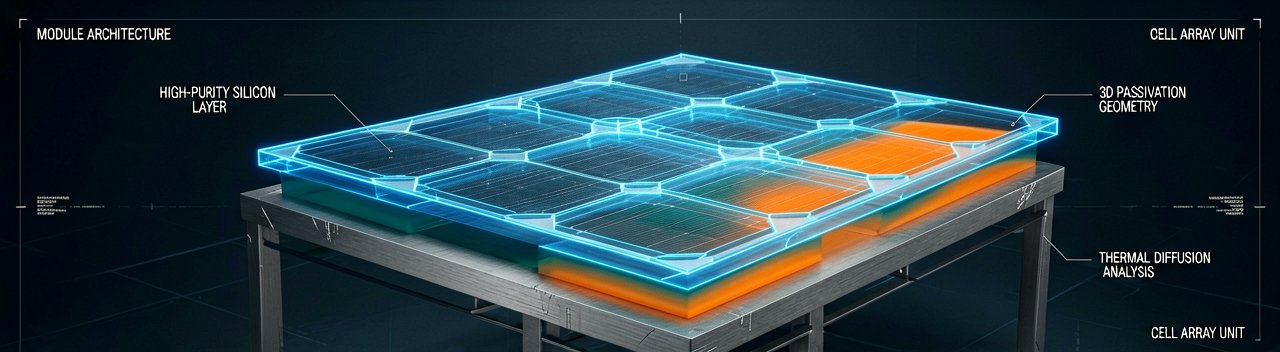
To understand how JinkoSolar pushed its module efficiency past the 25.91% mark, you have to look closely at the physical layers of the cell itself. The foundation relies on a high-purity homogeneous silicon substrate that reduces internal impurities, which in turn minimizes the recombination of charge carriers. On top of this substrate, JinkoSolar has deployed a broad-spectrum light-trapping structure. This geometry acts like an optical trap, capturing a wider range of incoming solar wavelengths and preventing reflective losses, which is critical during early morning and late afternoon hours when the angle of the sun is less than ideal.
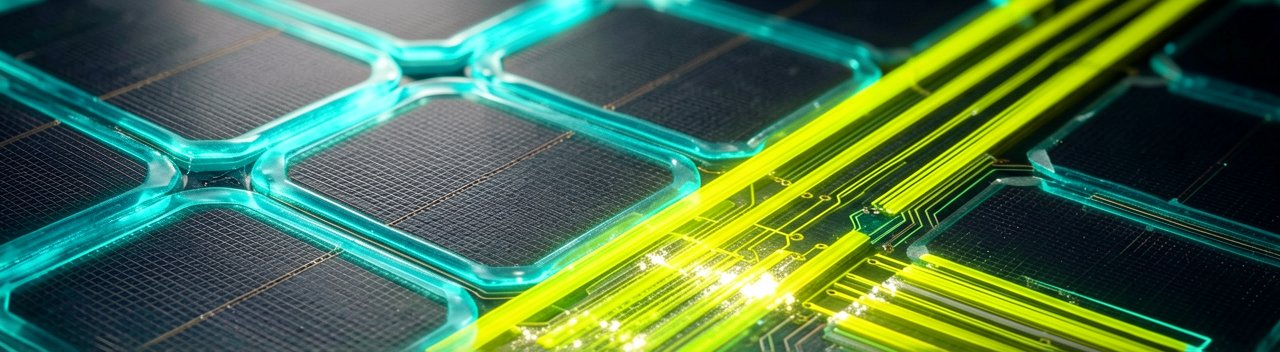
Electrical losses inside the cell are further mitigated through a comprehensive combination of full-area passivation and advanced metallization. By refining the chemical passivation layers across the entire rear surface, the design dramatically reduces localized structural defects where electrical current typically dissipates. Furthermore, the cell array utilizes a gap-free encapsulation technology. Eliminating the inactive space between individual cells not only boosts the active power-generation area of the faceplate but also optimizes thermal management across the panel, protecting the system from the localized hot spots that often plague high-wattage hardware.
Performance Metrics and Commercial Viability
In terms of absolute performance, the 30 W bump over the previous generation translates to measurable financial advantages in the field. According to initial product announcements tracked by PV Tech, the refined architecture offers up to a 3% increase in total energy yield over typical market alternatives. This metric is further bolstered by a low temperature coefficient and strong low-light performance characteristics carried over and improved from earlier iterations, ensuring that the module maintains stable output even during peak summer heat or under heavy overcast skies.
While the hardware is primarily targeted at driving down the levelized cost of energy (LCOE) for massive, utility-scale deployments, the high-density footprint makes it a compelling option for residential and commercial roofs with strict spatial constraints. By squeezing more generation capability into a smaller physical area, installers can hit aggressive power targets without needing to reinforce existing roof structures or expand mounting layouts. JinkoSolar is betting that this combination of top-tier efficiency and practical packaging will secure its position at the vanguard of the N-type transition, setting a new cadence for mass-production solar technology moving forward.
Behind the Scenes: Elevating a commercial solar module to a 700-watt ceiling requires more than just scaling up surface area; it demands that engineers systematically eliminate micro-scale electrical resistance and optical shading across the entire structural layout. At the microscopic layer of JinkoSolar's updated TOPCon cell layout, the core focus centers on the quantum mechanical optimization of the tunnel oxide passivation layer. Systems engineers achieved this by engineering an ultra-thin silicon oxide interface layer coupled with a highly doped polycrystalline silicon film. This specific dual-layer architecture creates a precise asymmetric band alignment that allows major carriers—the electrons—to tunnel through freely while completely blocking minority carriers. By suppressing this carrier recombination at the contacts, the open-circuit voltage is driven closer to the absolute thermodynamic limit of single-junction silicon.
To support this heightened internal electronic activity, the metallization grid on the front of the cell underwent a significant architectural redesign. Instead of relying on traditional thick silver busbars that physically shade the underlying silicon, the engineering team deployed a super-multi-busbar design utilizing microscopic, rounded wire ribbons. This shift reduces localized finger resistance and shortens the physical distance that an excited electron must travel to reach a collection point. Because the wires are rounded rather than flat, incoming light that strikes the grid lines is reflected back down onto the active silicon surface at an angle instead of being bounced directly away from the panel. This optical recycling effect maximizes photon absorption and keeps the structural shadowing factor to an absolute minimum.
Advanced Thermal and Mechanical Packaging
Managing the thermal dynamics of a 700-watt panel introduces unique engineering hurdles, as increased power generation naturally leads to higher internal operating temperatures if left unchecked. JinkoSolar addresses this by altering the cell-to-cell connection matrix, utilizing a specialized zero-gap tiling ribbon technology that overlaps the cells by fractions of a millimeter. This configuration eliminates the traditional dead space between cell rows, which prevents localized thermal gradients from developing across the module face. By maintaining an even thermal distribution, the module lowers its nominal module operating temperature and mitigates the risk of localized hotspots that can degrade the surrounding ethylene-vinyl acetate encapsulation material over a multi-decade operational lifespan.
From a deployment perspective, this high-density layout modifies the structural loading calculations for field engineers optimizing balance-of-system mechanics. The integration of high-tensile, lightweight alloy frames allows the physical panel dimensions to remain manageable for standard dual-axis trackers and fixed-tilt racking systems without requiring structural reinforcement. This careful mechanical balancing ensures that the module can withstand severe dynamic wind loads and heavy snow accumulation. Ultimately, the system delivers a major jump in spatial power density while maintaining complete backwards compatibility with existing industrial utility inverters and high-current electrical tracking architectures.
Reading Between the Lines: While a 25.91% efficiency rating makes for an impressive headline, the broader solar industry must look past the laboratory triumphs to evaluate how these metrics hold up under sustained deployment stress. A historical friction point with high-efficiency TOPCon cells is their heightened vulnerability to moisture-induced degradation when exposed to harsh outdoor environments. The very thin tunnel oxide layers that enable such high power outputs require immaculate, hermetic sealing. If the zero-gap encapsulation technology experiences even minor micro-delamination over a decade of thermal cycling, moisture ingress can accelerate localized corrosion along the silver-paste contacts, rapidly eroding those hard-won efficiency gains.
There is also an economic contradiction inherent in pushing single-junction silicon to these extreme limits. As manufacturers squeeze the final fractions of a percentage point out of N-type architectures, the marginal cost of production engineering inevitably climbs. Advanced lithography, ultra-precise passivation, and specialized metallization pastes all add complexity to the manufacturing line. If the price premium per watt for a 700 W module outpaces the balance-of-system cost savings it provides in the field, utility-scale developers will simply stick to cheaper, slightly less efficient 650 W alternatives that offer a more predictable return on investment.
Supply Chains and the Next Generation Horizon
Furthermore, this milestone arrives at a time when the global solar supply chain is already grappling with systemic overcapacity and compressed profit margins. Introducing a premium, high-spec module tier forces a difficult choice on project engineers who must recalculate tracker layouts, inverter compatibility ratios, and string lengths for a product that may take time to reach true high-volume manufacturing liquidity. If the broader ecosystem of racking and electrical components cannot instantly adapt to handle the elevated current outputs of these dense panel layouts without adding protective switchgear, the theoretical balance-of-system savings could be eaten away by specialized hardware requirements.
Finally, JinkoSolar’s push to maximize standard silicon highlights the looming shadow of silicon-perovskite tandem technologies. Forcing TOPCon technology toward its absolute theoretical ceiling of roughly 28% shows incredible engineering discipline, but it also signals that single-junction hardware is nearing a dead end. While tandem cells promise efficiencies well north of 30%, their commercial viability remains hampered by severe durability issues. By pushing standard silicon to 700 W, the industry is effectively trying to buy itself another half-decade of breathing room, squeezing every last drop of performance out of a proven material before being forced to take the volatile leap into entirely new semiconductor chemistries.
It turns out that chasing the perfect solar panel is a lot like tuning a high-performance sports car: you spend millions of dollars and countless engineering hours just to squeeze out a few extra horsepower, only to realize that the most critical variable is still whether the sky decides to cooperate on a Tuesday afternoon.
Artūras Malašauskas is an AI Systems Integrator with 20+ years of production-grade web engineering experience. He has designed, shipped, and scaled enterprise Python/PHP systems for logistics, SaaS, and public-sector clients. For the past year, he has focused exclusively on AI integrations: deploying open-source LLMs, building generative media pipelines (image, audio, video), and engineering multi-agent workflows for real production environments. His standard: reproducibility, security, cost-efficient inference—no vaporware. He documents and evaluates emerging AI tooling, separating verified capabilities from marketing noise. Technical editor at: muza-ai.eu, ai-verslas.lt, ai-naujinos.lt Connect on LinkedIn
Comments