CISA's AI Governance Rollout Signals New Era in Cybersecurity Compliance

The federal oversight of artificial intelligence has entered an intensive operational phase following President Trump’s signing of the "Promoting Advanced Artificial Intelligence Innovation and Security" executive order on June 2, 2026. Moving with notable velocity, acting Cybersecurity and Infrastructure Security Agency (CISA) Director Nick Andersen announced that the agency will immediately begin rolling out platform access and binding operational directives to enforce the new federal mandate, as reported by Cybersecurity Dive. Rather than implementing a rigid, top-down regulatory regime, the administration is leveraging cybersecurity, federal procurement, and critical infrastructure defense as its primary levers for AI governance.
This rapid deployment shifts AI security from a theoretical risk-management exercise to an immediate compliance priority for federal partners and enterprise vendors. CISA's upcoming Binding Operational Directives will compel civilian federal agencies to harden their digital networks, manage software vulnerabilities, and rapidly integrate AI-enabled defensive tools. Simultaneously, the executive order structures a voluntary pre-release review framework, developed alongside the National Security Agency (NSA), that invites frontier AI developers to submit highly capable models for national security benchmarking up to 30 days before public release, according to analysis by Ropes & Gray.
For the broader technology market, this policy rollout solidifies a public-private defense paradigm designed to counter sophisticated AI-driven cyber threats without stifling domestic innovation. While the administration explicitly disclaims mandatory licensing requirements to preserve American competitiveness, the commercial implications are clear. Enterprises, critical infrastructure operators, and federal contractors must align their internal AI governance frameworks with these emerging federal benchmarks or risk exclusion from lucrative public sector deployment channels and trusted partnerships.
The 30-Day Sprint: CISA Directives and the Cyber Clearinghouse
The executive order establishes aggressive 30-day timelines that force swift agency execution. Under Section 2 of the directive, CISA must deliver compulsory requirements safeguarding civilian federal networks while expanding access to AI-powered defensive capabilities for state, local, and critical infrastructure sectors. Concurrently, a Treasury-led "AI cybersecurity clearinghouse"—operating in consultation with CISA and the NSA—will coordinate cross-sector vulnerability scanning and patch prioritization, creating a unified mechanism to address tech debt and reduce attack surfaces as detailed by Latham & Watkins.
Frontier Model Benchmarking and the Illusion of Choice
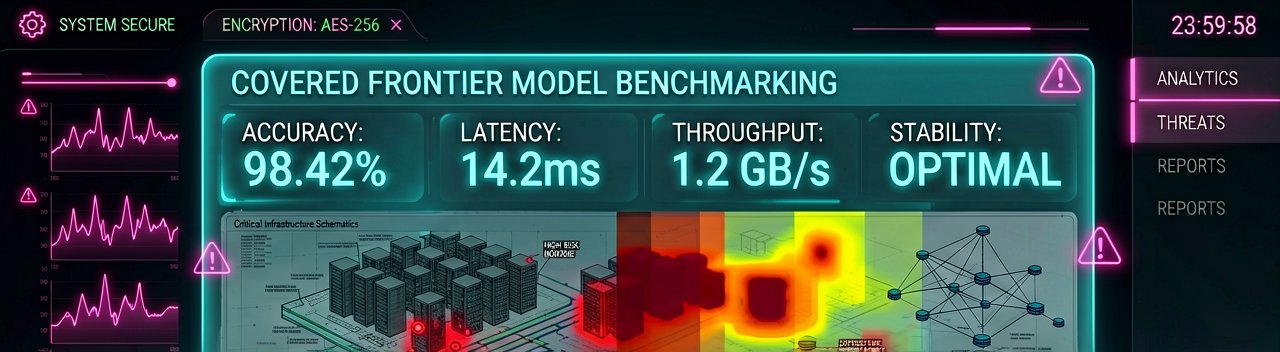
A critical strategic shift centers on the classified benchmarking process designed to identify "covered frontier models." While participation in the pre-release review framework remains technically voluntary, tech industry analysts observe that compliance will likely dictate future market standards. AI developers who bypass federal evaluation may face heightened scrutiny, potential liability under prioritized Department of Justice enforcement of existing anti-fraud statutes, and a distinct disadvantage in securing federal or critical infrastructure contracts.
Market Impact on Compliance and Enterprise Governance
Chief Information Security Officers (CISOs) and compliance leaders must look past the "voluntary" phrasing of the executive order to evaluate its practical downstream effects. Federal grant preferences, workforce talent pipelines via the expanded U.S. Tech Force initiative, and regional infrastructure playbooks will all filter through CISA's newly established compliance architecture. Organizations that proactively adopt these rigorous vulnerability discovery and validation standards will achieve a distinct market advantage in an increasingly compliance-driven technology ecosystem.
An Deep-Dive Assessment of Federal AI Oversight
Beyond the Compliance Checklist: The strategic pivot orchestrated by CISA marks a profound shift from the compliance-heavy mandates of previous regulatory attempts toward an infrastructure-first defense model. Historically, federal agencies approached emerging technologies by building expansive bureaucratic frameworks that often stifled deployment timelines without meaningfully reducing systemic risk. By anchoring this rollout in actionable, binding operational directives rather than open-ended policy guidelines, the administration is treating artificial intelligence not as a separate category of technological risk, but as an immediate extension of the nation's critical software supply chain. This tactical adjustment forces federal information security officers to move beyond superficial risk assessments and instead integrate automated, continuous vulnerability management directly into their active runtime environments.
This operational velocity introduces significant friction across the federal ecosystem, particularly for legacy agencies grappling with compounding technical debt. Implementing real-time, AI-driven vulnerability scanning requires a level of network visibility and standardized data logging that many civilian departments still struggle to maintain. Inside the beltway, cybersecurity leads express quiet concern that the aggressive timelines could trigger a compliance bottleneck, where the push to deploy automated defense tools outpaces the agency personnel's capacity to validate and monitor these systems for adversarial exploitation. The challenge is no longer just defining what a secure AI system looks like, but ensuring that the underlying infrastructure can support automated defensive measures without introducing fresh operational vulnerabilities.
For the venture-backed defense tech sector and traditional federal contractors, this defense-centric paradigm fundamentally alters the economics of software procurement. Enterprise vendors are quickly realizing that the voluntary pre-release benchmarking framework serves as a powerful market filter. While Silicon Valley has historically resisted mandatory federal oversight, developers of highly capable frontier models face immense pressure to participate in the joint CISA and NSA review pipelines. Securing a clean bill of health through these classified national security benchmarks is rapidly becoming the ultimate validation metric, functioning as an unofficial prerequisite for closing high-value contracts within critical infrastructure sectors like energy, defense, and telecommunications.
This evolving framework also reshapes the talent landscape, positioning the federal government as a direct competitor for elite machine learning and cybersecurity engineering talent. Through the expansion of dedicated technical workforce initiatives, the public sector is attempting to bridge the deep expertise gap that has historically left regulators at a disadvantage when evaluating complex, proprietary architectures. The success of this governance model ultimately hinges on this human element. Without a highly technical internal workforce capable of independently validating frontier model capabilities and identifying sophisticated evasion techniques, the federal oversight apparatus risks becoming overly dependent on the self-reporting and compliance assertions of the very tech giants it is tasked with monitoring.
The Friction Between Innovation and Enforcement
Reading Between the Lines: The administration’s dual commitment to unfettered technological dominance and rigorous national security oversight creates a fundamental policy contradiction that will test the boundaries of executive authority. On one hand, the framework explicitly rejects European-style mandatory licensing and top-down regulatory structures in order to preserve American competitive agility. On the other hand, it mandates aggressive, centralized cybersecurity vetting through CISA and the NSA that carries a heavy, coercive undertone. Proclaiming an environment of regulatory freedom while simultaneously engineering a "voluntary" pre-release review framework creates an operational paradox. In practice, the line between an invitation to cooperate and an ultimatum to comply vanishes when a tech firm's entire public-sector revenue pipeline hangs in the balance.
Furthermore, relying on existing anti-fraud statutes and targeted Department of Justice enforcement as the primary teeth for this framework exposes a glaring regulatory gap. Substituting reactive litigation for a specialized, proactive regulatory body means federal oversight will inevitably lag behind the rapid lifecycle of frontier AI development. Prosecutors assessing whether a model developer misrepresented its safety or security capabilities during the 30-day pre-release window must rely on highly complex, rapidly evolving technical benchmarks that traditional courtrooms are ill-equipped to evaluate. This approach risks transforming AI governance into a high-stakes game of legal cat-and-mouse, where the wealthiest developers can afford to litigate definitions while pushing the boundaries of model deployment.
This decentralized compliance strategy also creates a delicate dynamic between CISA and the commercial critical infrastructure operators it is tasked with protecting. Private entities controlling the nation's energy grids, financial networks, and telecommunications systems are being asked to absorb these rapid mandates without the cushion of explicit federal indemnification. If an enterprise integrates an automated, CISA-approved defensive AI tool that subsequently experiences a catastrophic failure or suffers from adversarial prompt injection, the liability burden remains dangerously ambiguous. Without a clear legislative shield or a formal safe-harbor framework, critical infrastructure providers may slow-walk actual deployment, preferring the predictable fines of compliance delays over the unquantifiable legal liabilities of an unproven automated defense network.
Ultimately, the rapid operationalization of this executive order exposes the limits of governing by decree in a highly fluid technical landscape. By bypassing Congress to establish these aggressive security architectures, the administration builds a compliance tower on a fragile foundation of executive durability. Future political transitions or inevitable judicial challenges to the expanded scope of CISA's binding directives could swiftly unravel the entire apparatus. Enterprise risk officers, well aware of this political volatility, are left trying to build long-term corporate governance strategies around federal frameworks that might not outlast the next election cycle, casting doubt on the permanent efficacy of this cybersecurity era.
"We are witnessing a truly modern bureaucratic marvel: a system designed to move at the speed of silicon, powered by voluntary compliance that no sane enterprise would dare refuse, and enforced by litigation that will likely conclude long after the models in question have been deprecated."
Artūras Malašauskas is an AI Systems Integrator with 20+ years of production-grade web engineering experience. He has designed, shipped, and scaled enterprise Python/PHP systems for logistics, SaaS, and public-sector clients. For the past year, he has focused exclusively on AI integrations: deploying open-source LLMs, building generative media pipelines (image, audio, video), and engineering multi-agent workflows for real production environments. His standard: reproducibility, security, cost-efficient inference—no vaporware. He documents and evaluates emerging AI tooling, separating verified capabilities from marketing noise. Technical editor at: muza-ai.eu, ai-verslas.lt, ai-naujinos.lt Connect on LinkedIn
Comments