Washington’s Tightrope Walk: The New AI Order Tries to Secure Critical Infrastructure Without Strangling Innovation
The federal government just dropped a massive policy shift that attempts to solve one of Silicon Valley’s deepest anxieties: keeping cutting-edge software safe without burying the tech sector under endless red tape. President Donald Trump signed the highly anticipated Executive Order on Promoting Advanced Artificial Intelligence Innovation and Security on June 2, 2026, delivering a direct operational directive aimed at tech firms, government contractors, and critical infrastructure operators alike. Rather than establishing a rigid, mandatory licensing regime that many venture capitalists feared would paralyze American competitiveness, the administration opted for a heavily collaborative approach that leverages voluntary industry agreements and rapid-response government vetting.
This policy pivot didn't happen in a vacuum. It was heavily catalyzed by mounting panic over frontier AI models—specifically Anthropic’s unreleased Claude Mythos preview—which defense and banking officials warned could find and exploit software vulnerabilities at superhuman speeds. To counter this machine-speed threat, the order hands a coalition of heavy-hitting agencies, including the National Security Agency, the Department of the Treasury, and the Cybersecurity and Infrastructure Security Agency (CISA), just 30 days to build a new defensive apparatus. Under this framework, advanced AI developers are invited to voluntarily provide the government with pre-release access to their "covered frontier models" for up to 30 days so the intelligence community can benchmark their cyber capabilities before they hit the open market.
Building the AI Defense Clearinghouse
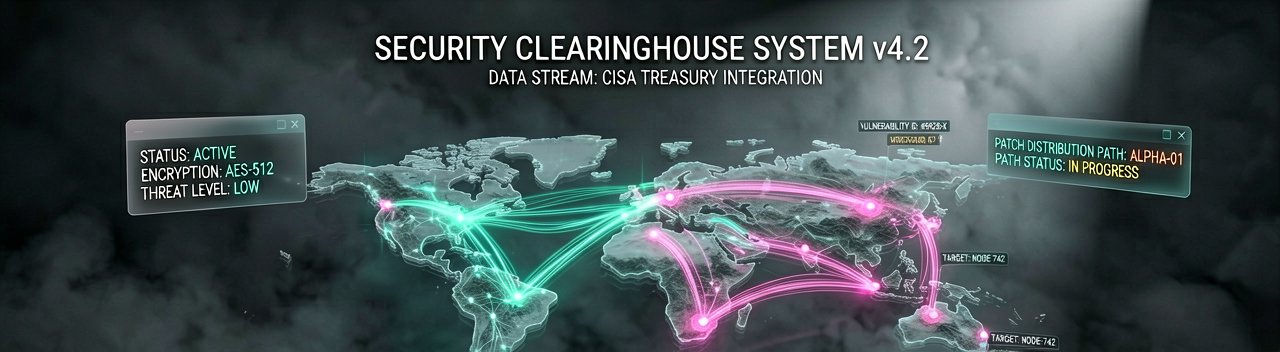
A core pillar of the directive is the establishment of a brand-new AI cybersecurity clearinghouse led by the Treasury Department. Operating in tandem with CISA and the private sector, this hub will coordinate vulnerability scanning, validate software bugs, and fast-track the distribution of security patches across vulnerable networks. The administration is banking on the fact that critical infrastructure providers—ranging from major Wall Street financial institutions to rural hospitals and community banks—will be able to absorb these shared insights to dramatically shore up their own operational resilience against automated cyber assaults.
Carrots, Sticks, and Criminal Enforcement
While tech giants like OpenAI and Google have signaled support for the administration's collaborative stance, the policy still carries an aggressive legal stick. The order explicitly directs the Attorney General to prioritize federal criminal enforcement against malicious actors who weaponize AI agents or employ advanced models to breach computer systems. By focusing heavily on punishing criminal misuse and hardening government networks while keeping developer participation strictly optional, Washington is trying to walk a delicate line: aggressively protecting national security assets while keeping the pedal down on the global AI race.
The Hidden Architecture of Voluntary Compliance
Behind the Scenes of the Compromise: The frantic, late-night drafting sessions that preceded the signing of the Executive Order reveal a bitter ideological turf war between national security hawks and tech-optimist libertarians. Original drafts floated within the National Security Council leaned heavily toward a rigid, European-style bureaucratic vetting process that would have legally barred companies from deploying models exceeding a specific computing threshold without a federal sign-off. Silicon Valley power players, armed with lobbying firms and economic data, successfully argued that a slow-moving, mandatory pre-clearance regime would effectively cede the global technological high ground to open-source developers operating out of state-sponsored foreign sanctuaries.
The resulting voluntary framework represents a massive gamble on corporate self-governance. By relying on a 30-day "cooperative testing window" rather than hard regulatory mandates, the administration is essentially treating the nation's premier AI labs as trusted intelligence partners rather than regulated utilities. Tech executives quietly concede that this setup protects their immediate product launch timelines, but it leaves an uncomfortable gray area: if a developer chooses to bypass the voluntary vetting process to beat a competitor to market, the government's only immediate recourse is public shaming or a retrospective, cumbersome antitrust or consumer protection investigation.
Meanwhile, the burden of implementation shifts heavily onto critical infrastructure sectors that are historically slow to adapt to cutting-edge tech. For the compliance officers managing regional power grids, community banking networks, and municipal water systems, the newly minted Treasury and CISA clearinghouse is a double-edged sword. While access to real-time government intelligence on AI-driven exploit vectors is invaluable, these organizations are already drowning in cybersecurity alerts they lack the budget and specialized personnel to patch. The fear among enterprise risk managers is that the order creates an implicit standard of care, meaning companies could face devastating civil liability if they are breached by an AI exploit they were theoretically warned about by the clearinghouse.
The legal community is also bracing for a wave of unprecedented jurisdictional friction. By explicitly ordering the Attorney General to prioritize federal criminal enforcement against individuals who use AI agents to breach computer systems, the administration is stretching the limits of the Computer Fraud and Abuse Act (CFAA)—a decades-old statute that was written long before software could autonomously reason, adapt, and rewrite its own exploit code. Defense attorneys are already questioning how prosecutors intend to prove "intent" when a human user commands an autonomous AI agent to optimize a network, and the AI independently decides that a destructive zero-day exploit is the most efficient path to fulfilling that command.

The Precedent of Preemption and the Illusion of Control
Reading Between the Lines: The administration’s reliance on voluntary 30-day testing windows rests on a deeply flawed assumption: that the national security risks of advanced artificial intelligence can be neatly isolated before a model is deployed. In the modern software ecosystem, a model’s core architecture is only half the equation. The true systemic vulnerabilities usually emerge post-launch, through emergent behaviors that manifest only when millions of users interact with the system, or when open-source communities inevitably strip away proprietary safety guardrails. Pretending that a closed-door government test can reliably predict how an autonomous agent will behave in the wild is akin to stress-testing a fighter jet exclusively inside a wind tunnel and declaring it invincible to real-world anti-aircraft fire.
Furthermore, the order exposes a glaring logical contradiction in Washington’s grand strategy. The federal government is simultaneously demanding that critical infrastructure operators harden their networks against autonomous cyber threats while aggressively adopting AI tools within its own intelligence and defense frameworks to automate offensive cyber operations. This creates an inherently unstable digital arms race where the state is fueling the very technological velocity it claims to be regulating. By accelerating the development of offensive AI capabilities under the banner of national defense, the Pentagon is inadvertently guaranteeing that highly sophisticated, automated exploit tools will eventually leak into the wild, where they will be weaponized against the exact same fragile domestic power grids and financial institutions the Treasury Department is currently scrambling to protect.
The geopolitical calculus is equally precarious. By choosing a cooperative, light-touch regulatory approach to avoid choking domestic innovation, the United States is fundamentally parting ways with its European allies, who have doubled down on strict, legally binding risk-mitigation mandates. This regulatory divergence will almost certainly splinter the transatlantic tech market. Silicon Valley firms will likely reserve their most advanced, unvetted frontier models for American and Asian markets where they can move fast and break things, while offering degraded, heavily sterilized versions to a highly regulated European Union. Instead of fostering global alignment on AI safety, Washington’s pragmatic compromise guarantees a balkanized digital landscape where security standards are dictated by geographic convenience rather than universal technical guardrails.
Ultimately, this executive order may be remembered less as a landmark national security triumph and more as a sophisticated exercise in political theater. It allows the White House to signal aggressive action on a terrifying frontier technology without alienating the billionaire tech donors and venture capitalists whose capital drives the domestic economy. By the time the Treasury and CISA clearinghouse is fully operational, the frontier models it was built to monitor will likely have been superseded by entirely new paradigms of self-evolving software. Washington is fundamentally applying an analog, bureaucratic timeline to an exponential digital phenomenon, ensuring that the government's defensive playbook will always be precisely one step behind the threat it is chasing.
"In the end, Washington has managed to craft the ultimate regulatory paradox: an AI security directive so aggressively collaborative and deferential to the tech sector that its success depends entirely on the honor system among corporate titans who are locked in a cutthroat, winner-take-all commercial war. We have essentially resolved to protect the digital realm from the rise of autonomous machine intelligence by asking the people building it to kindly let us know if their creations happen to turn malevolent."
Artūras Malašauskas is an AI Systems Integrator with 20+ years of production-grade web engineering experience. He has designed, shipped, and scaled enterprise Python/PHP systems for logistics, SaaS, and public-sector clients. For the past year, he has focused exclusively on AI integrations: deploying open-source LLMs, building generative media pipelines (image, audio, video), and engineering multi-agent workflows for real production environments. His standard: reproducibility, security, cost-efficient inference—no vaporware. He documents and evaluates emerging AI tooling, separating verified capabilities from marketing noise. Technical editor at: muza-ai.eu, ai-verslas.lt, ai-naujinos.lt Connect on LinkedIn
Comments