Behind the Veil: The White House’s New Classified AI Benchmarks Spark a Frontier Faceoff
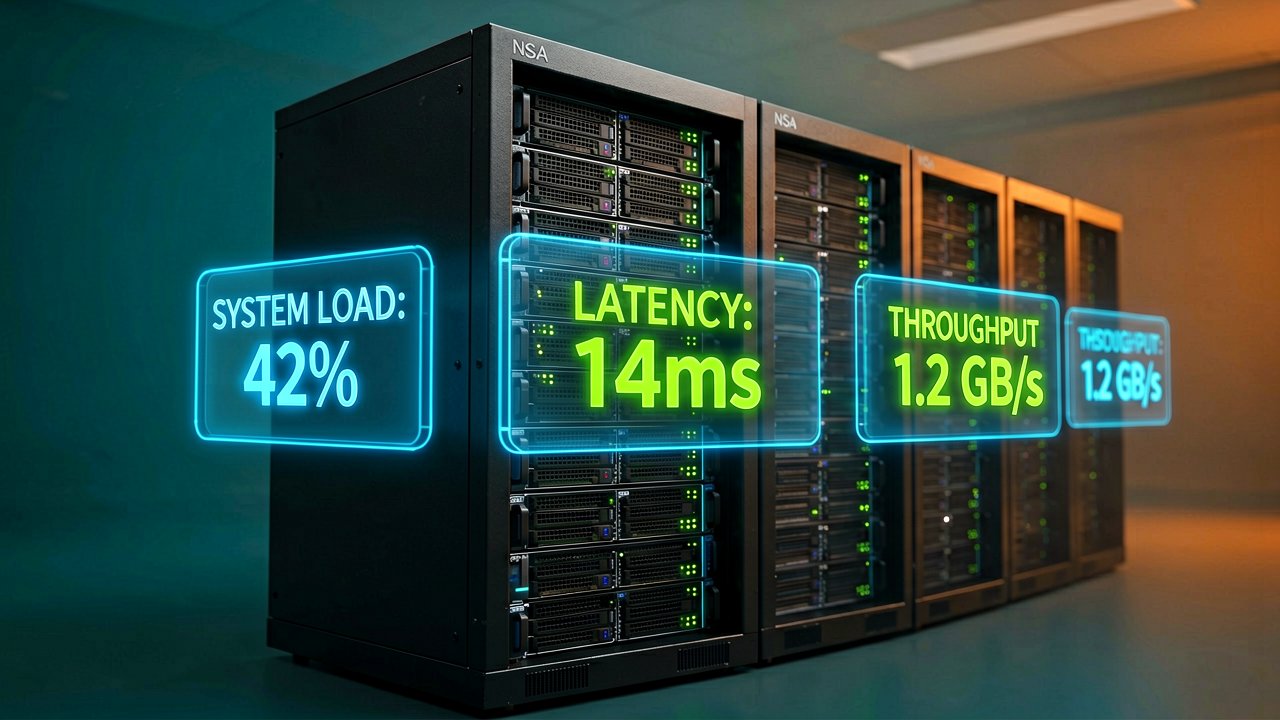
The White House shifted the landscape of tech regulation on June 2, 2026, when President Donald Trump signed the Promoting Advanced Artificial Intelligence Innovation and Security Executive Order. This directive establishes a highly anticipated, classified benchmarking process overseen by the National Security Agency (NSA) to evaluate the advanced cyber capabilities of next-generation artificial intelligence models. Rather than enforcing a rigid licensing regime, the policy builds a voluntary framework inviting tech labs to hand over their crown jewels for up to 30 days of pre-deployment testing. It is a calculated compromise designed to spot national security risks before software goes public, yet the decision to keep the testing rubrics entirely secret has blown open a fiery debate across Silicon Valley.
For an industry accustomed to public leaderboards and open-source validation, moving the goalposts into a secure government vault feels like a massive cultural pivot. The directive arrives as a direct policy response to fears surrounding hyper-capable models—like Anthropic's heavily discussed Mythos—which have triggered urgent federal conversations regarding how easily advanced systems could penetrate critical public and financial infrastructure. By keeping the official evaluation criteria classified, the administration argues it can preserve the element of surprise against malicious actors. However, critics are already raising alarms that a closed-door benchmark lacks public accountability and could inadvertently stifle transparent academic peer review.
Industry Heavyweights Weigh In
While some corners of the tech sector are sweating the implications, legacy tech players are leaning into the news. Enterprise mainstays like IBM immediately applauded the decision, framing the directive as a vital milestone toward creating standardized, secure evaluations for the industry's most potent models. Speaking at a tech summit shortly after the release, IBM Chief Executive Officer Arvind Krishna actively backed the administration’s narrowed focus, noting a distinct preference for these lighter federal guardrails over a heavy-handed, mandatory preclearance framework that could cripple American competitiveness against foreign adversaries.
The operational reality of the executive order now relies entirely on corporate cooperation. Because the framework lacks mandatory licensing powers, the White House is betting that major providers will willingly submit their models to maintain federal trust and secure a lucrative pipeline into government contracts. With the NSA now holding the keys to the definitive "frontier model" designation, tech giants and ambitious startups alike are forced to navigate a brand-new playbook where the ultimate standard for safety is one they are not even allowed to see.
The Hidden Architecture of Sovereign Testing
Behind the Scenes: The scramble to define a "frontier model" has moved from academic working papers directly into secure federal facilities. By placing the National Security Agency at the helm of this benchmarking process, the administration is treating advanced weights not just as commercial software, but as dual-use kinetic assets. This pivot mirrors the early days of cryptography regulation, where the line between private innovation and national defense blurred to the point of friction. For months, Washington insiders quietly debated whether the Department of Commerce or the Pentagon should anchor this oversight, and the choice of a classified military intelligence agency signals that the White House views the immediate risks as existential threats to digital infrastructure.
This classified rubric aims to solve a fundamental flaw in existing public benchmarks: data contamination. When evaluation tests are public, AI labs routinely—and sometimes accidentally—include those exact test questions in their massive training datasets, artificially inflating their models' scores. By keeping the evaluation suite behind a closed door, the government creates a true "blind test" that prevents companies from gaming the system. However, this strategy introduces a severe coordination problem for the engineers building these systems, who must now design guardrails for an invisible target, hoping their internal alignment protocols match the secretive government standard.
The split within Silicon Valley highlights a deeper ideological divide over the future of open-source development. While heavily capitalized enterprise giants express relief that the order favors voluntary compliance over a rigid licensing regime, smaller startups and open-source advocates fear a chilling effect. If a model must clear a classified hurdle to secure federal trust, independent developers who rely on public, crowd-sourced scrutiny are effectively locked out of the room. This structure risks creating a two-tiered ecosystem where only an elite handful of defense-contracted tech giants can realistically validate their systems to the satisfaction of federal overseers.
Historically, voluntary federal frameworks in tech have served as a prelude to stricter, codified mandates. Industry analysts point out that while compliance is technically optional today, the financial reality of government procurement will likely transform these benchmarks into a de facto requirement for any firm eyeing public sector contracts. As agencies begin updating their software pipelines to integrate autonomous agents, a clean bill of health from the NSA's classified evaluation team will likely become the ultimate gatekeeper for billions of dollars in federal spending. The tech sector is not just adjusting to a new safety test; it is adjusting to a permanent shift in how the state asserts authority over privately developed code.
The Paradox of Invisible Oversight
Reading Between the Lines: The administration’s reliance on a voluntary framework introduces a glaring contradiction that the tech industry is quietly exploiting. Washington is celebrating this order as a triumph of agile governance, yet its lack of enforcement teeth means the entire apparatus relies on corporate goodwill. If a tech lab suspects its newest, multi-billion-dollar model might trip the NSA's classified alarms, it can simply bypass the 30-day testing window entirely and launch straight to the public. By choosing not to implement a mandatory preclearance system, the government has built an expensive, high-tech checkpoint that the most ambitious, risk-tolerant actors can simply drive around.
Furthermore, keeping the benchmarking criteria classified creates a troubling feedback loop for national security itself. In the broader cybersecurity realm, safety matures through radical transparency—vulnerabilities are patched because an army of independent researchers discovers them, breaks them, and publishes the results. By locking the definitive tests in a government vault, the administration assumes that federal engineers possess a monopoly on foresight regarding AI risks. History suggests otherwise, as centralized government testing often struggles to keep pace with the chaotic, distributed ingenuity of the global open-source community.
The geopolitical calculation behind this secrecy is equally fragile. The White House operates under the assumption that hiding the benchmark prevents foreign adversaries from stealing the test and hardening their own models against American cyber-defenses. However, this strategy ignores the reality of modern corporate espionage, where the crown jewels of tech labs and federal agencies alike are constant targets. If a foreign intelligence service manages to breach the NSA's testing repository, they will not just steal code—they will gain a precise blueprint of exactly what the United States government is, and is not, capable of detecting.
Ultimately, this executive order functions less as an impenetrable shield and more as a sophisticated tool for market stabilization. By offering a prestigious, government-sanctioned stamp of approval, the federal government is inadvertently helping the industry's largest incumbents fortify their market positions. Startups aiming to disrupt the status quo will find themselves caught in a bureaucratic limbo, attempting to prove their safety against a hidden metric, while entrenched giants leverage their existing federal relationships to cruise through the classified review process.
"We have arrived at a fascinating moment in industrial policy where the ultimate proof of a machine's safety is a government grade that nobody is allowed to read, awarded by an agency that officially doesn't exist, to prevent a crisis that we haven't yet figured out how to define."
Artūras Malašauskas is an AI Systems Integrator with 20+ years of production-grade web engineering experience. He has designed, shipped, and scaled enterprise Python/PHP systems for logistics, SaaS, and public-sector clients. For the past year, he has focused exclusively on AI integrations: deploying open-source LLMs, building generative media pipelines (image, audio, video), and engineering multi-agent workflows for real production environments. His standard: reproducibility, security, cost-efficient inference—no vaporware. He documents and evaluates emerging AI tooling, separating verified capabilities from marketing noise. Technical editor at: muza-ai.eu, ai-verslas.lt, ai-naujinos.lt Connect on LinkedIn
Comments