Global Security Firms Pivot Strategies Amid AI-Driven Threat Landscape
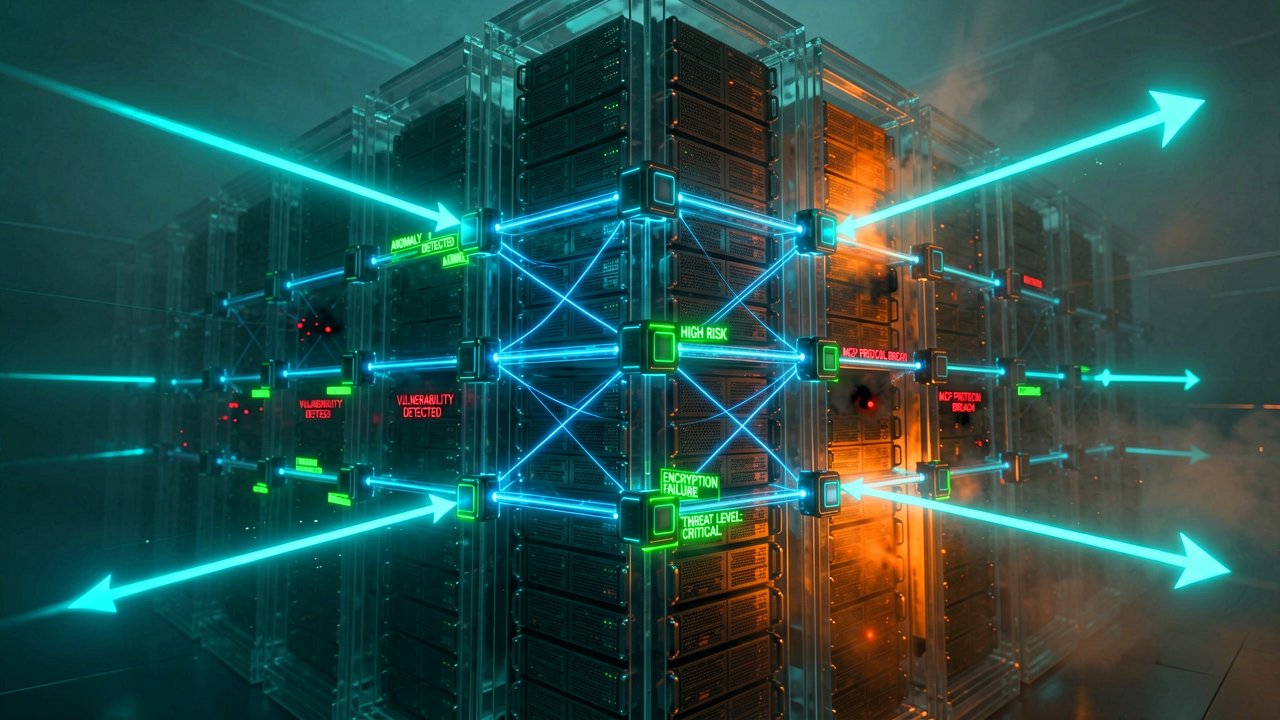
The global security ecosystem is undergoing an unprecedented structural transformation as corporate networks face a surge in highly automated, polymorphic threats. Artificial intelligence has officially transitioned from a forward-looking defensive feature to the central operating engine for both cybercriminals and enterprise protectors. This shift has forced the world's leading cybersecurity vendors to abandon legacy, signature-based frameworks in favor of autonomous security platforms designed to neutralize hazards at machine speed.
The financial scale of this transition underscores its urgency, with global cybersecurity spending projected to reach $306.4 billion, according to the LinkedIn StackCybersecurity Market Report. Organizations are compelled to rapidly integrate advanced automation as the window to mitigate network intrusions shrinks from days to mere hours. Consequently, major enterprise security budgets are pivoting decisively toward software-centric, cloud-native deployments that can actively monitor decentralized operations and hybrid environments.
The Offense-Defense Escalation and Agentic AI Threats
Malicious actors have heavily weaponized generative and agentic artificial intelligence, expanding operations far beyond basic social engineering. Data compiled in the Fortinet Global Threat Landscape Report demonstrates that threat actors are successfully using AI-driven automation to accelerate post-compromise lateral movements and orchestrate complex account discovery tactics. The time required for attackers to weaponize a newly discovered vulnerability has plummeted, exposing critical deficiencies in reactive legacy defense configurations.
This reality has triggered a major strategic push toward autonomous Security Operations Centers (SOCs) capable of independent risk analysis and instant system isolation. Defensive platforms must now operate without human intervention to cross-examine telemetry logs, weed out false positives, and actively disrupt live intrusion chains. By leaning on automated behavioral analytics, enterprises are reporting significant reductions in alert fatigue, allowing human engineers to focus exclusively on highly complex risk architecture.

Securing the Expanded AI Infrastructure Attack Surface
The widespread deployment of corporate language models and automated data pipelines has introduced entirely new systemic vulnerabilities. Security infrastructure audits have uncovered widespread flaws across newly deployed operational assets. Specifically, analysis by Lakera, a Check Point company, revealed critical security vulnerabilities in 40% of reviewed Model Context Protocol (MCP) servers, as documented by LinkedIn Talentus Global , presenting a severe risk as these servers are integrated into enterprise cores.
Furthermore, security providers are scrambling to engineer novel safeguards against emerging vectors like data poisoning, retrieval-augmented generation (RAG) manipulation, and prompt injection. Research published in the HiddenLayer AI Threat Landscape Report emphasizes that minimal amounts of malicious data can fundamentally subvert model behaviors in critical environments. As unmanaged AI agents propagate throughout corporate networks, security firms are forced to prioritize continuous threat exposure management over static boundary parameters.
Ethical Realities and the Geopolitical Compliance Framework
The intersection of rapid technological adoption and geopolitical fragmentation has elevated cybersecurity to a core board-level variable. The World Economic Forum Global Cybersecurity Outlook highlights that an overwhelming 94% of surveyed leaders identify artificial intelligence as the primary force reordering global risk profiles. Concurrently, intensifying national data sovereignty mandates and strict international privacy directives are compelling corporations to balance aggressive technical innovation with rigorous ethical guardrails.
The primary hurdle for enterprise technology executives remains the opacity and inherent algorithmic bias embedded in advanced machine learning systems. C-suite leaders frequently express hesitation over full autonomous orchestration due to a lack of model interpretability, creating friction between risk mitigation and operational velocity. To bridge this divide, top-tier security providers are re-engineering products to deliver granular audit logs, explicit chain-of-custody tracking for automated decisions, and transparent policy controls that satisfy stringent cross-border regulatory scrutiny.
Unmasking the Autonomous Frontier: What Most Reports Miss
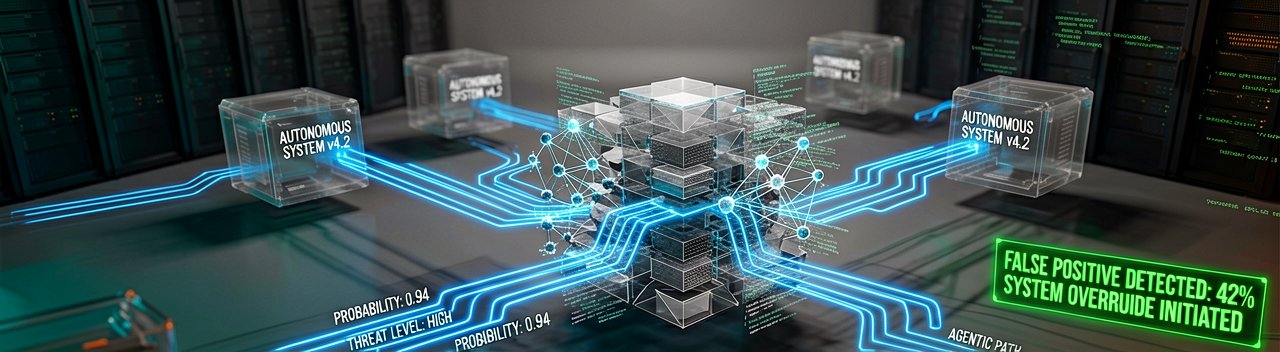
The transition to autonomous security infrastructure has exposed a quiet but profound rift between enterprise security vendors and the Chief Information Security Officers (CISOs) tasked with deploying their products. While corporate marketing campaigns champion a future of fully autonomous, self-healing networks, enterprise risk committees are raising flags over a critical lack of operational visibility. Security executives are hesitant to grant unrestricted system administration privileges to automated engines that cannot explain their reasoning. If an automated security model misinterprets a legitimate, high-volume server update as a ransomware attack and inadvertently shuts down a primary transaction database, the resulting operational downtime can mirror the financial damage of an actual cyberattack.
This trust deficit is rooted in the fundamental architecture of modern large language models and neural networks. Traditional software operates on predictable, deterministic logic where input directly dictates output, allowing engineers to trace errors back to specific lines of code. AI platforms, conversely, function probabilistically, creating an explainability problem that complicates post-incident forensics. When an algorithmic defender fails to detect an intrusion or inadvertently triggers a massive false positive, the lack of a clear audit trail makes it exceptionally difficult to satisfy insurance underwriters or compliance regulators who demand exact accountability.
The ground-level reality inside Security Operations Centers reveals that automated platforms are shifting the nature of human labor rather than eliminating it. While advanced tooling successfully filters out the background noise of low-level ping sweeps and routine credential stuffing, the alerts that do escape automation are highly complex, mutated threats. Tier-1 security analysts, who previously spent their days triaging high volumes of simple alerts, are being rapidly phased out. In their place, organizations require elite threat hunters who possess deep expertise in reverse-engineering manipulated software code and auditing autonomous model behaviors.
Furthermore, the rapid deployment of these defense systems has touched off an aggressive talent war, with defensive security teams competing directly against malicious entities for advanced technical skills. The exact same machine learning frameworks used to fortify corporate boundaries are being leveraged by sophisticated adversaries to automate the discovery of software vulnerabilities. This dual-use nature of advanced automation means that a breakthrough in defensive modeling can be quickly reverse-engineered by threat actors to map network blind spots, creating a continuous cycle of patch and exploit that demands permanent tactical vigilance.
Ultimately, the long-term viability of the AI-driven security pivot hinges on a structural reassessment of corporate network architectures. Security teams are discovering that layering autonomous tools on top of fragile, decades-old legacy databases only creates an illusion of safety. True systemic resilience requires companies to redesign their data environments from scratch, ensuring that models operate with precise data governance and tightly restricted access permissions. The organizations surviving this transition are those treating automation not as a plug-and-play solution, but as a deeply integrated, carefully managed component of human-led operations.
The Paradox of Automated Defense: Reading Between the Lines
Reading Between the Lines: The corporate rush to deploy artificial intelligence as a cybersecurity silver bullet ignores a fundamental, mathematical contradiction in modern software design. Enterprise software vendors aggressively market autonomous defense systems as the ultimate weapon against systemic vulnerabilities, yet these platforms are themselves constructed from millions of lines of unverified code. By embedding highly complex, non-deterministic language models into the absolute core of the enterprise network, organizations are expanding their technical attack surface rather than shrinking it. Security teams are effectively attempting to cure a software fragility crisis by introducing a new layer of software that is inherently prone to hallucination, manipulation, and structural blind spots.
This strategic disconnect becomes painfully evident when examining the industry-wide push for data centralization to feed defensive models. To predict and neutralize sophisticated threats, an autonomous platform requires deep, unrestricted telemetry access across every corporate repository, communication channel, and operational pipeline. This massive consolidation of sensitive operational records creates an incredibly lucrative target for adversarial entities. Instead of having to meticulously breach dozens of isolated, siloed systems, a sophisticated attacker only needs to compromise the central security model itself to gain a comprehensive, automated roadmap of the entire corporate infrastructure.
Furthermore, the widespread marketing narrative that artificial intelligence democratizes cybersecurity capabilities stands in stark contrast to global economic realities. While basic generative tools may assist junior analysts with routine script writing, the high-tier infrastructure required to train, deploy, and continuously fine-tune bespoke defensive models remains financially prohibitive for small and mid-sized enterprises. This dynamic is rapidly creating a dangerous, asymmetric security hierarchy where only multi-billion-dollar conglomerates can afford elite, predictive digital armor. The vast majority of the global supply chain is left relying on generic, off-the-shelf security packages that are easily outmaneuvered by automated, state-sponsored cybercriminal collectives.
Looking ahead, the long-term economic implications of this technological arms race point toward diminishing structural returns for corporate defensive investments. As threat actors inevitably automate the creation of mutating, polymorphic malware, security vendors will be forced to increase their model sizes and processing requirements to keep pace, driving enterprise subscription costs exponentially higher. This cyclical framework ensures that corporate technology budgets will be permanently consumed by defensive maintenance, leaving fewer resources available for actual business innovation. The enterprise ecosystem risks trapping itself in an expensive, algorithmic treadmill where immense capital is continuously spent simply to maintain a baseline status quo of operational vulnerability.
"We have spent hundreds of millions of dollars replacing predictable, human mistakes with blindingly fast, automated errors, all while paying a premium subscription fee for the privilege of watching our security platforms try to outsmart themselves."
Artūras Malašauskas is an AI Systems Integrator with 20+ years of production-grade web engineering experience. He has designed, shipped, and scaled enterprise Python/PHP systems for logistics, SaaS, and public-sector clients. For the past year, he has focused exclusively on AI integrations: deploying open-source LLMs, building generative media pipelines (image, audio, video), and engineering multi-agent workflows for real production environments. His standard: reproducibility, security, cost-efficient inference—no vaporware. He documents and evaluates emerging AI tooling, separating verified capabilities from marketing noise. Technical editor at: muza-ai.eu, ai-verslas.lt, ai-naujinos.lt Connect on LinkedIn
Comments