Silicon Realism: How MediaTek’s Dimensity 7450 Sharpens the Edge for Motorola’s Mid-Range
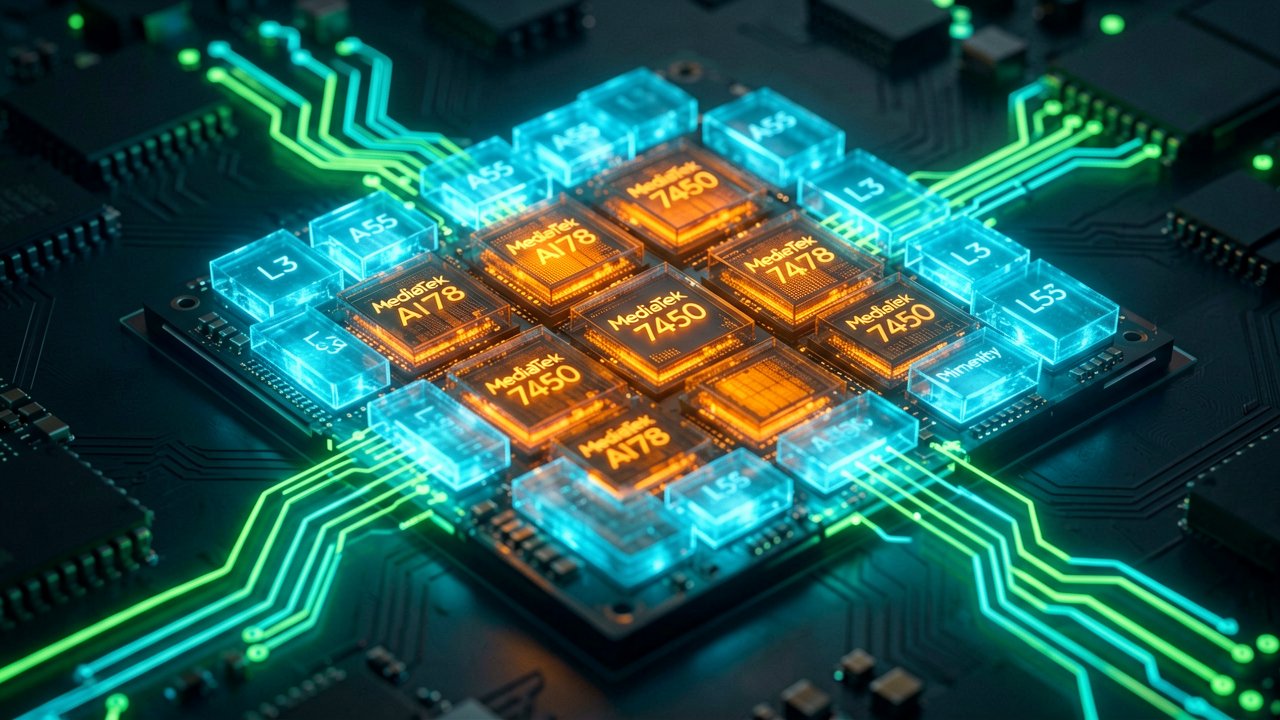
Motorola's strategy for its newly unveiled Edge 2026 marks a fascinating departure from the standard "more is more" smartphone playbook. Instead of chasing bloated spec sheets, the device opts for a lean, highly localized punch by embracing MediaTek’s Dimensity 7450 chipset, an architecture explicitly tuned to prioritize power consistency over fleeting peak benchmark victories. In a market segment that often treats hardware like a muscle-car competition, this phone targets the everyday user who values sustained thermal efficiency and a compact footprint over numerical bragging rights. It is a calculated gamble on silicon realism, proving that a well-optimized mid-range platform can deliver an experience that feels remarkably premium without demanding a flagship ransom.
Balancing Power and Thermals under the Hood
The engineering core of this device relies on MediaTek's 4nm-class architecture, combining an octa-core setup that handles tasks with sensible restraint rather than brute force. The processor splits the heavy lifting among four performance-focused Arm Cortex-A78 cores ticking up to 2.6GHz, complemented by four energy-conscious Cortex-A55 efficiency cores to shoulder the background noise, as detailed by GSMArena. Graphics are managed by an Arm Mali-G615 MC2 GPU, which anchors the phone's visual output without pushing the thermal envelope into dangerous throttling territory. This silicon blueprint is engineered specifically to prevent the rapid battery drain that haunts so many modern sub-flagship devices, focusing instead on structural longevity and fluid multitasking.
Sustained Speed and Real-World Metrics
That architectural balance shows its true strength when looking at sustained performance numbers and connectivity upgrades. The chipset integrates an updated 5G Release 17 modem that relies on advanced 3GPP standards to squeeze higher average network speeds and sharper signal retention out of crowded cellular towers, according to MediaTek. Rather than burning through its 5,000mAh cell in an attempt to hit unsustainable frame rates, the system deploys proprietary HyperEngine and Adaptive Gaming 3.0 algorithms to continuously cross-reference real-world operating temperatures with rendering demands. The result is a steady graphical delivery that avoids aggressive frame-rate dips during extended use, translating directly into a device that stays cool in the hand and relies on calculated efficiency to quietly power a crisp, 120Hz Super HD display.
Architectural Deep Dive into Low-Level Efficiency
Behind the Scenes: The true power of the MediaTek Dimensity 7450 inside the Motorola Edge 2026 lies not in its raw frequency, but in its sophisticated low-level scheduling and system-level cache architecture. Systems engineers look beyond marketing clocks to evaluate how the hardware manages thread migration across the asymmetric core clusters. The Dimensity 7450 utilizes an optimized Energy-Aware Scheduling framework that actively monitors thread load and instantly assigns light tasks, such as UI frame drawing or ambient data synchronization, to the efficiency block. By preventing minor processes from waking the power-hungry Cortex-A78 cores prematurely, the system minimizes the transition latency and associated voltage spikes that degrade battery life over a typical user's day.
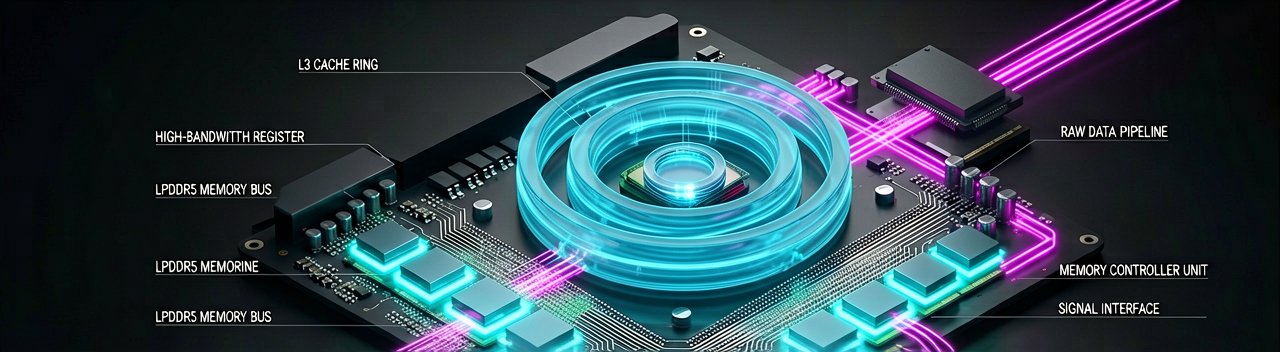
Beneath the high-level scheduling, the memory subsystem handles data routing through a tightly integrated L3 cache configuration and a unified system-level cache. This layout drastically cuts down on the energy-expensive bus trips to the main LPDDR5 RAM during complex computational workloads like real-time computational photography and background AI translation. When the 50MP camera sensor dumps massive raw image pipelines into the system, the memory controller bypasses traditional system memory bottlenecks by streaming raw pixel arrays directly through specialized, high-bandwidth registers. This specific pipeline layout allows the camera to apply multi-frame noise reduction algorithms with minimal delay, avoiding the frame drops and shutter lag common to mid-range devices.
On the network front, the silicon implementation of the 5G Release 17 modem features specific hardware-level logic gates designed to mitigate transceiver power draw during standby loops. The engineering focus here centers on Connected Mode Discontinuous Reception, a protocol that enables the modem to remain sleep-state for microseconds longer between cellular handshakes without dropping connection integrity. Rather than keeping the radio frequency front-end constantly energized, the chip calculates tower distances and signal-to-noise ratios dynamically. This microsecond-level clock gating keeps the device running significantly cooler during heavy downloads and prevents thermal throttling from capping performance elsewhere on the main motherboard.
The Pragmatic Limits of Mid-Range Ambition
Reading Between the Lines: Industry marketing would have us believe that specialized mid-range silicon represents an uncompromised victory for consumers, but a cold look at the hardware reveals a more delicate balancing act. While Motorola trumpets the efficiency of the Dimensity 7450, this silicon strategy is as much about managing manufacturing margins as it is about saving battery life. By opting for a pairing of older Cortex-A78 performance cores with legacy Cortex-A55 efficiency cores, MediaTek is leveraging mature, cost-effective fabrication blueprints. This approach avoids the premium pricing of newer Armv9 architectures, but it also creates a hard performance ceiling that software updates will inevitably struggle to breach as apps grow heavier over the next few years.
This reliance on older core designs introduces a subtle contradiction when contrasted with the phone's advertised AI and gaming capabilities. MediaTek’s HyperEngine 3.0 and automated thermal management work exceptionally well to smooth out performance ripples, but they act essentially as sophisticated limiters. They maintain steady frame rates by preemptively curbing peak performance, meaning the device achieves stability by ensuring it never runs at full throttle for long. For users executing basic tasks or casual gaming, this invisible hand keeps the chassis comfortably cool, but power users will likely notice a distinct lack of headroom when pushing the phone with sustained, heavy computational loads.
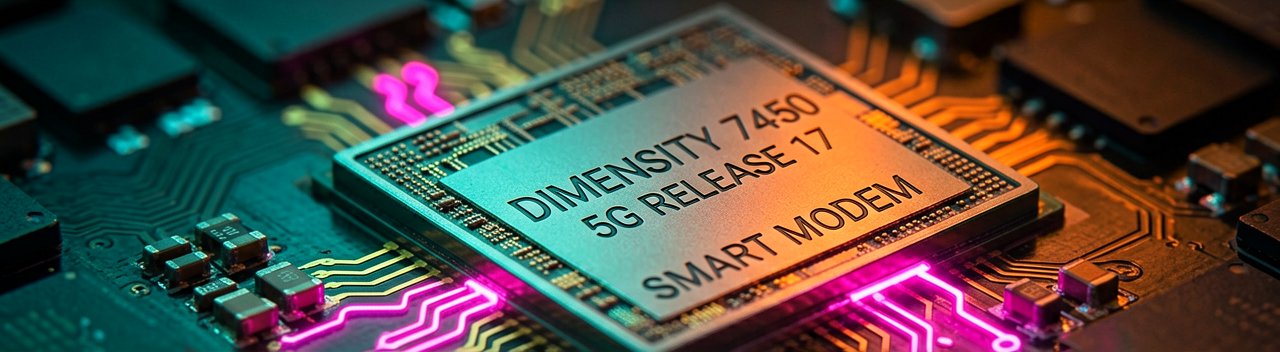
Furthermore, the integration of advanced 5G Release 17 capabilities highlights a classic hardware-versus-infrastructure bottleneck. The modem inside the Edge 2026 is structurally capable of remarkable power savings and superior network optimization, yet these benefits rely entirely on carrier deployment. In areas where cellular networks have not fully upgraded to support these nuanced Release 17 standards, the modem must fall back on older, less efficient communication protocols. Consequently, the real-world efficiency gains of this silicon are highly dependent on geography, leaving a significant portion of buyers with hardware built for a network future they might not actually experience anytime soon.
The modern mid-range smartphone has perfected the art of the compromise, managing to convince us that skipping the top-tier price tag is an act of savvy consumer rebellion rather than a simple exercise in budgetary restraint.
Artūras Malašauskas is an AI Systems Integrator with 20+ years of production-grade web engineering experience. He has designed, shipped, and scaled enterprise Python/PHP systems for logistics, SaaS, and public-sector clients. For the past year, he has focused exclusively on AI integrations: deploying open-source LLMs, building generative media pipelines (image, audio, video), and engineering multi-agent workflows for real production environments. His standard: reproducibility, security, cost-efficient inference—no vaporware. He documents and evaluates emerging AI tooling, separating verified capabilities from marketing noise. Technical editor at: muza-ai.eu, ai-verslas.lt, ai-naujinos.lt Connect on LinkedIn
Comments