Silicon Symbiosis: How ASUS and NVIDIA Re-Engineered the Creative Station
For years, mobile creators have played a frustrating game of compromises. If you want true desktop-class rendering power, you generally have to carry a workstation that resembles a concrete slab and drains its battery in under an hour. ASUS aims to shatter that paradigm with its newly unveiled ProArt P16 and P14 laptops, leveraging a dual-punch of architectural innovation that rewrites the rulebook on creative silicon. By abandoning traditional x86 design patterns in favor of an integrated Arm-based superchip, ASUS isn't just offering an incremental speed bump; it's laying down a blueprint for how professional computing will handle localized AI workloads moving forward.
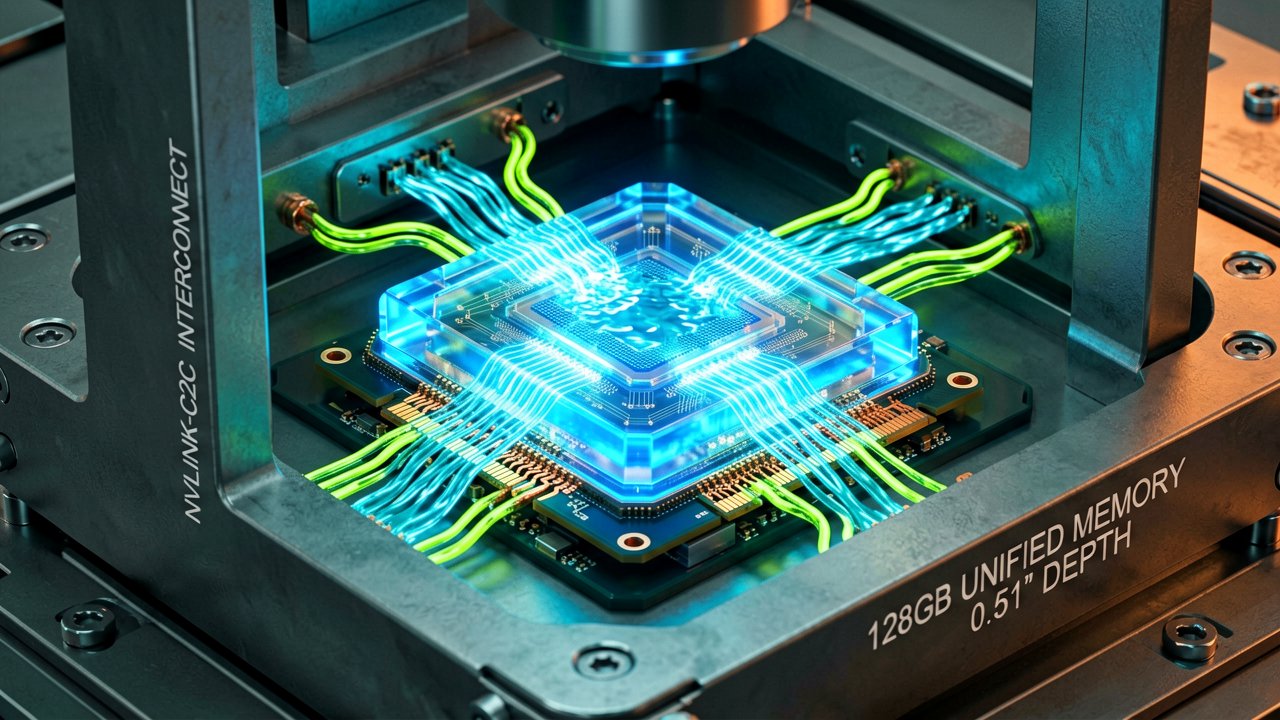
At the center of this transformation is the NVIDIA RTX Spark platform, a unified System-on-Chip (SoC) that marries a 20-core NVIDIA Grace CPU to a next-generation Blackwell RTX GPU. As detailed in the launch announcement by ASUS Press Room, these components communicate over an ultra-fast NVLink-C2C interconnect, eradicating the traditional PCIe bottlenecks that slow down data transfers between memory pools. The GPU itself packs 6,144 CUDA cores alongside fifth-generation Tensor Cores engineered with FP4 precision. It's an aggressive architecture that fundamentally shifts how local machines handle heavy mathematical computations and parallel tasks.
Breaking the One-Petaflop Barrier
What does this mean when you actually fire up a timeline? The architectural synergy pushes local AI performance to a staggering 1 petaflop. Because the SoC accommodates up to 128GB of unified memory shared dynamically between the CPU and GPU, the system adapts instantly to whatever task is thrown its way. Content creators can render massive 3D scenes exceeding 90GB or edit raw 12K footage without the typical caching stutters. Software giants are already capitalizing on this shift; Adobe is re-architecting applications like Photoshop and Premiere from the ground up specifically for the RTX Spark platform to unlock a twofold increase in AI and graphics throughput.
Remarkably, this extreme performance profile doesn't require a bulky, power-hungry chassis. The efficient Arm architecture keeps thermal demands in check, enabling ASUS to package this hardware into a CNC-machined frame measuring just 0.51 inches thick for the 16-inch model. Combined with a maximum flight-legal 99.9 watt-hour battery and vibrant Lumina Pro OLED displays pushing 1,600 nits of HDR brightness, these machines prove that raw local AI power and genuine mobility can finally coexist in the same footprint.
Under the Hood of the Unified Memory Architecture
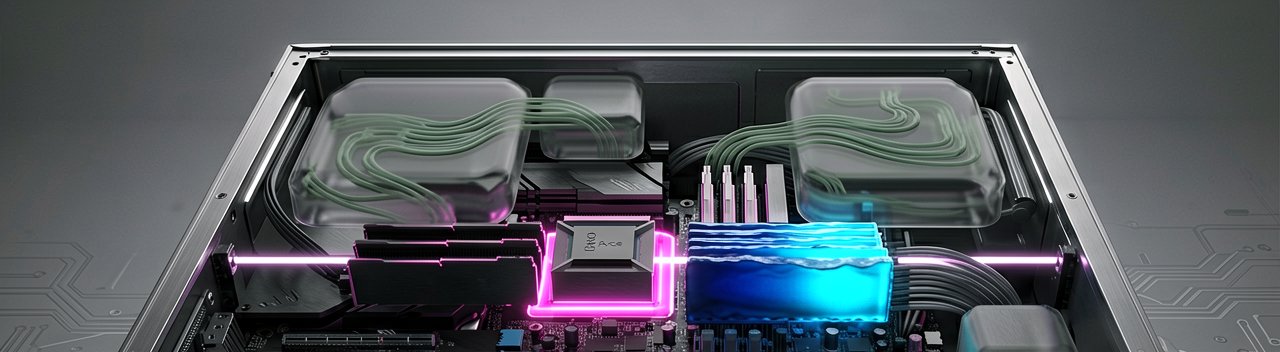
Behind the Scenes: The real engineering magic of the ProArt RTX Spark platform lies in how it completely abolishes the traditional split-memory architecture that has bottlenecked creators for decades. In a standard x86 workstation, moving a massive asset from system RAM over the PCIe bus to VRAM introduces severe latency penalties. The RTX Spark bypasses this entirely by utilizing a coherent LPDDR5X unified memory pool tied directly to the NVLink-C2C interconnect. Systems engineers will appreciate that this bidirectional interconnect delivers up to 900 GB/s of bandwidth, allowing the CPU and Blackwell GPU to access the exact same physical memory address spaces without the overhead of duplicate data copying.
From a software development perspective, this unified approach changes how applications allocate resources. Developers can leverage standard Unified Memory management routines in CUDA, where pointers are shared transparently across processing units. This eliminates memory fragmentation and avoids the dreaded Out of Memory errors that typically crash 3D rendering engines when a scene file exceeds the dedicated graphics card buffer. Because the system dynamically scales allocation up to 128GB, a heavy simulation can scale across the entire pool, keeping the compute pipeline saturated without stalling for page faults.
Low-Level AI Optimizations and Tensor Core Execution
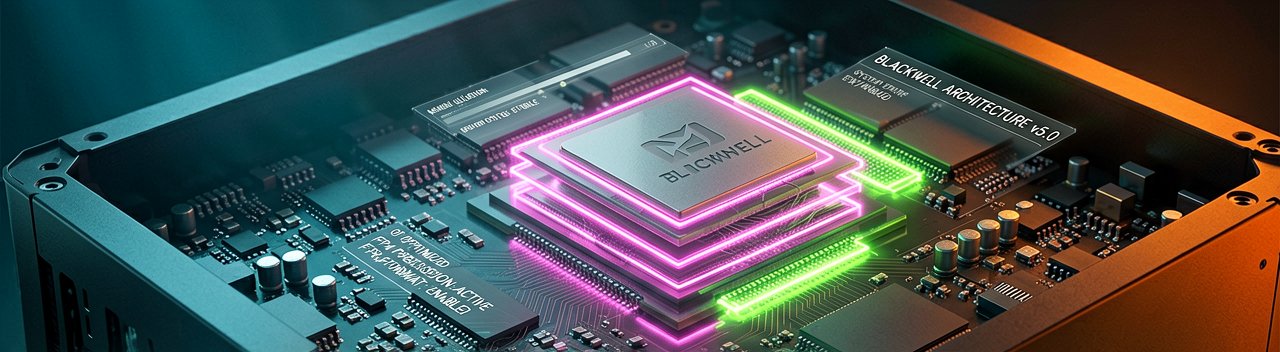
To hit the promised one-petaflop compute target, the silicon relies on an aggressive implementation of fifth-generation Tensor Cores utilizing native FP4 and FP8 precision formats. Hardware-level Transformer Engines automatically analyze the precision requirements of incoming data streams during real-time inference tasks. When running localized large language models or complex generative diffusion networks, the hardware scales down quantization dynamically to maximize throughput while maintaining model accuracy. This deep integration ensures that mathematical matrix multiplications execution happens with minimal clock-cycle waste.
Parallel workload execution is further optimized through an advanced hardware scheduler that maps directly to the 20-core Grace CPU's Arm Neoverse V3 architecture. The OS scheduler distributes background OS tasks to power-efficient clusters, leaving the high-throughput performance cores entirely free to feed data directly into the Blackwell graphics pipeline. This meticulous segregation ensures that real-time viewport rendering in tools like Blender remains completely fluid, even while intense background compilation or video encoding tasks run simultaneously on the same chip.
The Real-World Cost of the Arm Transition
Reading Between the Lines: While the raw performance metrics put forth by ASUS and NVIDIA paint a utopian picture of mobile computing, the reality for working professionals will inevitably be messier than the marketing suggests. The tech industry has a habit of treating hardware benchmarks as absolute truth, conveniently ignoring the complex software translation layers that dictate daily usability. Shifting an entire creative ecosystem from legacy x86 architectures to Windows on Arm is a massive gamble, and history shows that software developers rarely move as fast as hardware engineers. The promise of flawless execution depends entirely on an application being natively compiled, and many niche engineering, plug-in, and legacy rendering tools remain firmly rooted in x86 code.
There is an inherent contradiction in marketing an ultra-thin 12.9mm chassis as a 1-petaflop creative powerhouse. Physics is an unforgiving taskmaster, and packing a 20-core CPU alongside a Blackwell-class GPU into a frame that thin creates an immediate thermal puzzle. Even with advanced vapor chambers and variable-speed cooling fans, continuous heavy workloads like overnight 3D rendering or prolonged 12K video exports will inevitably trigger thermal throttling. The peak metrics cited in promotional materials are exactly that—peaks—and professionals might find that the machine dials back its performance considerably during sustained production marathons.
We must also look at the broader economic and practical implications of the unified memory model. On one hand, having up to 128GB of dynamically allocated memory is a dream for heavy datasets. On the other hand, because this memory is soldered directly onto the Spark SoC to achieve its blazing 900 GB/s bandwidth, upgradeability is completely dead. Creative studios accustomed to buying base-model laptops and upgrading RAM internally to extend the fleet's lifespan will now face exorbitant upfront costs. If a user underestimates their memory requirements at the time of purchase, they cannot just swap in a new stick of RAM; they have to replace the entire workstation.
"We are rapidly approaching an era where our laptops possess enough local computational horsepower to simulate the physics of the entire universe, yet we will still find ourselves waiting ten minutes for a poorly optimized video editing plugin to figure out why it cannot find the right folder path."
Artūras Malašauskas is an AI Systems Integrator with 20+ years of production-grade web engineering experience. He has designed, shipped, and scaled enterprise Python/PHP systems for logistics, SaaS, and public-sector clients. For the past year, he has focused exclusively on AI integrations: deploying open-source LLMs, building generative media pipelines (image, audio, video), and engineering multi-agent workflows for real production environments. His standard: reproducibility, security, cost-efficient inference—no vaporware. He documents and evaluates emerging AI tooling, separating verified capabilities from marketing noise. Technical editor at: muza-ai.eu, ai-verslas.lt, ai-naujinos.lt Connect on LinkedIn
Comments