Jio and Google's Affordable AI Smartphones Signal Shift in Global Smartphone Market Dynamics

The joint venture between Reliance Jio and Google to launch budget-friendly, AI-integrated smartphones in 2026 marks a turning point in democratization strategies within emerging economies. By embedding sophisticated machine learning capabilities directly into low-cost hardware, the partnership directly addresses the massive user base still using legacy feature phones. This strategic shift transitions the narrative of artificial intelligence from an exclusive, premium flagship luxury into an accessible, mass-market utility.
This initiative builds upon a rapidly expanding collaborative ecosystem between the two companies. Notably, the tech giant extended 18 months of free access to its premium Google AI Pro plan, powered by Gemini 2.5 Pro, to over 500 million Jio users, as detailed in an official Google Blog post. By offering high-tier cloud storage alongside localized software processing, Jio and Google are building a formidable digital pipeline capable of fundamentally reshaping data consumption patterns in the region.
Disrupting Entry-Level Market Realities
For years, entry-level smartphones forced a severe compromise between price and computational performance. Legacy hardware platforms routinely struggle with modern, resource-heavy operating systems, resulting in an fragmented user experience that deters non-smartphone users from upgrading. By applying Google’s tailored software optimizations alongside localized AI models, this venture seeks to break that historical constraint, delivering responsive performance at price brackets previously reserved for basic hardware.
Reshaping the Global Competitive Landscape
The arrival of deeply integrated AI capabilities at budget price points presents an immediate challenge to regional market leaders. Chinese original equipment manufacturers (OEMs) have traditionally dominated the entry-to-mid tier categories through aggressive hardware specifications. However, an alliance combining Jio's unmatched domestic telecom infrastructure with Google’s core machine learning stack threatens to alter consumer expectations, shifting the primary purchasing criteria from raw hardware metrics to integrated, intelligent services.
Building the Ambient Intelligence Pipeline
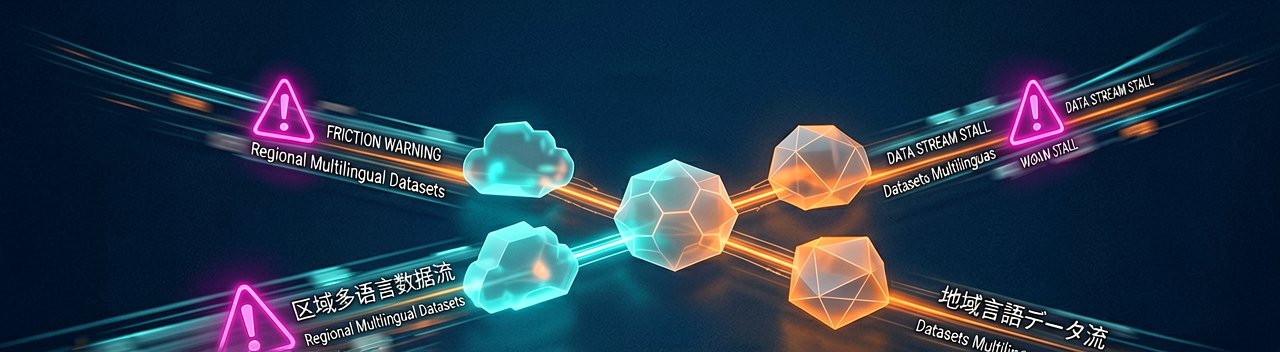
From a broader industry perspective, this partnership serves as a high-volume data and habit-formation engine for the next phase of cloud computing. Mass adoption of localized AI tools generates a vital feedback loop of multilingual datasets, allowing for the refining of regional machine learning models. As user habits solidify within this collaborative ecosystem, the traditional application-grid smartphone model yields to an ambient, agent-driven environment, establishing a new playbook for device deployment across the global South.
Anatomy of a High-Volume Digital Ecosystem
What Most Reports Miss: The true disruption of the Jio-Google alliance lies not in the physical hardware, but in the structural architecture of the data pipeline behind it. Traditional smartphone models rely on expensive on-device application processors to execute machine learning algorithms locally, a cost barrier that historically locked advanced features behind flagship price tags. By leveraging Jio's ubiquitous cloud infrastructure alongside Google's custom software optimizations, the upcoming 2026 device lineup shifts the computational burden away from the handset. This hybrid cloud-edge processing model allows a sub-$100 device to execute complex language translation, voice-activated workflows, and computational photography that would otherwise paralyze low-end silicon.
The operational realities for established hardware manufacturers are shifting rapidly as a result of this strategy. For nearly a decade, dominant Chinese original equipment manufacturers maintained market leadership by fine-tuning supply chains to deliver maximum hardware specifications—like higher megapixel counts or larger batteries—at minimal margins. However, a device architecture centered on cloud-delivered intelligence reduces a phone's reliance on premium internal components. This fundamental shift effectively nullifies the traditional hardware-centric competitive advantages of rival brands, forcing the entire budget tier to pivot toward ecosystem services and software integration.
From an infrastructure perspective, this deployment acts as a massive data engine designed to capture the next wave of internet users. For Google, partnering with a telecom giant that commands hundreds of millions of subscribers offers a direct path to training regional large language models on an unprecedented scale. The multilingual and culturally diverse user demographics provide the specific, localized data points required to refine voice interfaces and contextual algorithms. This localized optimization creates an ecosystem sticky enough to retain users long after their initial purchase, securing long-term digital engagement in rapidly growing economies.

Simultaneously, this venture alters the financial calculus for Reliance Jio, transitioning the company from a utility pipeline into an indispensable digital gateway. By placing an AI-capable device into the hands of previous feature-phone users, Jio accelerates consumer migration toward higher-tier data plans and proprietary digital services. The smartphone becomes a hub for mobile banking, commerce, and streaming entertainment, heavily subsidized by the long-term lifetime value of the subscriber base. This integrated approach creates a self-sustaining ecosystem where hardware deployment costs are offset by the compounding value of network usage and cloud-based services.
The Hidden Frictions of Democratizing AI
Reading Between the Lines: The industry consensus enthusiastically frames this partnership as a philanthropic leap toward digital equality, yet this narrative glosses over a stark structural contradiction. AI models, particularly those relying on cloud-hybrid architectures, demand immense computational power and continuous high-bandwidth data consumption. For a consumer base highly sensitive to price, the hidden cost of maintaining an active, high-volume data plan to power these "budget" AI features may quickly outpace the upfront savings on the handset. If the intelligent assistant stops functioning the moment a user runs out of daily data, the device risks reverting into just another sluggish, under-specced entry-level phone.
Furthermore, the reliance on a cloud-centric architecture introduces severe privacy and sovereignty complications that are rarely addressed in corporate press releases. Processing mass-market user data through localized cloud infrastructure inevitably places an immense volume of personal, biometric, and linguistic data into the hands of a single telecom-tech duopoly. As regulatory frameworks around data residency and algorithmic transparency tighten globally, managing the storage and utilization of data from hundreds of millions of low-income users will become a political lightning rod, potentially forcing costly structural re-engineering.
The assumption that advanced machine learning will seamlessly convert feature-phone users into sophisticated digital consumers also underestimates the steep learning curve of non-text interfaces. Voice-driven AI sounds ideal for overcoming literacy barriers, yet early deployments show that regional dialects, background noise, and rigid intent-parsing often lead to user frustration. Without a massive, sustained investment in localized user education and interface design, these advanced tools risk becoming underutilized gimmicks, leaving users to fall back on basic messaging and video playback while the expensive AI infrastructure idles.
"The ultimate irony of the affordable AI revolution is that while the smartphones themselves are priced for the masses, the energy grid, data centers, and fiber optic cables required to keep them smart remain stubbornly expensive—meaning the future of mobile intelligence might just belong to whoever can figure out how to run a neural network on the financial equivalent of a pocketful of loose change."
Artūras Malašauskas is an AI Systems Integrator with 20+ years of production-grade web engineering experience. He has designed, shipped, and scaled enterprise Python/PHP systems for logistics, SaaS, and public-sector clients. For the past year, he has focused exclusively on AI integrations: deploying open-source LLMs, building generative media pipelines (image, audio, video), and engineering multi-agent workflows for real production environments. His standard: reproducibility, security, cost-efficient inference—no vaporware. He documents and evaluates emerging AI tooling, separating verified capabilities from marketing noise. Technical editor at: muza-ai.eu, ai-verslas.lt, ai-naujinos.lt Connect on LinkedIn
Comments