The 12GB Baseline: How On-Device AI Solidified Smartphone Memory Standards in 2026
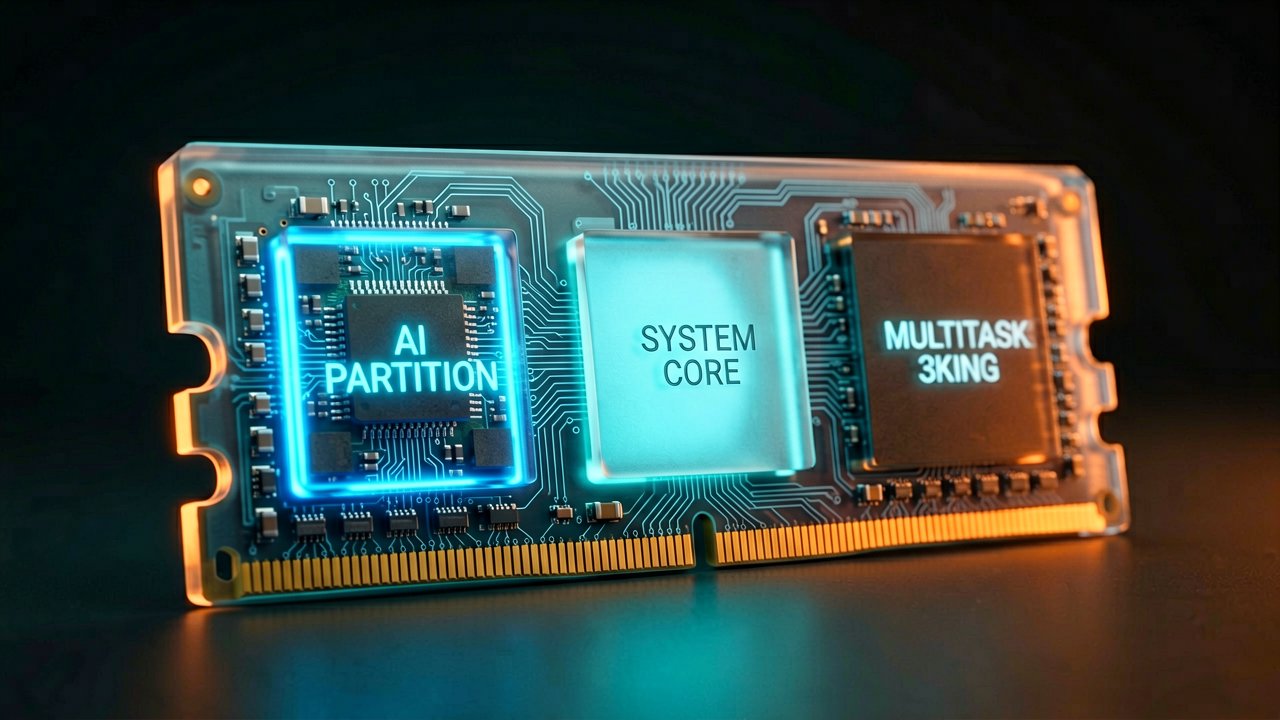
The global smartphone industry has reached a critical turning point in 2026, establishing 12GB of RAM as the non-negotiable baseline for premium performance. This structural shift is entirely dictated by the hardware demands of next-generation, on-device artificial intelligence. Unlike traditional applications that cycle in and out of system memory, modern generative AI models and localized large language models must remain persistently resident in a device's RAM to deliver instant, contextual responses.
This technical reality has forced global hardware manufacturers to adjust their product roadmaps, solidifying 12GB as the minimum specification for flagship intelligence. Operating systems now feature deeply integrated agentic architectures, such as Google's advanced Gemini Intelligence ecosystem, which require significant dedicated memory pools purely to execute localized automation workflows without causing system instability. Consequently, devices falling short of this threshold are increasingly relegated to basic application handling, entirely missing out on the premium tier of localized AI features.
The consolidation around 12GB of RAM is further complicated by severe supply chain pressures and fluctuating component costs that have reshaped the broader consumer electronics market. Tech industry analysts at TechRadar have detailed how surging memory component prices have constrained hardware configurations, halting the previously anticipated transition toward 16GB tiers for mainstream flagships. This economic reality has turned 12GB into both a technical floor for advanced AI functionality and a practical ceiling for manufacturers balancing premium performance against rising production margins.
The Technical Necessity of Localized Memory Allocation
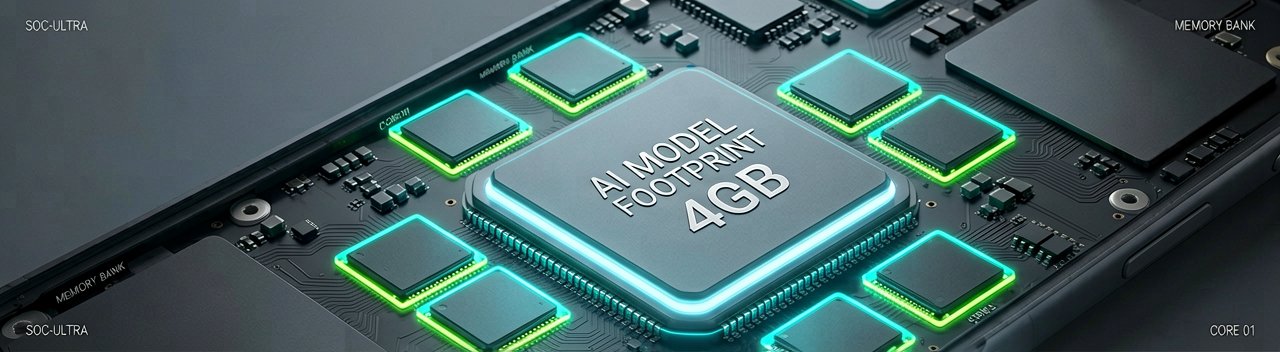
On-device AI relies on immediate execution, meaning that the foundational model parameters must occupy an unyielding block of a smartphone's random-access memory. When a mobile operating system attempts to run background tasks, system interfaces, and a localized AI agent simultaneously, an 8GB memory pool undergoes severe bottlenecking, leading to aggressive background app termination. System architects note that assigning a dedicated 4GB to 5GB partition exclusively for localized AI models leaves exactly enough remaining headroom in a 12GB configuration to sustain standard multitasking and fluid user navigation.
Strategic Pivots Across Mid-Range and Premium Tiers
The market has bifurcated dramatically along these memory lines, fundamentally changing how consumer hardware is marketed. Premium mid-range smartphones that previously experimented with lower memory configurations are systematically upgrading to 12GB modules to ensure compatibility with modern software features. Meanwhile, base-tier flagship models have abandoned smaller capacities entirely, creating a rigid specification boundary where memory capacity directly determines a device's intelligence tier rather than just its multitasking speed.
Deep-Dive: The Hidden Architecture Driving the Silicon Memory War
Behind the Scenes: The transition to a 12GB RAM standard is not merely a marketing upgrade, but a defensive architectural maneuver against the sheer physics of localized computing. For over a decade, smartphone manufacturers treated memory increases as a luxury benchmark, primarily utilizing excess capacity to keep multiple mobile games suspended in the background. The arrival of localized large language models shattered this paradigm, introducing static memory footprints that refuse to yield to traditional operating system optimization or memory-swapping techniques.
Silicon engineering teams face a stark architectural reality when adapting software for on-device execution. A compressed four-billion parameter model requires roughly 2GB to 3.5GB of system memory simply to sit idle in the system cache. When a user initiates a complex, multimodal request involving real-time image processing or contextual voice translation, that model's active footprint rapidly balloons, necessitating high-bandwidth data transfers that would instantly choke an 8GB system architecture and crash background system processes.
This technical bottleneck has triggered intense debate within the executive suites of major semiconductor firms and original equipment manufacturers. While chip designers have successfully shrunk model architectures through advanced quantization techniques, there is a hard boundary where over-compression destroys model accuracy and turns helpful AI assistance into incoherent hallucination. Consequently, hardware planners have accepted that upgrading physical memory capacity is far more cost-effective than attempting to engineer miracles in software optimization.
From a historical perspective, this standard consolidation mirrors the PC hardware boom of the late 1990s, where software capabilities outpaced standard hardware configurations at an unprecedented rate. Smartphone brands that once relied on a staggered tiering system to upsell consumers on premium storage and memory variants have seen their product segmentation strategies upended. In 2026, delivering an intelligent mobile device means accepting lower margins on entry-level models to absorb the substantial costs of mandatory 12GB high-density LPDDR5X memory modules.
The global component supply chain has responded with aggressive production shifts, prioritizing high-capacity mobile DRAM over lower-density modules to meet this industry-wide mandate. This massive reallocation of manufacturing capacity has effectively killed off the 8GB configuration for premium consumer electronics, ensuring that the software ecosystems of the near future can rely on a uniform baseline of computational headroom. The resulting landscape is one where memory is no longer a metric of luxury, but the absolute currency of modern device utility.
The Paradigm Friction: Skepticism, Margins, and the Reality of AI Utility
Reading Between the Lines: The sudden coronation of 12GB of RAM as the industry savior masks a deeper, more uncomfortable reality for the smartphone market. For years, hardware manufacturers struggled to convince consumers to upgrade their devices, as year-over-year performance gains grew increasingly incremental. By tying the necessity of premium hardware to localized artificial intelligence, the industry has successfully engineered a synthetic upgrade cycle, forcing consumers to abandon perfectly functional 8GB devices under the pretense that local processing is inherently superior to cloud-based computation.
This forced migration exposes a glaring contradiction in current product strategies, as manufacturers aggressively market the privacy and speed of on-device AI while simultaneously requiring continuous cloud connectivity for their most advanced features. The reality is that a 12GB smartphone remains vastly underpowered for truly transformative, independent machine learning tasks. Split-second processing demands still frequently trigger silent handoffs to massive cloud data centers, leaving the local silicon underutilized while the local memory pool remains permanently occupied and unavailable for standard multitasking.
Furthermore, this architectural mandate introduces a severe sustainability crisis that contradicts the industry’s vocal commitments to electronic waste reduction. By making 12GB the absolute baseline for modern software ecosystems, developers are rapidly deprecating millions of perfectly capable legacy devices through software bloat disguised as innovation. This rapid obsolescence risks alienating budget-conscious consumer segments, effectively creating a technological divide where advanced digital utility is restricted entirely to those who can afford to absorb the rising costs of high-density memory components.
As the market stabilizes around this standard, the promised revolution in user experience remains largely theoretical for the average consumer. The current generation of on-device AI tools consists heavily of photo manipulation, text summarization, and predictive typing—tasks that older hardware handled for years using cloud APIs or clever local algorithms. Unless developers move past these superficial applications and deliver truly indispensable local automation, the massive investment in physical memory upgrades will be remembered as an expensive hardware insurance policy rather than a genuine leap in mobile utility.
"We have officially entered the era where your smartphone requires more random-access memory than the computer that sent astronauts to the moon, all so a localized algorithm can subtly rewrite your text messages and confidently replace your cousin's face with a hyper-realistic houseplant."
Artūras Malašauskas is an AI Systems Integrator with 20+ years of production-grade web engineering experience. He has designed, shipped, and scaled enterprise Python/PHP systems for logistics, SaaS, and public-sector clients. For the past year, he has focused exclusively on AI integrations: deploying open-source LLMs, building generative media pipelines (image, audio, video), and engineering multi-agent workflows for real production environments. His standard: reproducibility, security, cost-efficient inference—no vaporware. He documents and evaluates emerging AI tooling, separating verified capabilities from marketing noise. Technical editor at: muza-ai.eu, ai-verslas.lt, ai-naujinos.lt Connect on LinkedIn
Comments