NVIDIA Unveils Its Edge: Inside the Architecture and Strategy of the New Client PC SoC
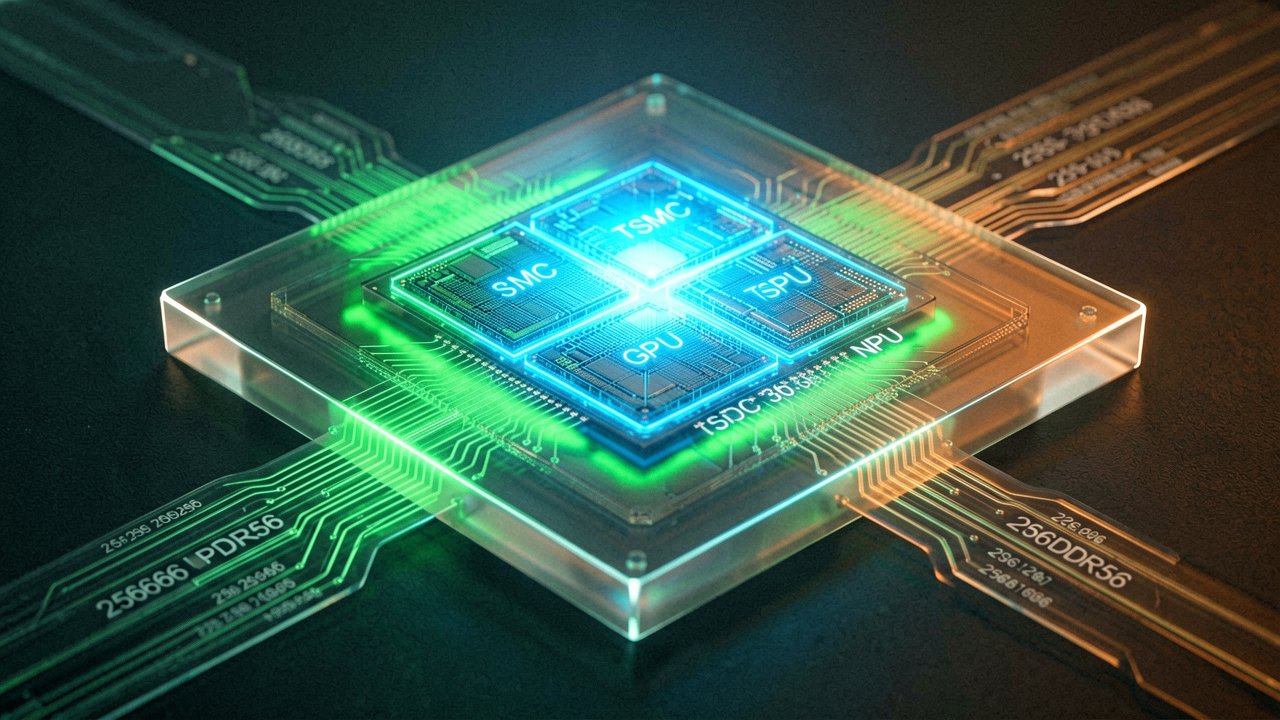
NVIDIA has officially disrupted the personal computing landscape by detailing its highly anticipated client System-on-Chip (SoC), marking a definitive structural pivot from enterprise data center dominance to high-end consumer hardware. Co-developed in a strategic partnership with MediaTek, the upcoming processor—codenamed within the N1 and N1X series framework—brings a full-scale integration of CPU, GPU, and NPU elements onto a single piece of silicon. This commercial expansion allows NVIDIA to tap directly into the 150-million-unit annual global laptop market, establishing a direct competitive vector against Apple's M-series silicon, Qualcomm's Snapdragon X elite tier, and traditional x86 architecture giants.
The timing of this architectural reveal underscores a critical inflection point for the broader semiconductor industry. By embedding its top-tier client graphics IP and advanced AI processing capabilities directly into an Arm-based SoC package, NVIDIA is addressing a fundamental market shift toward localized, high-efficiency AI execution. As operating systems move to run complex machine learning models directly on end-user machines without relying on high-latency cloud infrastructure, this platform leverages the company's mature software ecosystem to redefine mobile workstation and premium gaming capabilities. Further architectural context and release timelines are thoroughly tracked by industry analysts at TechPowerUp .
The Compute Blueprint: Hybrid Arm Core Configuration
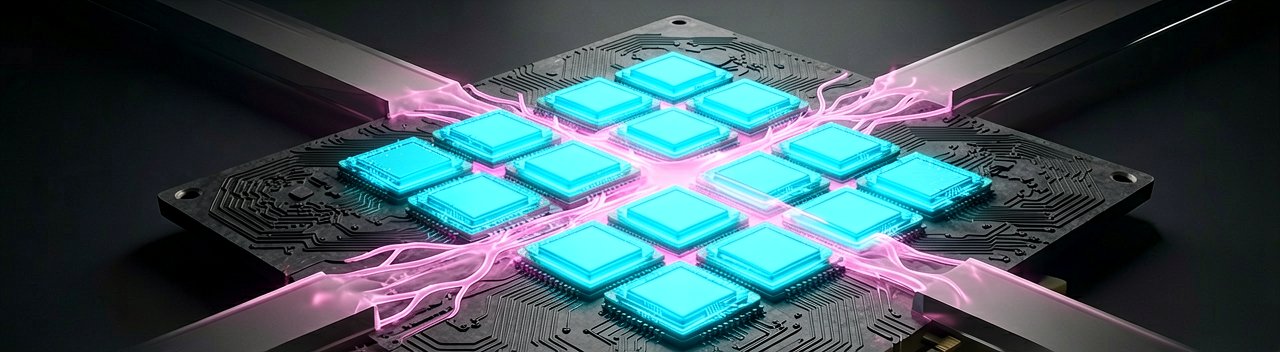
The processing foundation of the SoC utilizes a high-performance hybrid CPU layout engineered to optimize multi-threaded throughput and thermal efficiency. It integrates up to twenty Arm processor cores fabricated on TSMC's cutting-edge 3-nanometer process node. The cluster is divided evenly between ten Cortex-X925 high-performance cores and ten Cortex-A725 efficiency cores, delivering aggressive single-threaded speeds scaled up to 3.9 GHz. This configuration provides the necessary compute baseline to natively execute complex desktop applications while maintaining the battery longevity inherent to the Arm instruction set.
Blackwell Graphics Integration on Silicon
Graphics processing receives a monumental upgrade via an on-die integrated GPU derived from NVIDIA's latest Blackwell architecture. Featuring up to 48 Streaming Multiprocessors (SMs), the graphics subsystem packs 6,144 CUDA cores, a density that brings discrete-class rendering performance to ultra-thin laptop motherboards. The architecture integrates a ultra-wide 256-bit memory bus supporting LPDDR5X-9400 memory, pushing data transfer rates to near-unprecedented limits for a unified system architecture. This subsystem bypasses the traditional PCIe bus bottlenecks, feeding graphical and neural data directly into the processing pipeline.
Local AI Acceleration and Ecosystem Dynamics
A specialized Neural Processing Unit (NPU) powers the chip’s localized AI workflows, driving an estimated 180 to 200 AI TOPS (Trillions of Operations Per Second) of computational performance. This hardware layer is specifically optimized to interface with NVIDIA's extensive CUDA software layer, giving developers immediate compatibility with existing machine learning libraries. Rather than relying on cloud servers, the SoC natively executes complex tasks including live code translation, autonomous agent workflows, and real-time generative imaging. OEM partners including Dell, Lenovo, and ASUS are actively developing premium consumer and gaming designs around this platform, setting the stage for a major realignment of high-end laptop tier standards.
The Architectural Genesis: From Server Room to Silicon Substrate
What Most Reports Miss: The foundational blueprint of this SoC represents a meticulous downscaling of corporate enterprise strategy rather than a simple upscaling of mobile hardware. For over a decade, NVIDIA dominated the data center landscape by convincing enterprises that massive, discrete GPU clusters were the only viable path to advanced computational throughput. The structural engineering of this client chip flips that script entirely, consolidating decentralized nodes onto a unified piece of silicon. This pivot reveals a calculated defensive maneuver designed to insulate the company from a future where localized consumer computing might cannibalize traditional cloud-rental revenue models.
Behind closed doors, the partnership with MediaTek reflects a decade of hard-learned lessons stemming from the era of the Tegra processor line. Early internal attempts to break into the mobile market faltered because the company lacked the deep system-level integration expertise required to balance cellular modems, radio frequencies, and strict ultra-low thermal envelopes. By delegating the physical layout, power management integrated circuits, and cellular connectivity logic to MediaTek, the graphics pioneer was freed to focus strictly on its core strengths: packing unprecedented density into the compute complex and maximizing memory bandwidth across an ultra-wide bus structure.
The choice to run exclusively on an Arm foundation is also a direct reaction to historical friction points with the established x86 duopoly. Industry veterans recall how licensing restrictions and proprietary cross-licensing agreements systematically locked independent GPU manufacturers out of building native x86 microprocessors. Transitioning to a custom-designed Arm cluster bypasses these structural gatekeepers completely, granting the engineering team total sovereignty over the silicon footprint. This architectural independence allows them to tightly couple the CPU and the Blackwell-based graphics subsystems without navigating the legacy overhead that continues to burden traditional PC architectures.
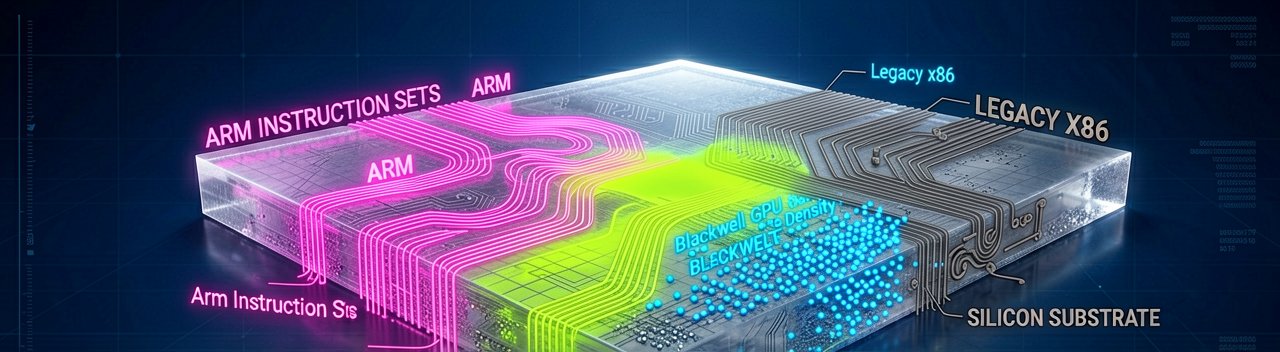
This design methodology creates an interesting shift in ecosystem dynamics, forcing software developers to reconsider how they optimize complex applications. Historically, software engineers treated the CPU and GPU as distinct entities separated by a relatively high-latency PCIe bus interface, which required aggressive caching strategies to prevent processing bottlenecks. The unified memory architecture of this new SoC forces a paradigm shift, allowing both compute engines to access the exact same pool of ultra-fast LPDDR5X memory simultaneously. Consequently, developers can eliminate data duplication, drastically reducing the system-level memory footprint required to run intensive real-time rendering and localized AI applications.
Reading Between the Lines: The Reality of the Consumer Silicon Frontier
Reading Between the Lines: The marketing narrative surrounding this SoC heavily emphasizes its 200 TOPS capability, yet this number obscures a fundamental disconnect between peak synthetic performance and everyday application utility. While tech enthusiasts marvel at theoretical raw compute metrics, the immediate desktop software landscape remains largely unequipped to utilize such specialized hardware efficiently. History shows that building silicon is significantly easier than rewriting decades of legacy consumer applications, many of which still struggle to leverage multi-threaded CPU setups, let alone a highly customized on-die neural processor.
A glaring paradox also exists within the hardware strategy itself. NVIDIA is heavily promoting local AI execution as a privacy-focused, zero-latency alternative to cloud computing, but the company's core financial engine remains deeply rooted in selling massive AI data center infrastructure to cloud hyperscalers. By engineering a client chip designed to keep computational workloads local, the company risks creating a structural contradiction in its broader business model. If local silicon actually succeeds in reducing reliance on cloud-hosted neural models, it could inadvertently cool the insatiable enterprise demand for the very server-side hardware that currently drives Wall Street's valuation of the firm.
Furthermore, the reliance on an Arm instruction set introduces immediate compatibility friction that the Windows ecosystem has spent years trying to resolve. Despite Microsoft's aggressive push for Arm adoption, consumer software translation layers inherently introduce performance penalties that can easily erase the efficiency gains achieved by cutting-edge 3-nanometer fabrication. Early adopters will likely find themselves in a frustrating position where native applications run beautifully, but legacy productivity tools, custom enterprise software, and anti-cheat mechanisms in mainstream PC video games encounter stability roadblocks or severe performance degradation.
The ultimate test for this platform will not be decided in a controlled laboratory benchmark, but rather in the unforgiving thermal realities of premium ultra-thin laptop chassis. Packing a high-density Blackwell graphics core alongside twenty CPU cores requires sophisticated power management that must constantly choose between peak performance and thermal throttling. If OEMs are forced to aggressively cap the chip's power draw to prevent laptops from overheating, the real-world performance delta between this costly silicon and existing, cheaper x86 alternatives may prove too narrow to justify the premium price tag.
"We are being promised a future where our laptops can effortlessly map the cosmos and write our code locally, but for the foreseeable future, this monumental triumph of silicon engineering will mostly be utilized to remove background noise from video calls and generate slightly more realistic lighting on virtual chat avatars."
Artūras Malašauskas is an AI Systems Integrator with 20+ years of production-grade web engineering experience. He has designed, shipped, and scaled enterprise Python/PHP systems for logistics, SaaS, and public-sector clients. For the past year, he has focused exclusively on AI integrations: deploying open-source LLMs, building generative media pipelines (image, audio, video), and engineering multi-agent workflows for real production environments. His standard: reproducibility, security, cost-efficient inference—no vaporware. He documents and evaluates emerging AI tooling, separating verified capabilities from marketing noise. Technical editor at: muza-ai.eu, ai-verslas.lt, ai-naujinos.lt Connect on LinkedIn
Comments