Apple’s Radical Shift: The iPhone 18 Pro Unveils the Future of Hardware and AI for Indian Consumers
Apple is systematically redefining its smartphone philosophy, shifting focus from minor annual updates to a massive technological leap forward. The Cupertino tech giant is preparing to shake up the Indian premium smartphone ecosystem with the upcoming debut of the iPhone 18 Pro series, a lineup that fundamentally rewrites what we expect from mobile hardware and deeply integrated local artificial intelligence. This highly anticipated unveiling, detailed through extensive supply chain updates and analyst documentation published by Livemint, signals a definitive pivot toward heavy-duty, localized processing power.
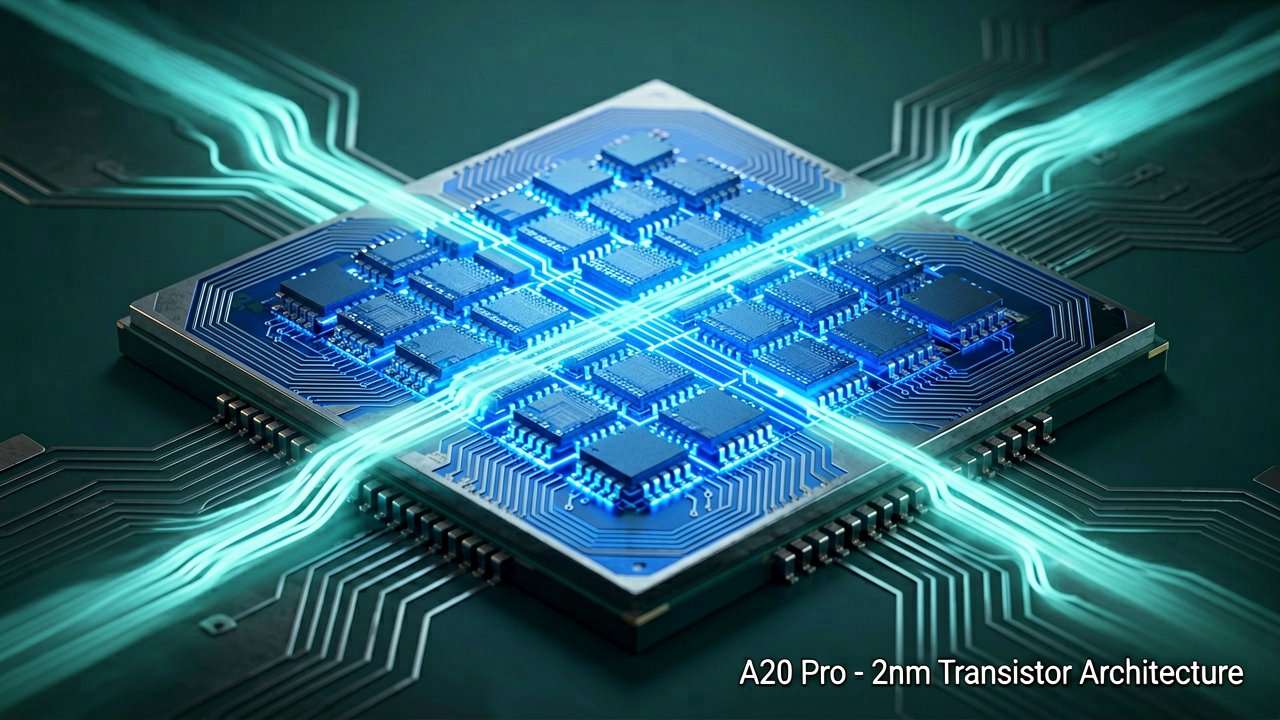
Scheduled to debut on the global stage in September 2026, the device arrives at a fascinating moment for Indian tech enthusiasts who are demanding more than just a premium logo on a glass back. Rather than continuing its multi-year reliance on 3-nanometer chip designs, Apple engineers have finalized the A20 Pro silicon, which stands out as the commercial industry's very first chip built on a cutting-edge 2-nanometer manufacturing process. It is a massive architectural flex that offers up to a 15 percent bump in raw speed while trimming energy consumption by a staggering 30 percent, which translates directly to cooler operation during intense gaming sessions in warm Indian subcontinental climates.
A Substantial Leap in Local AI and Siri Evolution
For the Indian market, the real magic of this silicon transition is how it supercharges localized data processing. Apple is pairing this highly efficient 2nm processor with a standardized 12GB of RAM to run an entirely overhauled version of Apple Intelligence on device. According to comprehensive software details compiled by MyMobileIndia, the flagship will arrive alongside iOS 27, introducing a radically smartened Siri that features a complete chatbot interface, deeper integration with the shrinking display cutouts, and specialized support for third-party AI models tailored for diverse linguistic regional needs.
This localized AI power filters down to everyday utilities that matter intensely to local buyers. The device leverages its massive neural engine to handle natural language shortcuts, live translation across multiple dialects without requiring an active internet connection, and predictive grammar checkers. Even the native Camera app is getting an injection of generative intelligence, offering automated reframing, intelligent scene analysis, and an expanded "Image Playground" that functions completely offline to preserve user privacy.

Physical Innovations and Aggressive Market Strategy
On the hardware front, the physical design leans into practical luxury. Leaked case renders and dummy units tracked by The Economic Times confirm that Apple has managed to shrink the divisive Dynamic Island cutout by nearly 35 percent by successfully tucking crucial Face ID components directly beneath the display panel. The back of the device replaces older two-tone finishes with a beautifully unified matte frosted panel, available in a striking new "Dark Cherry" signature shade. Photography purists will also see the debut of a mechanical variable aperture on the main 48-megapixel sensor, giving mobile photographers absolute physical control over depth-of-field and light intake without relying purely on software blur filters.
Perhaps the most compelling news for domestic buyers is Apple's refined pricing trajectory. Industry analysts point out that despite skyrocketing material costs for premium displays and memory chips, Apple plans to adopt an uncharacteristically aggressive pricing structure for the base configurations of the iPhone 18 Pro lineup in India, ensuring it remains fiercely competitive against a surging crop of ultra-premium Android flagships.
Beneath the Silicon: The True Scale of Apple’s Subcontinental Gamble
What most mainstream reports miss is that Apple’s shift to a 2-nanometer architecture is less about winning a benchmark war and more about surviving the brutal physical constraints of the Indian summer. For years, premium smartphone users in the region have wrestled with a frustrating reality: ambient temperatures routinely soaring past 40 degrees Celsius trigger aggressive thermal throttling, crippling device performance during heavy camera use or extended gaming sessions. By adopting the A20 Pro’s vastly superior thermal efficiency, Apple is fundamentally engineering a phone that can maintain its peak performance profile without transforming into a hand-warmer, addressing a localized engineering challenge that off-the-shelf processors have historically struggled to solve cleanly.
This technical optimization arrives alongside a dramatic shift in Apple’s domestic manufacturing footprint. Behind the scenes, the timing of the iPhone 18 Pro release aligns with a massive scaling up of Foxconn and Pegatron facilities in Tamil Nadu and Karnataka. Sources within the supply chain indicate that Apple intends to compress the historical time lag between global launch and domestic assembly down to zero for the 18 Pro series. This represents a monumental logistical victory, allowing the company to bypass the heavy import duties that typically inflate the sticker price of imported flagships, thereby granting them the financial headroom to price the device aggressively against rivals like Samsung’s Ultra series.

The decision to mandate 12GB of RAM as a baseline standard is another calculated move heavily influenced by the shifting dynamics of the Indian software ecosystem. Local tech stakeholders note that super-apps and multi-utility digital banking ecosystems dominate the Indian smartphone landscape, requiring immense background memory management. By pairing this expanded memory pool with iOS 27’s localized neural models, Apple ensures that its complex on-device AI algorithms can run smoothly alongside heavy enterprise apps, providing a seamless multitasking experience that executive-class buyers in Mumbai and Bengaluru now consider a non-negotiable standard.
Historically, Siri's utility within the subcontinent was hampered by an inability to parse the rich linguistic blending of English with regional dialects. The upgraded chatbot interface addresses this directly by integrating specialized multi-dialect transformers designed to decode hybrid phrasing effortlessly. Veteran tech analysts view this as Apple’s definitive play to capture the demographic of affluent, tech-literate consumers who demand intuitive, localized automation rather than a generic, Western-centric digital assistant that stumbles over local accents and cultural context.
The addition of a mechanical variable aperture to the main camera sensor is also a deliberate nod to India’s vibrant festival culture and elaborate wedding seasons. These events typically feature highly complex, low-light environments punctuated by intense, saturated artificial lighting that frequently confuses standard computational photography algorithms. By providing a physical mechanism to control light intake, Apple gives content creators and everyday users a tool that relies on traditional optics rather than aggressive software smoothing, preserving skin tones and fabric textures with a level of fidelity that computational overrides often erase.
Ultimately, this rollout represents the culmination of a decade-long transition for Apple in India, moving from a niche luxury status symbol to a deeply integrated player in the country's digital infrastructure. By anchoring its cutting-edge 2nm hardware advancements to localized AI capabilities and local manufacturing timelines, the tech giant is positioning the iPhone 18 Pro not just as an incremental luxury upgrade, but as an indispensable tool tailored explicitly for the demands of one of the world's fastest-growing and most discerning digital economies.
Reading Between the Lines: The Friction Between Aspirational Tech and Market Realities
The tech industry loves a neat narrative of linear progress, but the heralded arrival of the iPhone 18 Pro in India exposes a glaring contradiction between Apple’s global silicon ambitions and the daily realities of the Indian consumer. On paper, the 2-nanometer A20 Pro chip is a masterclass in engineering, yet packing such immense computing power into a mobile chassis risks creating an over-engineered solution for a market where basic infrastructural bottlenecks still dictate the smartphone experience. While the processor is capable of executing billions of local AI operations per second, these advanced features will still inevitably rely on cloud handshakes for heavy-lifting tasks, forcing users to wrestle with the sporadic nature of regional 5G networks and cellular dead zones that a shiny new chip simply cannot fix.
Furthermore, Apple’s aggressive push into on-device AI through iOS 27 presents a profound privacy paradox that the company has yet to publicly reconcile. Apple has built its modern brand identity on the ironclad promise of absolute user privacy, asserting that localized data processing keeps personal information safe from prying eyes. However, tailoring machine learning models to the deeply fragmented linguistic landscape of the Indian subcontinent requires massive amounts of localized training data. To truly master multi-dialect translation and contextual shortcuts, Apple must either source data from third-party regional partners or quietly soften its strict stance on data harvesting, a compromise that threatens to undermine its carefully cultivated reputation as a privacy-first fortress.
There is also a distinct financial tension underlying the company's local manufacturing strategy. Although expanding production facilities in Tamil Nadu and Pegatron hubs creates a convenient shield against exorbitant import tariffs, it is highly optimistic to assume these savings will translate into a cheaper device for the end consumer. Historically, Apple has used domestic assembly margins to pad its own bottom line and offset global supply chain inflation rather than passing the discounts down to the buyer. The promise of an uncharacteristically aggressive pricing structure may end up being nothing more than clever marketing, leaving the base tier of the iPhone 18 Pro firmly out of reach for all but the top fraction of the country's demographic pyramid.
Even the much-hyped hardware innovations, such as the shrinking Dynamic Island and the variable aperture camera sensor, carry an unspoken shelf-life warning. Introducing intricate mechanical moving parts into a smartphone camera system is a notoriously risky engineering choice in a region characterized by pervasive fine dust and monsoon humidity. While a physical aperture provides stunning, authentic depth-of-field for festive photography, it also introduces a delicate failure point that could lead to a surge in costly out-of-warranty repairs, testing the limits of Apple's expanding but still highly centralized domestic service network.
Ultimately, this ambitious rollout underscores the delicate balancing act Apple must perform as it tries to commodify luxury. The iPhone 18 Pro is undeniably a triumph of hardware miniaturization and localized software tuning, but it arrives in a market that is increasingly cynical about incremental yearly upgrades disguised as revolutionary leaps. If the heavily praised AI utilities turn out to be mere gimmicks that drain the battery during a warm afternoon commute, all the 2-nanometer silicon in the world won't stop discerning local buyers from questioning whether they purchased the future of technology or simply a very expensive status symbol.
Selling a 2-nanometer pocket supercomputer to someone currently sitting in a dead zone on the Mumbai local train is the ultimate triumph of modern marketing. We are being handed a device capable of predicting our next thought in three different languages simultaneously, provided we can find enough cellular signal to download the software update first.
Artūras Malašauskas is an AI Systems Integrator with 20+ years of production-grade web engineering experience. He has designed, shipped, and scaled enterprise Python/PHP systems for logistics, SaaS, and public-sector clients. For the past year, he has focused exclusively on AI integrations: deploying open-source LLMs, building generative media pipelines (image, audio, video), and engineering multi-agent workflows for real production environments. His standard: reproducibility, security, cost-efficient inference—no vaporware. He documents and evaluates emerging AI tooling, separating verified capabilities from marketing noise. Technical editor at: muza-ai.eu, ai-verslas.lt, ai-naujinos.lt Connect on LinkedIn
Comments