Open Source to the Rescue: LawDroid Fills the Legal Aid Gap Left by Anthropic’s ‘Claude-pocalypse’
When Anthropic dropped its massive Claude for Legal suite earlier this month, the legal tech sector practically melted down. Corporate attorneys and Big Law partners salivated over 12 specialized practice area plugins and 20 integrations built for multi-million dollar M&A deals, compliance tracking, and automated document review. Yet, amidst the flurry of enterprise-grade excitement, a massive swath of the legal world was left completely out in the cold. The hundreds of court self-help programs and legal aid clinics serving low-income Americans weren't invited to the party. Civil legal aid isn't just corporate litigation with a smaller wallet; it is a completely separate operational ecosystem operating under severe staffing crunches and tight funding limitations.
Recognizing this stark disparity, justice-tech veteran LawDroid didn’t just complain about the oversight—they went ahead and built a solution. The company has officially launched the Legal Aid Plugin, a free, entirely open-source suite explicitly tailored to the needs of public-interest legal providers using Anthropic’s Claude AI platform. This rollout aims to bridge a staggering societal divide highlighted by the Legal Services Corporation Justice Gap Report, which notes that a heartbreaking 92% of low-income Americans currently receive inadequate or zero assistance for their civil legal troubles. By deploying targeted AI infrastructure directly where it is needed most, this development could fundamentally alter how public defenders and clinic managers survive the relentless daily paperwork deluge.
An Intentionally Sovereign Architecture
What makes this release genuinely compelling is how LawDroid approached its technical delivery. Rather than locking public-interest firms into another costly, proprietary Software-as-a-Service (SaaS) contract or forcing them to jump through procurement hoops, the project is published openly on GitHub and LawNext. Organizations don't need to create separate external vendor accounts, nor do they risk exposing sensitive client data to third-party aggregation systems. Because it is completely self-contained, legal aid teams can leverage Claude's deep context windows while retaining total sovereignty over their local environments, allowing them to pair the open architecture with Anthropic's deep nonprofit API discounts.
15 Targeted Skills Built for the Front Lines
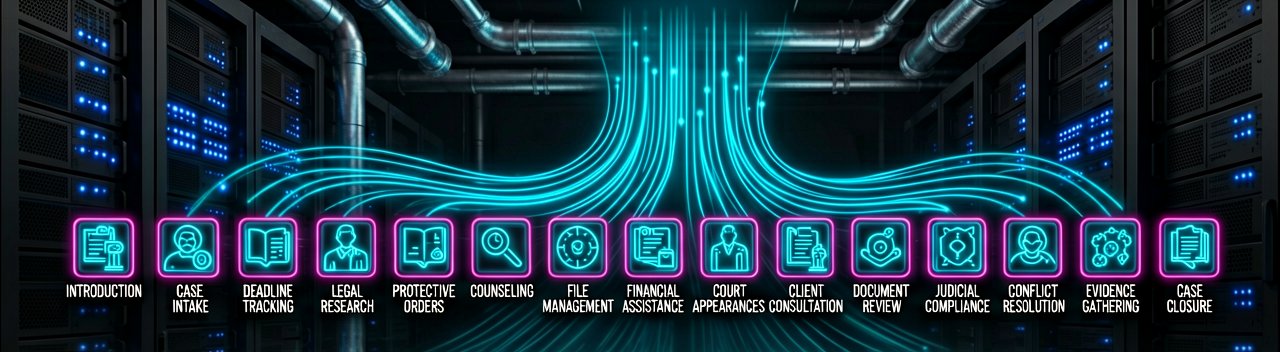
According to initial release details shared by LawNext, the open-source plugin ships with 15 pre-configured legal aid skills. These skills skip the flashy corporate fluff to focus squarely on brutal administrative bottlenecks. Instead of optimizing corporate vendor agreements, Claude is directed to handle high-volume front-line workflows like initial client intake, eligibility screening, and drafting protective orders. It can author localized practice area guides, summarize complex case histories for overextended staff, and track pressing deadlines for public benefits appeals. It is a calculated move designed to clear out bureaucratic friction, giving public-interest attorneys the rare gift of actual time to dedicate to the human beings sitting across their desks.
What Most Reports Miss: The Deep Tech Stack Powering Public Interest Justice
While industry analysts frequently treat legal tech rollouts as interchangeable productivity updates, the deployment of open-source artificial intelligence in civil legal clinics introduces unprecedented architectural shifts. Standard commercial legal bots operate via rigid, black-box frameworks that demand steep monthly subscription costs and extensive technical maintenance. Conversely, LawDroid’s plugin relies on decentralized microservices that bridge consumer-facing interfaces with Anthropic’s underlying large language models. This allows an resource-strapped clinic to deploy a fully functional intake system directly onto an inexpensive, local server stack without incurring crippling infrastructure overhead.
Historically, civil legal aid networks have operated as the technological stepchildren of the legal profession. When private law firms adopted early cloud-based document management systems in the late 2000s, legal aid offices were frequently left wrangling legacy databases and paper files due to strict government grant stipulations. The decision to make this suite completely open source fundamentally upends that historical dynamic. By hosting the source code openly on platforms like GitHub, public interest attorneys are no longer dependent on a corporate product roadmap that could pivot, change pricing tiers, or phase out features at the whim of venture capital investors.
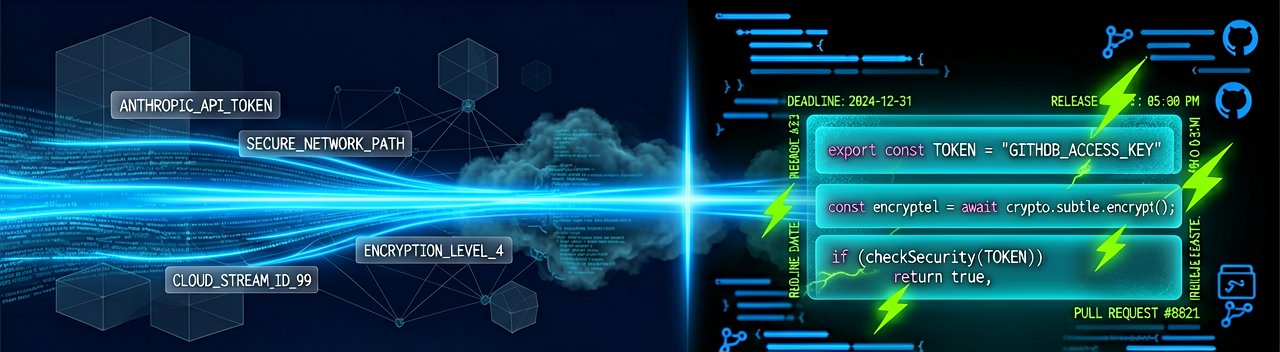
This decentralized approach also addresses a quiet crisis simmering within public interest law: localized data governance. Legal aid organizations routinely handle highly sensitive personal information, ranging from domestic violence escape plans to delicate eviction defense filings. Standard enterprise AI tools often pass data through multiple corporate aggregators, posing severe risks to attorney-client privilege in non-traditional legal settings. Because the plugin connects directly from the clinic's secure environment to Anthropic’s API endpoints via encrypted tokens, it completely cuts out middleman data brokers, ensuring that low-income clients receive the exact same data privacy protections enjoyed by elite corporate entities.
The operational impact extends far beyond simple form filling or automated scheduling. For a public housing clinic dealing with a sudden surge in unlawful detainer notices, the plugin acts as an immediate force multiplier by instantly cross-referencing complex municipal housing codes against tenant intake responses. Rather than forcing a single staff attorney to manually review fifty distinct cases on a chaotic Monday morning, the AI pre-screens for structural defenses, such as broken utilities or improper notice delivery. This allows human lawyers to walk into local housing courts with highly targeted, pre-drafted arguments already in hand.
Ultimately, this technological intervention serves as a critical proof of concept for the broader justice-tech movement. It demonstrates that advanced foundational models do not inherently belong to elite corporate spaces, provided that independent developers are willing to build the necessary integration pipelines. As more legal aid networks adopt, modify, and contribute code back into this open-source ecosystem, the gap between institutional legal resources and marginalized community needs will continue to shrink, shifting the narrative from corporate optimization to systemic equity.
Reading Between the Lines: The Friction Between Open-Source Idealism and API Reality
While the launch of a free, open-source plugin is a brilliant public relations victory for egalitarian tech, it exposes a glaring structural contradiction in the current wave of "AI for good" initiatives. LawDroid has generously waived its software licensing fees, yet the underlying engine remains completely bound to Anthropic’s proprietary, commercial API. This creates a fragile dependency model where a cash-strapped legal aid clinic is entirely vulnerable to sudden API pricing restructuring, token inflation, or sudden changes to developer terms of service. True technological independence is an illusion when the core infrastructure relies on a silicon valley tech giant whose primary allegiance belongs to its institutional shareholders rather than the public defender's office.
Furthermore, deploying an open-source tool requires an initial baseline of technical literacy that remains dangerously scarce within the civil legal aid ecosystem. It is naive to assume that a legal clinic operating on a shoestring budget can easily pull a repo from GitHub, configure secure API keys, and manage token consumption without dedicated IT support. The legal sector frequently suffers from an acute digital divide; expecting an overworked attorney who can barely get the office printer to function to seamlessly integrate a cutting-edge LLM plugin ignores the harsh realities of front-line non-profit operations. Without a parallel investment in technical training and implementation support, open-source code runs the risk of becoming sophisticated shelfware.
There is also the nuanced issue of legal liability and algorithmic drift that tech evangelists routinely gloss over. In corporate M&A, a hallucinated clause or a missed detail results in a financial adjustment or an insurance claim. In civil legal aid, a hallucinated defense in an eviction case or an improperly screened domestic violence petition can result in immediate homelessness or physical harm. While the plugin promises to automate high-stakes workflows like drafting protective orders, the ethical burden placed on the final human reviewer escalates exponentially, potentially creating a new form of cognitive fatigue that offsets the promised time-saving benefits.
Looking ahead, this rollout projects a fascinating ideological battleground for the future of access to justice. If these tools successfully streamline administrative workflows, they may inadvertently incentivize state legislatures to further defund civil legal aid under the flawed assumption that software can permanently replace human advocates. Tech optimization must not become a convenient excuse for institutional neglect, transforming a noble effort to bridge the justice gap into a justification for a two-tiered legal system where the wealthy get elite human representation and the impoverished get a well-prompted chatbot.
"We have finally achieved the democratization of legal bureaucracy, ensuring that low-income citizens can now be denied their constitutional rights with unprecedented digital efficiency and perfectly formatted paperwork."
Artūras Malašauskas is an AI Systems Integrator with 20+ years of production-grade web engineering experience. He has designed, shipped, and scaled enterprise Python/PHP systems for logistics, SaaS, and public-sector clients. For the past year, he has focused exclusively on AI integrations: deploying open-source LLMs, building generative media pipelines (image, audio, video), and engineering multi-agent workflows for real production environments. His standard: reproducibility, security, cost-efficient inference—no vaporware. He documents and evaluates emerging AI tooling, separating verified capabilities from marketing noise. Technical editor at: muza-ai.eu, ai-verslas.lt, ai-naujinos.lt Connect on LinkedIn
Comments