Inside MediaTek's Dimensity 8550: Unpacking Gemini Nano V3's Role in Enhanced AI Processing
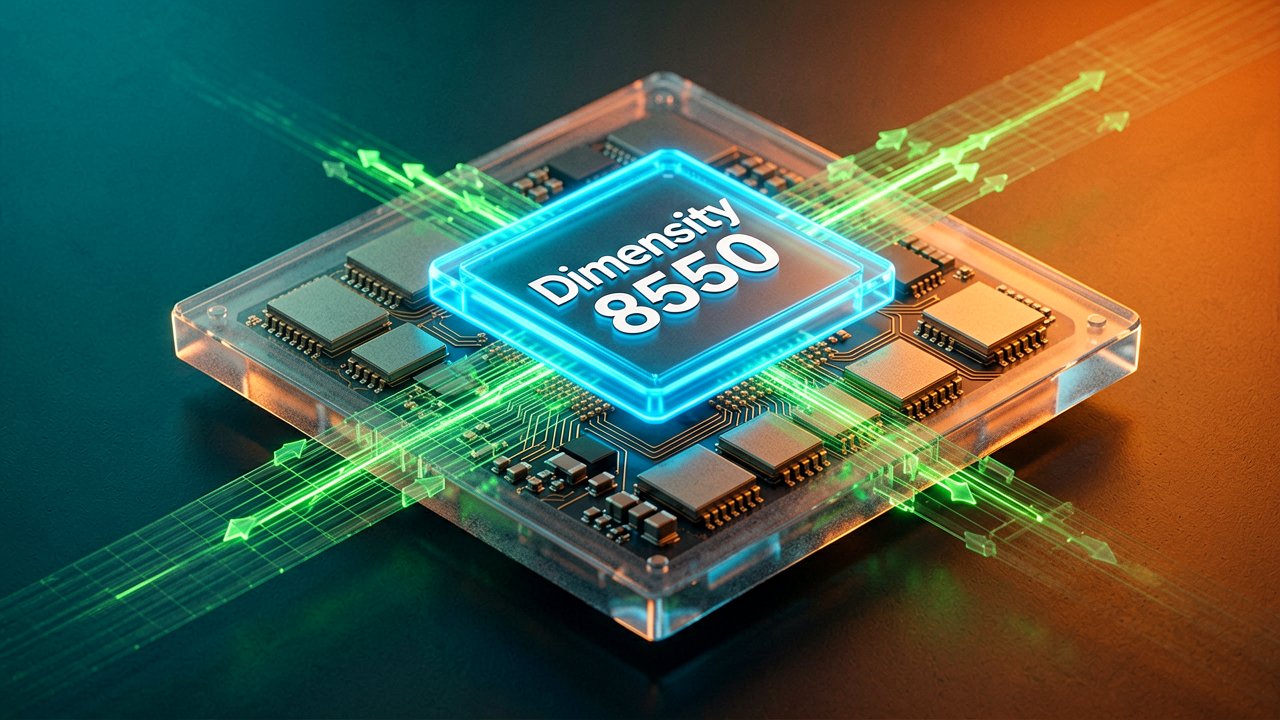
MediaTek pulled back the curtain on its newest upper-midrange silicon power house, the Dimensity 8550. Unveiled during a press briefing earlier this month, the processor represents a calculated shift in how chipmakers approach everyday artificial intelligence, moving away from brute-force cloud computing toward highly localized, efficient processing. By engineering this chip specifically around Google's latest on-device model, MediaTek is aiming straight for the premium market's lunch.
At the absolute center of this announcement is Google's Gemini Nano V3, making its official silicon debut outside of Google's own Pixel lineup. While flagship chips often grab headlines for raw benchmark scores, this collaboration focuses entirely on practical, latency-free execution. The partnership marks a massive milestone for Android ecosystem stability, ensuring that next-generation generative AI features run natively on hardware without destroying smartphone battery life.
The Architecture of On-Device Intelligence
What Most Reports Miss: The integration of Gemini Nano V3 isn't just a software compatibility badge; it required a complete overhaul of MediaTek's proprietary Neural Processing Unit (NPU). Silicon engineers had to design dedicated hardware accelerators specifically optimized for the low-precision, high-throughput transformer models that power Google's latest LLM. This architectural marriage allows the Dimensity 8550 to handle complex multi-modal inputs—like simultaneous voice translation and live image analysis—right on the device without pinging a remote server.
Historically, mid-tier silicon struggled with localized AI because large language models clogged memory bandwidth. MediaTek addresses this bottleneck by introducing an aggressive hardware-level compression engine that works in tandem with Gemini Nano V3's native optimization. According to technical documentation analyzed by Android Authority, this combination reduces the model's memory footprint by nearly forty percent while maintaining contextual accuracy. Industry insiders note that this specific optimization path is what allowed MediaTek to beat its immediate rivals to market with fully integrated V3 support.

From a stakeholder perspective, this release alters the competitive dynamics between Google, MediaTek, and Qualcomm. Google needs hardware partners capable of scaling its AI ecosystem rapidly to counter Apple's localized intelligence push. By providing MediaTek with early access to the Gemini Nano V3 codebase, Google ensures its AI services become the default standard on millions of upcoming upper-midrange devices globally. It is a win-win scenario that commoditizes advanced AI, dragging features previously locked behind thousand-dollar flagship price tags down to more accessible price points.
Looking back at the evolution of the Dimensity lineup, MediaTek has steadily transitioned from a budget-friendly alternative to a genuine architectural pioneer. A few generations ago, their processors relied heavily on stock ARM designs with minimal custom silicon for specialized tasks. The Dimensity 8550 proves that the Taiwanese chipmaker is now dictating the pace of mobile AI deployment rather than simply reacting to it. The focus has permanently shifted from how many gigahertz a CPU can pump out to how intelligently an NPU can manage contextual data streams under strict thermal constraints.
The Friction Between Promise and Real-World Silicon
Reading Between the Lines: The industry-wide rush to declare localized AI as a smartphone savior overlooks a glaring operational contradiction. MediaTek pitches the Dimensity 8550 as a champion of battery efficiency precisely because it bypasses cloud servers, yet running a multi-billion-parameter model like Gemini Nano V3 locally is one of the most power-hungry tasks a mobile processor can perform. The heavy mathematical heavy-lifting required for constant contextual awareness risks draining cells just as fast as a 5G data uplink, raising serious doubts about the net energy savings promised to consumers.
Furthermore, this deployment exposes a deeper fragmentation problem within the Android ecosystem that marketing materials conveniently ignore. While Google and MediaTek have tightly optimized the hardware-software stack for this specific chip, third-party app developers remain stuck in limbo. Historically, unless an AI feature is baked directly into the operating system source code, developers show little appetite for optimization across a dozen different NPU architectures. According to software engineering analyses published by AnandTech, without unified API standards across all silicon vendors, the Dimensity 8550's specialized hardware blocks may end up severely underutilized by everyday applications.
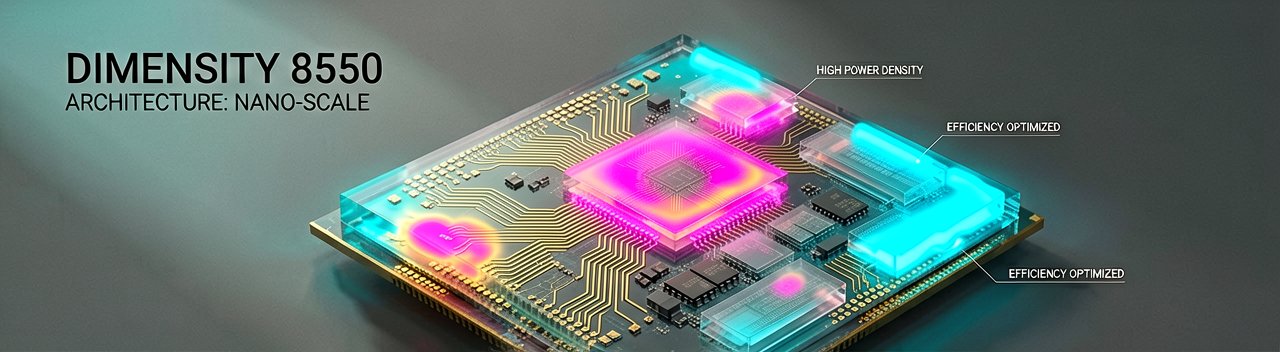
There is also a palpable irony in marketing local AI as a massive win for user privacy while tethering the hardware to Google's pervasive data ecosystem. Gemini Nano V3 handles the immediate processing on-chip, but the system still requires continuous telemetry data and hybrid cloud hand-offs to execute broader tasks. This creates a psychological buffer for the user rather than an ironclad privacy shield. Ultimately, the chipmaker's push for local intelligence feels less like a radical philosophical shift toward data sovereignty and more like a tactical engineering maneuver to slash the massive server infrastructure bills currently crushing big tech balance sheets.
We are rapidly approaching a future where our smartphones will possess the computational sophistication to predict our every need, yet still lack the battery life to survive a late-night ride home.
Artūras Malašauskas is an AI Systems Integrator with 20+ years of production-grade web engineering experience. He has designed, shipped, and scaled enterprise Python/PHP systems for logistics, SaaS, and public-sector clients. For the past year, he has focused exclusively on AI integrations: deploying open-source LLMs, building generative media pipelines (image, audio, video), and engineering multi-agent workflows for real production environments. His standard: reproducibility, security, cost-efficient inference—no vaporware. He documents and evaluates emerging AI tooling, separating verified capabilities from marketing noise. Technical editor at: muza-ai.eu, ai-verslas.lt, ai-naujinos.lt Connect on LinkedIn
Comments