Inside Team Group’s Quad-Rank CUDIMM ECC: A Technical Breakdown of Next-Gen Memory Solutions
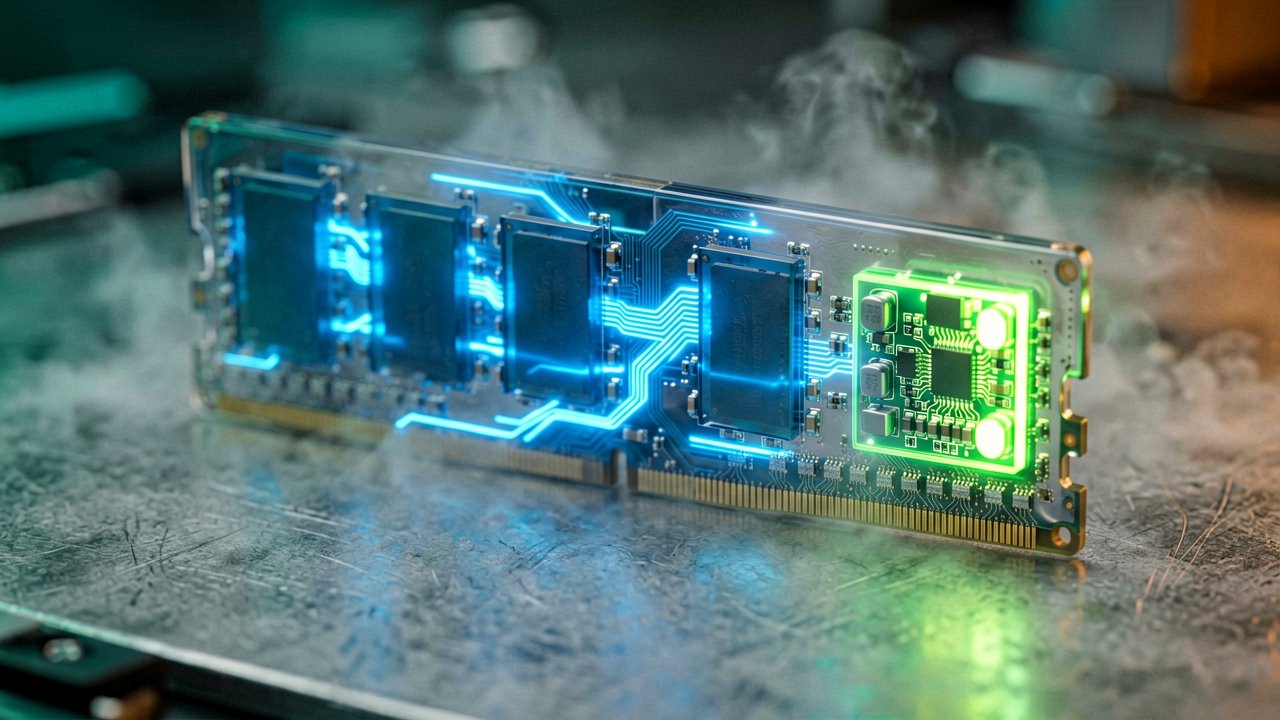
The memory landscape just shifted in a big way. On May 27, 2026, memory innovator TechPowerUp revealed that Team Group is officially introducing its new Quad-Rank CUDIMM ECC memory modules. This highly technical hardware drop is scheduled to take center stage at the upcoming Computex 2026 exhibition. By combining the raw speed of Clocked Unbuffered DIMMs with error-correcting code and a massive four-rank architecture, this hardware bridges the gap between client performance and enterprise stability.
What Most Reports Miss: The integration of a Clock Driver directly onto an unbuffered ECC module solves a massive engineering problem that has plagued high-capacity memory for years. Historically, packing four ranks of memory onto a single stick resulted in massive electrical noise and signal degradation. This degradation usually forced system builders to choose between high capacity or high speed. By utilizing an onboard clock driver, Team Group can buffer and clean the frequency signals right on the piece of silicon. This layout minimizes jitter and lets high-rank modules maintain blistering speeds without crashing the system.
The Architecture of Quad-Rank Density
To understand why this matters, you have to look at how data flows through the silicon. A traditional memory stick uses one or two ranks, which are essentially independent blocks of memory chips that the processor can access. By moving to a quad-rank design, Team Group effectively doubles the density of the memory module without requiring exotic, ultra-expensive individual DRAM dies. This layout gives AI workstations and dense edge-computing nodes access to unprecedented capacities per slot, allowing space-constrained motherboards to hit memory ceilings that were previously impossible.
Enterprise Stability for Next-Gen Speeds
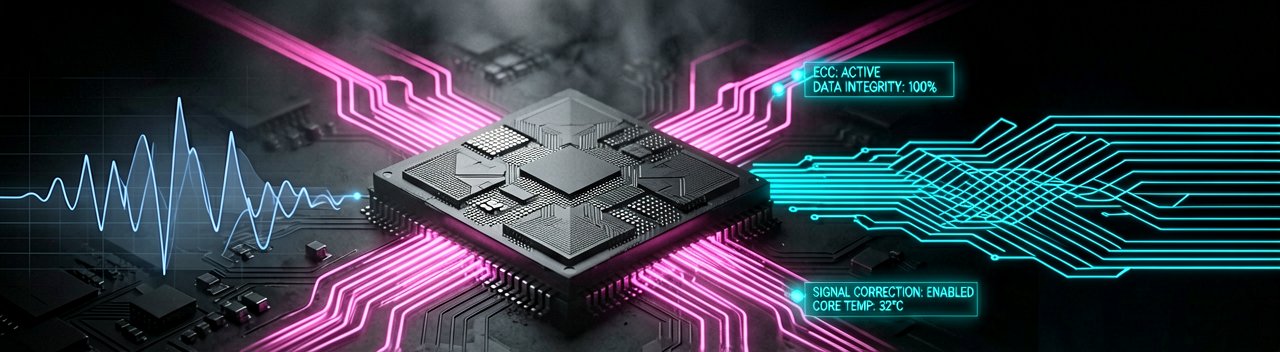
Stability is the hidden hero of this technical breakdown. Standard consumer RAM focuses entirely on clock speed, but industrial workloads care far more about data integrity. Team Group implements full Error-Correction Code on these modules, ensuring that single-bit data errors are detected and corrected on the fly before causing a system-wide crash. This safeguard operates alongside an advanced power management integrated circuit that optimizes load control. Operating at a lean JEDEC standard voltage, the hardware limits thermal output while maintaining absolute signal integrity under heavy mathematical loads.
Market Outlook and Adoption Timelines
While power users will undoubtedly want this hardware in their desktop rigs, the primary destination for these quad-rank modules is the high-performance computing sector. Industry insiders note that next-generation CPU architectures are increasingly dependent on advanced memory buffering standards to maximize data throughput. Team Group is positioning itself ahead of the curve by showing off working silicon right before the next wave of server and workstation platforms hit the market. As AI generation and deep learning workloads continue to demand massive data footprints, this hybrid architecture will likely set the baseline for high-reliability memory design over the next few years.
The memory landscape just shifted in a big way. On May 27, 2026, memory innovator TechPowerUp revealed that Team Group is officially introducing its new Quad-Rank CUDIMM ECC memory modules. This highly technical hardware drop is scheduled to take center stage at the upcoming Computex 2026 exhibition. By combining the raw speed of Clocked Unbuffered DIMMs with error-correcting code and a massive four-rank architecture, this hardware bridges the gap between client performance and enterprise stability.
What Most Reports Miss: The integration of a Clock Driver directly onto an unbuffered ECC module solves a massive engineering problem that has plagued high-capacity memory for years. Historically, packing four ranks of memory onto a single stick resulted in massive electrical noise and signal degradation. This degradation usually forced system builders to choose between high capacity or high speed. By utilizing an onboard clock driver, Team Group can buffer and clean the frequency signals right on the piece of silicon. This layout minimizes jitter and lets high-rank modules maintain blistering speeds without crashing the system.
The Architecture of Quad-Rank Density
To understand why this matters, you have to look at how data flows through the silicon. A traditional memory module uses one or two ranks, which are essentially independent blocks of memory chips that the processor can access. By moving to a quad-rank design, Team Group effectively doubles the density of the memory module without requiring exotic, ultra-expensive individual DRAM dies. This layout gives AI workstations and dense edge-computing nodes access to unprecedented capacities per slot, allowing space-constrained motherboards to hit memory ceilings that were previously impossible.
Enterprise Stability for Next-Gen Speeds
Stability is the hidden hero of this technical breakdown. Standard consumer RAM focuses entirely on clock speed, but industrial workloads care far more about data integrity. Team Group implements full Error-Correction Code on these modules, ensuring that single-bit data errors are detected and corrected on the fly before causing a system-wide crash. This safeguard operates alongside an advanced power management integrated circuit that optimizes load control. Operating at a lean JEDEC standard voltage, the hardware limits thermal output while maintaining absolute signal integrity under heavy mathematical loads.
Market Outlook and Adoption Timelines
While power users will undoubtedly want this hardware in their desktop rigs, the primary destination for these quad-rank modules is the high-performance computing sector. Industry insiders note that next-generation CPU architectures are increasingly dependent on advanced memory buffering standards to maximize data throughput. Team Group is positioning itself ahead of the curve by showing off working silicon right before the next wave of server and workstation platforms hit the market. As AI generation and deep learning workloads continue to demand massive data footprints, this hybrid architecture will likely set the baseline for high-reliability memory design over the next few years.
The Realities of Memory Interfacing
Reading Between the Lines: The industry marketing machine loves to paint a picture of flawless, universal performance leaps, but hardware design is always a game of compromises. While the addition of a clock driver to an unbuffered module is brilliant, it introduces a whole new layer of latency that the memory controller must navigate. We are essentially watching consumer hardware adopt the heavy, complex signaling traits of enterprise server memory. This shift raises valid questions about whether standard motherboard BIOS updates will actually be able to handle the complex training sequences required by four ranks of silicon at high speeds.
There is also a glaring contradiction in the way these modules are being positioned for the broader market. Team Group is showcasing these sticks alongside ultra-fast consumer kits, yet true quad-rank layout behavior naturally fights against aggressive overclocking. The sheer physical density of having four ranks means that heat dissipation becomes a localized nightmare under heavy sustained rendering or AI learning tasks. It is highly probable that early adopters will find themselves dialed back to modest JEDEC baseline speeds just to keep the system from throwing thermal throttling fits.
Furthermore, the actual economic justification for CUDIMM ECC remains incredibly narrow for the average professional. Enterprise servers already utilize highly optimized RDIMMs, which handle massive multi-rank configurations with far superior architectural support at the processor level. This leaves Team Group targeting a very specific, niche audience of prosumers and boutique workstation builders who demand massive capacity but are restricted to consumer-grade CPU sockets. Unless major motherboard manufacturers rewrite their firmware to fully exploit this specific clock driver layout, these cutting-edge sticks run the risk of becoming an expensive answer to a question very few users are actually asking.
"We have officially reached the era of computing where memory sticks require their own internal traffic cops just to keep the data from crashing into itself, proving once again that humans will gladly reinvent the server room inside a desktop chassis just to see a benchmark score go up by five percent."
Artūras Malašauskas is an AI Systems Integrator with 20+ years of production-grade web engineering experience. He has designed, shipped, and scaled enterprise Python/PHP systems for logistics, SaaS, and public-sector clients. For the past year, he has focused exclusively on AI integrations: deploying open-source LLMs, building generative media pipelines (image, audio, video), and engineering multi-agent workflows for real production environments. His standard: reproducibility, security, cost-efficient inference—no vaporware. He documents and evaluates emerging AI tooling, separating verified capabilities from marketing noise. Technical editor at: muza-ai.eu, ai-verslas.lt, ai-naujinos.lt Connect on LinkedIn
Comments