Smart Unveils Rokid AI Glasses in Philippines, Pioneering AR Accessibility
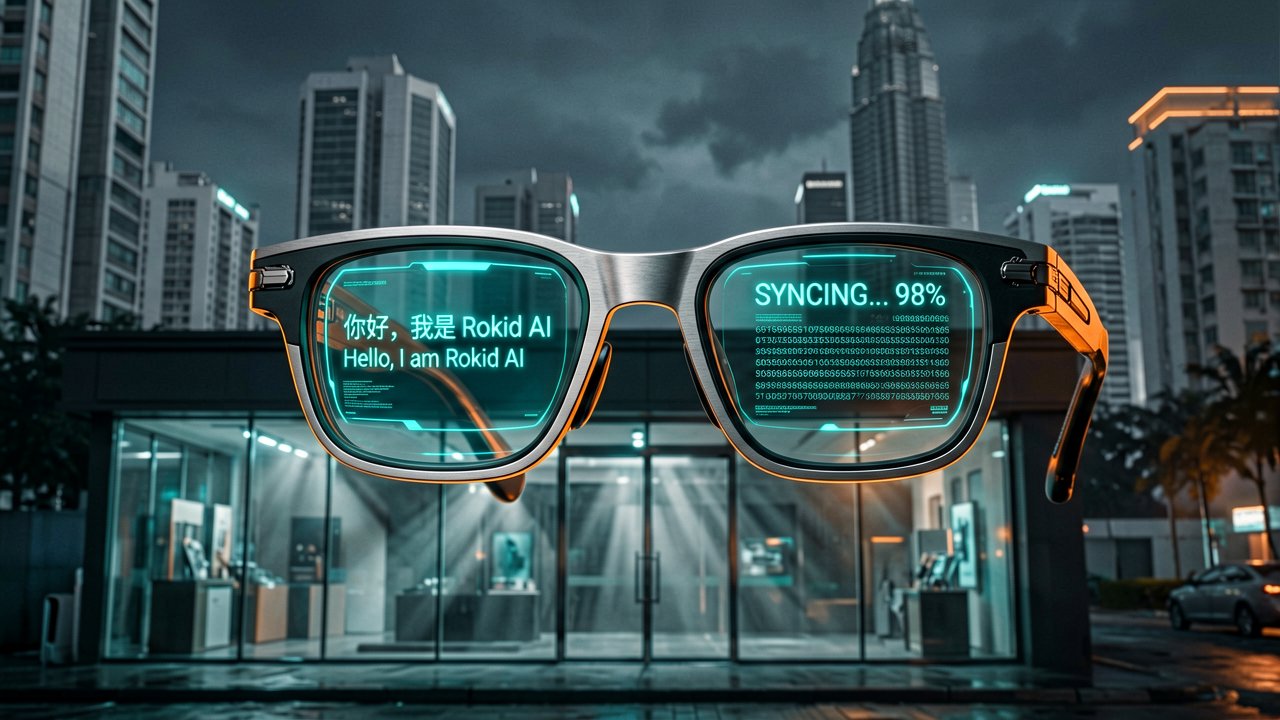
The race for mainstream augmented reality just found its latest battleground in Southeast Asia. Local telecom giant Smart Communications has officially partnered with AR pioneer Rokid to bring the acclaimed Rokid AI Glasses to the Philippines market on May 29, 2026. Available via premium postpaid lineups and showcased with interactive demo units across major flagship stores nationwide, this collaboration aims to transform cutting-edge wearable AI from a niche enthusiast novelty into a staple of daily digital life.
Weighing in at an incredibly nimble 49 grams, the sleek hardware looks and feels remarkably close to standard daily eyewear, avoiding the bulky, sci-fi aesthetics that doomed earlier iterations of smart frames. Despite the featherweight footprint, the glasses pack a 12MP high-definition camera, integrated directional audio privacy speakers, and a subtle dual-eye heads-up display. According to early coverage shared by JAM Online, the rollout leverages Smart’s robust high-speed mobile network to power real-time cloud computing, which drives immediate AI queries, instant multi-language translation, and contextual navigation directly in the user's line of sight.
What Most Reports Miss: The Network is the Real Magic
While the initial wave of mainstream media coverage has understandably focused on the hardware's Red Dot Design Award credentials, the true catalyst for this rollout is infrastructure. Wearable artificial intelligence lives or dies by latency; a three-second delay on an AI voice summary or a translation overlay ruins the illusion of an ambient digital assistant. By bundling the hardware into consumer postpaid subscriptions, the carrier ensures that these devices are tethered to high-bandwidth, low-latency mobile pipelines. It transforms what would be an isolated, processor-heavy gadget into a sleek terminal for continuous, cloud-based ambient computing.
Shattering the Early Adopter Price Barrier
Historically, the biggest hurdle for augmented reality has been the sticker shock associated with standalone retail distribution. Independent tech retailers previously carried imported units of these smart frames at high upfront costs, pushing them well out of reach for average consumers. By integrating the wearable into familiar monthly telecom billing cycles, the entry barrier drops significantly. This structural shift moves AR away from the luxury novelty shelf and firmly positions it alongside premium smartphones as a standard upgrade option for the modern professional.

The Architecture of Ubiquitous AI
The feature set embedded within the titanium plastic chassis hints at a broader ecosystem play. The built-in 4-mic array handles complex speaker isolation and voice-to-text recording, while a localized teleprompter mode targets content creators and enterprise users. It is an approach designed to capture real-world data seamlessly without demanding the user pull a screen out of their pocket. By planting demo units across highly trafficked hubs like SM Megamall, SM Aura, and Glorietta, the partnership is betting heavily on experiential marketing to convince a skeptical public that wearing their internet is vastly superior to holding it.
Reading Between the Lines: The Reality of the AR Mirage
The grand narrative surrounding consumer AR always promises an effortless paradigm shift, yet history suggests the road to optical ubiquity is paved with compromise. While marketing materials paint a seamless picture of real-time translation and flawless AI queries, the physical constraints of a 49-gram chassis cannot be ignored. Heat dissipation, battery degradation under heavy data loads, and the inevitable processing bottlenecks of a cloud-dependent device mean that early users are likely to encounter a stark gap between promise and practice. The true test is whether a device that relies so heavily on constant network handshakes can survive the uneven coverage realities of real-world commuting.
The Privacy Paradox in Public Spaces
Beneath the enthusiasm for first-person content creation lies a glaring social friction that hardware manufacturers continually fail to solve: the discomfort of the unconsenting public. Equipping users with a discreet 12MP camera right at eye level introduces subtle ethical and social tensions in public transport, offices, and private establishments. Even with built-in recording indicators, the average bystander cannot distinguish between a person checking their navigation and someone actively recording a conversation. This unspoken tension has historically triggered social pushback against head-mounted tech, and a fancy telecom subsidy does little to change the inherent awkwardness of talking to your glasses in a crowded elevator.
The Carrier Lock-In Strategy
From a purely business perspective, this launch is less about pioneering the future of computing and more about anchoring consumers to high-tier postpaid data buckets. Smart glasses are notorious data hogs, requiring continuous upstream and downstream traffic to process video, voice, and contextual overlays via the cloud. By subsidizing the hardware, the carrier ensures a captive audience locked into premium data plans for the next twenty-four to thirty-six months. It is a brilliant monetization play disguised as technological altruism, shifting the financial risk of a unproven hardware category directly onto long-term subscription revenue.
We are told the future is hands-free, which is fantastic news for anyone who has ever dreamed of reading an email while tripping over a curb, provided their data connection holds up and their battery doesn't die before lunch.
Artūras Malašauskas is an AI Systems Integrator with 20+ years of production-grade web engineering experience. He has designed, shipped, and scaled enterprise Python/PHP systems for logistics, SaaS, and public-sector clients. For the past year, he has focused exclusively on AI integrations: deploying open-source LLMs, building generative media pipelines (image, audio, video), and engineering multi-agent workflows for real production environments. His standard: reproducibility, security, cost-efficient inference—no vaporware. He documents and evaluates emerging AI tooling, separating verified capabilities from marketing noise. Technical editor at: muza-ai.eu, ai-verslas.lt, ai-naujinos.lt Connect on LinkedIn
Comments