Inside Gigabyte’s AORUS MASTER 16: Hardware Breakthroughs Powering AI and Gaming
The premium laptop space has shifted from a pure frame-rate race into a complex battle for silicon efficiency. At the center of this transition is the GIGABYTE Global AORUS MASTER 16, a flagship machine engineered to satisfy local enthusiasts demanding uncompromised hardware local execution for complex neural networks and traditional AAA titles alike. Unveiled at the start of 2026, this machine serves as a physical blueprint for how major hardware manufacturers plan to sustain massive power loads without melting the chassis.
Gigabyte tackled this challenge by outfitting the platform with top-tier desktop-grade silicon, utilizing either the Intel Core Ultra 9 275HX or the AMD Ryzen 9 9955HX3D processor with 3D V-Cache technology. These platforms handle heavy multithreaded AI workloads while feeding data directly to NVIDIA GeForce RTX 50 Series Laptop GPUs. This hardware combination marks a critical moment for mobile rigs, forcing thermal technology to drastically evolve past traditional heat pipes to keep up with intense local compute loads.
The Anatomy of Thermal Dominance
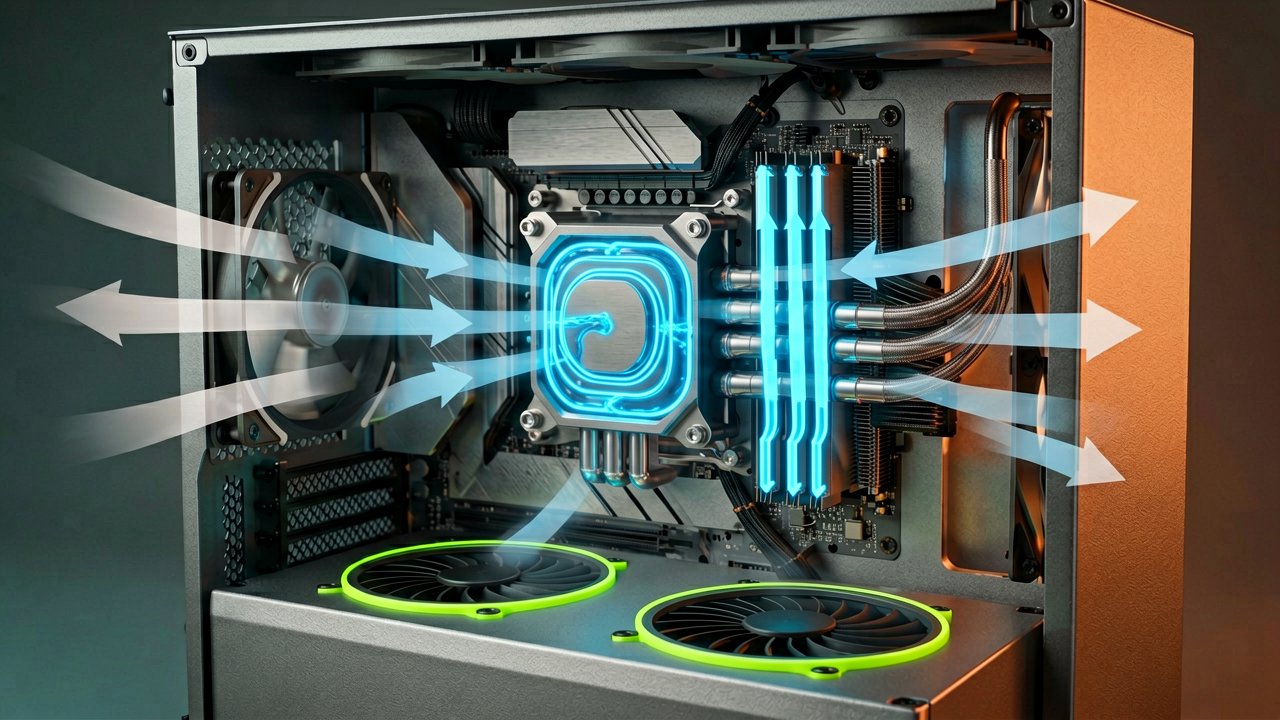
What most reports miss is that silicon is only as fast as its thermal ceiling allows. While many manufacturers opt for thinner profiles that inevitably force aggressive throttling, Gigabyte prioritized raw, sustained performance by implementing its fully realized WindForce Infinity EX cooling architecture. This design relies on a massive, high-coverage vapor chamber mated to high-density dual-channel inlets on both the keyboard surface and the bottom cover. By transforming the chassis into a true 3D air-channel exchange system, the thermal assembly manages a staggering 230-watt total maximum power budget. This setup keeps the WASD keys cool during long gaming marathons while preventing local neural network training sessions from down-clocking the GPU.
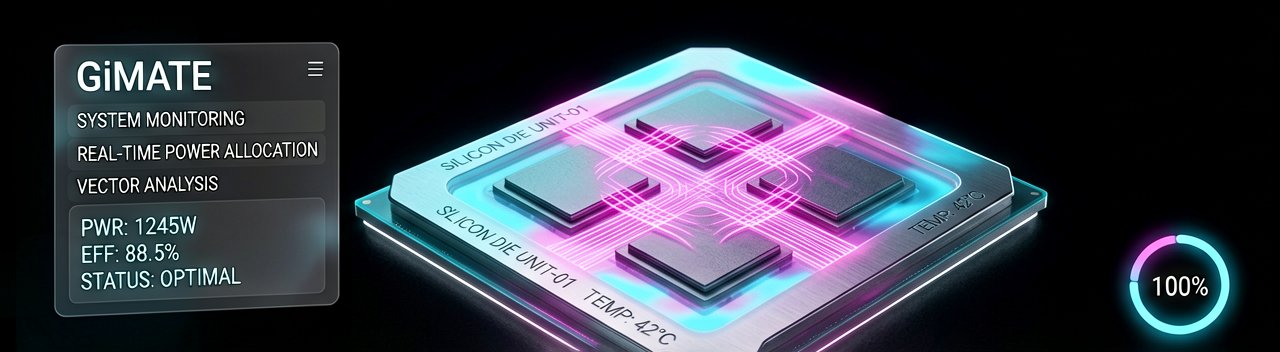
The physical cooling hardware is managed by a software layer known as GiMATE, an in-house intelligence suite that replaces traditional, rigid fan curves. Instead of waiting for a component to hit critical temperatures before spinning up the fans, the pre-trained system monitors active processes in real time to dynamically balance the noise floor and power distribution. If the machine detects a light generative-AI text task, it aggressively routes power to efficiency cores and cuts fan noise completely. Conversely, firing up an intensive game shifts the internal MUX switch instantly, allocating maximum wattage to the hardware to keep the frame delivery steady.
Display Accuracy and Mobile Versatility
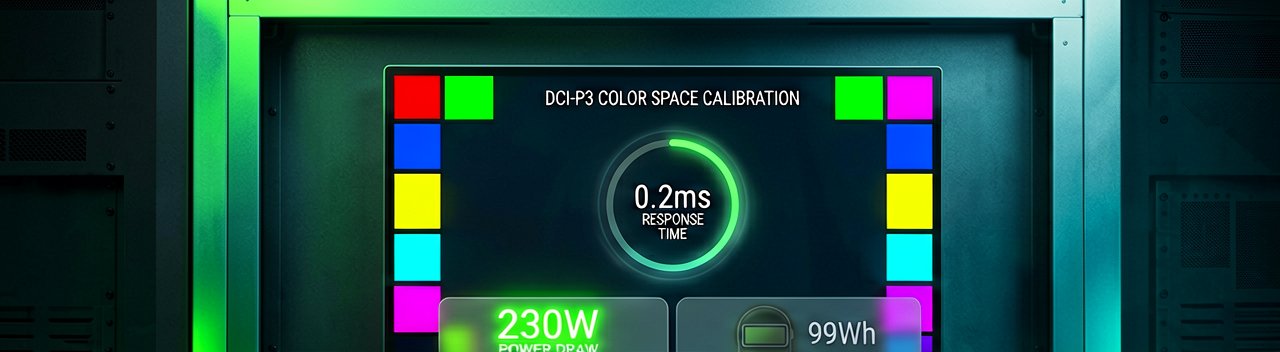
All this raw processing power is funneled into a stunning 16-inch WQXGA OLED display sporting a fast 240Hz refresh rate. Moving past the standard IPS panels found in older mid-tier builds, this 16:10 display uses the latest light-emitting panel materials from Samsung Display. It hits a 1,000,000:1 contrast ratio and covers 100% of the DCI-P3 color space, satisfying both game developers and competitive players alike. The panel factory calibration earns it Pantone validation, making it an excellent dual-use tool for video editors who need color-accurate timelines during the day and low-latency, 0.2ms response times at night.
Gigabyte rounded out the internal architecture by adding a PCIe Gen5 M.2 SSD slot alongside a secondary Gen4 lane, allowing local users to expand their storage up to 4TB for massive data repositories. This storage flexibility is critical for local AI engineers who need to keep large language models close to the processor. Backed by a full 99Wh lithium-polymer battery and Wi-Fi 7 wireless connectivity, the platform operates as a self-sustaining powerhouse that handles high-bandwidth data transfers effortlessly. The AORUS MASTER 16 represents a thoughtful blend of extreme hardware engineering and practical software design, proving that true performance limits are defined by thermal control rather than raw silicon specifications alone.
The Efficiency Paradox of Modern Performance
Reading Between the Lines: The marketing surrounding the 230-watt power ceiling presents a fascinating contradiction in what it means to be a "mobile" workstation. While engineers deserve immense credit for packing desktop-class thermal capabilities into a 16-inch chassis, the reliance on such massive power budgets completely redefines the concept of portability. A 99Wh battery—the maximum capacity legally allowed on commercial flights—serves less as an engine for untethered productivity and more as an integrated uninterruptible power supply. Operating this machine at full tilt away from a wall outlet results in battery depletion measured in minutes rather than hours, highlighting a widening gap between peak processing capability and genuine battery endurance.
Furthermore, relying on a pre-trained software suite like GiMATE to manage these intense thermal states introduces long-term predictability concerns. Silicon optimization relies on software accurately guessing what user workflows require in real time. When these algorithms guess incorrectly—perhaps misinterpreting an unoptimized indie game as a light productivity app—performance can stutter unexpectedly while the system shifts power states. The continuous negotiation between the Intel or AMD efficiency cores and the power-hungry NVIDIA GPU creates an intricate layer of software dependency that may complicate system stability as drivers evolve over the lifecycle of the machine.
This dynamic shifts the long-term ownership proposition toward aggressive maintenance. High-density dual-channel inlets and vapor chambers are notoriously sensitive to dust accumulation, meaning that maintaining the advertised 230-watt thermal headroom requires a clean operating environment. Over time, micro-obstructions can degrade thermal efficiency, forcing the software to throttle the hardware sooner than it would out of the box. For the consumer, this creates an ongoing battle to maintain optimal conditions, proving that mobile AI dominance is not just a hardware milestone, but an ongoing service commitment from the user.
We have officially entered an era of mobile computing where laptops require the thermal engineering of a small spacecraft and the power draw of a microwave just to let us generate images of cats in business suits locally.
Artūras Malašauskas is an AI Systems Integrator with 20+ years of production-grade web engineering experience. He has designed, shipped, and scaled enterprise Python/PHP systems for logistics, SaaS, and public-sector clients. For the past year, he has focused exclusively on AI integrations: deploying open-source LLMs, building generative media pipelines (image, audio, video), and engineering multi-agent workflows for real production environments. His standard: reproducibility, security, cost-efficient inference—no vaporware. He documents and evaluates emerging AI tooling, separating verified capabilities from marketing noise. Technical editor at: muza-ai.eu, ai-verslas.lt, ai-naujinos.lt Connect on LinkedIn
Comments