The End of Raw Power: Why Efficiency Architecture is the Only Surviving AI Stock Play
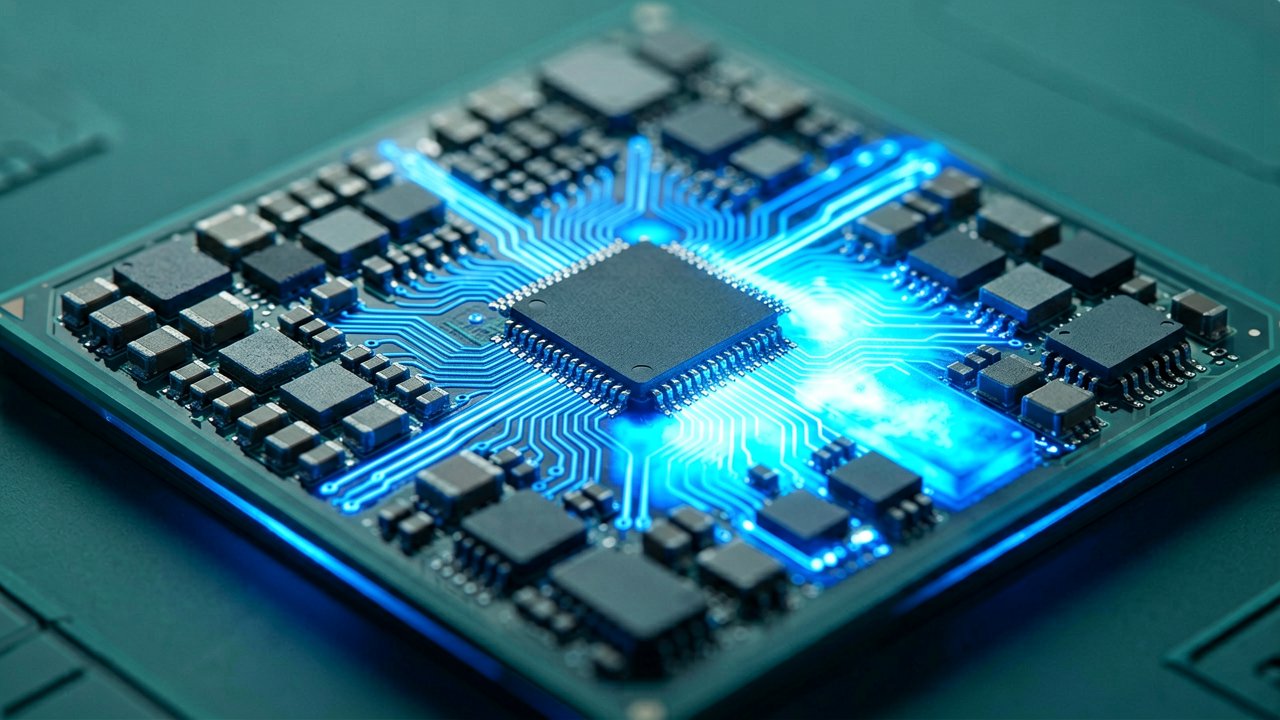
For the last few years, the semiconductor market acted like a muscle car convention. Wall Street cheered for the loudest engine, bidding up any stock that promised more raw FLOPS, more parameters, and bigger clusters. But as the silicon dust settles in mid-2026, the economics of artificial intelligence are forcing a brutal reality check. The training hype cycle is winding down, and the industry has hit what architects call the "Inference Flip." According to data cited by Yahoo Finance, running existing models now commands roughly two-thirds of all AI computing power, completely eclipsing the compute used to train them.
This massive structural shift exposes the fatal flaw of general-purpose GPUs. They are brilliant at the heavy, chaotic lifting required for training, but they are brutally expensive and power-hungry when applied to day-to-day deployment. When an enterprise AI agent needs to respond instantly, a massive, power-bleeding graphics chip is total overkill. The market doesn't need bigger hammers anymore; it needs sharper scalpels. This is precisely why the smartest capital on the street is quietly rotating away from raw processing monsters toward companies redefining value through lean, efficiency-focused architectures.
The Structural Pivot from Training to Tokens
To understand why efficiency architecture wins, you have to look at the bottom line of the modern data center. The initial rush to build LLMs was treated as a capital expenditure race where cost was no object. Now, tech giants are spending a combined fortune on infrastructure, and the conversation has shifted from building brains to selling tokens. Optimization is no longer a technical preference; it is the difference between a profitable digital service and an unsustainable cash burn. When millions of users ping an API simultaneously, standard hardware setups choke on latency and fluctuate wildly in performance.
Smart chip design bypasses this chaos by throwing out the old general-purpose computing handbook. By designing silicon built strictly around predictable mathematical execution patterns—like the deterministic workflows inherent to transformer models—innovative architectures eliminate the expensive, power-hogging components that crowd traditional processors. There is no need for complex caching or speculative execution when the data pathways are already mapped out at compile time. This radical simplification achieves a massive leap in token throughput per watt, allowing platforms to deliver blistering real-time inference speed without triggering an energy crisis.
Why the Industry Giants are Buying In
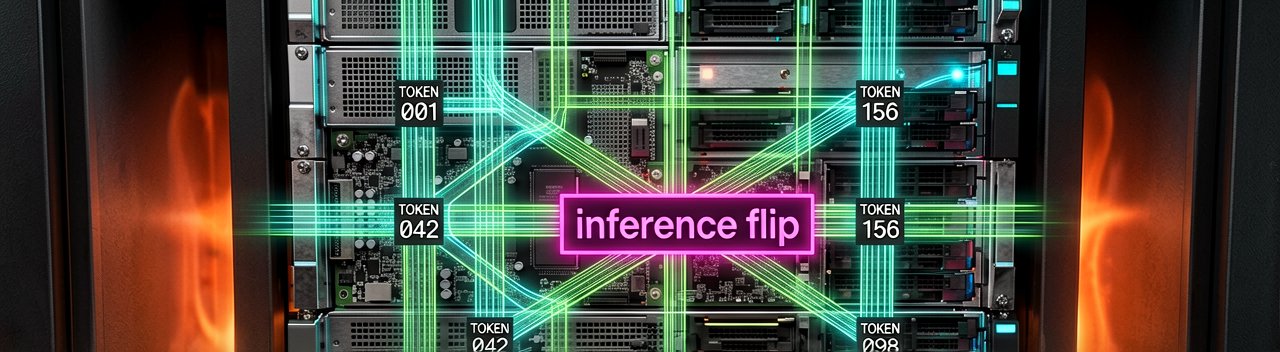
The validity of this lean architectural approach was recently confirmed by the ultimate industry gatekeeper. In an uncharacteristic move that sent shockwaves through the semiconductor ecosystem, Nvidia executed a massive $20 billion strategic transaction to acquire the foundational inference assets and talent of Groq, a pioneer in specialized Language Processing Units. Analysis from Counterpoint Research details how this specific technology is being woven into next-generation server stacks to rescue enterprise applications from crippling latency bottlenecks. This is not just a standard IP acquisition. It is an explicit admission from the market leader that the era of the one-size-fits-all GPU is officially over.
By integrating deterministic, compiler-first architecture into broader data center ecosystems, developers are suddenly seeing inference throughput metrics skyrocket by multiples rather than incremental percentages. This structural evolution is driving immense value to a distinct class of infrastructure stocks. Companies that specialize in ultra-efficient chip designs, advanced high-bandwidth memory routing, and targeted custom silicon execution are suddenly sitting on a mountain of secular demand. They are the structural backbone of an economy transitioning from experimental generative toys to real-time, autonomous agentic systems.
Securing Sustainable Value Beyond the Hype
For investors looking past the immediate horizon, the takeaway is crystal clear. Betting on sheer computing scale yields diminishing returns when gigawatt-scale power limitations and thermal throttling become the definitive bottlenecks of the modern cloud. The high-flying stock valuations built entirely on supplying hardware for initial model builds face an inevitable plateau as those models mature. Sustainable market leadership will belong to the architectures that democratize AI by making it commercially viable to run continuously at scale.
The true winners of the next decade will be the efficiency plays that strip away the overhead, slash the cost per token, and fit seamlessly into standard enterprise hardware footprints. As tech infrastructure spending marches toward the multi-trillion dollar mark, companies prioritizing architectural elegance over brute force are no longer just alternative options. They represent the only viable financial path forward.
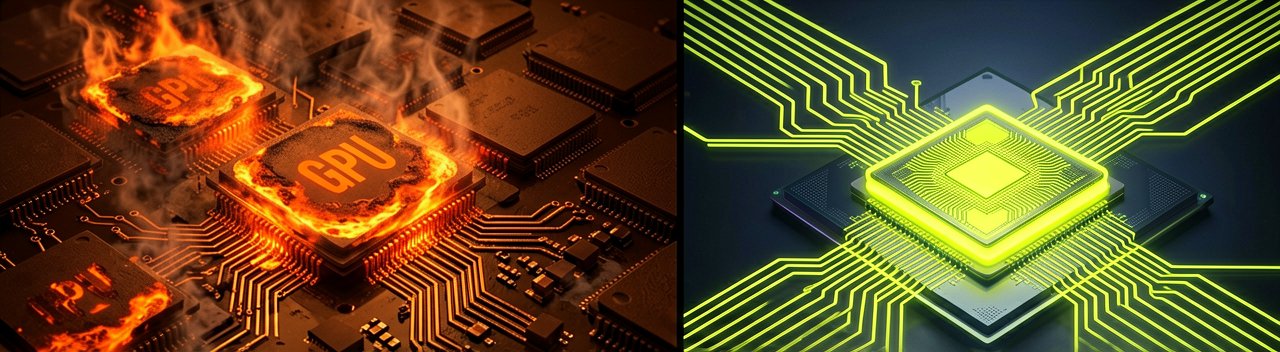
Reading Between the Lines: The prevailing Wall Street narrative suggests that the transition to specialized inference architecture will be a smooth, linear ascent toward permanent profitability. This assumption is dangerously naive. It completely ignores the historical friction between hardware innovation and software stability. Silicon valleys are littered with the corpses of brilliantly designed, hyper-efficient processors that failed because developers simply refused to rewrite their software libraries to support them. Efficiency means nothing if it requires an enterprise to spend millions of dollars and thousands of engineering hours porting legacy applications over to a proprietary, untested instruction set.
Furthermore, a glaring contradiction lies at the heart of the current infrastructure boom. Hyperscalers are simultaneously touting their corporate climate commitments while aggressively building out data centers that strain municipal power grids to their absolute breaking points. The pivot to efficient inference architecture is frequently marketed as a green initiative, an elegant technological fix to a glaring environmental problem. In reality, it is driven purely by margin preservation. If a chip design slashes energy consumption by fifty percent, cloud providers will not use half the power; they will simply deploy twice as many chips to maximize their computational throughput, completely neutralizing any theoretical environmental gains.
This relentless drive for efficiency also introduces a hidden, systemic risk to the tech sector: the premature obsolescence of billions of dollars in hardware assets. The capital expenditures of the past three years were built on the premise that general-purpose graphics processors would retain high residual value for a decade. If specialized inference silicon commoditizes token delivery as rapidly as early data suggests, those massive, general-purpose server farms will transform into incredibly expensive, power-bleeding liabilities long before their depreciation schedules wrap up. The industry is effectively sprinting toward a hardware write-down crisis, masked temporarily by creative accounting and relentless marketing hype.
"We spent three years treating artificial intelligence like a theoretical god that just needed more digital sacrifices to grow. It turns out AI is actually just a very demanding utility bill, and the future belongs not to the wizards who built the brain, but to the accountants who figure out how to keep the server room from melting down on a Tuesday."
Artūras Malašauskas is an AI Systems Integrator with 20+ years of production-grade web engineering experience. He has designed, shipped, and scaled enterprise Python/PHP systems for logistics, SaaS, and public-sector clients. For the past year, he has focused exclusively on AI integrations: deploying open-source LLMs, building generative media pipelines (image, audio, video), and engineering multi-agent workflows for real production environments. His standard: reproducibility, security, cost-efficient inference—no vaporware. He documents and evaluates emerging AI tooling, separating verified capabilities from marketing noise. Technical editor at: muza-ai.eu, ai-verslas.lt, ai-naujinos.lt Connect on LinkedIn
Comments