Beyond the Baseboard: How Premium AI Robot Vacuums Became the Brains of the Smart Home
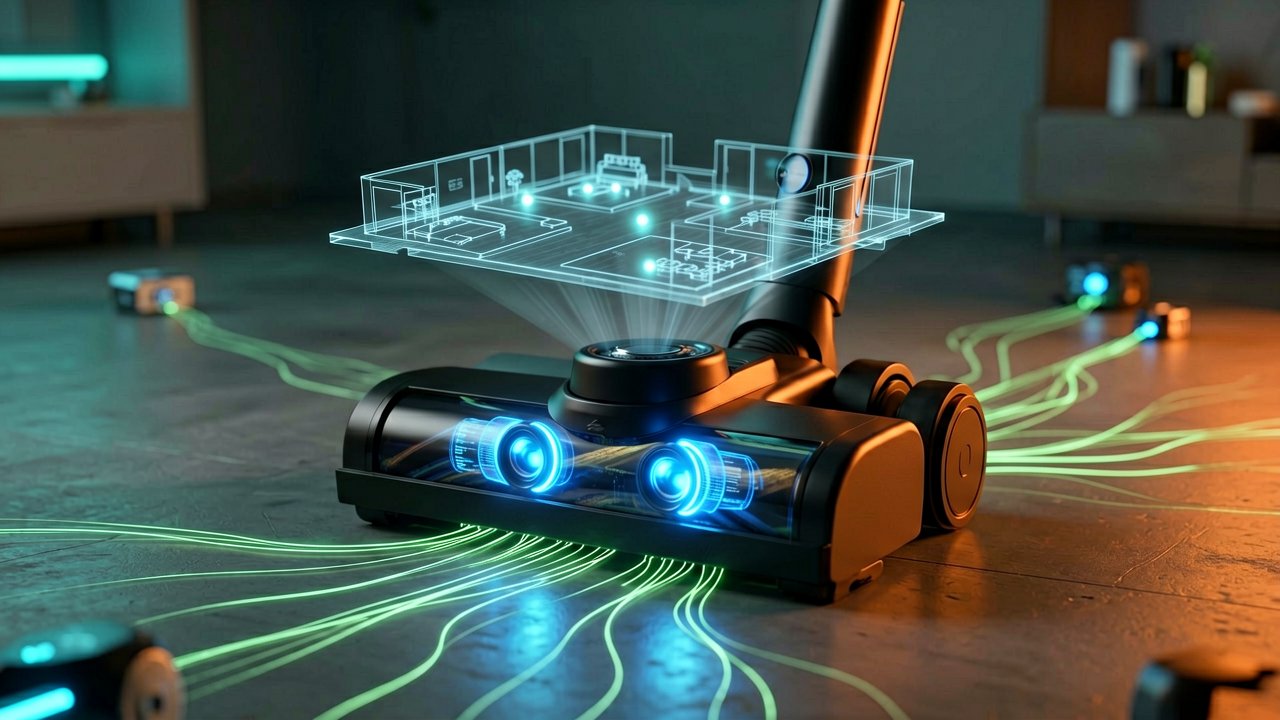
For years, the humble robot vacuum occupied a reliable, if slightly embarrassing, niche in our living rooms. It was a expensive pet toy that occasionally swallowed phone chargers or got terminally confused by a lightweight rug. But if you look at the upper echelon of the market today, that bumbling novelty is entirely gone. Premium robotic vacuum cleaners are undergoing a massive evolutionary leap, shifting from isolated, single-use appliances into intelligent, context-aware hubs. Driven by rapid advancements in onboard AI and local machine learning, these top-tier flagships are quietly anchoring a broader industry pivot toward genuinely integrated home automation.
This transformation is hitting the market with staggering financial momentum. According to a recent analysis by Edison Opto, global robotic vacuum shipments surged past 17.4 million units following robust double-digit year-over-year growth. What is telling, however, is not just how many units are moving, but which ones are capturing consumers' imaginations. The traditional "bump-and-turn" budget cleaners are losing ground to devices priced well north of a thousand dollars. Homeowners are proving willing to pay a hefty premium for vacuums that do not require babysitting, pushing the high-end segment into unprecedented territory. We are witnessing a clear market stratification where consumers treat the robot vacuum not as a mechanical broom, but as a long-term investment in an automated lifestyle.
The Architecture of Autonomous Awareness
The secret sauce driving this shift is multi-sensor fusion. Today's premium floor bots pack more processing power than the computers that guided astronauts to the moon, utilizing dual AI cameras, 3D time-of-flight sensors, and local neural networks. Brands are competing fiercely on their software algorithms rather than raw suction metrics. Industry leader Roborock leveraged its advanced localized decision-making and scene-understanding capabilities to climb to the top spot globally in the smart cleaning robot sector. These advanced systems do more than just dodge stray socks; they identify specific types of flooring, recognize real-time pet messes, and dynamically adapt their cleaning pressure and water temperature on the fly.
The Matter Protocol and the Unified Ecosystem
Having a brilliant appliance means very little if it lives inside a walled garden, speaking a language none of your other tech understands. Historically, robot vacuums were notorious for their fragmented, proprietary apps that refused to play nice with wider smart home routines. That frustration is finally evaporating as major hardware manufacturers implement the Freedompro tracked universal Matter standard. With the maturation of Matter, these premium vacuums are being woven directly into the nervous system of the house over low-power Thread mesh networks.

This cross-platform interoperability transforms how a household operates. Because Matter allows native, local communication between entirely different ecosystems, a premium robot vacuum can now act as a trigger for your entire home. For instance, when your smart lock registers that you have left for the morning, it can securely pass that data to the vacuum. The bot then commands the HVAC system to adjust to an eco-mode, turns off the smart lights, and begins its cleaning run while the house is empty. If it encounters an issue or gets trapped by an unexpected obstacle, it can even push an alert directly to your living room television screen via Matter Casting, signaling for help without requiring you to open a finicky smartphone app.
A Shift in the Competitive Landscape
This relentless drive toward AI-heavy, ecosystem-integrated hardware has fundamentally rewritten the rules of the tech industry, catching legacy brands flat-footed. The most dramatic casualty of this shift was iRobot, the pioneer behind the iconic Roomba. Failing to pivot quickly enough toward advanced AI navigation and robust multi-functional docking stations, the company fell into financial distress, eventually filing for bankruptcy before being reorganised under new ownership. The market belongs to the agile innovators who view the vacuum as a mobile sensor platform. As these machines map our homes with laser precision and communicate flawlessly with our appliances, they are proving that the future of home automation is not a control panel on the wall, but an intelligent helper moving across the floor.
What Most Reports Miss: The Invisible Power Struggle for Domestic Data
Behind the slick marketing videos of self-emptying docks and laser-guided navigation lies a much more complex reality that industry outsiders routinely overlook. The transition of premium robot vacuums from simple mechanical sweepers to mobile AI hubs has turned our living rooms into a primary battlefield for data collection. These machines do not just see the world in terms of dust and debris; they generate highly precise, three-dimensional spatial maps of our most intimate spaces. For silicon valley giants and hardware manufacturers alike, this spatial data is the holy grail of context-aware automation, revealing everything from a household's wealth based on furniture layout to the daily habits of its inhabitants.
This reality has triggered an intense, behind-the-scenes engineering philosophy split among major stakeholders. On one side, legacy appliance makers and new-wave Asian hardware giants are racing to process as much vision data as possible in the cloud to train their massive neural networks. On the other side, privacy advocates and security-focused developers are pushing for strict "edge-only" processing, where video feeds never leave the vacuum's local processor. This tension forces premium brands to walk a razor-thin line, balancing the heavy computing demands of real-time obstacle avoidance with growing consumer paranoia over hackers gaining access to a mobile camera roaming their homes.
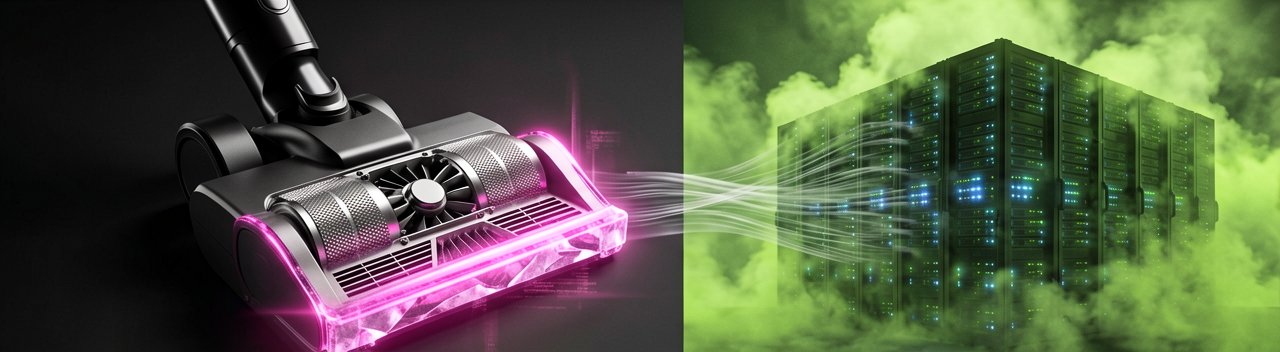
The stakes are further complicated by the corporate scramble to own the operating system of the physical home. Amazon's highly publicized, and ultimately aborted, attempt to acquire iRobot underscored just how critical these mobile mapping bots are to the broader big-tech roadmap. Without the spatial intelligence provided by a robot vacuum, smart speakers, thermostats, and lighting systems remain fundamentally blind, relying on manual programming or coarse motion sensors. By capturing the physical layout of a home, premium vacuums act as the foundational layer that allows other smart devices to understand context, such as knowing exactly which room a user is in when they give a vague voice command.
This data-centric evolution is also forcing a massive shift in how hardware engineering is approached. In the early days of the industry, innovation meant designing a better brush roll or increasing battery capacity. Today, engineering budgets are overwhelmingly dominated by software development, computer vision training datasets, and wireless protocol optimization. A premium vacuum's longevity is no longer judged by how long its motor lasts, but by how frequently its manufacturer pushes over-the-air firmware updates to improve object recognition and patch cybersecurity vulnerabilities, effectively turning hardware purchases into long-term software subscriptions.
Reading Between the Lines: The Automation Paradox
The industry's breathless marketing paints a utopian picture of friction-free domestic bliss, yet this premium automation push introduces a glaring contradiction. We are buying thousand-dollar machines under the premise of saving time, but the hidden cost is a new form of digital labor. Instead of pushing a traditional vacuum for twenty minutes, affluent homeowners now find themselves managing push notifications, cleaning proprietary filtration assemblies, and troubleshooting software handshake failures between rival ecosystem apps. The promise of complete autonomy is routinely undermined by the reality that these hyper-complex machines require a continuous stream of human digital maintenance just to keep running smoothly.
Furthermore, the environmental narrative surrounding these premium appliances deserves a healthy dose of skepticism. Brands frequently highlight eco-modes and energy-efficient charging cycles, yet the absolute lifecycle of these high-tech hubs is fundamentally shorter than the low-tech tools they replace. A traditional corded vacuum can easily last a decade or two with basic maintenance. In contrast, an AI-driven robot vacuum is bound to the relentless cycle of consumer electronics obsolescence. Between the inevitable degradation of lithium-ion batteries and the eventual cessation of software support from manufacturers, these expensive status symbols risk becoming highly unrecyclable e-waste within a few short years.
This reality exposes a profound shift in consumer psychology, where we have traded predictable mechanical durability for fragile algorithmic convenience. As these devices integrate deeper into home infrastructure via the Matter protocol, a single buggy firmware update can theoretically disable a household's entire automated ecosystem. The industry has successfully convinced consumers to treat basic household maintenance as a problem requiring advanced computer vision and network architecture. In doing so, it has created an ecosystem where the simple act of keeping a floor clean is now dependent on global server uptimes, cloud computing infrastructure, and complex corporate software roadmaps.
"We have officially reached peak domestic sophistication when the most advanced supercomputer in the average household spends its entire processing power negotiating a diplomatic truce with a discarded bath mat."
Artūras Malašauskas is an AI Systems Integrator with 20+ years of production-grade web engineering experience. He has designed, shipped, and scaled enterprise Python/PHP systems for logistics, SaaS, and public-sector clients. For the past year, he has focused exclusively on AI integrations: deploying open-source LLMs, building generative media pipelines (image, audio, video), and engineering multi-agent workflows for real production environments. His standard: reproducibility, security, cost-efficient inference—no vaporware. He documents and evaluates emerging AI tooling, separating verified capabilities from marketing noise. Technical editor at: muza-ai.eu, ai-verslas.lt, ai-naujinos.lt Connect on LinkedIn
Comments