The Smart Home Escalation: Eufy HydroJet S2 and MOVA V70 Ultra Complete Push Robotic Cleaning to Extremes
The premium robotic vacuum market is experiencing a massive arms race, and the latest flagships are leaving minor evolutionary updates behind. Anker's eufy division has officially launched its highly anticipated Omni S2, anchoring its floor-scrubbing ambitions around the HydroJet 2.0 system. Meanwhile, rising heavyweight MOVA is aiming directly for the enthusiast crown with the V70 Ultra Complete. These are not just automated sweepers anymore; they are hyper-engineered, AI-driven maintenance appliances built for consumers who are entirely done with manual labor.
What makes this specific hardware generation fascinating is how both brands are tackling the inherent limitations of tiny chassis form factors. For years, corners were left dusty, thick rugs stalled out motors, and base stations felt like a chore to maintain. The tech arriving this spring proves that engineers have stopped treating these machines like clever toys and started viewing them as architectural solutions for modern homes. It is a battle of brute suction force against surgical mechanical extensions, and the spec sheets are genuinely wild.
Eufy's Omni S2: Continuous Real-Time Scrubbing and AI Foresight
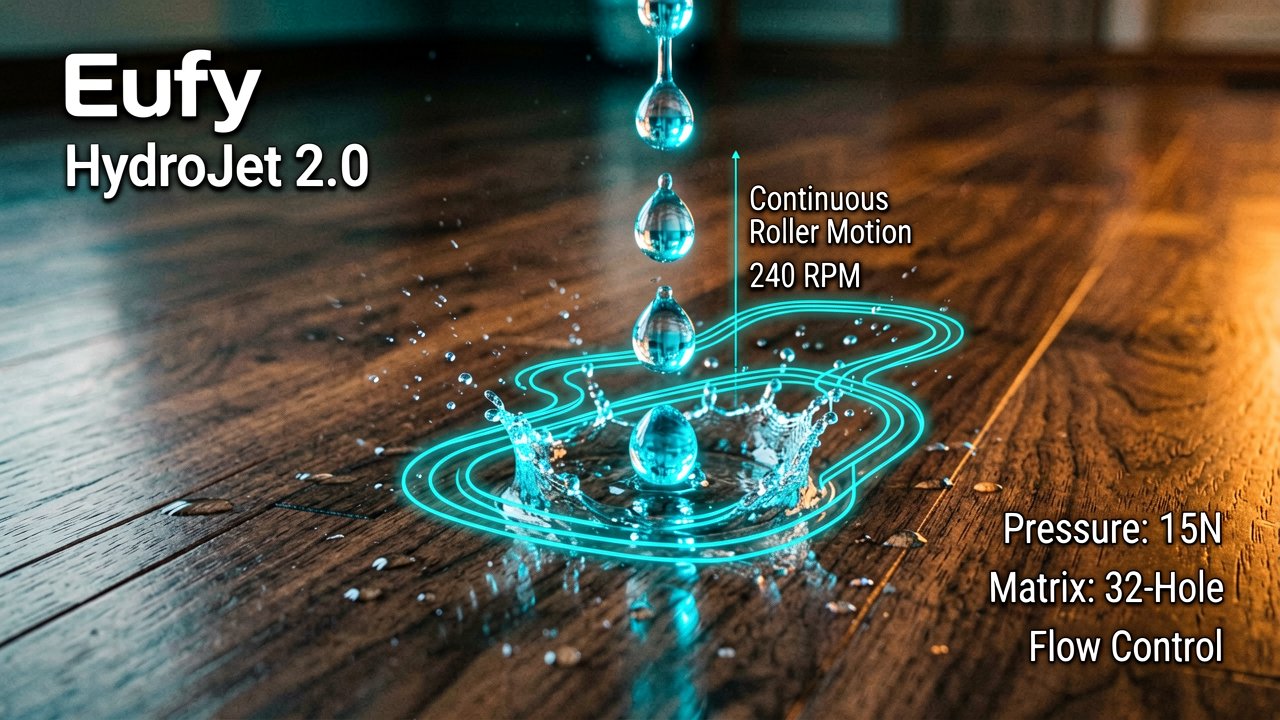
Anker’s premium cleaning division is betting big on the concept of zero degradation. The standout feature of the eufy Robot Vacuum Omni S2 is its HydroJet 2.0 roller mop, which throws out traditional spinning pads in favor of a continuous rolling mechanism. Operating under 15N of downward pressure at 240 RPM, the system uses a 32-hole water injection matrix to wash the roller in real time as it cleans. A dual-scraper structure strips away dirty residue instantly, ensuring the machine never streaks muddy water across pristine hardwood floors. This continuous self-cleaning approach is paired with the brand's CleanMind AI system, utilizing a 3D MatrixEye 2.0 sensor to categorize over 40 distinct mess types and flawlessly navigate around 200 different obstacles.
On the vacuum side, the S2 answers the carpet performance complaints that occasionally bogged down its predecessor, the Omni S1 Pro. The updated AeroTurbo 2.0 motor pulls an extraordinary 30,000 Pa of suction, pulling deep-seated dust out of carpets up to two inches thick. It also features a multi-cyclone dustbin design intended to keep airflow uninhibited, ensuring suction does not drop off over weeks of operation. When it returns home, the 12-in-1 UniClean base station sanitizes the floor-cleaning elements with electrolyzed water, dries components with hot air, and dispenses custom fragrances to keep the charging nook smelling like bergamot or fresh bamboo.
MOVA V70 Ultra Complete: Extreme Reach and Bagless Sustainability
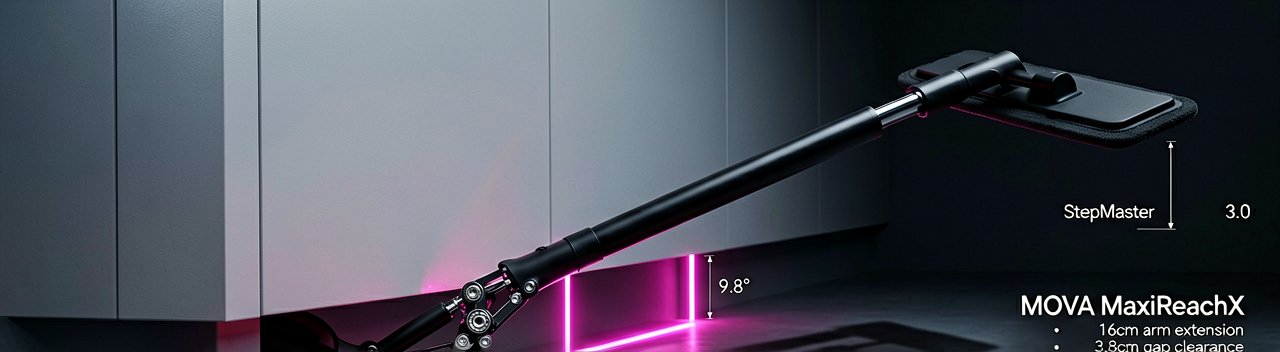
If Eufy is focusing on chemical-free sanitization and continuous washing, the MOVA V70 Ultra Complete is winning the war on physical geography. MOVA has introduced its MaxiReachX technology, featuring mechanical arms that stretch remarkably far beyond the perimeter of the robot. The mop arm extends outward by up to 16 cm, allowing the high-torque, 300 RPM mop pads to glide deep under low-hanging cabinets and right up to baseboards. Simultaneously, the side brush can extend 12 cm forward, sneaking into tight gaps as narrow as 3.8 cm to clear out forgotten dust bunnies. To clear door thresholds and transitions, MOVA deployed a StepMaster 3.0 system, allowing the unit to scale obstacles up to 9 cm high.
Power-wise, MOVA is entering unchartered territory with a staggering 40,000 Pa hurricane-level suction rating, driven by an internal motor spinning at 150,000 RPM. Yet, the real engineering marvel might be at the base station. The V70 Ultra Complete features the EcoCyclone dust collection system, a bagless design that cuts out the recurring cost and environmental waste of disposable paper collection bags. The station handles self-emptying, fills the internal reservoir, and washes the mops using a 100°C PTC heating element before drying them, aiming to eliminate bacteria and foul odors without user intervention.
Two Paths to the Hands-Free Ideal
These two flagships represent distinct philosophies in premium home automation. Eufy leans heavily on sophisticated AI navigation and continuous roller-mop hygiene, attempting to deliver a reliable, low-maintenance daily deep clean that preserves the life of the machine's own filters. MOVA relies on raw mechanical dominance, boasting unprecedented suction metrics and aggressive arm extensions designed to leave absolutely no physical corner unreached. For early adopters watching the space via distributors like MediaMarkt, the choice comes down to whether your home demands the meticulous, real-time sanitation of the HydroJet system or the extreme physical reach and bagless convenience of MOVA’s engineering.
What Most Reports Miss: The Architectural Shift in Robotic Maintenance
The sudden leap to 30,000 and 40,000 Pa suction metrics looks impressive on a retail display box, but industry insiders know these numbers mask a structural transformation in how these machines manage airflow. In earlier product generations, high suction was largely a marketing gimmick; the tiny internal intake channels would clog within minutes of hitting heavy pet hair or thick carpet fibers, rendering the peak motor speed useless. By implementing multi-cyclonic dust bins inside the robots themselves, Eufy and MOVA are borrowing engineering principles from premium cordless stick vacuums. This approach separates heavy debris from fine dust before it ever reaches the primary filter, allowing the motors to sustain their maximum velocity throughout an entire cleaning cycle without choking out.

This massive influx of raw power has forced a radical redesign of the modern home base station, shifting it from a simple charging dock into a miniature utility room. Historically, the Achilles' heel of premium robot vacuums has been the damp, dark environments inside the docking stations, which quickly became breeding grounds for mildew and bacterial odors. MOVA’s adoption of a 100°C PTC heating element represents a massive escalation in the appliance hygiene wars, actively pasteurizing the cleaning pads rather than just gently blowing warm air over them. This approach reflects a growing stakeholder realization that affluent consumers will not tolerate premium automation if the maintenance machine itself requires frequent, unpleasant manual scrubbing.
Furthermore, the physical footprint of these units signals a quiet truce between engineering departments and interior designers. For years, the trend leaned toward increasingly massive, monolithic plastic towers that dominated living room walls. The current crop of flagships tries to mitigate this visual clutter by integrating multi-functional, hidden compartments for water treatment and automated chemical dispensing. Eufy’s inclusion of custom ambient fragrances is a direct response to customer feedback indicating that while floors looked clean after a robotic run, the immediate air quality often smelled stagnant due to recycled dust. By treating air quality and floor hygiene as a singular, unified problem, these brands are shifting from simple gadget manufacturing toward comprehensive home environmental control.
The broader market implications of MOVA’s bagless EcoCyclone system cannot be understated, as it takes aim at a highly lucrative recurring revenue stream. For a decade, the industry standard relied on proprietary paper collection bags, forcing users into a continuous purchasing loop that mimicked the traditional printer cartridge model. Breaking away from this dynamic is a risky, consumer-first gamble that appeals directly to eco-conscious buyers tired of hidden ownership costs. If MOVA can prove that a bagless cyclone system can dump fine particulate into a central bin without releasing dust clouds back into the home, it will likely force legacy brands to abandon their profitable disposable bag ecosystems or risk looking hopelessly outdated.
Reading Between the Lines: The Cost of Over-Engineering the Everyday Clean
The marketing narratives surrounding these ultra-premium machines promise total liberation from household chores, yet they gloss over a glaring paradox: as robots become more autonomous, their mechanical complexity introduces catastrophic points of failure. A machine equipped with articulating mechanical limbs, 32-hole water injection matrices, and internal motors spinning at 150,000 RPM is no longer a simple appliance; it is a highly stressed piece of micro-engineering. When an extending side brush hits an unexpected stray phone charger or a piece of heavy tassel on a rug, the torque spikes can easily strip plastic gears. By chasing the final five percent of hard-to-reach dust, manufacturers are shifting the user burden from basic manual sweeping to navigating complex warranty claims and tracking down specialized replacement parts.
There is also a profound contradiction in the escalating suction war. Pushing suction ratings to a staggering 40,000 Pa requires massive amounts of electrical current, which rapidly drains onboard batteries and necessitates frequent, mid-cycle return trips to the charging base. More importantly, this level of negative pressure can actually damage the very homes it is meant to preserve. High-powered vacuums risk pulling up the adhesives on older vinyl flooring, fraying the edges of delicate antique textiles, and scratching soft wood finishes if a hard particle gets trapped under the intense downward pressure of the chassis. Industry engineers are building machines optimized for laboratory testing parameters, potentially ignoring the messy, fragile realities of diverse, real-world interior architecture.
Finally, the transition toward fully automated water treatment systems introduces a subtle, long-term environmental and plumbing hazard that has yet to be properly scrutinized. Machines that use electrolyzed water and onboard chemical reservoirs to strip away grime must eventually dump that concentrated, greywater sludge into a base station tank. While bagless dust bins solve the problem of paper waste, the user is still left with a bio-slurry tank that must be emptied down a household drain. As these devices proliferate, we are merely trading the simple act of throwing away a dry vacuum bag for the deeply unpleasant task of managing liquefied household waste, proving that true convenience remains an elusive, moving target.
We have finally achieved the dream of the hands-free home: an era where you no longer have to push a vacuum cleaner for twenty minutes a week, because you can spend forty minutes a week cleaning the lasers, descaling the water matrices, and troubleshooting the firmware of a two-thousand-dollar autonomous floor-sanitization droid.
Artūras Malašauskas is an AI Systems Integrator with 20+ years of production-grade web engineering experience. He has designed, shipped, and scaled enterprise Python/PHP systems for logistics, SaaS, and public-sector clients. For the past year, he has focused exclusively on AI integrations: deploying open-source LLMs, building generative media pipelines (image, audio, video), and engineering multi-agent workflows for real production environments. His standard: reproducibility, security, cost-efficient inference—no vaporware. He documents and evaluates emerging AI tooling, separating verified capabilities from marketing noise. Technical editor at: muza-ai.eu, ai-verslas.lt, ai-naujinos.lt Connect on LinkedIn
Comments