Roots in the Soil, Eyes on the Future: Egypt’s Egrobots Drops a Bombshell on AgTech
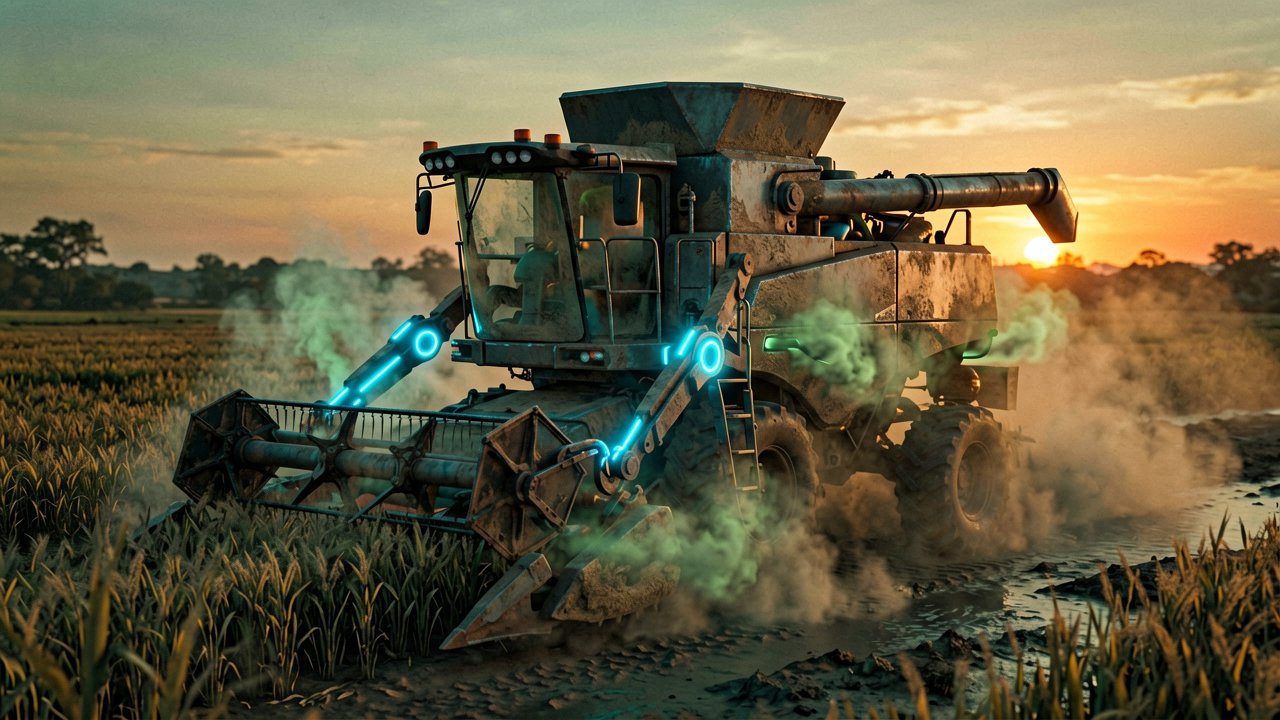
For years, the narrative around agricultural robotics has been heavily dominated by deep-pocketed Western tech hubs or precision manufacturing giants in East Asia. But a quiet revolution has been brewing along the Nile, and it just culminated in a massive milestone for regional deep tech. Cairo-based startup Egrobots has officially pulled back the curtain on the Arab world’s very first fully autonomous harvesting robot, built completely from scratch by home-grown Egyptian engineers. It is a bold, physical AI statement that proves local talent can build high-tier, heavy-duty industrial machinery capable of tackling some of the most stubborn inefficiencies plaguing global food supply chains.
This isn't just a prototype slapped together for a tech convention exhibition floor; it is a serious piece of industrial engineering designed to work under the grueling conditions of commercial farming. The machine relies on a sophisticated blend of computer vision, advanced edge AI, and precision navigation algorithms to map out a field, identify ripe crops, and pick them without needing a human to babysit its path. According to a detailed breakdown by , the chassis can support up to four multi-jointed robotic arms moving simultaneously, clocking a harvesting speed of roughly 160 kilograms of crops per hour while maintaining a non-stop, 24/7 operational cycle. By stripping human error and exhaustion out of the equation, the hardware offers an aggressive answer to the seasonal labor shortages and spiking overhead costs that squeeze farmers across the Middle East every single year.
Breaking the Import Habit with Domestic DeepTech
What makes this rollout particularly fascinating from an economic standpoint is how it challenges the region's traditional reliance on imported tech solutions. Instead of simply buying up existing platforms and adapting them to local soil, the engineering team engineered this system from the ground up, utilizing cumulative expertise that spans decades of complex hardware design. As noted in a report by Waya Media, the founding team brings more than 50 years of collective robotics and industrial systems experience to the table, including previous work developing traffic management infrastructure for Egypt's Ministry of Interior. Backed by heavyweight validation programs like Google for Startups and NVIDIA Inception, Egrobots is strategically positioning itself as a pioneer of sovereign tech development, moving the goalposts for what Middle Eastern hardware startups can actually achieve on the global market.
What Most Reports Miss: The True Gravity of Egypt’s Hardware Gambit
Behind the glossy press releases and the celebratory headlines lies a much grittier reality that only seasoned hardware engineers truly appreciate. Building a software startup in Cairo is challenging enough, but scaling a physical, deep-tech robotics company in an economy historically reliant on imported heavy machinery is an entirely different beast. Egrobots isn't just fighting the typical bugs in an AI model; they are battling the harsh, abrasive realities of dust, extreme heat, and unpredictable agricultural terrain that routinely destroy delicate electronic components. The true triumph here is not just that the robot picks crops, but that local engineers managed to build a robust, dust-resistant, and thermally optimized chassis using a supply chain they had to largely forge themselves.
From a macroeconomic perspective, this breakthrough arrives at a critical juncture for Egyptian agriculture, a sector that contributes roughly 11% to the nation's GDP but remains plagued by archaic infrastructure and immense water waste. Stakeholders within the regional agribusiness ecosystem have long pointed out that labor shortages during peak harvest seasons lead to massive food spoilage before crops ever reach the market. By introducing a continuous, 24/7 autonomous harvesting solution, Egrobots provides a buffer against these seasonal bottlenecks, effectively stabilizing the supply chain and keeping operational costs predictable for large-scale farm operators who are constantly squeezed by inflation.
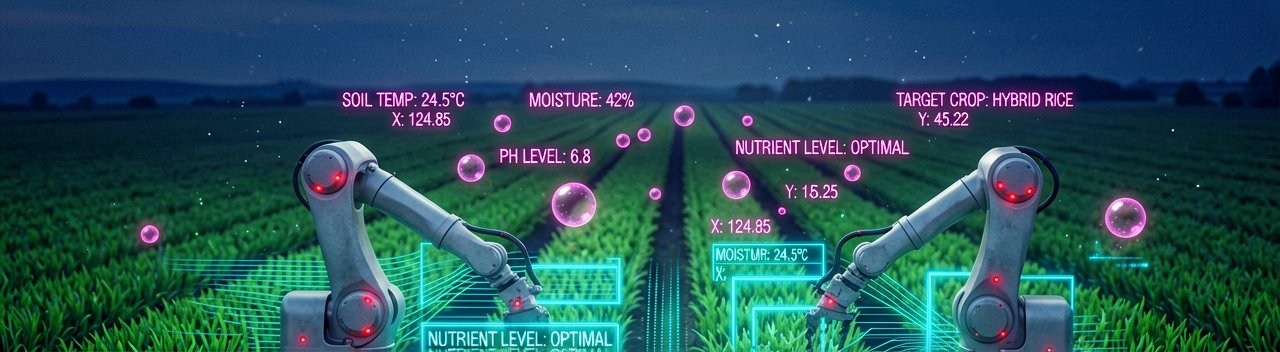
Furthermore, the data collection capabilities embedded within the machine offer an entirely separate layer of value that standard reporting often overlooks. As the robot navigates the fields, its onboard computer vision suite does more than just spot ripe fruit; it gathers granular agronomic data on crop health, soil anomalies, and yield predictions. This transforming of a simple mechanical harvester into a mobile data center allows farmers to transition from reactive land management to highly precise, predictive agriculture. According to industry insiders tracked by Waya Media, the integration of these proprietary data streams is what ultimately caught the attention of global tech accelerators, paving the way for the startup to scale its software ecosystem alongside its physical machinery.
Ultimately, the long-term impact of Egrobots extends far beyond the borders of Egypt, serving as a blueprint for the wider Middle East and North Africa region. For decades, regional tech investment has poured into fintech, e-commerce, and logistics software because hardware was deemed too capital-intensive and risky. By successfully demonstrating a fully functional, sovereign autonomous machine, this team of Egyptian engineers is actively shifting investor mindsets. They are proving that with the right combination of local engineering talent and targeted international mentorship, the Arab world can transition from being mere consumers of global technology to primary innovators on the global stage.
Reading Between the Lines: The Friction Between Innovation and Infrastructure
While the technical achievement of Egrobots is undeniably impressive, the road from a successful product launch to widespread adoption in the agricultural sector is notoriously bumpy. Silicon Valley is littered with the ghosts of agtech startups that built brilliant machinery but failed to account for the entrenched conservatism of rural farming communities. In Egypt and the broader region, land ownership is heavily fragmented, dominated by smallholder farmers who lack the capital to invest in high-end robotics, let alone the specialized infrastructure required to maintain them. For Egrobots to achieve true commercial viability, they will need to look past corporate mega-farms and pioneer creative deployment models, such as robotics-as-a-service, to lower the barrier to entry for ordinary growers.
There is also a fascinating paradox at play regarding the labor market dynamics this technology aims to solve. The startup rightly targets seasonal labor shortages and rising overhead costs as critical pain points for modern farm operators. However, Egypt’s agricultural sector remains one of the largest employers of manual labor in the country, providing livelihoods for millions of citizens. While a 24/7 autonomous harvester introduces massive efficiency gains for the agricultural elite, it simultaneously threatens to displace low-skilled workers in a region already grappling with high underemployment. Navigating this delicate social and economic balance will require careful coordination between tech innovators, corporate agricultural conglomerates, and local policymakers.
Finally, maintaining an edge AI hardware fleet in the field introduces a complex logistical puzzle that software-only startups never have to face. When a cloud-based software platform glitches, engineers can push an over-the-air patch from the comfort of a Cairo office in a matter of minutes. When a multi-jointed robotic arm suffers a mechanical failure in the middle of a dusty field three hours outside the capital, the solution requires spare parts, physical distribution networks, and field technicians. To truly scale and compete against global giants, Egrobots must invest just as heavily in building out a localized, agile maintenance ecosystem as they did in training their neural networks, ensuring their machines spend more time harvesting and less time waiting for repairs.
It turns out that teaching a robot to recognize a ripe crop is only half the battle; the real test is ensuring the machine survives the relentless dust storms, the local logistics puzzle, and the skepticism of farmers who still trust a pair of experienced hands over a motherboard. If Egrobots can pull that off, they won't just disrupt Middle Eastern agriculture—they might actually convince venture capitalists that investing in hardware isn't a form of corporate masochism.
Artūras Malašauskas is an AI Systems Integrator with 20+ years of production-grade web engineering experience. He has designed, shipped, and scaled enterprise Python/PHP systems for logistics, SaaS, and public-sector clients. For the past year, he has focused exclusively on AI integrations: deploying open-source LLMs, building generative media pipelines (image, audio, video), and engineering multi-agent workflows for real production environments. His standard: reproducibility, security, cost-efficient inference—no vaporware. He documents and evaluates emerging AI tooling, separating verified capabilities from marketing noise. Technical editor at: muza-ai.eu, ai-verslas.lt, ai-naujinos.lt Connect on LinkedIn
Comments