Beyond the Chatbot: WisdomTree Bets Big on the Era of Physical AI
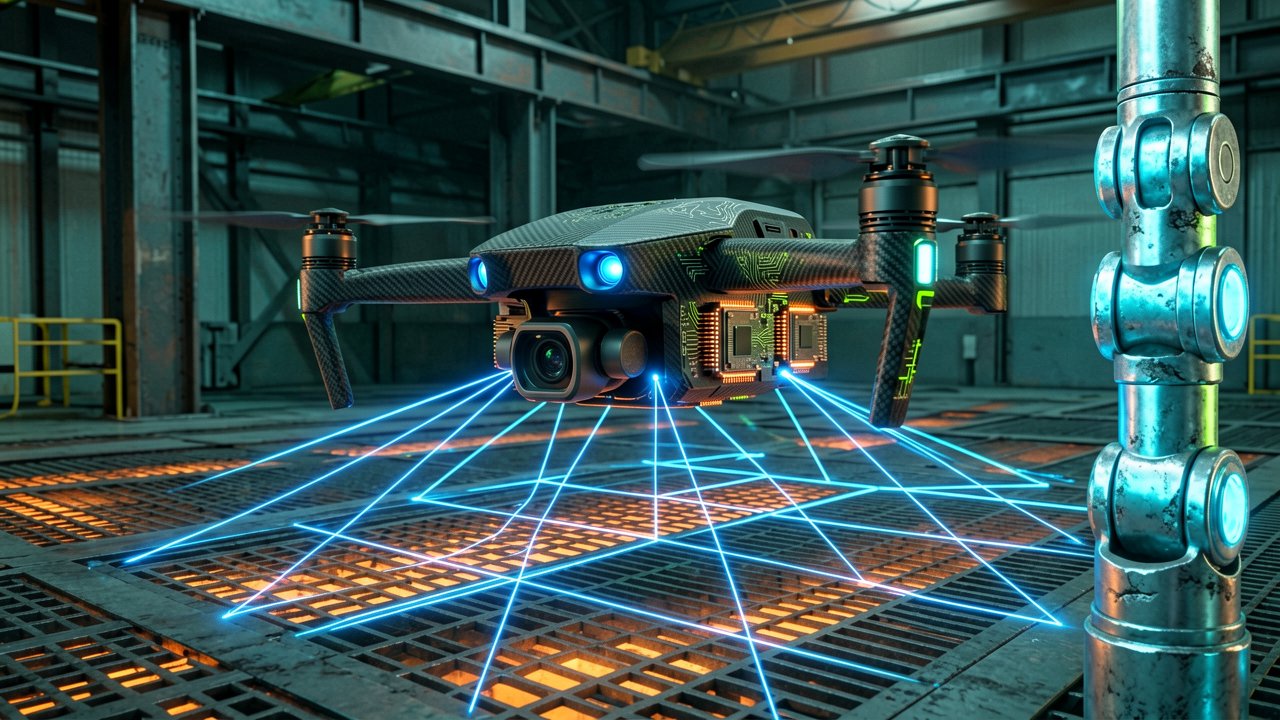
For the past few years, the artificial intelligence hype cycle has been thoroughly dominated by software. We have obsessed over large language models, pixel-perfect image generators, and enterprise chatbots that automate our daily busywork. But the digital world is getting crowded, and the real frontier is moving outside the server rack. WisdomTree is banking heavily on this transition with the launch of its new WisdomTree Physical AI, Humanoids, and Drones Fund (trading under the ticker WDRN on the Cboe BZX Exchange). It is a calculated wager that the next explosive wave of value creation will happen when intelligence integrates fully with mechanical hardware.
This fund is not just another rehashed tech portfolio tracking the old guard of internet giants. Instead, it explicitly targets what industry insiders call Physical AI—the technology that allows machines to perceive their environments, reason through complex scenarios, and execute tasks autonomously in our chaotic, real-world spaces. According to details shared by ETF Trends, the underlying index filters companies using a proprietary scoring system based purely on their direct relevance to physical automation. While it still leverages heavy-hitters like Nvidia and Tesla, which together make up roughly 11% of the initial allocation, its primary focus remains locked on hardware advancement rather than abstract code.
A Full-Stack Play for the Physical Economy
What makes this strategy worth watching is its expansive definition of the automated value chain. WisdomTree divided its investment thesis into five distinct industrial pillars: humanoid robotics, autonomous mobility, smart manufacturing, next-generation logistics, and specialized robotic applications spanning agriculture and medicine. This structural design is vital because buying into the future of robotics requires more than just picking a cool-looking bipedal machine. It demands backing the sensors, the edge-computing chips, and the massive manufacturing frameworks that make these devices viable at scale.
There is real urgency behind this push, driven largely by severe structural labor shortages in manufacturing and logistics worldwide. For European and global investors looking to play this trend, WisdomTree also offers a UCITS-compliant equivalent listed across major European exchanges, carrying a total expense ratio of 0.45%, as documented by JustETF. The tech sector has spent a long time teaching computers how to think and talk like humans, and now the race is officially on to give those digital brains a pair of working hands.
What Most Reports Miss: The Convergence of Labor and Compute
The sudden influx of capital into physical automation is not a sudden whim, but a necessary reaction to a brewing macro-economic crisis. For decades, global supply chains relied on an abundance of cheap industrial labor to keep manufacturing and logistics costs low. Today, that foundation is eroding due to rapidly aging workforces in Western nations and East Asia. Industrial giants are realizing that the software tools of the last decade cannot move boxes, assemble circuit boards, or harvest crops. The push toward humanoid robotics and autonomous drones is a desperate, multi-billion-dollar race to build a flexible labor supply that never retires, strikes, or slows down.
This shifting landscape explains why a fund like WisdomTree is drawing a hard line between pure-play software and physical machinery. Building an AI that generates text requires massive datacenters and immense power, but the digital output remains relatively low-risk. Conversely, building an AI that controls a 300-pound humanoid robot moving through a human-occupied factory requires real-time processing at the edge, ultra-low latency, and flawless spatial awareness. If an enterprise chatbot makes a mistake, it hallucinates a fact; if a physical AI makes a mistake, it damages expensive machinery or compromises workplace safety. Consequently, the engineering barriers to entry are vastly higher, creating a protective moat around the hardware pioneers holding the necessary patents.
Skepticism remains high among traditional value investors who remember the overhyped robotics bubbles of the early 2010s. Early automated systems were brittle, expensive, and required rigid, highly controlled environments to function at all. The breakthrough this time around lies in the software-hardware feedback loop. Modern foundation models allow robots to learn through imitation and reinforcement learning in simulated environments before they ever touch a physical factory floor. This drastically cuts down development timelines, transforming what used to be a decade-long hardware R&D cycle into a fast-paced software deployment timeline.
From a portfolio construction standpoint, the inclusion of autonomous drones indicates a maturation of the commercial unmanned aerial vehicle market. Once viewed primarily as military hardware or hobbyist toys, drones have quietly become essential infrastructure for automated inventory management, agricultural monitoring, and last-mile logistics. By grouping humanoids and drones under a single investment thesis, asset managers are recognizing that the underlying technology stack—computer vision, battery density, and edge-AI processing—is identical. The market is no longer treating these machines as isolated novelties, but as different form factors of the exact same cognitive automation wave.
Reading Between the Lines: The Friction Between Hype and Factory Floors
The marketing narrative surrounding physical AI paints a utopian picture of seamless automation, but Wall Street's enthusiasm glosses over a harsh manufacturing reality. Silicon Valley thrives on the concept of rapid iteration, where software updates are pushed overnight to fix glaring bugs. This "move fast and break things" ethos falls completely flat when applied to heavy industrial machinery and humanoid robots. A software bug in a mobile application causes a minor annoyance, but a glitch in an autonomous drone or a multi-axis robotic arm can halt an entire automotive assembly line, costing a manufacturer tens of thousands of dollars per minute. The financial risks of deploying unproven hardware mean that industrial adoption curves will be measured in long years, not quarters.
Furthermore, a glaring contradiction sits at the heart of the humanoid robotics thesis. Proponents argue that building robots with human form factors is the most efficient path because our world is already engineered for human bodies. While true in theory, this assumption ignores the staggering energy and mechanical inefficiencies of bipedal locomotion. For the vast majority of warehouse and logistics tasks, a wheeled robot or a fixed gantry system remains vastly more reliable, cheaper to maintain, and energy-efficient than a complex, top-heavy humanoid machine. Investors pouring capital into these funds may find that the most visually impressive robots in marketing videos are the least economically viable on an actual factory floor.
We must also look at the massive geopolitical and supply chain vulnerabilities underlying this technology. While the intellectual property and AI training models are largely driven by Western tech firms, the physical components—rare earth magnets, precise servomotors, and advanced lithium batteries—remain deeply consolidated within Asian supply chains. A fund trading heavily on the proliferation of physical automation is inherently exposed to the volatile trade tensions and export controls governing these critical materials. True independence in physical AI requires rewriting global manufacturing logistics, an endeavor that will require trillions of dollars and decades of infrastructure development.
Ultimately, the transition from digital AI to physical machinery shifts the core metric of corporate success from software margins to industrial scaling capacity. Tech companies accustomed to 80% gross margins will find themselves wrestling with the low-margin, capital-intensive realities of hardware manufacturing, warranty claims, and physical maintenance networks. It is entirely possible that the biggest financial winners of the physical AI revolution will not be the high-flying robotics startups themselves, but the legacy industrial component manufacturers supplying the mundane sensors and actuators that keep these machines moving.
Teaching a computer to pass the bar exam turned out to be the easy part; the real challenge is building a robot that can reliably change a lightbulb without suing its creator for damages or knocking over the ladder.
Artūras Malašauskas is an AI Systems Integrator with 20+ years of production-grade web engineering experience. He has designed, shipped, and scaled enterprise Python/PHP systems for logistics, SaaS, and public-sector clients. For the past year, he has focused exclusively on AI integrations: deploying open-source LLMs, building generative media pipelines (image, audio, video), and engineering multi-agent workflows for real production environments. His standard: reproducibility, security, cost-efficient inference—no vaporware. He documents and evaluates emerging AI tooling, separating verified capabilities from marketing noise. Technical editor at: muza-ai.eu, ai-verslas.lt, ai-naujinos.lt Connect on LinkedIn
Comments