The Tamagotchi for AI Agents: Anthropic and OpenELAB Unveil a $30 Window Into Claude’s Brain
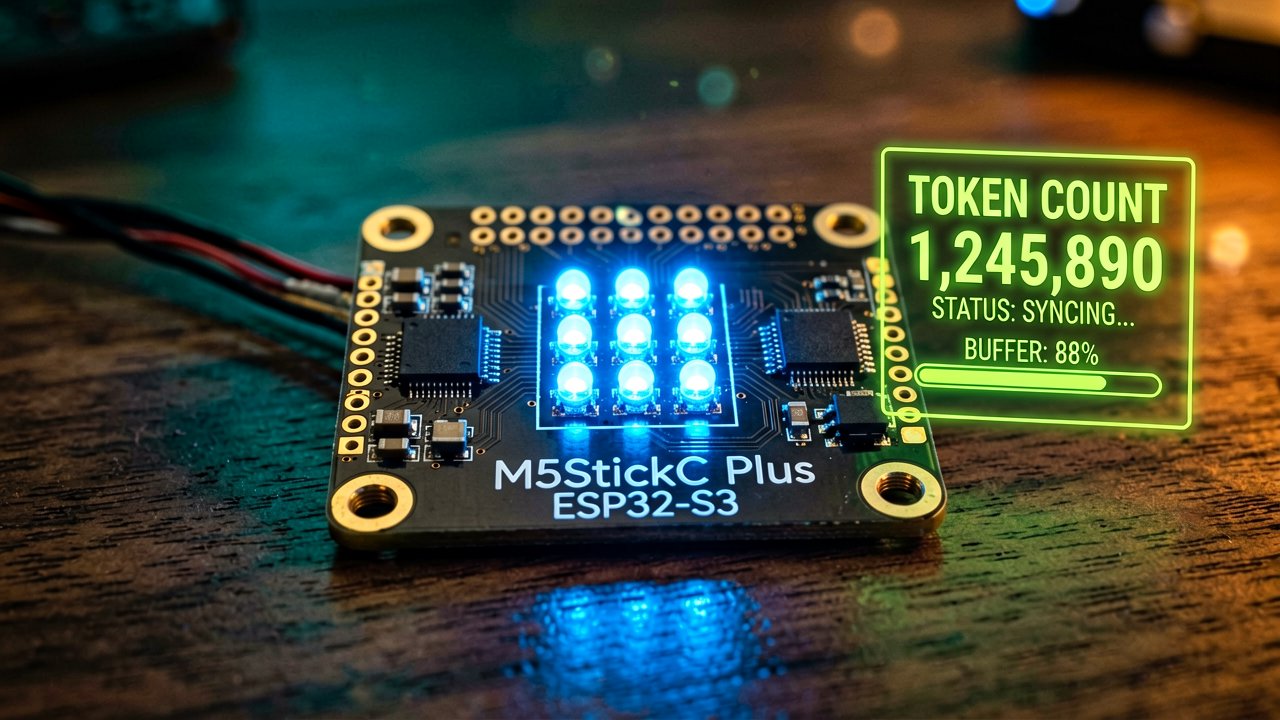
AI assistants have spent years trapped behind glass screens, silently crunching tokens while leaving users guessing what happens mid-thought. Anthropic is changing that dynamic by open-sourcing the Claude Desktop Buddy protocol, a lightweight hardware bridge that transforms affordable ESP32-S3 development boards into interactive desk companions. The initiative, popularized through community implementations by groups like OpenELAB and showcased at recent developer events, pairs the digital brain of Claude with a physical gadget that acts as an ambient activity tracker and gatekeeper. For roughly $30 in off-the-shelf components, users can build a dedicated console that physically pulses, reacts, and requests human permission as Claude executes local workflows.
The physical companion connects directly to the Claude desktop application on macOS and Windows via Bluetooth Low Energy. Rather than forcing developers to buy proprietary gear, Anthropic designated the ESP32-powered M5StickC Plus development board as its official reference hardware, alongside recommendations for tactile variants like the M5Stack Cardputer. The device tracks live token usage, celebrates milestones, and alters its on-screen facial expressions depending on the current computing load. When Claude enters deep execution loops—such as managing files or writing code via autonomous local tools—the little desk accessory acts as a real-time monitor, ensuring users always know exactly when an AI agent is working or idling.
Behind the Scenes: Turning Invisible AI Cycles into Tactile Control
The real genius of this hardware initiative is not the novelty of a pixelated face on your desk, but how it solves a compounding UX bottleneck born from autonomous agent frameworks. As Anthropic shifts Claude from a passive chatbot into an active workplace agent through tools like Claude Code and local workspaces, the interaction model changes entirely. Instead of answering single prompts, the AI now structures multi-step plans that edit local files and run terminal commands. Waiting for a complex agent loop to finish leaves the user in an informational vacuum. The Desktop Buddy fills that void by sweating during heavy sessions and displaying specific animations to reflect what the underlying model is trying to achieve.
Beyond ambient status tracking, the device acts as a hardware-level firewall for local computer operations. When Claude attempts an action that requires a security check, the desktop software passes a permission prompt over Bluetooth using the open Nordic UART Service protocol. Instead of forcing users to continually tab back into a terminal or browser windows, the gadget utilizes physical buttons to approve or deny the action instantly. It is a clever blend of modern artificial intelligence and old-school consumer hardware ergonomics, turning what could be tedious administrative overhead into an intuitive click.
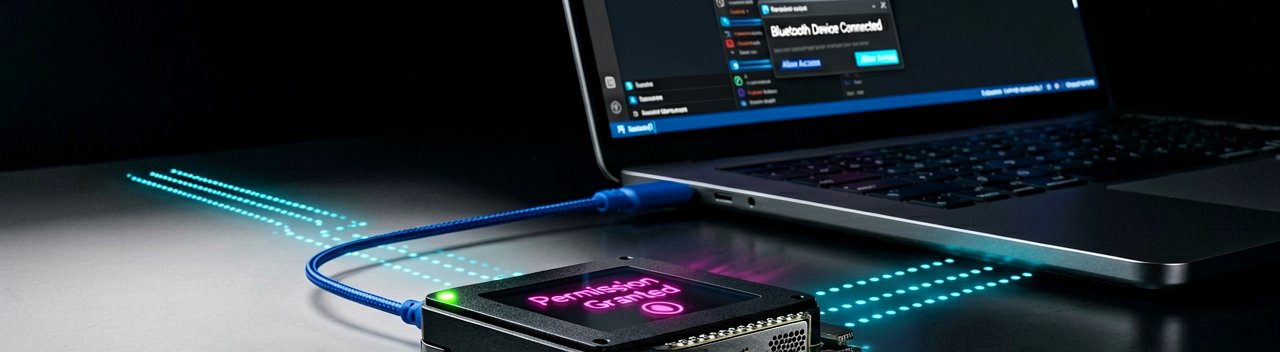
Makers and community ecosystems have rapidly capitalized on the protocol openness. Educational groups like OpenELAB have published detailed flashing guides using standard , allowing amateur builders to bypass complex setups and get devices up and running via a simple USB-C flash. Because the entire wire protocol specification is completely public and documented with JSON message structures, the hardware reference design is just a starting point. Tinkerers are already adapting the codebase to power larger external displays, custom mechanical macropads, and alternative microcontrollers like the Raspberry Pi or nRF52 series.
This move underscores an ideological split in how top-tier AI labs approach consumer hardware integrations. While other tech giants lean into locked-down ecosystem plays or high-priced wearable accessories, Anthropic's choice to distribute an open BLE API invites grassroots customization. By relying on highly accessible microcontrollers that cost less than a casual meal, the project establishes a low-friction standard for physical human-in-the-loop AI orchestration. It provides developers a tangible, highly responsive way to manage background computational tasks without disrupting their primary on-screen workspace.
Reading Between the Lines: The Deeper Implications and Pragmatic Realities
The broader narrative framing this release positions it as a charming, hacker-friendly embrace of open-source principles, but a cynical look at the broader enterprise AI pipeline reveals a much pricklier motivation. Anthropic’s pivot into hardware telemetry is not merely a cute gift to the maker community; it is a calculated attempt to solve the "black box" visibility problem that threatens the corporate adoption of agentic software. When an autonomous model operates entirely inside a background loop on a corporate workstation, users naturally grow anxious about security, resource draining, and accidental data exposure. By outsourcing the monitoring infrastructure to a highly visible, physical desk accessory, Anthropic is trying to gamify security and make continuous surveillance feel comforting rather than invasive.
However, a glaring contradiction sits right at the heart of this "cheap hardware" revolution. While the ESP32 chip itself costs next to nothing, keeping a model like Claude 3.5 Sonnet alive to constantly fuel that little device with status updates is an expensive endeavor. The token consumption required to sustain complex local agent execution loops can rack up API costs that dwarf the $30 hardware investment within a few days of heavy programming. This creates a bizarre economic asymmetry where the user is handed a cheap, open-source plastic toy as an interface to manage a highly centralized, proprietary cloud infrastructure that charges them by the millisecond.
Furthermore, relying on a Bluetooth Low Energy bridge introduces its own set of workflow frictions that seasoned developers will recognize immediately. In an era where tech professionals are plagued by device fatigue, adding another accessory that requires its own firmware updates, battery management, and occasional wireless pairing drops feels counterproductive to true efficiency. Using physical buttons to approve terminal commands is a novel mechanism, but the moment an engineer needs to approve fifty administrative file changes in a row, the physical click-to-approve interface risks degrading into a literal wrist-cramping bottleneck.
Ultimately, this experiment exposes a larger industry truth: the current software interfaces we use for computing are profoundly unsuited for autonomous AI agents. We are trying to shoehorn proactive, independent software entities into operating systems designed thirty years ago for reactive, human-triggered windows and menus. While a pixelated face on an ESP32 board is a creative stopgap measure for the developer community, it highlights just how desperately the tech industry needs a completely native redesign of human-computer interaction paradigms before autonomous agents can truly blend into the daily workplace.
"We have successfully reached the peak of technological irony: utilizing an incredibly advanced, multi-billion-dollar neural network capable of rewriting software architecture, just to give it the pixelated consciousness of a 1996 digital pet that begs for human permission before it accidentally deletes your root directory."
Artūras Malašauskas is an AI Systems Integrator with 20+ years of production-grade web engineering experience. He has designed, shipped, and scaled enterprise Python/PHP systems for logistics, SaaS, and public-sector clients. For the past year, he has focused exclusively on AI integrations: deploying open-source LLMs, building generative media pipelines (image, audio, video), and engineering multi-agent workflows for real production environments. His standard: reproducibility, security, cost-efficient inference—no vaporware. He documents and evaluates emerging AI tooling, separating verified capabilities from marketing noise. Technical editor at: muza-ai.eu, ai-verslas.lt, ai-naujinos.lt Connect on LinkedIn
Comments