AMD Takes Local AI Personal with New Ryzen Max 400 Chips and the $3,999 Ryzen AI Halo
AMD is making a massive play for the local AI market, aggressively expanding its hardware stack to keep developers from defaulting to Nvidia. The headline acts of this latest push are the brand-new Ryzen AI Max 400 series processors—internally dubbed "Gorgon Halo"—and the formal commercial launch of the Ryzen AI Halo developer platform. Team Red is pitching these as the ultimate solution for running gargantuan Large Language Models (LLMs) without relying on a single string of cloud code, keeping latency low and data entirely private.
According to the latest coverage from Tom's Hardware , the Ryzen AI Halo mini-PC will officially open for pre-orders in June starting at a cool $3,999. It is an unapologetic shot across the bow of Nvidia’s DGX Spark. While an expensive piece of kit for the average consumer, AMD justifies the price tag by framing it around the "token economy," calculating that local development can save teams thousands of dollars a month in cloud compute costs.
Gorgon Halo: Massive Unified Memory Upgrades
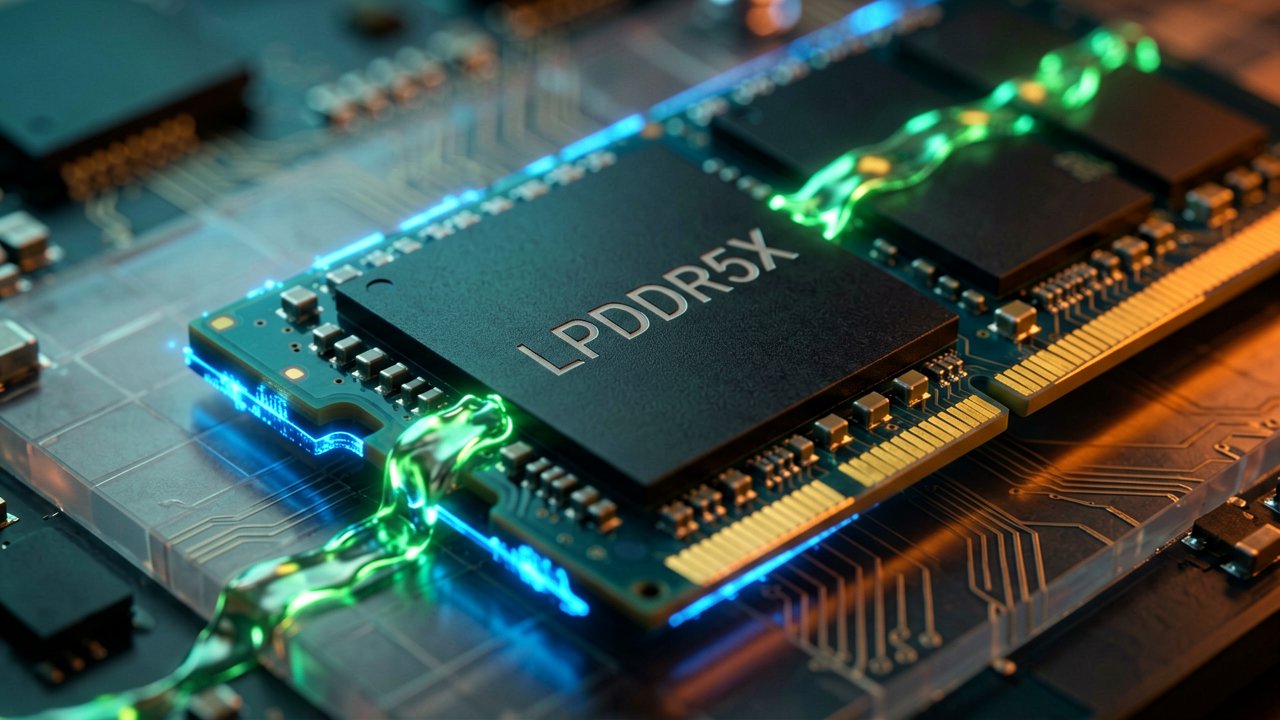
The engineering marvel behind this rollout is the new Ryzen AI Max 400 processor series. This isn't just a mild speed bump; it is a fundamental reconfiguration of what an APU can handle. By upgrading the memory controllers on the silicon, AMD has pushed the unified memory boundary up to an astonishing 192GB of LPDDR5X. Because the system memory is shared, users can manually allocate up to 160GB of that pool strictly as VRAM for the integrated graphics. That is enough headroom to run massive, 300-billion-parameter models directly on a single chip, a feat that previously required daisy-chaining multiple discrete enterprise GPUs.
The silicon architecture balances raw power with AI-specific logic. It pairs up to 16 full-size "Zen 5" CPU cores clocking up to 5.2 GHz with a beefy RDNA 3.5 integrated GPU featuring 40 compute units. Reporting from Wccftech confirms that major hardware vendors like ASUS, HP, and Lenovo are already lined up to debut these processors in high-end workstations and laptop systems by the third quarter of 2026. The chips also ship with AMD's full suite of enterprise PRO features, explicitly matching Intel's vPro line to win over enterprise buyers.

The Ryzen AI Halo Dev Platform
For developers who want a turn-key solution, the first physical manifestation of this tech comes via the Ryzen AI Halo mini-PC. Measuring a tiny 5.9 x 5.9 inches, this small-form-factor box packs a Ryzen AI Max+ 395 processor, 128GB of unified memory, and full optimization for AMD's ROCm software ecosystem. AMD's internal metrics claim that under a Linux environment, the Halo platform actually edges out Nvidia’s DGX Spark by up to 14% in tokens-per-second performance when running specific models like GLM 4.7 Flash. It marks a significant milestone where AMD's integrated silicon can comfortably trade blows with dedicated AI hardware.
What Most Reports Miss: The Architectural Bet on Unified Memory
The real story here is not about raw clock speeds or teraflops; it is a calculated gamble on memory architecture. For years, Nvidia has held a virtual monopoly on the AI space because developers defaulted to CUDA and high-bandwidth discrete VRAM. By equipping the Ryzen AI Max 400 series with up to 192GB of unified memory, AMD is exploiting a critical bottleneck in modern AI workflows. Large language models do not just require processing power; they require massive pools of fast, accessible memory to hold their weights. By treating system memory and video memory as a single, flexible pool, AMD circumvents the physical limitations of discrete mobile GPUs, allowing a single chip to load models that would choke a standard desktop graphics card.
This approach mirrors Apple’s highly successful Apple Silicon strategy, which has made Mac Studios a favorite among independent AI researchers. However, AMD is taking this philosophy straight into the open x86 ecosystem, bridging the gap between mainstream enterprise IT and bleeding-edge machine learning. Stakeholders within the hardware community note that this unified structure dramatically lowers the barrier to entry for local fine-tuning. Instead of budgeting for a massive server cluster or paying exorbitant hourly cloud fees to Amazon Web Services or Microsoft Azure, a small development team can run, tweak, and test iterative models right at their desks on a machine that plugs into a standard wall outlet.
Historically, AMD’s biggest Achilles' heel has not been the silicon itself, but the software stack required to run it. While Nvidia’s CUDA has become the industry standard, AMD has quietly spent the last several years maturing its Radeon Open Compute platform, better known as ROCm. The commercial launch of the Ryzen AI Halo developer platform represents a major milestones for this software ecosystem. By tailoring this $3,999 mini-PC specifically for Linux environments and pre-optimizing it for ROCm, AMD is attempting to erase the software friction that previously drove developers away. It is a concerted effort to prove that their open-source alternative is finally stable enough for production-grade development.

Enterprise buyers are watching this launch with a mix of caution and intense interest. Industry insiders suggest that the inclusion of AMD’s PRO security features is the definitive signal that Team Red is targeting corporate procurement departments, not just hobbyists. For CIOs managing strict data compliance and intellectual property security, the ability to deploy local AI workstations to data scientists eliminates the risk of sensitive corporate data leaking into public cloud models. If AMD can successfully ship these chips via partners like Lenovo and HP without supply chain delays, they stand a very real chance of shifting the local AI landscape away from an all-Nvidia default.
Reading Between the Lines: The Cost of Chasing the Cloud
While AMD’s hardware specifications are undeniably impressive on paper, a healthy dose of industry skepticism is warranted before declaring an end to Nvidia's hegemony. The most glaring contradiction lies in the financial calculus of the "$3,999 solution." AMD is aggressively pitching the Ryzen AI Halo as a cost-saving alternative to the "token economy" of cloud computing, implying that a one-time hardware investment will instantly zero out a development team's monthly AI bill. Yet, this narrative conveniently overlooks the rapid depreciation cycle of AI hardware. In a field where model architectures and hardware requirements shift drastically every six months, a fixed $4,000 silicon investment today risks becoming an expensive, underpowered paperweight long before a company realizes its projected cloud-savings ROI.
Furthermore, relying entirely on local unified memory introduces its own set of performance compromises that AMD’s marketing glosses over. While 192GB of LPDDR5X memory provides a massive sandbox for loading giant 300-billion-parameter models, it lacks the blindingly fast bandwidth of the HBM3e or GDDR6 VRAM found on discrete enterprise graphics cards. Loading a model into memory is only half the battle; processing tokens at a speed that keeps human developers productive is another entirely. By opting for shared system memory to hit these massive capacities at a lower price point, AMD is accepting a structural latency penalty that could make local inference painfully sluggish when pushing these chips to their absolute physical limits.
There is also the lingering ghost of AMD's software past to consider. Launching a dedicated developer platform running ROCm on Linux is a smart tactical move, but it highlights just how fragmented the user experience remains for the broader Windows-based enterprise market. Most corporate developers do not operate entirely in isolated Linux environments; they rely on standard enterprise OS ecosystems where AMD's AI software stack has historically suffered from spotty driver stability and poor optimization. For all of AMD's talk about winning over Fortune 500 Chief Information Officers with their PRO security features, hardware means very little if corporate IT departments have to spend hundreds of unbillable hours troubleshooting software dependencies that simply work out of the box on competing platforms.
It turns out that democratizing local AI development doesn't mean it comes cheap—it just means you get to trade your terrifying monthly cloud bill for a terrifying up-front invoice, all while praying your 300-billion-parameter model doesn't decide it needs 193 gigabytes of memory next Tuesday.
Artūras Malašauskas is an AI Systems Integrator with 20+ years of production-grade web engineering experience. He has designed, shipped, and scaled enterprise Python/PHP systems for logistics, SaaS, and public-sector clients. For the past year, he has focused exclusively on AI integrations: deploying open-source LLMs, building generative media pipelines (image, audio, video), and engineering multi-agent workflows for real production environments. His standard: reproducibility, security, cost-efficient inference—no vaporware. He documents and evaluates emerging AI tooling, separating verified capabilities from marketing noise. Technical editor at: muza-ai.eu, ai-verslas.lt, ai-naujinos.lt Connect on LinkedIn
Comments