Gumi City’s New AI Training Center Looks to Rewrite the Rules of Factory Work
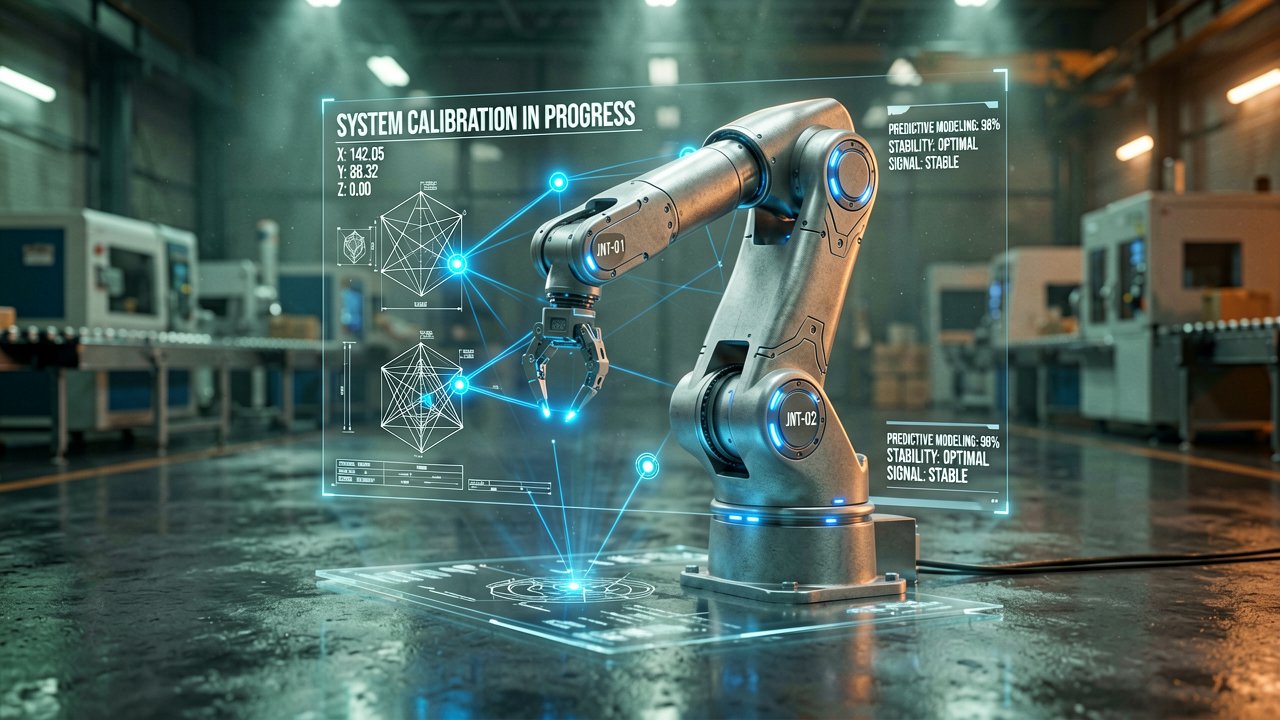
For decades, Gumi City has functioned as a muscular backbone of South Korea's industrial powerhouse, steadily evolving from a 1970s textile town into a massive hub for semiconductors, defense, and electronics. But the old ways of manufacturing are hitting a wall, and the city isn’t content with just keeping the lights on. In a bold bid to inject artificial intelligence directly into the factory floor, Gumi officially launched its AI-Specialized Joint Training Center inside the Korea Robotics Convergence Research Institute's Robot Job Innovation Center. This isn't just another localized tech initiative; it's a calculated, well-funded bet to overhaul the region's small and medium-sized enterprises (SMEs) before they get left behind in the global automation race.
Let’s talk numbers because they paint a clear picture of the scale here. Backed by a 1.5 billion won investment slated to run through 2028, this new facility aims to churn out roughly 360 highly skilled professionals every year. According to a detailed report from the Chosun Ilbo, the curriculum bypasses abstract coding theory to focus squarely on heavy-duty, practical applications: humanoid robotics, physical AI, and generative AI built specifically for manufacturing environments. It’s an approach designed to solve real-world bottleneck issues on the production line, like quality predictive modeling and adaptive process automation, rather than just optimizing spreadsheet data.
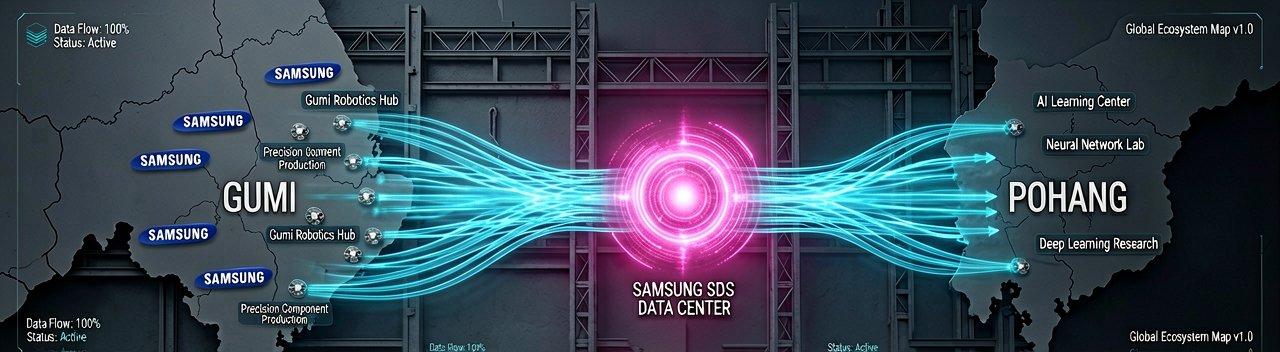
What makes this rollout particularly fascinating is how it hooks into Gumi's broader, aggressive push to become a specialized hub for robotics. The city is currently vying for a highly competitive national designation as a robotics-specialized complex, leveraging a tag-team strategy with nearby Pohang where Gumi handles component production while Pohang tackles the heavy AI learning. Throw in Samsung SDS's massive upcoming 60MW data center in the area, and you can see the blueprint of a self-sustaining ecosystem taking shape. By training localized tech talent to operate autonomous machinery, South Korea is attempting to build an industrial firewall against global supply chain vulnerabilities, ensuring that its factories remain as smart as they are productive.
Behind the Scenes: The High-Stakes Gamble on Industrial DNA
To truly understand why Gumi is pushing so hard into physical AI, you have to look at the demographic and economic claustrophobia facing South Korea’s manufacturing sector. For years, the country’s industrial complexes have battled a dual crisis: an rapidly aging workforce and a steep decline in younger workers willing to take up traditional factory roles. This joint training center isn't a luxury project born out of tech optimism; it is an aggressive survival mechanism designed to transition Gumi from a reliance on cheap, manual labor to high-margin, autonomous intelligence before the current generation of factory floor experts retires.
Local stakeholders note that the real challenge lies in bridging the massive technology gap between conglomerates and small-scale suppliers. While corporate giants like Samsung and LG run highly automated operations, the tier-2 and tier-3 suppliers that form Gumi’s backbone often rely on legacy machinery and tribal knowledge. By embedding generative AI and humanoid robotics training directly into the local ecosystem, the center aims to democratize automation. Industry insiders point out that if these smaller suppliers fail to modernize, the entire supply chain fractures, rendering the region uncompetitive against emerging manufacturing powerhouses across Asia.
Historically, Gumi has survived by reinventing itself whenever global markets shifted, moving from textiles to consumer electronics, and later to advanced displays and semiconductors. This latest pivot toward physical AI—where software interacts directly with the messy, unpredictable physical world of heavy machinery—represents the most complex shift yet. Local officials are betting that by pairing this new training facility with the raw computing power of upcoming regional data centers, they can create a dense, localized feedback loop where AI models are trained, tested, and deployed entirely within a few square miles.
Ultimately, the success of this initiative will be measured by how effectively these 360 annual graduates can integrate into existing corporate cultures. Veteran factory managers are notoriously skeptical of flashy software solutions that fail during a midnight production crunch. Therefore, the center’s curriculum focuses heavily on rugged, industrial-grade AI application, ensuring that entering professionals know how to troubleshoot a malfunctioning robotic joint or recalibrate a predictive maintenance algorithm under tight deadlines. Gumi is wagering its industrial future on the idea that the next generation of manufacturing dominance belongs not to those who build the machines, but to those who make them think.
Reading Between the Lines: The Friction Between Silicon and Steel
The political rhetoric surrounding Gumi’s AI push paints a picture of a flawless, automated future, but the reality on the factory floor is bound to be far more chaotic. There is a fundamental contradiction in trying to rapidly inject generative AI and humanoid robotics into an ecosystem dominated by small and medium-sized enterprises. While tech evangelists love to talk about seamless integration, the legacy machinery humming inside Gumi’s older facilities was never designed to talk to cloud-based neural networks. Upgrading these factories requires massive capital expenditure that goes far beyond a 1.5 billion won training budget, suggesting that a significant portion of this newly minted talent may find themselves overqualified for businesses that still rely on Windows 7 and analog switches.

Furthermore, the ambition to churn out 360 specialized professionals annually raises a glaring question about talent retention. Gumi is essentially acting as a taxpayer-funded incubator for high-tech skills, but it remains geographically and culturally isolated compared to the glittering tech hubs of Seoul and Pangyo Techno Valley. Historically, provincial cities in South Korea have struggled with a severe brain drain, as ambitious young engineers routinely migrate toward the capital for better lifestyle amenities and corporate prestige. Without aggressive, long-term corporate incentives from local employers, Gumi risks running a very expensive revolving door that trains elite robotics experts only to watch them pack their bags for jobs in the Seoul metropolitan area.
There is also an element of geopolitical wishful thinking embedded in these localized automation strategies. Building an industrial firewall with physical AI sounds prudent, but the global supply chain for robotics components remains stubbornly centralized, heavily relying on rare earth elements and specialized sensors sourced from international competitors. If a trade dispute halts the import of critical robotic actuators or advanced microchips, all the localized manufacturing intelligence in the world won't keep the assembly lines moving. Gumi's pivot is undoubtedly a step in the right direction, but treating an AI training center as a magic bullet for systemic macroeconomic vulnerabilities ignores the messy realities of global interdependence.
"We are teaching robots to think and factory workers to code, all in the hopes that a 1970s industrial town can outsmart a global supply chain crisis. It is a brilliant, necessary gamble—provided someone remembers to tell the forty-year-old hydraulic presses that they are now part of the fourth industrial revolution."
Artūras Malašauskas is an AI Systems Integrator with 20+ years of production-grade web engineering experience. He has designed, shipped, and scaled enterprise Python/PHP systems for logistics, SaaS, and public-sector clients. For the past year, he has focused exclusively on AI integrations: deploying open-source LLMs, building generative media pipelines (image, audio, video), and engineering multi-agent workflows for real production environments. His standard: reproducibility, security, cost-efficient inference—no vaporware. He documents and evaluates emerging AI tooling, separating verified capabilities from marketing noise. Technical editor at: muza-ai.eu, ai-verslas.lt, ai-naujinos.lt Connect on LinkedIn
Comments