Silicon Over Sovereign Borders: Alibaba Challenges Nvidia as TechBio Gets a Quantum Boost
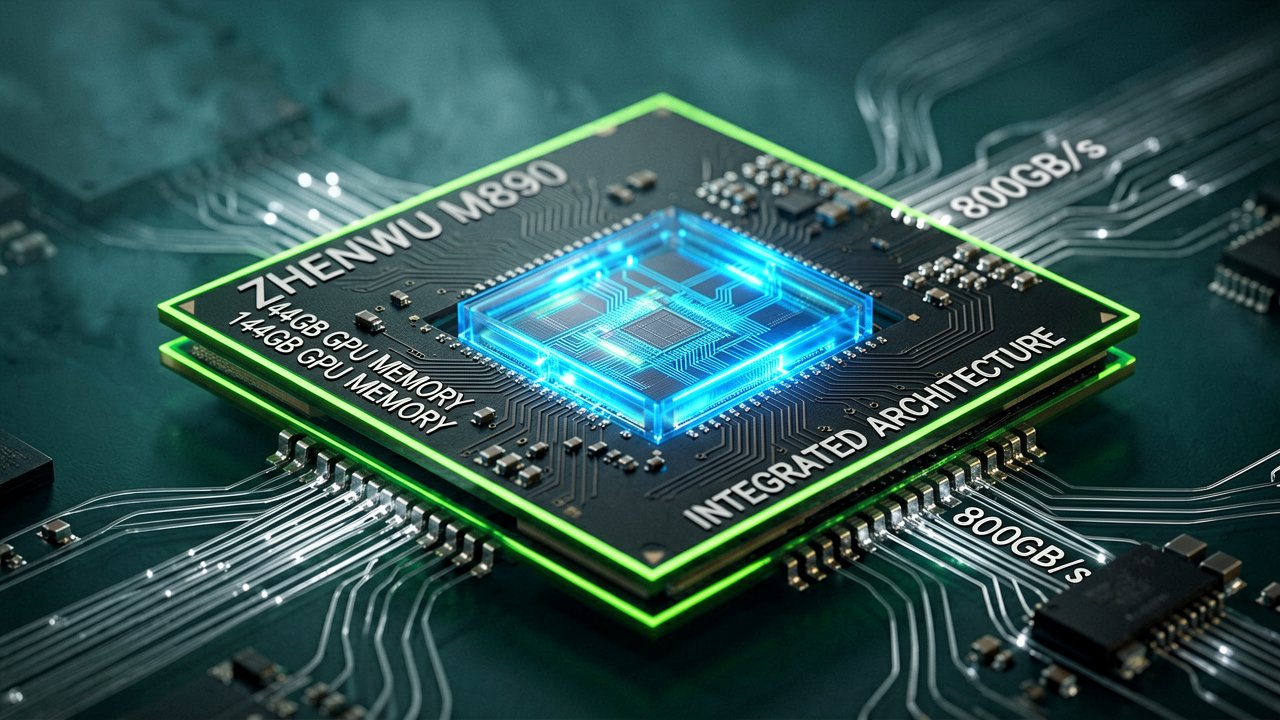
The global race for artificial intelligence supremacy isn’t just happening in the cloud; it’s being hardwired directly into the silicon. Alibaba Group showcased its accelerating semiconductor prowess by unveiling its latest powerhouse processor, the Zhenwu M890. Developed by its chip design arm T-Head, this new hardware marks a stark line in the sand as Chinese tech giants aggressively counter tightening U.S. export restrictions. Rather than waiting for downgraded Western alternatives to slip through regulatory cracks, Alibaba is aggressively building its own pipeline, boasting that the new chip delivers a staggering three times the performance of its predecessor, the Zhenwu 810E. According to detailed reporting by Reuters, the architecture is specifically tuned to power autonomous AI "agents" capable of complex, multi-step operations without constant human intervention.
While industry behemoths battle over raw computing clusters, a quiet revolution is taking hold at the intersection of AI, quantum physics, and biology. Manchester-based techbio innovator Imperagen announced it has successfully closed a £5 million seed funding round to completely redefine the parameters of enzyme engineering. The investment round was led by PXN Ventures, with notable follow-on backing from prominent early-stage investors IQ Capital and Northern Gritstone. As detailed by TechCrunch, Imperagen is moving away from decades of slow, manual trial-and-error laboratory experiments, instead deploying a closed-loop platform that utilizes quantum computations to design hyper-efficient biocatalysts. Concurrently, the firm has appointed life sciences veteran Guy Levy-Yurista as its new CEO to scale these proprietary computational models and capture a surging enterprise market hungry for sustainable manufacturing solutions.
Alibaba's Sovereign Silicon Strategy
The technical specs of the Zhenwu M890 point to a massive infrastructure play rather than a mere hardware iteration. Alibaba loaded the chip with 144 gigabytes of high-bandwidth GPU memory and an inter-chip communication rate of 800 GB per second. Paired with proprietary switching systems, the configuration allows up to 64 of these processors to link up seamlessly, paving the way for ultra-dense local data center configurations. Market analysts emphasize that while Western chip designs still hold an edge in raw, uninhibited bandwidth metrics, Alibaba has managed to ship over 560,000 units across its domestic customer base. This represents a highly effective hedge against geopolitical volatility, ensuring that massive domestic sectors—ranging from regional electric vehicle manufacturers to financial institutions—remain completely insulated from shifting Western trade compliance policies.
Biocatalysts and the Lean DeepTech Boom
Imperagen’s newly secured seed funding elevates its total backing to £8.5 million, highlighting a broader venture capital pivot toward capital-efficient, AI-native platforms capable of manipulating physical reality. Enzymes are crucial for reducing waste and lowering extreme thermal requirements in everything from high-end pharmaceutical formulation to everyday personal care products. Traditionally, adapting these delicate biological structures for harsh industrial manufacturing environments took years of painstaking biological screening. Imperagen plans to leverage its capital influx to significantly scale its automated wet lab capabilities in Manchester and aggressively expand its specialized AI engineering teams. By transforming biocatalysis from a highly unpredictable game of chance into a predictable digital engineering discipline, the techbio outfit stands as a premier example of how lean, localized deeptech firms can disrupt multi-billion-dollar global supply chains.

Behind the Scenes: The Invisible Geopolitical Friction Shaping the Next Tech Wave
The simultaneous breakthroughs of Alibaba's domestic silicon and Imperagen's quantum-biological platform reveal a profound paradigm shift in how global tech journalism must look at regional innovation. For years, Western analysts viewed Chinese chip design as a game of perpetual catch-up, predicting that strict embargoes on advanced extreme ultraviolet lithography equipment would effectively freeze domestic compute capabilities. However, Alibaba's successful rollout of the Zhenwu M890 proves that structural engineering cleverness can often compensate for manufacturing constraints. By maximizing inter-chip communication speeds and optimizing software stacks specifically for autonomous agents, domestic engineers are squeezing unprecedented efficiency out of existing fabrication processes, altering the balance of power in the global supply chain.
This reality has triggered intense debates within boardrooms across Silicon Valley and Beijing. Insiders note that while Tier-1 American cloud providers are forced to navigate complex regulatory frameworks to export specialized hardware, Alibaba is quietly building an ecosystem that thrives on sovereign independence. The massive deployment of over half a million units across Chinese automotive and financial sectors shows that domestic commercial adoption is already past the proof-of-concept phase. This rapid scaling provides Alibaba with an invaluable asset that money cannot buy: massive, real-world data feedback loops that allow them to iterate their architecture at a pace that catches global competitors off guard.
Meanwhile, the venture capital climate supporting deeptech in Europe is undergoing its own quiet transformation, as evidenced by Imperagen’s highly structured seed round. Historically, British life science startups faced a daunting "valuation valley of death" when trying to transition from academic concepts to commercial scaling, often losing talent and intellectual property to better-funded North American rivals. By bringing in a seasoned executive like Guy Levy-Yurista, Imperagen is signaling a strategic maturity that modern institutional investors demand. The funding is not merely a runway extension; it is a calculated bet on a closed-loop automated pipeline that turns biological mutation into a highly predictable, software-driven asset class.
Ultimately, both narratives converge on the concept of computational sovereignty. Whether it is a sovereign nation securing its processing pipelines against foreign policy shifts or a techbio enterprise decoupling pharmaceutical development from slow, legacy laboratory workflows, the underlying theme remains identical. The organizations winning the current era are those that successfully build closed loops where software, specialized hardware, and proprietary data models feed into one another seamlessly. As infrastructure costs continue to fluctuate wildly, this integrated approach is no longer just an ambitious engineering goal; it has become the baseline requirement for survival in the global technology race.

Reading Between the Lines: The Hype and Hard Truths of Tech Autonomy
The euphoria surrounding Alibaba’s latest silicon milestone conveniently glosses over a glaring structural contradiction. While boasting a threefold performance leap over legacy domestic chipsets, the architecture remains deeply dependent on foundational manufacturing bottlenecks that money alone cannot instantly solve. Packaging dozens of lower-yield processors into massive, high-bandwidth configurations allows Alibaba to mimic the raw power of Western hardware, but it does so at an immense cost to energy efficiency and thermal management. Cloud providers can market these chips as independent triumphs of domestic engineering, but the reality is that squeezing performance out of aging lithography nodes eventually hits a hard wall of physics, regardless of how much capital is thrown at the problem.
A similar strain of cautious skepticism must be applied to the TechBio frontier, where companies like Imperagen promise to replace physical experimentation with quantum-accelerated certainty. The narrative that a closed-loop digital platform can entirely bypass decades of slow laboratory trial-and-error is highly compelling to venture capitalists seeking software-like profit margins in deeptech. However, biological systems are notoriously chaotic, and algorithms are only as reliable as the data used to train them. Transitioning from predictable digital simulations to unpredictable, real-world chemical manufacturing environments frequently uncovers edge cases that force companies back to the very manual screening methods they claimed to obsolete.
The broader economic implication is an increasingly fragmented global supply chain where efficiency is sacrificed on the altar of geopolitical resilience. As companies worldwide scramble to build localized data centers and automated biological labs, they inadvertently duplicate infrastructure and create incompatible technology silos. For corporate buyers, this shift means navigating a messy marketplace where purchasing decisions are driven more by trade compliance and regional loyalty than by choosing the absolute best tool for the job. Innovation will undoubtedly continue, but it will happen in a hyper-managed, highly protective environment where genuine breakthroughs are easily obscured by corporate public relations.
"In the modern technology race, true sovereignty apparently means spending billions of dollars to build an incredibly advanced, perfectly autonomous digital ecosystem, only to realize you are still entirely dependent on the global supply chain for the copper wiring and concrete to actually plug it into the wall."
Artūras Malašauskas is an AI Systems Integrator with 20+ years of production-grade web engineering experience. He has designed, shipped, and scaled enterprise Python/PHP systems for logistics, SaaS, and public-sector clients. For the past year, he has focused exclusively on AI integrations: deploying open-source LLMs, building generative media pipelines (image, audio, video), and engineering multi-agent workflows for real production environments. His standard: reproducibility, security, cost-efficient inference—no vaporware. He documents and evaluates emerging AI tooling, separating verified capabilities from marketing noise. Technical editor at: muza-ai.eu, ai-verslas.lt, ai-naujinos.lt Connect on LinkedIn
Comments