Daegu’s Deep Tech Gamble: Why the City is Betting Big on AI and Robotics
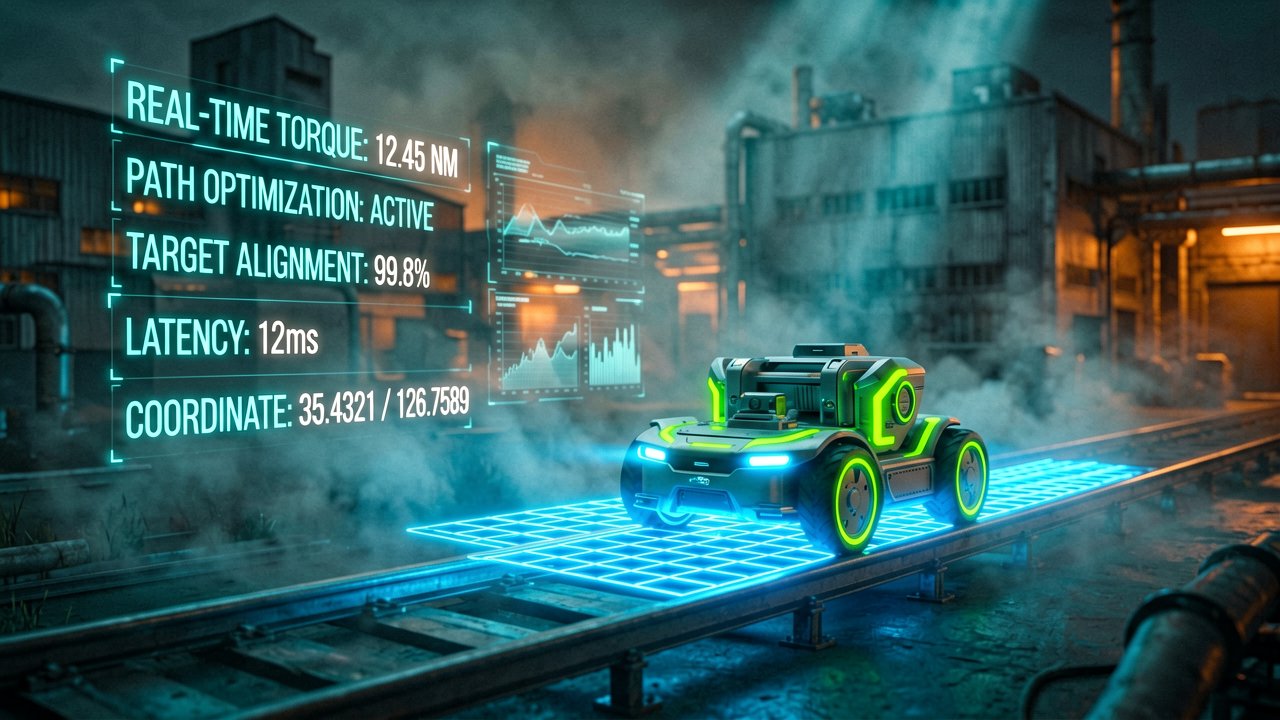
Seoul has long been the undisputed sun of South Korea’s tech universe, pulling in talent and capital like a massive gravity well. But Daegu is officially writing its own script. The city has secured a staggering 18.7 billion won in state funding—the largest slice of the pie among the country’s four newly designated regional tech hubs—to kick off its aggressive "Startup City Project" drive. Backed by the Ministry of SMEs and Startups, Daegu isn't just trying to build a few nice offices; it's laying down a comprehensive infrastructure roadmap designed to last through 2030, targeting everything from initial talent discovery to global investment attraction.
What makes this initiative compelling is how sharply it focuses on artificial intelligence (AI) and advanced robotics. Instead of chasing software-only trends, Daegu is leaning heavily into "Physical AI," merging raw data processing with heavy-duty manufacturing. According to detailed coverage by Seoul Economic Daily, the program forms a customized regional startup package that directly links local research powerhouses, like the Daegu Gyeongbuk Institute of Science and Technology (DGIST), with real-world testbeds. It's a calculated gamble to turn the city into a specialized sanctuary for deep tech ventures that need more than just a desk to survive.
Building the "AX" Capital
The core philosophy here is what policymakers are calling AI Transformation, or "AX." Daegu’s local industrial economy has traditional roots, but the goal now is a total manufacturing overhaul. By embedding intelligent sensors and autonomous mobile platforms directly into industrial assembly lines, the city is fashioning a blueprint for automated production that can adapt on the fly. To make sure these startups don't hit a wall when it comes to testing, a dedicated robot test field is taking shape in Dalseong-gun, allowing companies to safely put humanoid and industrial robots through their paces before they ever hit a commercial floor.
Global Ambitions and Suseong Alpha City
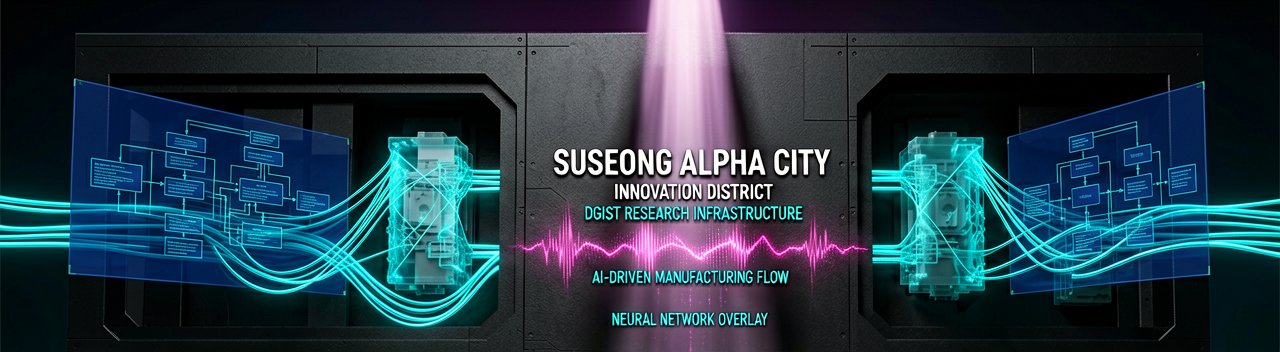
You can’t build a global hub in isolation, and Daegu’s leadership seems acutely aware of that trap. The city is anchoring much of its digital transformation inside Suseong Alpha City, an innovation district housing over 1,500 software companies. As reported by Chosun Biz, the wider national strategy involves creating highly collaborative structures where universities, regional labs, and investment institutions work in tandem to spin out viable tech unicorns. By lowering regulatory hurdles and aggressively funding cross-border commercialization projects, Daegu is quietly positioning itself as the go-to gateway for deep tech startups looking to scale across Asia and beyond.
What Most Reports Miss: The Hardware-Meets-Data Bottleneck
While flashing press releases celebrate the massive 18.7 billion won funding milestone, seasoned industry watchers know that throwing money at deep tech doesn't instantly solve its unique friction points. Unlike pure SaaS startups that can pivot overnight with a few lines of code, a deep tech venture combining artificial intelligence with robotics requires a grueling development cycle. These companies must bridge the digital world of algorithms with the unforgiving physical realities of manufacturing tolerances, battery life, and sensor degradation. Daegu’s heavy bet on "Physical AI" means the city is voluntarily stepping into this high-risk arena, where capital burns fast and tangible prototypes take years to mature.
To mitigate this slow-motion burn rate, local planners are playing a clever historical card by leveraging Daegu’s legacy as a traditional industrial and automotive components powerhouse. For decades, the region’s economic backbone relied on precision manufacturing and machinery parts, a sector that younger talent has increasingly abandoned in favor of Seoul's glamorous app-economy. By tethering cutting-edge AI startups directly to these established legacy factories, the city is attempting a delicate double-play. They are attempting to breathe digital life into aging assembly lines while simultaneously providing agile tech startups with immediate, real-world testing environments and experienced manufacturing mentors who actually understand how to scale hardware production.
This pragmatic synthesis is precisely why the upcoming robot test field in Dalseong-gun is being watched so closely by institutional investors. Insiders note that the primary bottleneck for autonomous mobile robots and humanoid machines isn't a lack of creative ideas, but rather the extreme difficulty of securing legal, controlled spaces to log operational hours. In South Korea's highly dense urban environments, strict regulatory frameworks often treat outdoor robotic testing with severe skepticism. By establishing a dedicated, state-backed regulatory sandbox, Daegu is effectively removing the bureaucratic red tape that typically chokes out early-stage robotics firms before they can prove their safety metrics to global clients.
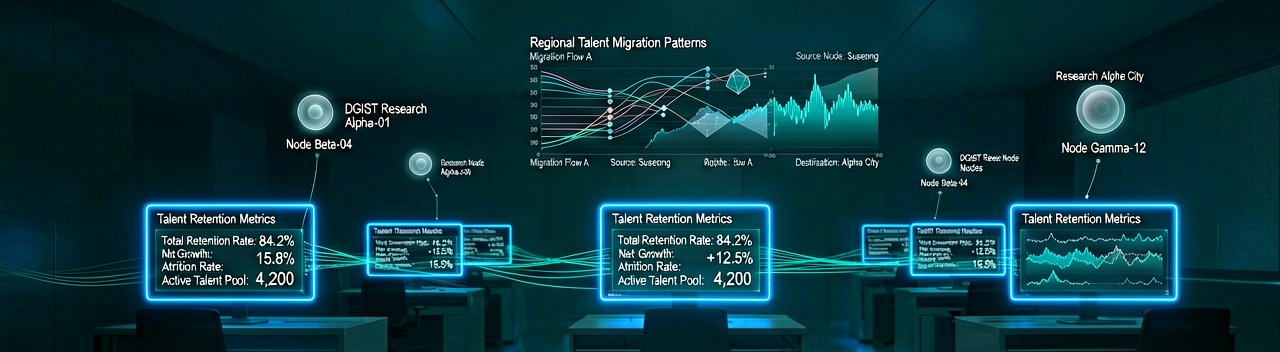
However, the human capital piece remains the ultimate wild card in this grand strategy. Cultivating an ecosystem inside Suseong Alpha City requires a steady influx of specialized talent capable of handling complex machine learning models and mechanical engineering simultaneously. While local institutions like DGIST turn out top-tier researchers, the historical trend has seen these bright minds migrate straight to the capital region the moment they graduate. To break this cycle, Daegu's new drive is shifting its focus toward aggressive retention packages and corporate match-making programs, ensuring that founders aren't just given a state-funded office space, but are also deeply integrated into lucrative, long-term commercial contracts with major regional enterprises.
Reading Between the Lines: The Illusion of Coexistence
The glossy brochures for Daegu’s deep tech transformation paint a picture of seamless symbiosis, where legacy factory owners and twenty-something AI engineers enthusiastically shake hands over automated assembly lines. In reality, merging old-school industrial manufacturing with cutting-edge software culture is a bit like forcing oil and water to mix. Traditional regional manufacturers operate on razor-thin margins and prioritize predictable, incremental gains, making them inherently risk-averse. Asking them to open up their shop floors to volatile, unproven autonomous systems built by early-stage startups introduces an operational headache that state subsidies alone cannot easily soothe.
Furthermore, the sudden proliferation of regional tech initiatives across South Korea raises serious questions about national duplication. With multiple provinces simultaneously declaring themselves the definitive capital of AI, robotics, or semiconductor design, the country's localized tech ecosystem risks becoming dangerously fragmented. Daegu’s massive 18.7 billion won slice of the pie is certainly a political victory, but money spread too thinly across competing regional centers can dilute the nation's overall global competitiveness. If every city builds its own miniature Silicon Valley, the result may be a collection of under-scaled hubs fighting over the same scarce pool of hyper-specialized talent.
This talent crunch is where the city’s ambition faces its starkest reality check. It is one thing to construct state-of-the-art testing grounds in Dalseong-gun, but it is another entirely to convince top-tier machine learning engineers to swap the vibrant lifestyle of Seoul for a regional industrial hub. Despite the high-tech infrastructure on offer, the gravitational pull of the capital’s established cultural and professional network remains immensely powerful. Daegu's long-term success will not be measured by the square footage of its new incubation centers, but by its ability to prove that a deep tech startup can successfully scale and exit without eventually packing its bags for Seoul.
"Building a global deep tech capital requires an immense amount of patience, capital, and luck—a combination rarely found in municipal planning cycles. If Daegu pulls this off, they will have successfully rewritten the rules of regional economic survival; if they fail, they will at least have the world's most technologically advanced, AI-driven empty warehouses."
Artūras Malašauskas is an AI Systems Integrator with 20+ years of production-grade web engineering experience. He has designed, shipped, and scaled enterprise Python/PHP systems for logistics, SaaS, and public-sector clients. For the past year, he has focused exclusively on AI integrations: deploying open-source LLMs, building generative media pipelines (image, audio, video), and engineering multi-agent workflows for real production environments. His standard: reproducibility, security, cost-efficient inference—no vaporware. He documents and evaluates emerging AI tooling, separating verified capabilities from marketing noise. Technical editor at: muza-ai.eu, ai-verslas.lt, ai-naujinos.lt Connect on LinkedIn
Comments