The Agentic Shift Hits the Hardware Layer: This Week in Tech
The tech industry spent the last few years treating artificial intelligence like a shiny web app, but this week made it abundantly clear that the software has officially outgrown its sandbox. We are watching the entire technology stack—from data center silicon to consumer desktop apps—realign itself around a singular concept: autonomous AI agents. The casual, text-input chatbot era is rapidly giving way to localized infrastructure designed to let digital entities execute complex, multi-step tasks without a human constantly holding their hand.
This structural transformation dominated the spotlight over the last few days, driven by massive developer previews and enterprise infrastructure rollouts. Tech giants are no longer just fighting over who has the smartest foundational model. Instead, the battlefield has moved to efficiency, deployment latency, and systemic integration. If you want to know where the smart money is moving, you have to look at the systems being built to sustain these hungry, non-stop workloads.
Google I/O 2026 Rewrites the Developer Playbook
Google completely flipped the script at its annual developer showcase by weaving its new agentic ecosystem directly into the fabric of its software suite. Rather than keeping artificial intelligence cornered inside a standalone browser window, the tech giant introduced Gemini Intelligence as an underlying layer powering everything from Android to Chrome. The heavy lifter here is the newly minted Gemini 3.5 Flash model, which boasts a blistering four-fold increase in output tokens per second compared to previous frontier models. This raw speed is exactly what software developers need to power real-time workflows where sub-second latency makes or breaks the user experience, as detailed by Mashable.
For the engineering crowd, the real shocker was the launch of Google Antigravity 2.0. This dedicated desktop application acts as an orchestration hub where multiple software agents can run complex tasks in parallel. To support the heavy compute demands of running these background automations, Google also rolled out a premium $100-per-month AI Ultra tier that boosts asset usage limits five-fold. It is a bold monetization play that proves the company is betting big on professional users willing to pay top dollar for serious digital leverage, a shift covered extensively in the Google Blog.
Dell and Alibaba Bring AI Factories to the Physical World
On the hardware side of the fence, Dell Technologies used its annual conference to tackle the soaring operational expenses of public cloud APIs. Partnering up with Nvidia, the company launched its Deskside Agentic AI Solutions to let enterprises process massive datasets locally. By deploying dedicated hardware running the Nvidia NemoClaw stack right next to enterprise data stores, companies can keep sensitive proprietary information entirely within their own corporate walls. According to architectural analysis by The Futurum Group, this aggressive push toward on-premises execution allows software teams to experiment without accumulating catastrophic cloud utility bills.
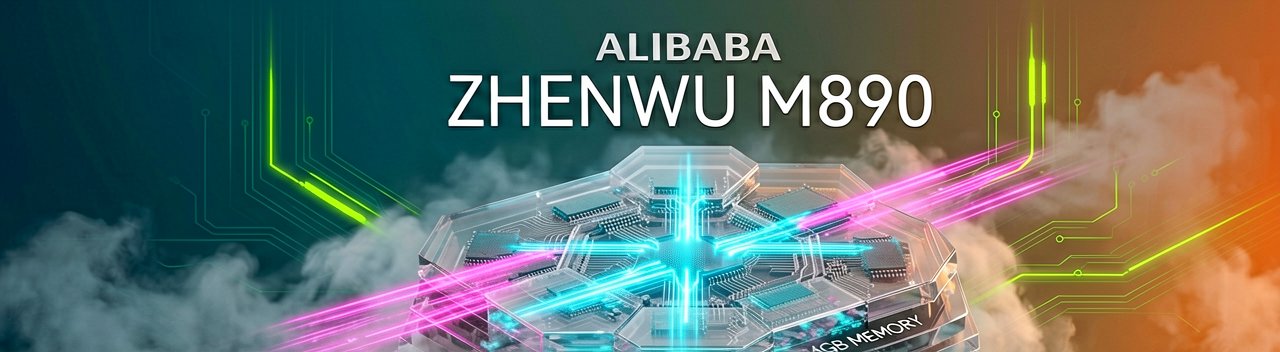
Meanwhile, Alibaba’s chip division, T-Head, signaled that it has no intention of letting Western silicon manufacturers completely dominate the enterprise market. The subsidiary unveiled its brand-new Zhenwu M890 AI accelerator, a beast of a chip sporting 144GB of high-bandwidth memory. Critically, this hardware is engineered explicitly to manage the long context windows and continuous communication patterns required by autonomous agents. By setting a strict annual hardware release roadmap, Alibaba is positioning itself as a fiercely independent platform contender rather than a mere fallback option for companies facing global supply chain constraints.
Pre-IPO Bets and Smarter Mid-Range Gadgets
The week wrapped up with a highly unusual cross-over product from the financial side of crypto tech. Binance announced the launch of Pre-IPO Perpetual Contracts, a novel derivative asset allowing retail traders to gain early market exposure to high-profile private companies before they ever hit public stock exchanges. The initial contract lets users take financial positions based on the anticipated valuation of SpaceX, effectively bridging crypto-native infrastructure with traditional venture capital milestones. This product represents a fascinating experiment in democratizing institutional-grade investment strategies for global retail markets, as reported by PR Newswire.
Finally, for those tracking everyday consumer appliances, smart home hardware just received a significant performance injection. Home robotics company Narwal officially rolled out its Freo Z10 Turbo vacuum to the retail market, pushing a staggering 25,000 Pa of suction power down into the mid-range pricing tier. What makes the machine compelling isn't just the raw power; it is the implementation of tri-laser navigation systems and an adaptive brush cover that seals off the suction zone over carpets automatically. It stands as a prime example of how bleeding-edge automated technology inevitably trickles down to handle mundane daily chores without demanding a luxury premium.
Behind the Scenes: The Invisible Friction of the Agentic Infrastructure Race
While marketing departments present a seamless vision of digital agents quietly managing corporate workflows, the reality inside engineering departments is far more chaotic. The transition from static Large Language Models to dynamic, autonomous agents forces a complete rethinking of software infrastructure. In traditional cloud computing, a user sends a request, receives a response, and the connection closes immediately. Autonomous agents, however, maintain persistent, unpredictable loops that continuously call APIs, query databases, and read local file systems. This non-stop chatter is triggering unprecedented bottlenecks at the networking and memory layers, exposing a massive gap between software ambition and hardware capability.
This operational friction explains the sudden, aggressive pivot toward localized enterprise hardware championed by players like Dell and Nvidia. Industry insiders quietly acknowledge that the public cloud, while highly scalable, is becoming cost-prohibitive for enterprise-scale agentic deployments. When an AI agent loops through hundreds of autonomous reasoning cycles just to resolve a single customer invoice discrepancy, the API transaction costs add up exponentially. By pushing the compute workloads down to localized deskside infrastructure, enterprises are trying to decouple their operational costs from external API billing cycles. It is a strategic retreat from the total-cloud paradigm, driven purely by the harsh economic reality of running continuous inference.
Concurrently, the regulatory and security implications of this shift are giving corporate compliance officers sleepless nights. Once a software tool transitions from a passive informational assistant to an active participant with permission to execute code and transfer data, the traditional enterprise security perimeter dissolves. If an autonomous agent makes an unauthorized financial commitment or accidentally leaks proprietary trade secrets during a self-directed web search, establishing legal liability becomes a nightmare. Silicon Valley is rushing to deploy orchestration layers like Google Antigravity to contain these digital entities, but the security protocols are largely being written on the fly as companies race to claim market share.
Historically, this tech cycle closely mirrors the early days of mobile app development, where early platforms rushed out features long before the underlying mobile networks could reliably handle the data traffic. The current rush to build massive memory spaces, like Alibaba's 144GB accelerator, proves that the competitive edge has moved away from model size and settled squarely on context length and retention. The tech ecosystem is fundamentally betting that whoever controls the most stable, secure, and cost-effective physical environment for these agents to live in will ultimately control the next decade of enterprise software enterprise value.
Reading Between the Lines: The Illusion of Total Autonomy
The tech industry's sudden infatuation with the word "agentic" carries a distinct whiff of desperate rebranding. For the past three years, the public was promised that generative artificial intelligence would instantly revolutionize cognitive labor, yet corporations have largely used it to draft slightly less boring emails. By rebranding these models as autonomous agents capable of independent action, Silicon Valley is attempting to shift the burden of utility from the software vendor to the user's infrastructure. If the AI hallucinates, it is no longer a flaw in the foundational model; it is an integration error in your localized data factory.
This shift reveals a glaring contradiction in the tech sector's sustainability narrative. We are told that localized hardware like Dell’s latest enterprise rigs will save companies from catastrophic cloud computing bills, yet this ignores the staggering operational reality of running high-bandwidth memory silicon around the clock. Moving computing workloads from a centralized data center to an office closet does not magically reduce the aggregate energy demand or the physical wear on hardware. It merely shifts those capital expenditures from a predictable monthly software subscription to an unpredictable local utility and cooling bill, creating a shell game of corporate carbon accounting.
Furthermore, the economic justification for premium developer tools like Google’s one-hundred-dollar monthly subscription rests on an untested assumption about human productivity. The industry is operating under the premise that giving a developer five times the asset usage limits will result in five times the software output. In reality, as autonomous systems generate code and execute workflows at blistering speeds, human engineers are increasingly relegated to the exhausting role of full-time code auditors. The bottleneck is no longer how fast an agent can tokenise a prompt, but how quickly a human supervisor can verify that the agent hasn't introduced a catastrophic security vulnerability into the production environment.
Looking ahead, this frantic infrastructure build-out is likely to trigger a consolidation crisis rather than a democratization of technology. While speculative financial products try to open the pre-IPO gates for retail investors, the actual physical infrastructure remains firmly gatekept by a handful of silicon architects and sovereign-backed enterprises. If the future of software requires continuous, multi-layered agentic reasoning, then the barrier to entry for new startups has just skyrocketed. The tech landscape is rapidly organizing into a feudal system where you either own the rare, specialized hardware required to sustain an autonomous digital workforce, or you pay rent to someone who does.
We are rapidly approaching a future where an autonomous AI agent will seamlessly schedule your meetings, optimize your supply chain, and automatically draft your corporate responses, leaving you with nothing left to do but sit back, relax, and manually review the eighty thousand errors it made before lunch.
Artūras Malašauskas is an AI Systems Integrator with 20+ years of production-grade web engineering experience. He has designed, shipped, and scaled enterprise Python/PHP systems for logistics, SaaS, and public-sector clients. For the past year, he has focused exclusively on AI integrations: deploying open-source LLMs, building generative media pipelines (image, audio, video), and engineering multi-agent workflows for real production environments. His standard: reproducibility, security, cost-efficient inference—no vaporware. He documents and evaluates emerging AI tooling, separating verified capabilities from marketing noise. Technical editor at: muza-ai.eu, ai-verslas.lt, ai-naujinos.lt Connect on LinkedIn
Comments