China Just Dropped the Shiguang S1 in Wuhan, and Your Chores Are Officially Numbered
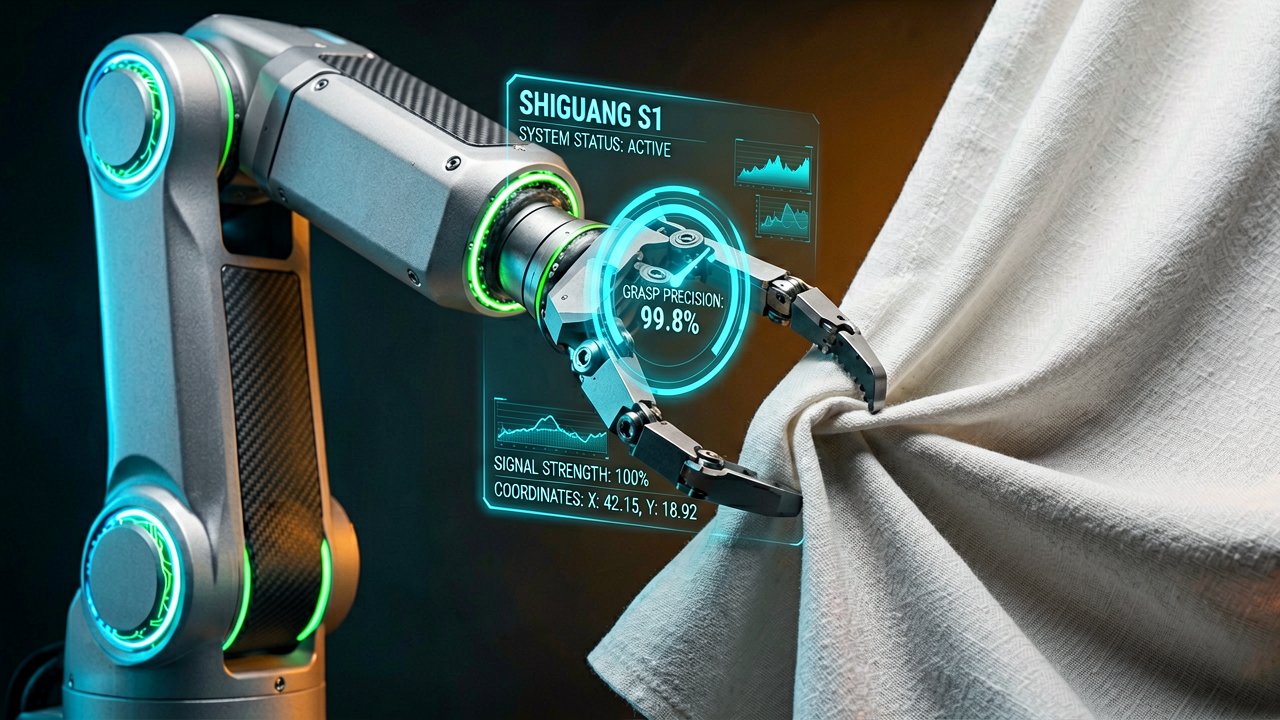
The dream of hands-free living just took a massive leap forward. Chinese robotics company GigaBrain officially launched the Shiguang S1, the country's first universal household robot, right in the heart of Wuhan's Optics Valley. While we have spent years watching rigid, industrial mechanical arms sort factory parts, this new machine is entirely built from the ground up for the chaotic, unpredictable nature of daily domestic life. It is not just another fancy vacuum cleaner; it is a genuine stab at giving everyday consumers a flexible, autonomous home helper.
According to early details tracking the rollout from Gizmochina, the Shiguang S1 handles tasks that usually require a human touch, like folding clothes, cooking meals, and clearing dinner tables. It even boasts natural language capabilities to chat with elderly family members and provide basic companionship. GigaBrain is leaning heavily on adaptive learning models here, meaning the bot does not just follow rigid pre-programmed routes—it continuously learns and modifies its behavior based on how your specific home is set up.
Breaking Free from the Factory Floor
The tech industry has spent a long time hyping up embodied intelligence, but getting a robot to safely navigate a living room without crushing a pet or shattering a glass is notoriously difficult. By deploying the Shiguang S1 into a major tech hub like Wuhan, GigaBrain is essentially putting its continuous learning algorithms to the ultimate test. If the software delivers on its promise, the era of specialized single-use appliances might finally be drawing to a close, replaced by an adaptable mechanical roommate that actually knows how to clean up after you.
What Most Reports Miss: The High-Stakes Battle Over Domestic AI Architecture
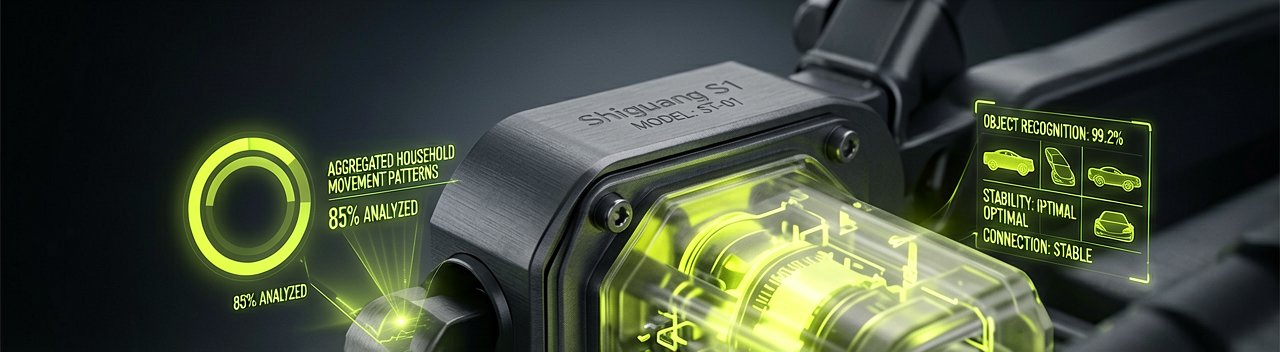
While mainstream coverage of the Shiguang S1 focuses on the novelty of a robot folding laundry, the real story lies in the software ecosystem GigaBrain is pioneering. Unlike industrial automation, which relies on predictable environments and precise coordinates, the domestic sphere is an engineering nightmare of scattered toys, changing lighting, and moving pets. By deploying this machine in Wuhan’s ultra-competitive tech corridor, GigaBrain isn't just selling an appliance; they are testing a massive, real-time data collection network designed to train their foundational spatial intelligence models at an unprecedented scale.

Industry insiders point out that this rollout marks a critical shift from specialized, single-task algorithms to generalized embodied intelligence. For years, the robotics sector has been divided between hardware purists who believe better mechanics solve autonomy, and software purists who rely entirely on simulation. GigaBrain’s approach aggressively bridges this gap by utilizing low-cost, high-durability actuators paired with an adaptive neural network that treats every household mistake as a data point for the next software patch.
This aggressive push into the living room has triggered intense debate among supply chain analysts regarding the economic viability of universal bots. Skeptics argue that the initial cost of manufacturing tactile-sensitive robotic hands remains prohibitively high for the average global consumer, suggesting the S1 might initially serve as a luxury status symbol rather than a true mass-market utility. However, optimistic stakeholders counter that China's heavily subsidized, highly integrated component supply chain could drive production costs down much faster than Western competitors anticipate.
Beyond the hardware economics, the Shiguang S1 enters a culturally distinct market where eldercare automation is no longer a futuristic preference, but an urgent demographic necessity. The inclusion of conversational companionship features highlights a strategic pivot toward addressing labor shortages in the domestic care sector. By framing the robot as a proactive family helper rather than a sterile machine, the developers are actively attempting to bypass the psychological resistance consumers traditionally feel toward letting autonomous, heavy machinery move freely around vulnerable family members.
Ultimately, the success of the Shiguang S1 will not be measured by its initial sales figures, but by how effectively it navigates the complex web of data privacy regulations and consumer trust. Gathering continuous, high-definition visual and spatial data from inside private residences is a regulatory minefield that GigaBrain must navigate carefully if they intend to export this technology globally. As the first units begin mapping out homes in Wuhan, the global tech industry is watching closely to see if this launch represents a genuine paradigm shift or simply another over-hyped prototype entering a notoriously difficult market.
Reading Between the Lines: The Friction Between Hype and Household Reality
The tech industry’s collective obsession with generalized robotics often blurs the line between a flawless lab demonstration and the chaotic reality of a real-world living room. GigaBrain’s marketing pitches the Shiguang S1 as a seamless cure for domestic drudgery, yet anyone who has watched a top-tier robot vacuum get defeated by a stray charging cable knows the limits of current spatial awareness. The assumption that an AI trained on standardized datasets can effortlessly transition to navigating tight, uniquely cluttered apartments overestimates the adaptability of localized neural networks operating without a cloud safety net.
There is also a glaring contradiction in the economic narrative surrounding the S1. GigaBrain champions the robot as a democratic solution to demographic challenges and shrinking domestic labor pools, but the advanced tactile sensors and high-torque actuators packed into its chassis carry an undeniable premium. Launching a sophisticated humanoid platform into a consumer market currently plagued by cautious spending feels less like a populist revolution and more like a high-profile proof of concept meant to court venture capital and state-backed tech subsidies rather than real household adoption.
Furthermore, the long-term maintenance of an intricate, multi-jointed mechanical roommate poses a logistical nightmare that hardware manufacturers routinely sweep under the rug. When a standard dishwasher breaks, a technician can swap a predictable pump; when a multi-axis robotic wrist loses calibration while carrying a hot bowl of soup, the liability and repair framework remains completely undefined. Consumers are expected to invite a complex industrial machine into their private lives without an established infrastructure for routine servicing, turning early adopters into glorified beta testers for a high-risk hardware experiment.
Projecting forward, the broader implication of the Shiguang S1 rollout is the inevitable corporate scramble for the ultimate frontier of monetization: your personal habits. By mapping the layout of your home, tracking your dietary preferences, and cataloging your possessions, a universal robot becomes the ultimate data-harvesting tool disguised as a helpful butler. The industry's push into this space suggests that the future of robotics won't be financed by hardware sales alone, but by the valuable telemetry data these machines extract from behind closed doors every single day.
We are told the future belongs to machines that can cook, clean, and hold a conversation, yet we are still waiting for a device that can reliably figure out how to separate darks from whites without shrinking a favorite wool sweater. Until the Shiguang S1 survives its first encounter with a defiant toddler or an unmapped pile of pet accidents, it might be wise to keep the old mop and broom safely stored in the closet.
Artūras Malašauskas is an AI Systems Integrator with 20+ years of production-grade web engineering experience. He has designed, shipped, and scaled enterprise Python/PHP systems for logistics, SaaS, and public-sector clients. For the past year, he has focused exclusively on AI integrations: deploying open-source LLMs, building generative media pipelines (image, audio, video), and engineering multi-agent workflows for real production environments. His standard: reproducibility, security, cost-efficient inference—no vaporware. He documents and evaluates emerging AI tooling, separating verified capabilities from marketing noise. Technical editor at: muza-ai.eu, ai-verslas.lt, ai-naujinos.lt Connect on LinkedIn
Comments