Silicon Valley Realism Meets Stuttgart Sophistication: Decoding Hesai’s Post-Mercedes Valuation
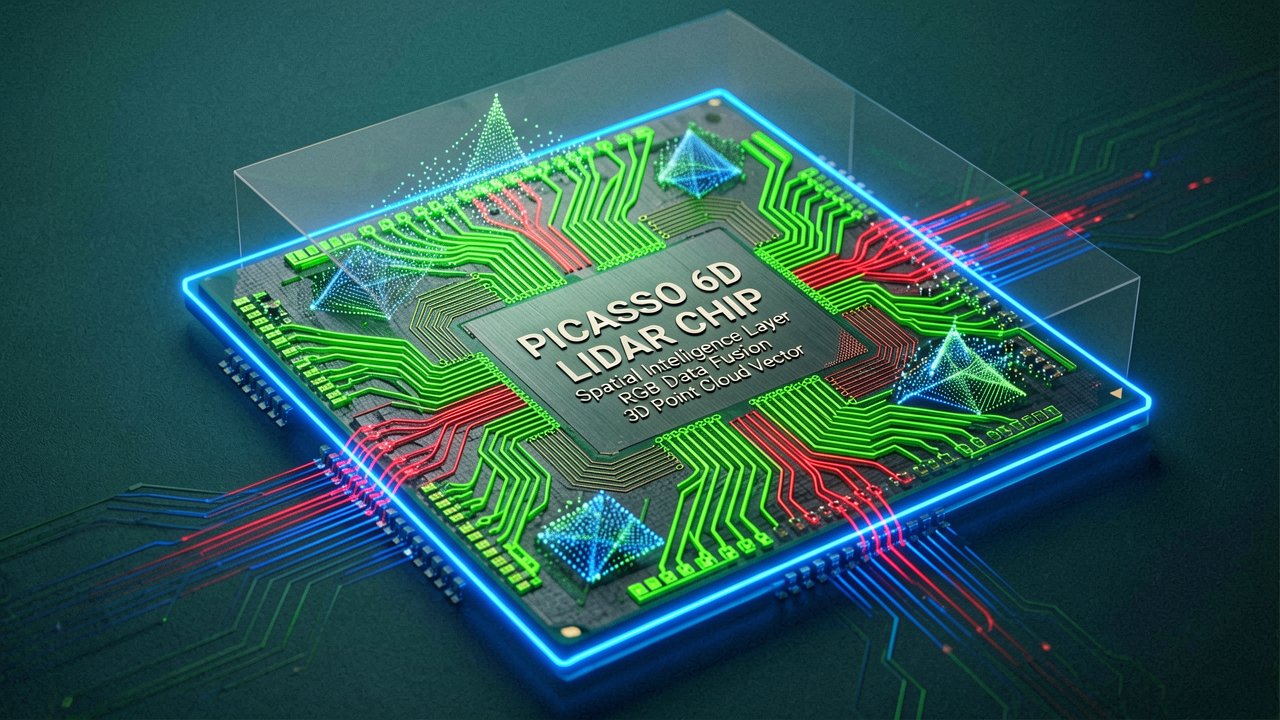
The lidar industry has long been notorious for promising the moon and delivering cash-burning black holes. Yet, Hesai Group (HSAI) is rewriting that tired narrative, pairing blue-chip validation with cold, hard profitability. The company just dropped a bombshell by announcing its official role as the strategic lidar partner and confirmed supplier for Mercedes-Benz's Level 3 autonomous driving models across Europe and China. This isn't just another casual pilot program; it’s a high-stakes, global production deal that cements Hesai’s tech inside some of the world's most premium luxury vehicles, with manufacturing handled safely outside trade tensions at its new Galileo facility in Thailand.
Strangely, Wall Street’s immediate reaction didn't match the weight of the news, proving that the broader market is still waking up to Hesai’s changing narrative. According to tracking data on Simply Wall St, short-term market sentiment actually softened, driving the stock into what analysts model as an undervalued zone. For forward-looking tech investors, that disconnect represents a massive fundamental shift, especially because Hesai isn't just surviving the ongoing automotive price wars—it's actively thriving.
The Math Behind the Momentum
While Western lidar rivals struggle to keep their lights on, Hesai’s Q1 2026 financial print proved that manufacturing scale solves everything. Net revenues climbed 29.6% year-over-year to 681 million yuan, while total lidar shipments skyrocketed by more than 140% to top 471,000 units in a single quarter. The most impressive part of the release, reported by CnEVPost, is that Hesai pulled off its fourth consecutive quarter of GAAP profitability, netting 18.3 million yuan compared to a painful loss in the same period last year.
Looking ahead, management isn't letting up on the gas pedal. The company's Q2 guidance predicts revenue growth between 20% and 27%, fueled by a full-year shipment target of 3 million to 3.5 million units. This aggressive scaling is exactly what allows them to withstand industry pricing pressure while funding next-generation research and development.
Hardware Overhaul: Moving From Perception to Spatial Intelligence
Hesai’s valuation isn't just resting on yesterday’s hardware. The company is actively executing a massive technological pivot toward what CEO David Li calls "spatial intelligence." At the center of this strategy is their newly launched Picasso 6D lidar platform. By fusing RGB color data and precise 3D geometry onto a single light-sensing chip, the Picasso sensor essentially blurs the line between traditional cameras and lidar arrays.
This chip-level integration directly challenges the camera-only approach popularized by certain EV manufacturers. Instead of forcing vehicles to choose between depth perception and color recognition, Hesai’s 6D tech handles both simultaneously, offering autonomous systems a far more human-like understanding of the physical world. As reported during their earnings call covered by Yahoo Finance, early customer feedback has been exceptionally strong, positioning the platform for widespread commercial adoption as Level 3 autonomy spreads beyond luxury tiers.
The Robotics and 'Physical AI' Wildcard
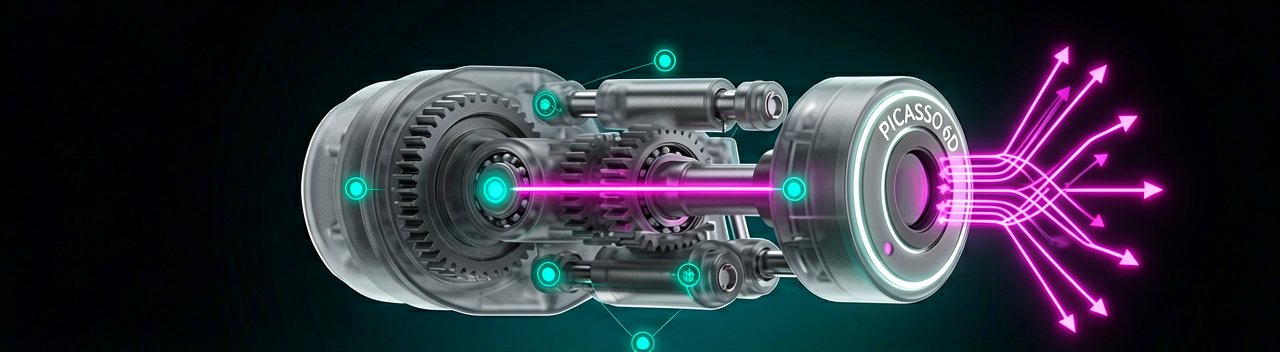
If passenger cars are the financial foundation, robotics is the explosive upside that could completely reset Hesai’s valuation multiples over the next three years. The firm’s Strategic Growth Initiative (SGI) segment, which handles robotic actuation modules and software workflows, is tracking to generate roughly 100 million yuan in 2026. Management expects that figure to balloon to 500 million yuan by 2027, introducing software-like recurring revenue streams to a traditionally hardware-dependent business model.
Between the blue-chip validation of the Mercedes-Benz deal, the technical edge of the Picasso chip, and a fast-growing footprint in humanoid robotics, Hesai is quietly distancing itself from the rest of the lidar pack. The market's temporary hesitation to reward the stock looks less like a structural red flag and more like a textbook valuation disconnect.
Behind the Scenes of the Stuttgart-Silicon Valley Axis
The Mercedes-Benz contract represents a profound shift in how Tier-1 global automakers view Chinese supply chains in an era of intense geopolitical friction. Historically, European luxury brands favored domestic stalwarts like Bosch or Continental for safety-critical components. By bypassing traditional continental suppliers to integrate Hesai's architecture into its global Level 3 Drive Pilot ecosystem, Mercedes-Benz is sending a clear signal: Western alternatives are currently unable to match Hesai's cost-to-performance ratio or its mass-production reliability. This decision was finalized only after rigorous, multi-year validation cycles that tested the physical limits of the hardware across extreme weather conditions and complex urban environments.
To circumvent the mounting threat of cross-border trade restrictions and tariffs, Hesai’s operational strategy had to evolve beyond mere technological innovation. The heavy reliance on the newly operational Galileo facility in Thailand is the true linchpin of the Mercedes deal. By shifting high-volume manufacturing for international markets outside of China, Hesai successfully insulated its premium automotive partners from the political crossfire of Washington and Brussels. This geographic hedging strategy transforms Hesai from a vulnerable regional exporter into a resilient, multinational automotive tech supplier, effectively lowering the risk premium that has depressed its stock price.
Inside the company, the transition from mechanical lidar arrays to the proprietary ASIC (Application-Specific Integrated Circuit) chip platform has altered internal engineering dynamics. Legacy lidar development was plagued by high failure rates due to complex moving parts and manual alignment processes on the factory floor. Hesai’s aggressive pivot to silicon-level integration allows them to print complex optical systems directly onto semi-conductor wafers. This semiconductor-first methodology explains how the firm managed a 140% explosion in shipment volumes while expanding gross margins—a feat that continues to baffle Western competitors who remain trapped in low-yield, hand-assembled production hell.
The strategic deployment of the Picasso 6D platform also alters the ongoing philosophical war between vision-only autonomous systems and sensor-fusion advocates. For years, critics argued that lidar added too much bulk and cost to aerodynamic consumer vehicles. Hesai addressed this aesthetic and financial pain point by reducing the sensor's physical footprint while adding RGB color data directly into the point cloud. Automotive design teams can now implement uncompromising safety arrays without ruining the vehicle's exterior styling, bridging the gap between engineering necessity and consumer demand.
Looking at the broader competitive landscape, the next twelve months will likely see a stark polarization between Hesai and its struggling peers. While several prominent North American lidar pioneers have faced delisting warnings or filed for restructuring, Hesai is leveraging its cash flow to fund aggressive R&D for the humanoid robotics sector. By adapting automotive-grade optical chips for robotic joints and spatial awareness, the company is preparing for an industrial market that operates on entirely different capital cycles than passenger vehicles. This diversification provides a crucial safety valve, ensuring that even if consumer EV adoption temporarily plateaus, the company's long-term valuation remains anchored to the broader automation revolution.
Reading Between the Lines of the Lidar Renaissance
The euphoric reaction to Hesai’s financial turnaround conveniently ignores the volatile regulatory landscape governing international technology transfers. While the Thailand facility successfully bypasses traditional direct tariffs, it remains a placeholder in an escalating trade war that shows no signs of slowing down. Western regulators are increasingly shifting their focus from where a physical product is stamped to where the underlying intellectual property was engineered. Should future sanctions target the foundational software stacks or the underlying silicon architecture developed in Shanghai, the physical isolation of the Galileo factory will offer very little protection against localized market bans.
Furthermore, the structural shift toward Level 3 autonomous driving introduces a massive liability trap that automakers are only beginning to comprehend. Under Level 3 frameworks, the vehicle manufacturer—not the driver—assumes legal responsibility when the automated system is engaged. This shifting legal burden means Mercedes-Benz and its peers will demand an unprecedented level of fail-safe reliability from Hesai's hardware. A single high-profile hardware glitch or a sensor failure that results in a catastrophic accident could instantly trigger sweeping safety recalls, erasing Hesai's hard-won margins and dealing a devastating blow to its brand equity overnight.
There is also a glaring contradiction in Hesai’s aggressive expansion into the humanoid robotics market. The company is pitching its Strategic Growth Initiative as a high-margin savior, yet the robotics industry is notorious for fragmented standards and agonizingly slow monetization cycles. Unlike the highly standardized passenger car market, robotics customers require highly customized, low-volume hardware configurations that completely dismantle the economies of scale Hesai mastered in the automotive sector. Capitalizing on this market requires a prolonged capital commitment that could easily bleed the company's newly achieved GAAP profitability if the broader automation boom takes longer to mature than optimistic analysts predict.
Finally, the competitive moat provided by the Picasso 6D platform may be narrower than current valuation models suggest. Fusing RGB data with 3D point clouds is a spectacular engineering achievement, but it simultaneously puts Hesai on a direct collision course with the rapidly advancing field of pure computer vision. As artificial intelligence models become increasingly sophisticated at extracting highly accurate depth perception from standard, low-cost camera feeds, the economic justification for expensive lidar systems—even highly integrated ones—will face intense pressure from budget-conscious automakers looking to trim production costs.
"Investing in the lidar sector has always felt a bit like backing a premium smartphone manufacturer in an era when most consumers are perfectly content with a flip phone. Hesai has undeniably built a better, cheaper, and legally bulletproof piece of hardware, but their ultimate success depends on convincing an anxious automotive industry that it actually needs a luxury supercomputer to parallel park."
Artūras Malašauskas is an AI Systems Integrator with 20+ years of production-grade web engineering experience. He has designed, shipped, and scaled enterprise Python/PHP systems for logistics, SaaS, and public-sector clients. For the past year, he has focused exclusively on AI integrations: deploying open-source LLMs, building generative media pipelines (image, audio, video), and engineering multi-agent workflows for real production environments. His standard: reproducibility, security, cost-efficient inference—no vaporware. He documents and evaluates emerging AI tooling, separating verified capabilities from marketing noise. Technical editor at: muza-ai.eu, ai-verslas.lt, ai-naujinos.lt Connect on LinkedIn
Comments