Building the Tech Pipeline: Lam Research Takes Its Robotics Challenge Nationwide

It is no secret that the semiconductor and advanced manufacturing sectors are staring down a massive talent gap. With the industry hurtling toward a trillion-dollar valuation, finding the next generation of engineers who actually know their way around intelligent automation is becoming a high-stakes scramble. Rather than waiting around for university engineering departments to fill the void, wafer fabrication giant Lam Research is making a strategic play earlier in the educational pipeline. The company recently rolled out its high school robotics competition, the Lam Research Robo Challenge, kicking off a series of nationwide qualifying rounds engineered to turn theory into flying sparks and real-world code.
Organized in tandem with the social cooperative SeedCoop and backed by the Korea Foundation for the Advancement of Science and Creativity, the program is a sharp departure from standard textbook learning. According to a detailed breakdown by Digital Today, the initiative kicked off its first regional preliminary round in northern Gyeonggi Province, providing students with intensive introductory training before cutting them loose on an Arduino-based robot-building sprint. It is an immersive, high-concentration ecosystem where teenagers manage the complex interplay between microcontrollers, sensors, and motors to execute mission-specific tasks.
From Silicon Fabs to School Auditoriums
What makes this initiative particularly compelling is how closely the competition's core disciplines mirror the sophisticated mechatronics running inside modern semiconductor fabs. Students are not just assembling toy kits; they are forced into an iterative cycle of building, coding, testing, and inevitably, troubleshooting. As reported by The Elec, this hands-on format forces participants to understand the foundational mechanics and operating principles of automated systems, developing the precise engineering mindset required to navigate an industrial landscape increasingly dominated by artificial intelligence.
A Clear Path to the Capital
The regional qualifiers are only the opening act of a much larger competitive calendar. Following the initial rounds, the tournament will move through five distinct regions nationwide, including a high-stakes stop in Ansan, before culminating in a grand final in Seoul scheduled for August 13. By expanding this footprint, Lam Research is effectively building a massive, accessible funnel for technical talent. They are betting that the best way to secure the industry's future is to get hardware directly into the hands of the kids who will eventually design it.
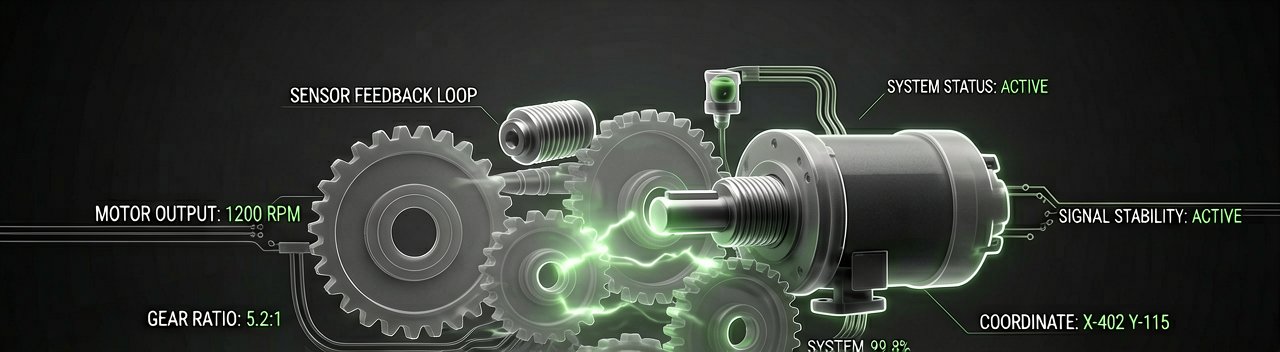
Behind the Scenes: The High-Stakes Math of Early Talent Poaching
While standard press releases frames these high school robotics challenges as purely altruistic community outreach, seasoned semiconductor insiders recognize a much more urgent reality. The global chip industry is facing a severe shortage of skilled technicians, specialized hardware engineers, and automation experts. Equipment giants like Lam Research, Applied Materials, and ASML are locked in a quiet, ferocious arms race for talent. By planting their corporate flags in high school auditoriums, Lam Research is executing a classic pipeline-capture strategy, attempting to win the hearts and minds of bright STEM students years before university recruiters or big-tech rivals even get a look at their resumes.
This early-intervention strategy reflects a broader structural shift in how tech conglomerates view engineering education. Historically, companies relied on prestigious university partnerships to source raw talent, but the blistering pace of the semiconductor manufacturing industry has made that lag time a liability. Today's advanced wafer fabrication equipment operates on complex mechatronic principles that require a cross-disciplinary understanding of mechanical engineering, computer science, and sensor technology. By forcing high schoolers to work with Arduino platforms, microcontrollers, and real-time sensory feedback loops, the competition serves as a brutal but effective filter for the exact blend of hardware and software skills the industry desperately needs.
Furthermore, the geopolitical geography of these qualifying rounds reveals a highly deliberate strategy. Concentrating regional preliminary events in areas like Gyeonggi Province and Ansan puts Lam Research in direct contact with communities tied closely to existing tech clusters. These are regions where students are already culturally aware of the tech sector's prestige, but might lack direct, hands-on mentorship from industry titans. Providing localized access to high-end hardware and professional engineers democratizes the playing field while simultaneously building a deeply loyal, hyper-local recruitment pool right in the backyard of major fabrication facilities.
Ultimately, the success of initiatives like the Robo Challenge will not be measured by the trophies handed out in Seoul this August, but by the enrollment data of engineering universities three to five years down the line. For Lam Research, the immediate cost of hardware kits, regional logistics, and prize pools is a rounding error compared to the long-term capital expenditure required to retrain standard graduates who enter the workforce without practical automation experience. By turning robot assembly into a competitive sport, they are successfully rebranding the often-invisible world of semiconductor infrastructure engineering into something tangible, exciting, and worth pursuing as a lifelong career.
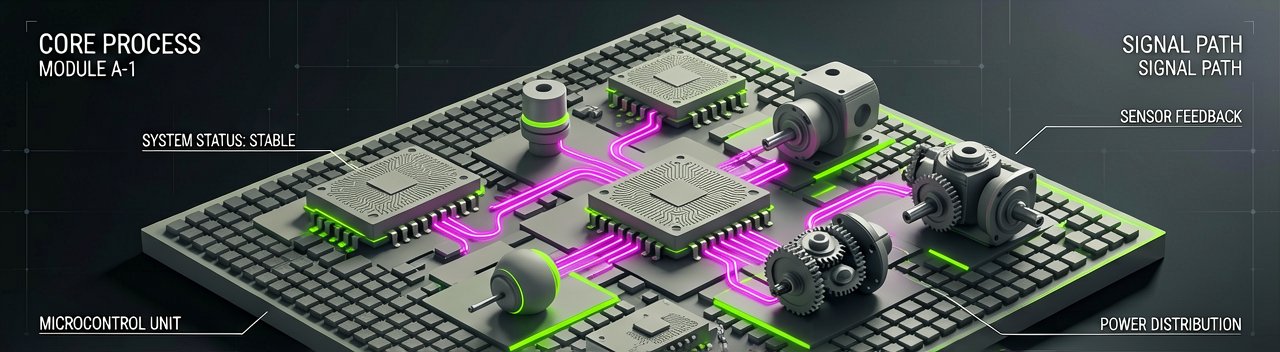
Reading Between the Lines: The Irony of Corporate-Sponsored Automation
There is a glaring paradox at the center of corporate-sponsored STEM challenges that tech journalists rarely talk about. Lam Research is spending considerable capital to teach high school students how to program automated systems, yet the ultimate goal of advanced semiconductor manufacturing is to eliminate human intervention from the cleanroom entirely. We are witnessing an odd corporate loop where companies must train human labor to build the very machines that will render that same labor obsolete on the factory floor. While students learn the joy of manual troubleshooting, the industry they are preparing to enter is shifting toward self-diagnostic AI and autonomous fab facilities where human hands are viewed primarily as contamination risks.
Furthermore, the heavy reliance on accessible, open-source platforms like Arduino in these competitions raises legitimate questions about industrial readiness. While tinkering with basic microcontrollers is an excellent way to get a sixteen-year-old excited about robotics, the distance between an Arduino-powered cart and a multi-million-dollar extreme ultraviolet (EUV) lithography or plasma etching tool is vast. Critics argue that these competitions are less about engineering education and more about corporate public relations. They act as high-visibility branding exercises designed to assure investors and governments that tech titans are proactively solving the labor crisis, even if the actual skills transferred are decades behind the cutting-edge reality of a modern silicon foundry.
We must also look at the high burnout rate that plagues the tech pipeline. Getting students hooked on the dopamine rush of a weekend robotics tournament is easy, but keeping them engaged through four to six years of grueling, theory-heavy university engineering coursework is a completely different challenge. Without sustained academic subsidies, university scholarships, and mental health support, these high school initiatives risk creating a brief surge of interest that fizzles out long before graduation day. If Lam Research and its contemporaries do not bridge the massive gap between high school play and university grit, these competitions will remain expensive talent magnets that ultimately lose their iron filings to higher-paying software startups or financial trading firms.
Yet, despite these systemic contradictions, the macroeconomic pressure makes these programs a necessity. The chip industry simply cannot afford to do nothing while aging engineers retire and fewer students choose hardware over the relative comfort of pure software development. Even if only a tiny fraction of these high school competitors survive the educational pipeline to become fab-ready engineers, that single-digit yield is still a massive win for corporate recruiters. It is an expensive, highly inefficient way to mine for human capital, but in a world desperate for silicon supremacy, efficiency is often the first luxury to go out the window.
It seems the ultimate test of these high school robotics challenges isn't whether the teenagers can get their machines to work, but whether they can build a robot clever enough to write their future engineering resumes and bypass the corporate HR algorithms entirely.
Artūras Malašauskas is an AI Systems Integrator with 20+ years of production-grade web engineering experience. He has designed, shipped, and scaled enterprise Python/PHP systems for logistics, SaaS, and public-sector clients. For the past year, he has focused exclusively on AI integrations: deploying open-source LLMs, building generative media pipelines (image, audio, video), and engineering multi-agent workflows for real production environments. His standard: reproducibility, security, cost-efficient inference—no vaporware. He documents and evaluates emerging AI tooling, separating verified capabilities from marketing noise. Technical editor at: muza-ai.eu, ai-verslas.lt, ai-naujinos.lt Connect on LinkedIn
Comments