Step Aside, Cricket: MetaShot’s Smart Paddle is Bringing Pickleball to the Living Room
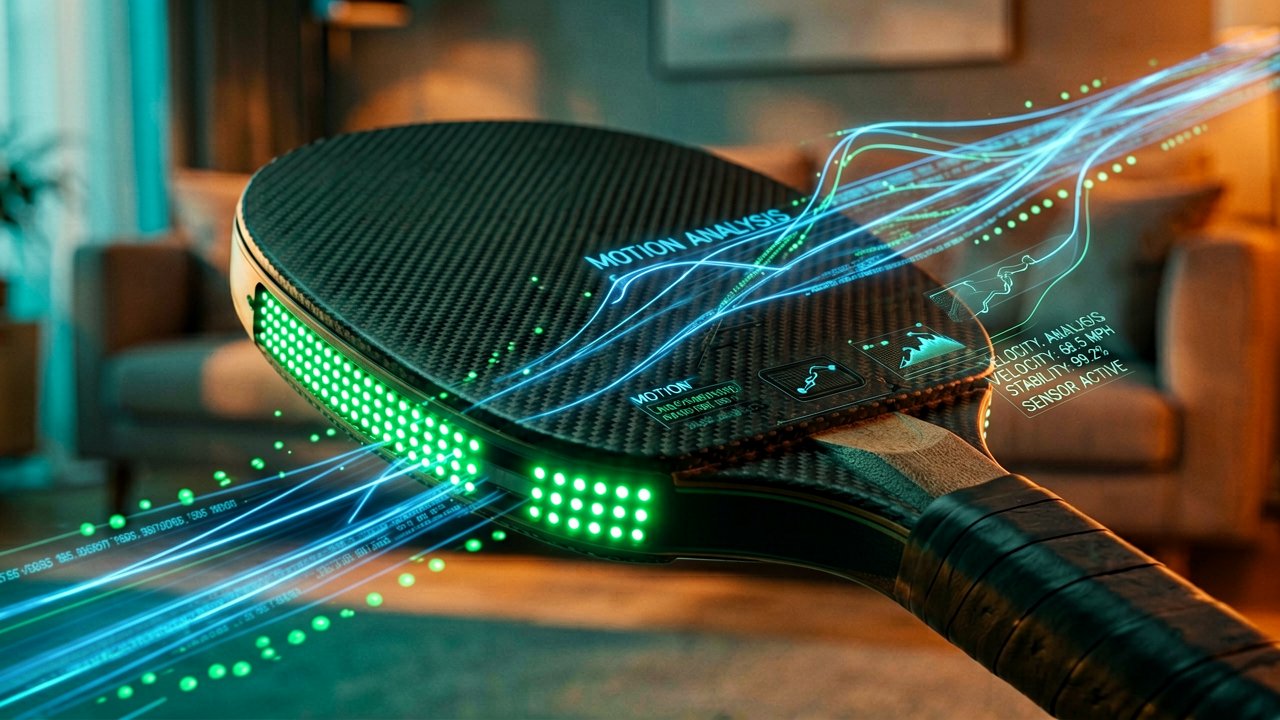
Pickleball is officially inescapable. It has taken over local parks, divided neighborhoods, and now, it is invading your living room. MetaShot, the Shark Tank India-backed startup that found massive success turning the country’s obsession with cricket into a physical-digital hybrid ecosystem, is pivoting its attention to the fastest-growing sport in the world. Rather than going at it alone, MetaShot has locked arms with Yudiz Solutions, a heavyweight in game development, to engineer the world’s first smart pickleball paddle and dedicated motion-tracking game.
For context, MetaShot made its name by letting you swing a sensor-packed bat in your kitchen while mapping those precise kinetic movements directly into a digital cricket stadium. It was immersive, shockingly accurate, and crucially, keeping all software development strictly internal. This new partnership marks a major shift in Strategy. According to a report by Digit, MetaShot is officially opening its proprietary motion gaming platform and SDKs to a third-party studio for the very first time. They are trusting Yudiz Solutions with the keys to their tech kingdom, and honestly, the choice makes sense if they want to rapidly scale their library before the motion-gaming novelty wears thin.
How the Magic Happens
The tech itself relies on the same core mechanics that made MetaShot a viral hit on television. Players hold a smart pickleball paddle loaded with high-fidelity motion-tracking sensors. When you slice, dink, or smash in real life, those real-time swings translate seamlessly into the digital court. Your actual physical timing, reaction speed, and swing direction are everything. If you are sloppy with your wrist, the ball flies out of bounds. It is a refreshing departure from the mindless button-mashing or basic swipe mechanics that dominate mobile sports games, serving as a genuine workout hidden inside a gaming loop.
The Strategy Behind the Swing
Opening up their ecosystem to external developers is a calculated gamble that could pay off massively for MetaShot. Building hardware is notoriously difficult, but sustaining a hardware ecosystem requires a steady stream of engaging software. By partnering with Yudiz Solutions, MetaShot can quickly capture the global pickleball zeitgeist without pulling its internal engineering resources away from its core cricket title. It is a blueprint for how home-grown motion tech can evolve from a one-trick pony into a legitimate domestic console platform.
What Most Reports Miss: The High-Stakes Battle Over Connected Motion Gaming
Behind the tech specs and corporate handshakes lies a fascinating reality about the economics of connected hardware. When MetaShot burst onto the scene with its smart cricket bat, it caught the attention of investors because it solved a classic hardware problem: keeping users hooked long after the initial unboxing thrill fades. By entering the pickleball arena, the startup isn't just chasing a trendy sport. They are actively testing whether their core value proposition—translating high-fidelity physical momentum into a hyper-accessible digital environment—can be successfully cross-pollinated into a completely different athletic discipline without alienating their core user base.
The decision to outsource software development to Yudiz Solutions is a strategic pivot born out of necessity. Historically, hardware companies that try to build every single piece of companion software in-house run into a resource bottleneck. There is a reason tech giants rely on sprawling third-party developer networks. By offering up their proprietary motion gaming platform and SDKs to Yudiz, MetaShot is quietly attempting to transform itself from a single-product company into a foundational platform ecosystem. If this blueprint succeeds, it opens the floodgates for future collaborations in tennis, badminton, or even golf, effectively turning MetaShot into a nimble, software-agnostic console alternative.
From a technical perspective, calibrating a smart paddle for pickleball introduces an entirely different set of physics compared to cricket. A cricket swing relies on a relatively predictable, linear arc with explosive velocity at impact. Pickleball, by contrast, is a game of erratic micro-movements, delicate soft-touch dinks, and sudden, reactionary wrist snaps. Industry insiders point out that mapping these complex kinetic subtleties into a real-time digital game requires serious optimization to prevent the dreaded latency lag that kills immersion. Yudiz Solutions brings a deep bench of gaming engineers to the table, which should theoretically ensure that a gentle kitchen drop shot feels just as accurate as an overhead smash.
The geopolitical timing of this launch is equally calculated. Pickleball is currently undergoing an unprecedented global boom, rapidly transitioning from a niche North American pastime into a global phenomenon with massive corporate backing. By leveraging their established distribution channels and brand equity in India, MetaShot and Yudiz are positioned to capture the early adopter market before international gaming conglomerates catch on to the trend. It is a classic land-grab strategy, establishing a physical footprint in living rooms through smart equipment before the digital sports landscape becomes oversaturated with standard controller-based alternatives.
Reading Between the Lines: The Friction Between Tech and Physical Intuition
Behind the optimistic press releases lies a glaring contradiction that both MetaShot and Yudiz Solutions will eventually have to confront: the inherent paradox of bringing a highly tactile, outdoor social sport into the confines of a living room. Pickleball’s explosive global growth is fundamentally driven by its low barrier to entry, physical community aspect, and the immediate feedback of a plastic ball hitting a composite face. Strip away the court, the wind, and the sound of adjacent games, and you are left trying to replicate a sensory experience through haptic feedback and a television screen. Whether a digital simulation can satisfy the very itch that drives people to the real courts remains a highly debatable assumption.
Furthermore, opening up proprietary SDKs to a third-party developer like Yudiz Solutions is rarely the frictionless victory lap tech journalists like to portray. While outsourcing the game engine accelerates time-to-market, it introduces a dangerous fragmentation risk for MetaShot’s brand. When a consumer buys a smart paddle, they hold MetaShot accountable for the entire end-to-end experience. If the game software suffers from calibration drift, framerate drops, or clumsy user interface design, the blame lands squarely on the hardware manufacturer. Navigating the delicate balance between rapid software scaling and strict quality control is a tightrope walk that has tripped up far larger consumer electronics giants in the past.
There is also the matter of spatial reality. Cricket simulation works at home because it is an explicitly linear movement; the user stands in one spot and swings through a fixed zone. Pickleball, however, is a game of lateral movement, quick lunges, and backward retreats. Attempting to trick the brain into feeling like you are moving across a court while your feet remain firmly anchored to a living room rug creates a profound cognitive dissonance. If the game forces players to move, they risk smashing into coffee tables; if it automates the player's movement and only tracks the swing, it risks feeling less like a sports simulator and more like an glorified, expensive version of a decade-old Nintendo Wii game.
Ultimately, this partnership represents a high-stakes test of consumer appetite for specialized tech hardware. We live in an era where consumers are increasingly resistant to buying single-use gadgets that clog up entertainment centers. MetaShot’s smart cricket bat succeeded by tapping into a near-religious national obsession, but pickleball, despite its trendy momentum, does not yet possess that level of cultural stickiness. If this smart paddle cannot transcend the status of a novelty holiday gift, it may end up as an expensive reminder that some sports are simply meant to be played outside.
Replacing a Sunday morning court reservation with a living-room simulator might save your knees, but it won't save your living room lamps from an over-enthusiastic backhand smash. After all, the ultimate test for any smart sports gadget isn't whether the tech works, but whether it ends up gathering dust next to the bread maker.
Artūras Malašauskas is an AI Systems Integrator with 20+ years of production-grade web engineering experience. He has designed, shipped, and scaled enterprise Python/PHP systems for logistics, SaaS, and public-sector clients. For the past year, he has focused exclusively on AI integrations: deploying open-source LLMs, building generative media pipelines (image, audio, video), and engineering multi-agent workflows for real production environments. His standard: reproducibility, security, cost-efficient inference—no vaporware. He documents and evaluates emerging AI tooling, separating verified capabilities from marketing noise. Technical editor at: muza-ai.eu, ai-verslas.lt, ai-naujinos.lt Connect on LinkedIn
Comments