Zimmer Biomet Establishes Tech Hub in Bengaluru to Drive Next-Gen Orthopedic Innovation

Zimmer Biomet, an American medical technology leader with a nearly century-long heritage in musculoskeletal health, has officially launched its new Global Capability Center (GCC) in Bengaluru, India. Established as Zimmer Biomet Global Services India Private Limited, this high-velocity digital innovation hub marks a definitive shift in the company's global operational strategy. Built in strategic partnership with ET GCC consulting firm ANSR, the facility is designed to blend India’s elite digital engineering talent ecosystem with the firm's expanding portfolio of connected healthcare systems and advanced medical technologies.
The newly inaugurated center will support Zimmer Biomet’s global operations across a multi-functional spectrum including cloud technology, cybersecurity, data analytics, and enterprise business operations. Crucially, the Bengaluru team will play a foundational role in accelerating the company's high-stakes digital healthcare roadmap. According to updates highlighted by Digital Health News, the GCC’s primary engineering focus includes developing next-generation patient-monitoring software, streamlining regional procurement for the APAC supply chain, and advancing AI-driven algorithmic frameworks for the firm's flagship robotic surgery lines.
What Most Reports Miss: The Evolution Beyond Back-Office Support
Behind the Scenes: While typical market announcements frame multinational expansions purely around cost optimization, Zimmer Biomet's new hub signifies a deeper structural pivot within the modern MedTech landscape. Historically, global capability centers in India operated as downstream cost-saving centers handling routine database maintenance or localized IT support. The Bengaluru layout, however, is being explicitly resourced as an upstream software powerhouse. It is architected to directly influence core product engineering for platforms like the ROSA Knee system and the comprehensive ZBEdge digital care ecosystem. This represents a conscious push to build internal engineering depth, insulating the firm’s development pipeline from the latency of traditional outsourced engineering models.
The strategic timing of this launch coordinates closely with intense regulatory and market pressures within the surgical robotics sector. As orthopedics shifts toward hyper-personalized, data-driven pre-operative and post-operative care, the battle for medical market share is no longer won solely in the mechanical hardware of a titanium joint implant. Instead, competitive dominance relies heavily on the predictive intelligence of the cloud software guiding the surgeon's hands. By anchoring these specialized software capabilities in India’s premier technology hub, Zimmer Biomet secures the continuous algorithmic refinement necessary to support its smart surgery platforms globally.
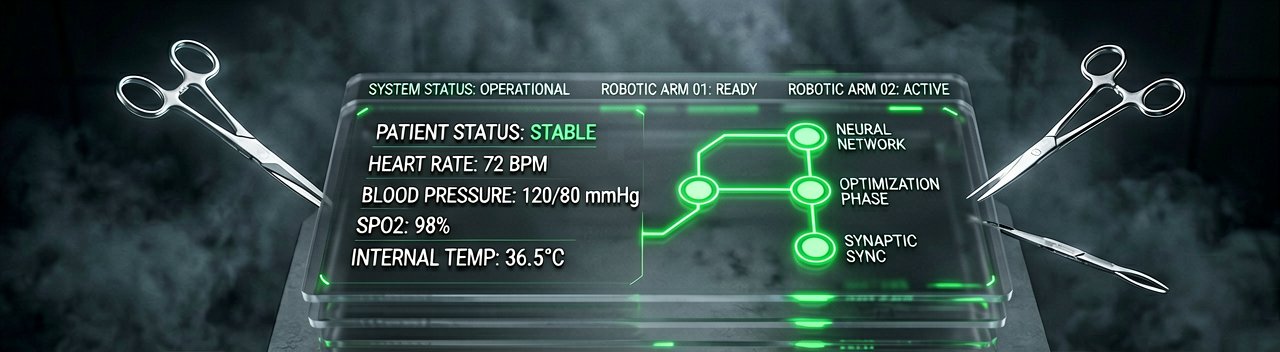
Furthermore, stakeholder perspectives indicate that the move addresses a critical operational friction point: real-time deployment velocity. Medical systems operating in unpredictable clinical environments require high-frequency updates, strict identity governance, and robust cloud infrastructure to safeguard sensitive data. By housing dedicated teams for IT security and smart implant architecture under one roof in Bengaluru, the organization gains the agility to rapidly adapt product features based on direct surgical feedback. This local engineering depth transforms the facility from a standard corporate extension into a core engine powering global commercial momentum.
Reading Between the Lines: The Friction in MedTech Globalization
Reading Between the Lines: The corporate enthusiasm surrounding Bengaluru’s newly minted GCC deliberately obscures a complex, industry-wide paradox. MedTech giants routinely champion global expansion as a seamless win-win for international innovation and local workforce empowerment. Yet, executing a highly technical product roadmap across a twelve-hour time difference introduces profound operational friction that rarely makes it into a press release. Splitting critical engineering workflows between seasoned product managers in Warsaw, Indiana, and newly recruited software developers in India risks creating disjointed development cycles. When immediate, iterative collaboration is essential for refining surgical software, reliance on asynchronous digital communication models often slows down the very velocity the expansion was built to achieve.
There is also a clear tension between Zimmer Biomet’s sophisticated vision for cloud-native medical ecosystems and the pragmatic realities of the local engineering market. Bengaluru is undeniably a premier global technology capital, but its talent landscape is hyper-competitive, notoriously volatile, and dominated by consumer internet firms offering aggressive compensation packages. For a legacy medical device manufacturer, maintaining long-term developer retention requires more than competitive pay; it demands proving that working on orthopedic data models is as professionally rewarding as building high-frequency trading algorithms or generative AI frameworks. If the local center becomes bogged down by maintenance tasks rather than high-impact creative engineering, it may struggle to retain the top-tier software talent necessary to drive true innovation.
Most importantly, the rush toward digital-first, AI-driven surgical platforms presents a stark contrast to the conservative regulatory framework governing global healthcare. Developing predictive orthopedic software in an agile Indian hub is one thing; navigating the complex, multi-year approval processes of the U.S. FDA, European MDR, and various Asia-Pacific regulatory bodies is quite another. Advanced software updates built in Bengaluru cannot simply be pushed to cloud-connected surgical systems overnight like a standard consumer application update. Every minor algorithmic tweak requires meticulous validation, extensive clinical documentation, and rigorous risk assessments. Consequently, the rapid innovation cycle promised by this new center will inevitably collide with the slow, unyielding realities of international medical compliance, potentially diluting the immediate competitive advantage the firm expects to gain.

"Ultimately, the modern medical tech playbook has evolved: you no longer just manufacture a flawless titanium hip; you must also build the cloud infrastructure to track its performance. Zimmer Biomet's massive bet on Bengaluru proves that the future of orthopedics belongs as much to software engineers as it does to orthopedic surgeons—assuming, of course, that the code compiles faster than the regulatory paperwork moves."
Artūras Malašauskas is an AI Systems Integrator with 20+ years of production-grade web engineering experience. He has designed, shipped, and scaled enterprise Python/PHP systems for logistics, SaaS, and public-sector clients. For the past year, he has focused exclusively on AI integrations: deploying open-source LLMs, building generative media pipelines (image, audio, video), and engineering multi-agent workflows for real production environments. His standard: reproducibility, security, cost-efficient inference—no vaporware. He documents and evaluates emerging AI tooling, separating verified capabilities from marketing noise. Technical editor at: muza-ai.eu, ai-verslas.lt, ai-naujinos.lt Connect on LinkedIn
Comments