eufy Omni C28 Robot Vacuum Review: Capable Mid-Range Floor Care Without the Gimmicks
The premium robot vacuum market has entered an era of diminishing returns, where cross-category flagships often boast eccentric, expensive features like stair-climbing capabilities or built-in, hand-held spot cleaners. Stripping away the excess to focus strictly on foundational floor-cleaning performance is a refreshing change of pace, and that is precisely where the eufy Omni C28 shines. Launched as a practical, mid-range alternative to ultra-premium models, this machine strikes a commendable balance between raw power, automated maintenance, and accessible pricing.
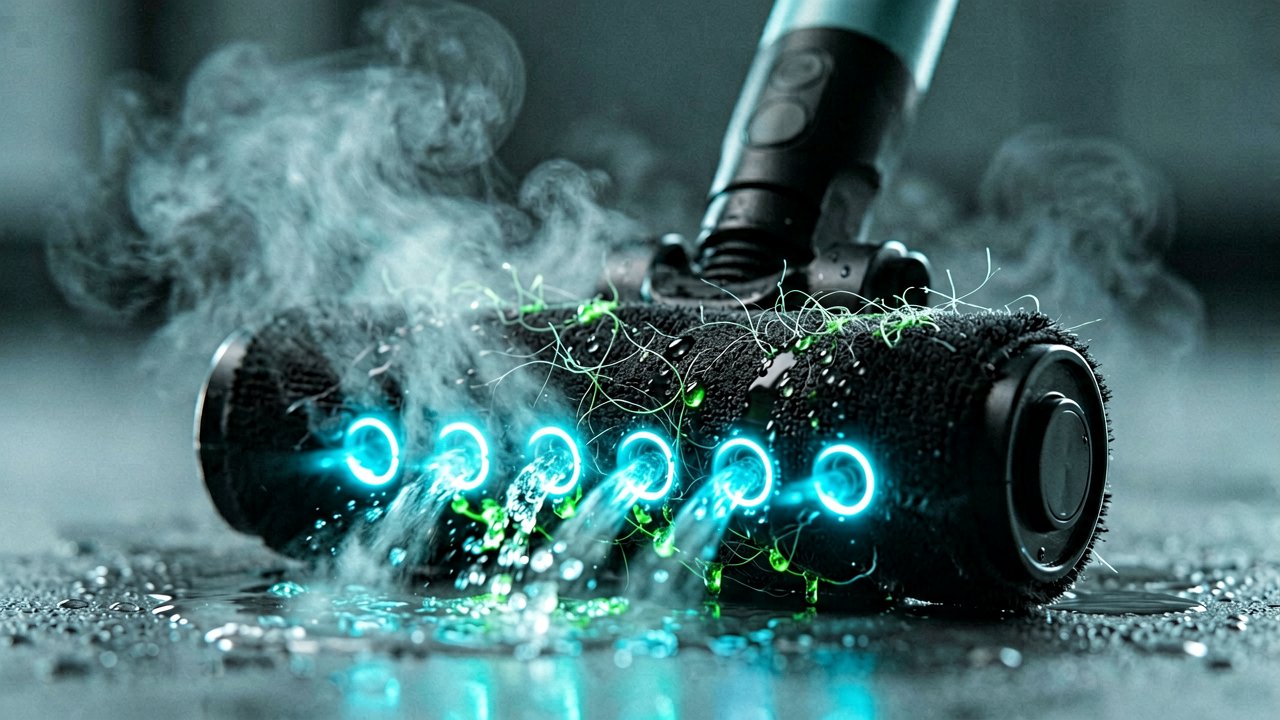
Equipped with a robust 15,000 Pa suction motor and a real-time self-cleaning HydroJet roller mop, the Omni C28 directly addresses the most stubborn real-world cleaning pain points—namely, pet hair wrapping around the roller and dirty water being dragged across hard floors. Testers at WIRED note that it delivers a substantial performance uplift compared to older models like the X10 Pro Omni, trading standard spinning pads for a continuous roller design that scrapes debris away into an onboard dirty water reservoir. While its obstacle avoidance can occasionally be overeager or clunky around tight corners, the sheer utility of its heavy-duty cleaning hardware helps offset its minor navigational quirks.
A Deep Dive Into Hardware Evolution and Everyday Realities
Behind the Scenes: The introduction of the eufy Omni C28 signals an important shift in product strategy. Rather than continuing to push consumers toward high-four-figure luxury models, manufacturers are increasingly migrating premium engineering down to more aggressive price points. As highlighted by hands-on analysis from Expert Reviews, the Omni C28 inherits a heavily optimized version of the HydroJet mopping logic seen in top-tier units, yet avoids the prohibitive price tags of experimental flagships. It functions as a spiritual, more practical successor to early generation premium lines, retaining a familiar all-in-one base station footprint while maximizing raw specifications under the hood.
The core of this machine's appeal lies in how it manages hair and wet spills. Traditional brush rolls are notorious for becoming tightly bound with long human hair or thick pet fur, requiring manual intervention with scissors or specialized blades. The Omni C28 counteracts this with its DuoSpiral detangle brush system, which uses an integrated internal comb to continuously strip away fibers before they can jam the axle. For pet owners managing a constant cycle of shedding and muddy paw tracks, the hardware combination of high-vacuum pressure and active mechanical detangling provides a highly autonomous, low-maintenance solution.

On hard floors, the 27 cm roller mop works alongside 24 integrated water ports to continuously wash itself while moving throughout the home, maintaining a uniform 1 kg of downward pressure. In long-term testing scenarios, including feedback documented on , this setup proves highly capable on typical kitchen grime, though sticky, dried-on juice or syrup may still require a secondary manual pass. This performance is managed by the iPath 2.0 navigation system, which uses LiDAR mapping to create highly detailed, accurate multi-floor boundaries within the eufy companion app.
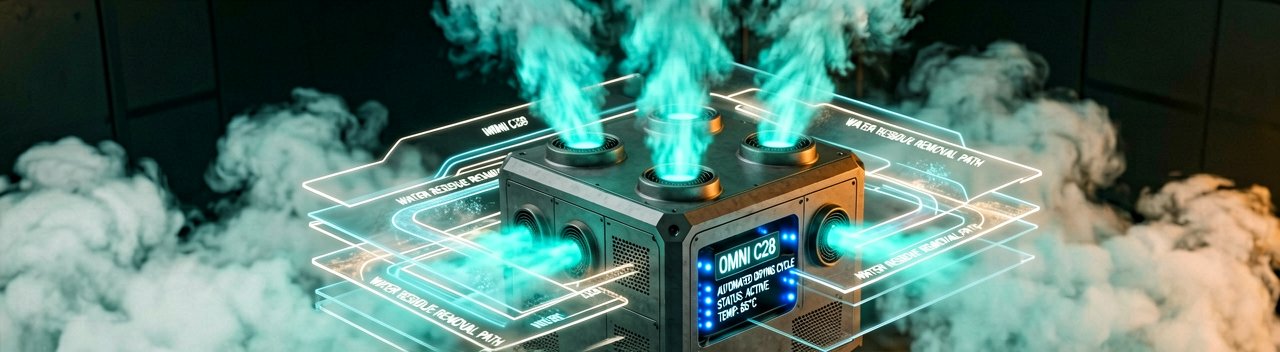
The all-in-one station fulfills its automated promises by handling dust extraction, fresh water replenishment, and active hot-air drying of the roller mop to mitigate bacteria and unpleasant odor buildup. However, buyers should prepare for a few environmental compromises inside the home. The automated dust emptying cycle operates at a very high volume, and the subsequent hot-air drying process emits a consistent, low-frequency hum that can persist for up to five hours. Placing the dock in a dedicated hallway or utility space, rather than a bedroom or main living room, is highly recommended to prevent the noise from interfering with daily activities. Ultimately, the Omni C28 skips the industry's trend toward flashy gimmicks, delivering highly effective vacuuming and mopping where it matters most.
Challenging the Spec Sheet: Power vs. Real-World Execution
Reading Between the Lines: The eufy Omni C28 prominently markets its 15,000 Pa suction rating, a staggering figure on paper that comfortably triples the capabilities of flagship models from just a few years ago. However, engineering reality rarely mirrors marketing hyperbole. In everyday household deployment, the leap from 8,000 Pa to 15,000 Pa offers a diminishing return on investment for standard hardwood floors and thin rugs, as the sealing required to leverage that level of negative pressure is incredibly difficult for a moving robot to maintain. Instead, this astronomical rating functions largely as a buffer for the unit's aggressive anti-tangle system, ensuring the motor can pull dense, stubborn pet hair through the internal ductwork without choking on its own success.
A notable contradiction lies in the contrast between the machine's advanced mechanical mopping and its surprisingly rudimentary obstacle avoidance. While the HydroJet roller mop cleverly solves the problem of dragging a filthy pad across clean tiles, the navigation system occasionally acts like a bull in a china shop around low-profile objects. According to community field tests shared on , the robot's front-facing sensors often struggle to differentiate between a genuinely hazardous rogue charging cable and a harmless transition strip between rooms. This overcautious programming results in a machine that might meticulously wash your kitchen floor to a mirror shine, only to stubbornly refuse to cross into the hallway because it misidentified a shadow as a solid wall.
Furthermore, the long-term cost of ownership for these highly integrated "gimmick-free" mid-ranger units is often overlooked during the initial honeymoon phase. By opting for a continuous roller mop rather than standard, cheap microfiber spinning pads, users are locked into buying eufy's proprietary, complex replacement rollers. The automated base station reduces daily friction, but it replaces simple manual chores with complex mechanical maintenance, requiring users to regularly deep-clean the station's internal wash board and buy specialized cleaning solutions to prevent hard-water buildup. It highlights a recurring paradox in modern smart home appliances: the more a gadget promises to save you from doing manual labor, the more elaborate its eventual maintenance routine becomes.
The modern robot vacuum has finally achieved the dream of automated floor care, provided you are willing to tolerate a device that cleans like a pro, roars like a jet engine during its lunch break, and occasionally treats a stray sock like an insurmountable existential crisis.
Artūras Malašauskas is an AI Systems Integrator with 20+ years of production-grade web engineering experience. He has designed, shipped, and scaled enterprise Python/PHP systems for logistics, SaaS, and public-sector clients. For the past year, he has focused exclusively on AI integrations: deploying open-source LLMs, building generative media pipelines (image, audio, video), and engineering multi-agent workflows for real production environments. His standard: reproducibility, security, cost-efficient inference—no vaporware. He documents and evaluates emerging AI tooling, separating verified capabilities from marketing noise. Technical editor at: muza-ai.eu, ai-verslas.lt, ai-naujinos.lt Connect on LinkedIn
Comments