Edgecore’s Praxis Wants to Drag AI Out of the Cloud and Onto the Edge
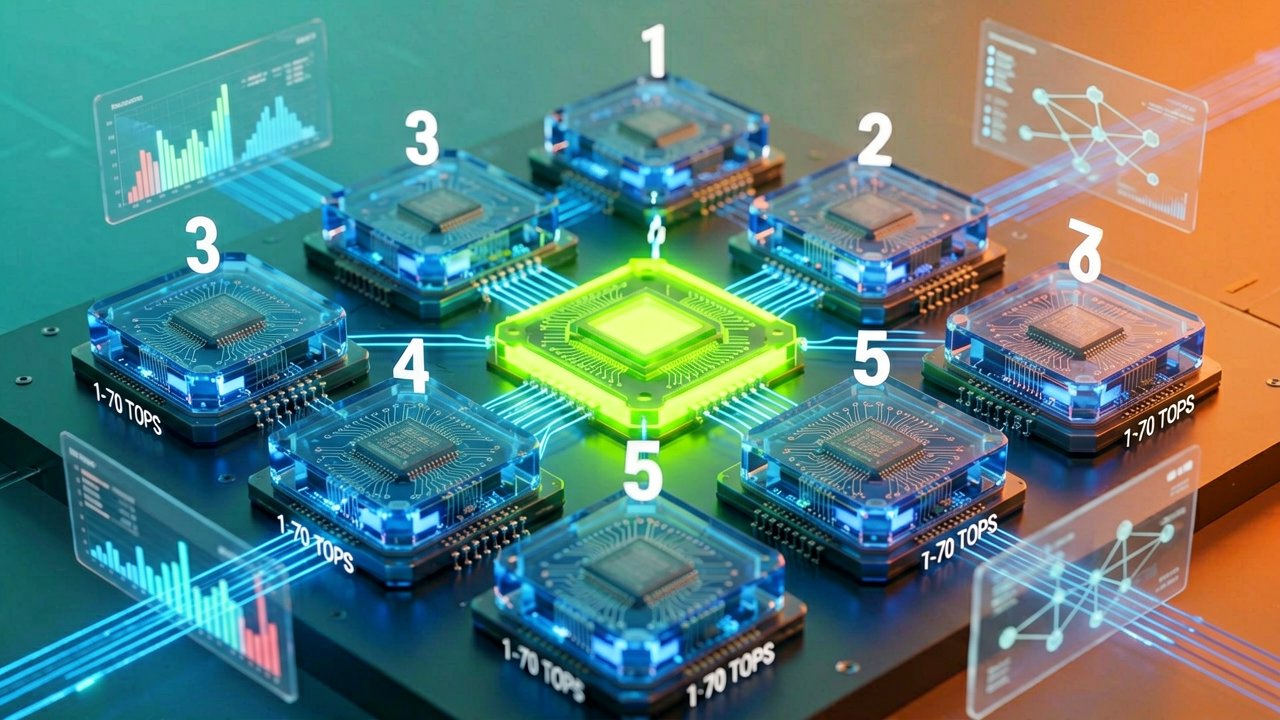
For all the talk about artificial intelligence changing the world, the reality of running it remains stubbornly centralized, tethered tightly to massive, power-hungry data centers. Edgecore Networks is trying to break that leash. The company has officially launched Edgecore Praxis, an curated Edge AI platform designed to let managed service providers (MSPs), internet service providers (ISPs), and SaaS companies deploy heavy-duty AI capabilities directly onto customer premises. Rather than treating the edge as a mere data collection point, this rollout repositions local environments as fully functional processing hubs, targeting the painful infrastructure overhead that has plagued early AI rollouts.
It’s no secret that keeping AI entirely in the cloud is becoming a losing game for scaling tech providers. As data volumes explode, the recurring operational costs of cloud inference spiral out of control, squeezing corporate margins. By shifting the heavy lifting to where data is actually born, Praxis transforms an unpredictable variable expense into a predictable, local cost structure. According to details shared via HPCwire, the strategy isn't just about saving money; it’s a necessary pivot for industries where letting data leave the building is a non-starter. For enterprise security, healthcare, and finance, on-premises execution isn't a luxury feature—it is a strict regulatory requirement.
Flexible Silicon for a Messy Real World
What makes this launch notable is how Edgecore handles the fragmented hardware landscape. Real-world deployment environments are rarely pristine, and customers aren't eager to rip and replace functional legacy gear just to run a new AI model. Praxis tackles this by introducing five distinct hardware configurations ranging from 1 TOPS to 70 TOPS of processing power, drawing from silicon platforms developed by Synaptics and Qualcomm. This allows service providers to slide AI capabilities alongside existing network setups, scaling up from simple IoT data processing to multi-stream video analytics without demanding a total infrastructure overhaul.
Ultimately, Edgecore isn't trying to build the next groundbreaking AI model. Instead, they're building the physical plumbing that allows those models to survive outside the cloud's climate-controlled comfort zone. By providing a rugged, specialized hardware foundation with a unified cloud control plane, they’re letting AI service providers focus on code and customer experience rather than deployment logistics. The platform has officially moved into its evaluation phase, inviting platform companies to test if localized silicon can truly live up to the cloud-free hype.

Behind the Scenes: The Invisible Friction of Localized AI
The push to decentralize artificial intelligence isn’t just an engineering milestone; it’s a direct response to a looming economic bottleneck. While the industry has spent the last few years marveling at the capabilities of large language models and computer vision, network engineers have been quietly panicking about backhaul. Sending raw, uncompressed high-definition video feeds or massive industrial telemetry streams to a centralized cloud for processing creates immense bandwidth strain. For service providers, this reality turns the cloud from a scalable solution into an expensive logistical choke point, making local hardware execution the only viable path forward for real-time applications.
Historically, the biggest barrier to deploying AI at the network edge hasn't been a lack of interest, but rather the sheer complexity of the software stack. Hardware components from different silicon vendors typically require entirely separate software toolchains, specialized drivers, and unique optimization protocols. A managed service provider trying to deploy an object-detection model might find themselves maintaining three different codebases just to support three different types of retail stores. This fragmentation destroys operational margins, which is exactly why the industry is shifting toward unified abstraction layers that mask the underlying hardware complexity from the software developers.
By partnering with established silicon players like Qualcomm and Synaptics, Edgecore is betting on hardware heterogeneity rather than a one-size-fits-all approach. For service providers, this choice matters because different edge environments demand vastly different power and thermal profiles. A fanless, ruggedized gateway mounted on a factory floor has completely different operating constraints than an enterprise-grade appliance sitting in an air-conditioned server room. Offering a spectrum of processing tiers allows providers to closely match the hardware cost to the exact revenue-generating use case, avoiding the financial trap of over-provisioning resource-heavy silicon for simple monitoring tasks.
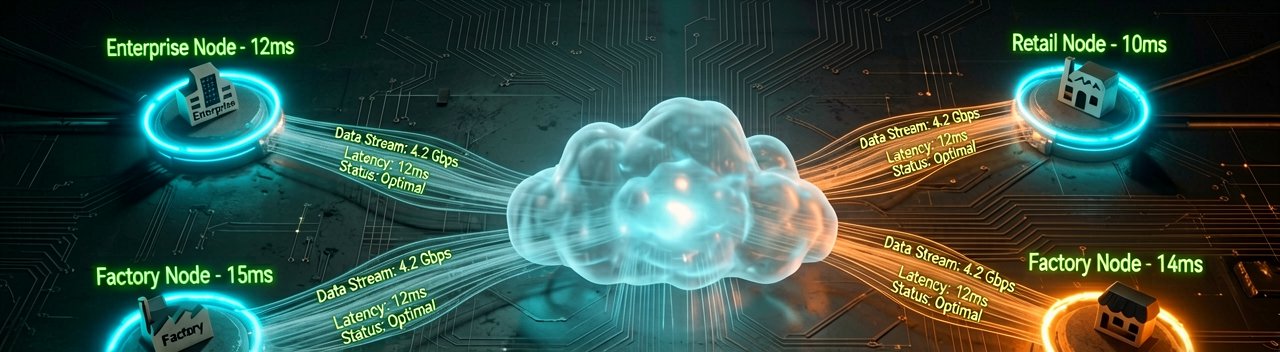
This rollout also highlights a shifting power dynamic between traditional cloud giants and local service providers. As enterprises realize that data privacy laws and latency requirements make cloud-only architectures impractical, regional ISPs and telecom operators have a unique opportunity to reclaim their ground. By hosting AI inference infrastructure directly on-premises or within local edge nodes, these providers can offer guaranteed, ultra-low latency services that centralized hyperscalers simply cannot match due to the laws of physics. The battleground for AI supremacy is rapidly moving away from who has the largest data center, shifting instead to who controls the last mile of connectivity.
Reading Between the Lines: The Edge Realism Versus the Hype
The industry's rush toward edge AI platforms like Praxis is built on a seductive premise: that moving intelligence to the local network will instantly solve the cloud’s cost and privacy crises. Yet, this narrative glosses over a harsh operational reality. Shifting workloads to the edge does not actually eliminate infrastructure complexity; it merely redistributes it. Instead of managing a concentrated pool of predictable resources in a single data center, service providers now face the nightmare of maintaining thousands of fragmented, physically isolated nodes scattered across unpredictable customer environments.
Furthermore, the claim of cost reduction deserves heavy skepticism. While enterprise tech buyers are understandably eager to escape the compounding subscription fees of cloud hyperscalers, trading operational expenses for upfront capital expenditure is a risky gamble in a rapidly evolving market. Silicons and AI models are advancing at such a breakneck pace that localized hardware deployed today risks obsolescence within twenty-four months. A service provider that locks itself into rigid hardware configurations across hundreds of client sites may soon find itself stuck with expensive, underpowered metal while the rest of the industry moves on to more efficient architectures.
There is also an inherent contradiction in the way edge platforms handle security. While keeping data on-premises elegantly satisfies data residency laws and prevents external leaks, it simultaneously opens up a massive physical attack surface. Cloud data centers are fortresses with multi-layered physical and digital security protocols. In contrast, an edge appliance sitting in a retail backroom or a factory closet is vulnerable to tampering, theft, and local network intrusions. True operational resilience at the edge requires a level of decentralized security engineering that very few managed service providers are currently staffed or trained to handle.
"We are effectively spending billions of dollars to build an incredibly sophisticated cloud, only to realize we now need to build an equally sophisticated un-cloud just to survive the monthly hosting bill."
Artūras Malašauskas is an AI Systems Integrator with 20+ years of production-grade web engineering experience. He has designed, shipped, and scaled enterprise Python/PHP systems for logistics, SaaS, and public-sector clients. For the past year, he has focused exclusively on AI integrations: deploying open-source LLMs, building generative media pipelines (image, audio, video), and engineering multi-agent workflows for real production environments. His standard: reproducibility, security, cost-efficient inference—no vaporware. He documents and evaluates emerging AI tooling, separating verified capabilities from marketing noise. Technical editor at: muza-ai.eu, ai-verslas.lt, ai-naujinos.lt Connect on LinkedIn
Comments