High-Tech Hooliganism: NDSL Unveils the First Drone Soccer League for Secondary Schools

Forget standard textbooks and tedious flight simulators. The Naija Drone Soccer League (NDSL) is officially bringing a chaotic, high-octane twist to STEM education by launching the first-ever competitive drone soccer league dedicated entirely to secondary school students. By embedding hands-on engineering directly into a full-contact aerial sport, the initiative is designed to fast-track aviation literacy, robotics, and teamwork across 32 secondary schools spanning six regions. It is a brilliant, hyper-competitive antidote to the traditional classroom lull, blending the raw adrenaline of a traditional football match with the intellectual grit of advanced aerospace design.
For the uninitiated, drone soccer is essentially Quidditch meets BattleBots. Five-on-five co-educational teams face off inside a heavily netted arena, piloting rugged quadcopters encased in glowing, protective carbon-fiber orbs. The rules are beautifully simple yet technically demanding: only one designated "striker" drone can score by physically flying through the opponent's elevated hoop, while the remaining defenders execute high-speed, mid-air blocks to protect their own goal. Because these aircraft frequently collide at blistering speeds, matches inevitably turn into a mechanical demolition derby. This is where the real learning happens, forcing student pilots to scramble in the pits between three-minute sets to solder wires, swap batteries, and replace shattered components under immense pressure.
Building the Next Generation of Aerospace Innovators
What makes the NDSL project so compelling is its refusal to treat technology as a passive hobby. Students are not just buying off-the-shelf toys; they are mastering industrial-grade, open-source tech. The league acts as a practical feeder program that forces teenagers to grasp complex telemetry, flight dynamics, and radio programming. By gamifying these intricate aerospace concepts, the program dismantles the intimidating barriers often associated with hard sciences, stealthily guiding participants toward real-world certifications and future careers in an increasingly autonomous global economy.
Ultimately, this initiative positions competitive e-sports as a legitimate gateway to professional aviation. As schools transition from traditional tech labs to competitive arenas, students absorb the specialized vocabulary, rigorous safety protocols, and intense collaborative habits required by the modern aerospace workforce. The NDSL is proving that the best way to prepare kids for tomorrow's skies is to let them build, break, and race their own innovations today.

Inside the Arena: The Engineering Behind the Chaos
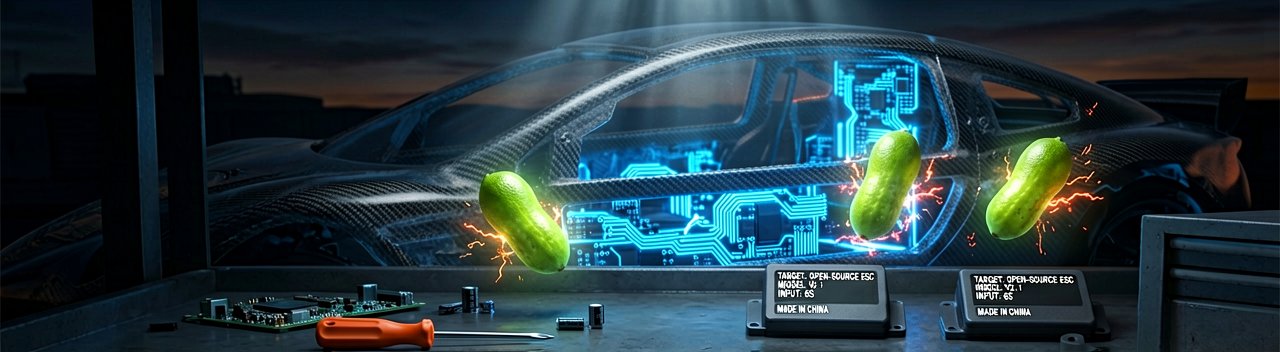
Behind the Pit Wall: What casual spectators mistake for a simple arcade game is actually a punishing trial of real-time hardware engineering. Drone soccer requires student teams to operate as high-performance pit crews, managing identical structural constraints while maximizing aerodynamic efficiency. The standard 20-centimeter aircraft must withstand repeated, high-velocity impacts without losing telemetry. This forces students to master the subtleties of carbon-fiber elasticity, weight distribution, and component layout inside the protective exoskeleton. A single millimeter of imbalance can cause the onboard flight controller to overcompensate, burning out electronic speed controllers (ESCs) mid-match.
The learning curve in the pits is notoriously brutal but highly effective. Unlike traditional robotics competitions where projects are built over months and tested in controlled environments, drone soccer demands instant triage. When a defender drone takes a direct hit and plummets to the arena floor, students have a microscopic window between frames to diagnose the failure. They must quickly determine if the issue is a desoldered motor wire, a cracked propeller blade, or a corrupted gyro calibration. This high-pressure environment shifts their mindset from passive tech consumers to active troubleshooters, mirroring the exact high-stress environments found in commercial aviation maintenance and aerospace engineering.
Navigating the Open-Source Sky
By forcing students to work with open-source flight stacks like Betaflight, the league completely bypasses the simplified, proprietary interfaces common in educational toys. Teenagers are introduced directly to PID (Proportional-Integral-Derivative) tuning loops, command-line interfaces, and radio frequency management. To gain a competitive edge, student pilots learn to manipulate rates and expo curves, customizing how aggressively the drone responds to stick inputs. This level of technical literacy bridges the massive gap between playing a video game and understanding the underlying software architecture that keeps autonomous vehicles airborne.
This deep technical exposure also serves as an equalizer across diverse schools. Because the league emphasizes standardized hardware kits, winning does not come down to the school with the biggest budget. Victory belongs to the team that optimizes their software profiles, masters the physics of momentum conservation during mid-air blocks, and maintains the disciplined communication required to orchestrate a fluid offense. It transforms complex mathematical concepts like vectors and angular acceleration into tangible tactics that students must master to win a championship trophy.
A Direct Pipeline to Global Aviation Careers
From an industry standpoint, the aviation sector is facing a looming demographic crisis with an urgent need for drone operators, avionics technicians, and aerospace programmers. Traditional pathways into these careers are often prohibitively expensive and academically siloed. The league tackles this bottleneck by transforming a niche hobby into a highly visible varsity sport. This framework leverages the existing competitive infrastructure of schools, making aviation look just as attractive and accessible to young students as traditional athletics.
Furthermore, the co-educational structure of the teams is intentionally dismantling the historical gender imbalances found in engineering disciplines. By integrating tactical communication, strategic coaching, and manual fabrication, the sport draws in a diverse cohort of students who might otherwise never have stepped into a robotics lab. Industry stakeholders are watching closely, recognizing that the teenagers currently patching up battered quadcopters in high school gyms are the exact professionals who will be managing autonomous cargo networks and urban air mobility systems a decade from now.
The Logistics Friction and Technological Realities
Reading Between the Lines: While the glossy PR campaigns frame drone soccer as a frictionless fast-track to the future of aerospace, the operational realities on the ground tell a far more complicated story. The assumption that handing high-tech equipment to secondary school students automatically translates into STEM fluency ignores the steep, expensive barrier of ongoing maintenance. Batteries degrade, motors burn out, and carbon-fiber cages shatter under the enthusiastic, erratic piloting of teenagers. Without sustained corporate sponsorship or significant government subsidies, less-funded institutions risk being sidelined after their initial kits inevitably break down, potentially widening the digital divide rather than closing it.
Furthermore, there is a distinct contradiction between the frenetic, arcade-style gameplay of drone soccer and the meticulous, hyper-regulated world of professional aviation. Commercial drone piloting relies heavily on strict flight checklists, spatial awareness over long distances, and autonomous pre-programming rather than fast-twitch muscle reflexes and full-contact aerial collisions. There is a legitimate concern that the league may be training excellent video game competitors rather than disciplined pilots, mistaking rapid thumb movements on a controller for a deep comprehension of meteorological factors and complex national airspace regulations.
There is also the logistical nightmare of scaling this initiative across diverse regions with varying infrastructure. High-speed drone telemetry relies on clean, interference-free radio frequencies and reliable power sources to charge dozens of lithium-polymer batteries between matches. In schools where basic laboratory equipment is already a luxury and grid stability is an ongoing struggle, maintaining a delicate fleet of digital aircraft presents a paradox. To truly democratize this tech, the league must focus less on the spectacle of the tournament and more on building the localized, gritty infrastructure required to keep these miniature machines airborne over the long haul.
"Ultimately, the greatest triumph of drone soccer isn't that it seamlessly teaches teenagers the nuances of aerodynamic drag or PID tuning loops, but rather that it successfully tricks them into doing heavy mechanical engineering under the guise of an explosive, full-contact sport where breaking the school equipment is finally considered a strategic victory."
Artūras Malašauskas is an AI Systems Integrator with 20+ years of production-grade web engineering experience. He has designed, shipped, and scaled enterprise Python/PHP systems for logistics, SaaS, and public-sector clients. For the past year, he has focused exclusively on AI integrations: deploying open-source LLMs, building generative media pipelines (image, audio, video), and engineering multi-agent workflows for real production environments. His standard: reproducibility, security, cost-efficient inference—no vaporware. He documents and evaluates emerging AI tooling, separating verified capabilities from marketing noise. Technical editor at: muza-ai.eu, ai-verslas.lt, ai-naujinos.lt Connect on LinkedIn
Comments