Beyond the Spec Sheet: Why Allient’s Humanoid Joint Webinar Matters
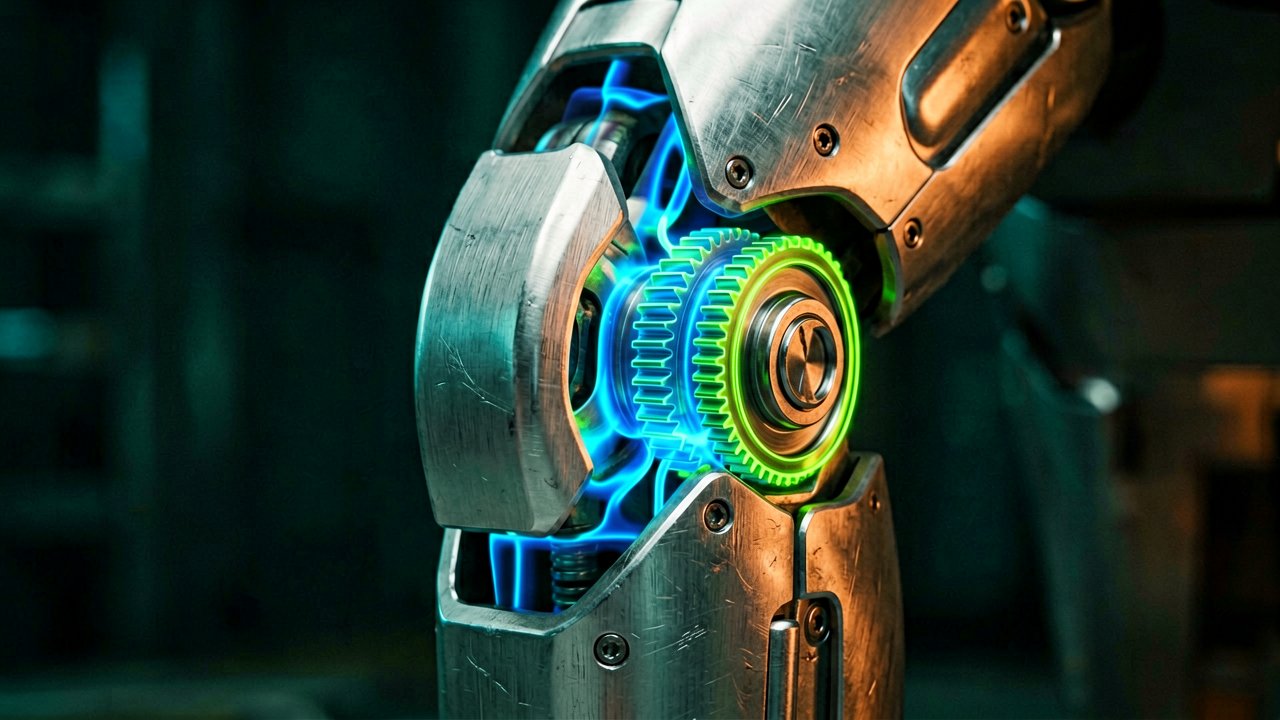
Humanoid robotics is officially transitioning from a sci-fi research project into practical, commercial reality. But building a machine that can walk, balance, and interact naturally requires a radical rethink of mechanical engineering. Standard off-the-shelf motor data just does not cut it anymore. If you want to know what it actually takes to power these complex machines, a deep dive into the engineering realities behind advanced robotics is essential.
Engineering specialist Allient Inc. is tackling these exact system-level hurdles head-on. The company announced its upcoming live presentation, "Engineering Thermally-Optimized Joints for Humanoids," hosted by RoboticsTomorrow. Scheduled for May 21, 2026, the webinar focuses entirely on the critical thermal and structural challenges that face hardware designers today.
The Thermal Bottleneck in Humanoid Actuation
In a typical factory robot arm, motors are bolted to heavy, static metal bases that act as massive heat sinks. Humanoids do not have that luxury. Their motors are crammed into tight, compact joint housings where heat builds up fast, threatening to degrade performance or trigger system failures. Relying strictly on standard spec sheets can lead to massive design blind spots because real-world multi-joint coupling alters thermal behavior entirely.
Allient's session promises a shift from dry component reporting to practical, system-level approaches. Attendees will learn how to properly interpret motor performance data within dynamic, continuous environments rather than static laboratory conditions. Maximizing torque density while keeping heat under control is the true holy grail for the next generation of mobile, bipedal automation.
The Hidden Cost of the Weight-to-Power Equation
What Most Reports Miss: The race to build commercial humanoids is often framed as an artificial intelligence race, but the physical chassis remains the ultimate gatekeeper of progress. For decades, roboticists have wrestled with the unforgiving realities of power density. Every extra gram of motor weight requires more torque to move, which in turn demands more electrical current, generating additional heat. This vicious cycle has historically forced engineers to choose between heavy, overpowered machines that drain their batteries in minutes, or nimble, lightweight bots that lack the strength to perform meaningful industrial tasks.
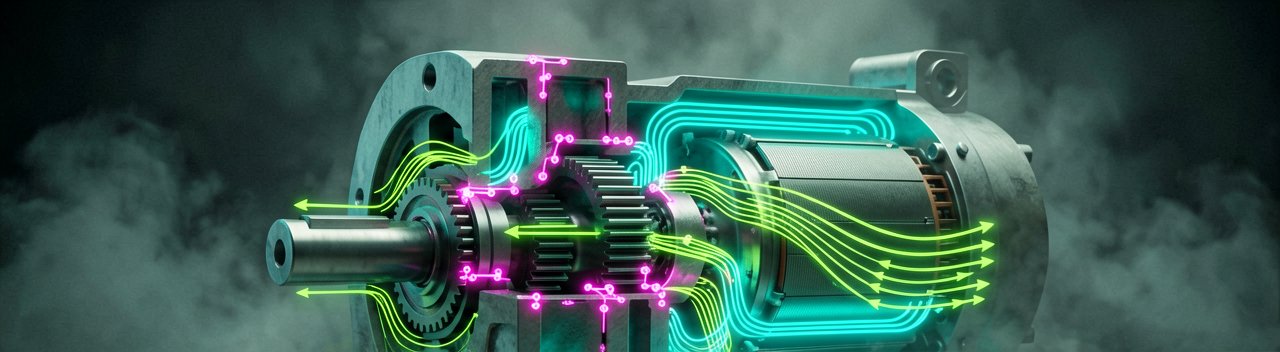
Historically, the industry relied on standard industrial servo motors to bridge the gap. These components work beautifully in fixed assembly lines where weight is irrelevant and ambient cooling is predictable. However, when those same motors are packed tightly into a humanoid knee or hip joint, they operate under entirely different physics. The lack of passive airflow combined with continuous, erratic movements creates localized thermal pockets. When a joint overheats, its internal magnets lose efficiency, forcing the system to pull even more current and threatening a catastrophic thermal runaway event.
Industry insiders emphasize that solving this bottleneck requires looking past individual component ratings to focus heavily on the mechanical housing itself. True innovation lies in structural integration, where the joint casing, gear reduction system, and motor windings function as a unified thermal circuit. By designing custom housings that actively conduct heat away from the core while doubling as load-bearing structural elements, engineers can push motors well past their traditional data-sheet limits without risking structural or electrical failure.
This systemic approach is shifting how stakeholders view the robotics supply chain. Major manufacturing facilities and logistics hubs are demanding longer operational runtimes and lower maintenance intervals before they commit to large-scale fleet deployments. For hardware suppliers, the ability to deliver verified, thermally optimized joints is no longer just a premium feature. It has become a strict commercial prerequisite for any company hoping to secure a piece of the rapidly growing automation market.

The Reality Check for the Humanoid Hype Cycle
Reading Between the Lines: The tech sector's sudden obsession with humanoid robots ignores a glaring economic contradiction. Silicon Valley pitch decks frequently project a future where billions of bipedal machines seamlessly replace human labor in warehouses and homes. Yet, the physics of multi-joint thermal dissipation suggests that these machines are still vastly impractical for sustained, multi-shift factory work. There is a wide gulf between a controlled, two-minute promotional video of a robot doing a backflip and a machine operating reliably for eight hours straight on a hot warehouse floor.
The prevailing industry assumption is that software and artificial intelligence will eventually optimize away these mechanical inefficiencies. Enthusiasts argue that smarter path-planning algorithms can minimize unnecessary movements, thereby reducing the strain on joint motors. However, this relies on a flawed premise. An AI cannot rewrite the laws of thermodynamics; a robot lifting heavy payloads will generate immense heat regardless of how efficiently its neural network paths are calculated. Relying on software to fix a fundamental hardware bottleneck is a high-stakes gamble that often results in expensive machines sitting idle while their actuators cool down.
Furthermore, the current push toward proprietary, highly customized joint architectures creates a massive sustainability and repairability headache for early adopters. If every major robotics startup relies on bespoke, thermally-optimized, integrated joint systems, standardizing parts across the industry becomes nearly impossible. Enterprise clients accustomed to the readily available, modular spare parts of traditional factory automation may find themselves locked into fragile supply chains, waiting weeks for a specialized knee assembly from a single vendor just to get a lone robot back online.
Ultimately, the true trajectory of advanced robotics will likely look much less revolutionary than current marketing suggests. Instead of a sudden wave of humanoid workers stepping into factories, we are more likely to see these advanced, thermally-optimized joint technologies cannibalized by existing, practical forms of automation. Quadrupedal delivery bots, advanced heavy-duty automated guided vehicles, and highly specialized multi-axis robotic arms will reap the benefits of this hardware evolution long before a fully bipedal humanoid can cost-effectively manage a full shift without melting its own ankles.
"We are currently spending billions to build machines that can walk, balance, and over-engineer a simple lifting motion, all to replicate a workforce that already exists and operates on a remarkably efficient diet of coffee and sandwiches."
Artūras Malašauskas is an AI Systems Integrator with 20+ years of production-grade web engineering experience. He has designed, shipped, and scaled enterprise Python/PHP systems for logistics, SaaS, and public-sector clients. For the past year, he has focused exclusively on AI integrations: deploying open-source LLMs, building generative media pipelines (image, audio, video), and engineering multi-agent workflows for real production environments. His standard: reproducibility, security, cost-efficient inference—no vaporware. He documents and evaluates emerging AI tooling, separating verified capabilities from marketing noise. Technical editor at: muza-ai.eu, ai-verslas.lt, ai-naujinos.lt Connect on LinkedIn
Comments