Silicon in the Heartland: Why the University of Minnesota’s New Microelectronics Center Matters
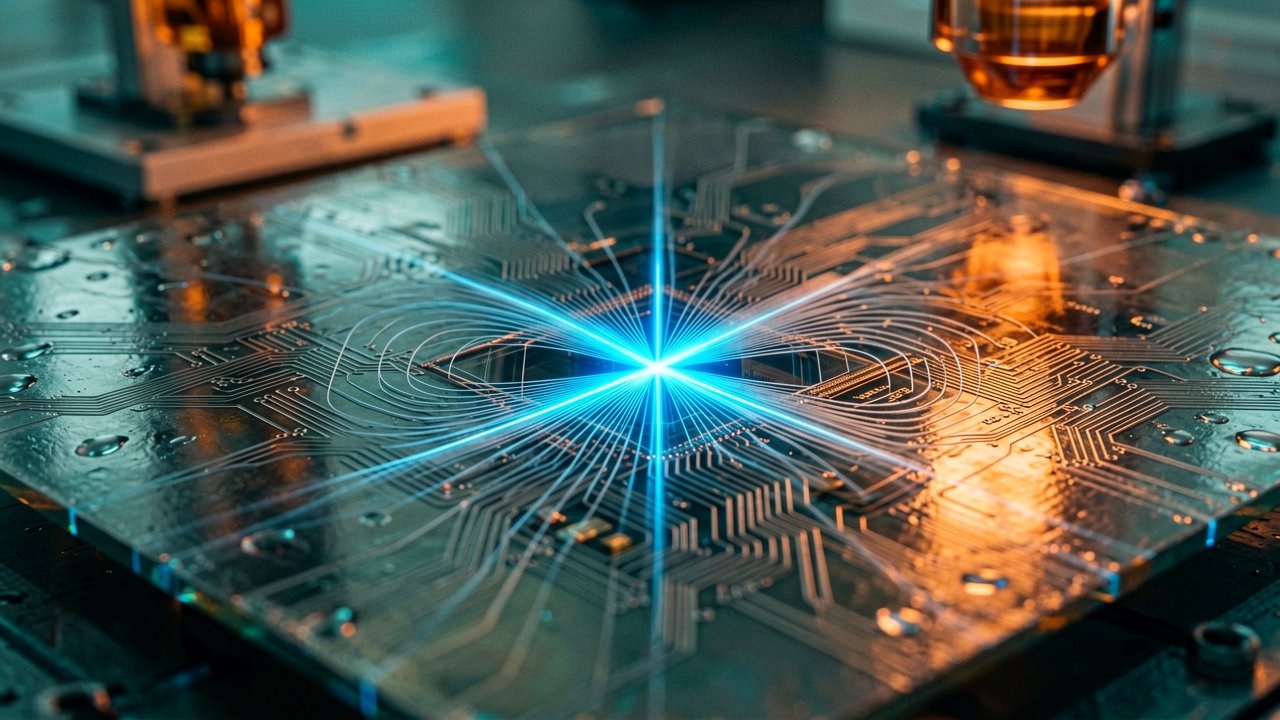
The Midwest isn't just about agriculture and heavy machinery anymore; it’s aggressively staking a claim in the global race for hardware supremacy. In a move that cements the region’s growing tech ambitions, the University of Minnesota has officially launched a new dedicated center tasked with driving the microelectronics and semiconductor industries forward. This isn't just an academic sandbox; it's a heavily backed industrial play designed to bridge the notoriously tricky gap between bleeding-edge laboratory breakthroughs and commercial fabrication facilities.
What makes this initiative particularly compelling is its alignment with the university's broader Elevate Extraordinary 2030 vision. Rather than just churning out conventional silicon architecture, the center is setting its sights on emerging architectures, including quantum spintronics and highly sustainable hardware tailored specifically for AI workloads. It’s a smart pivot. By focusing on tomorrow's power-efficient hardware demands, Minnesota is attempting to leapfrog established tech hubs and offer solutions to the computing industry's most glaring bottleneck: energy consumption.
A Powerful Coalition of Industry Heavyweights
Academia needs industry muscle to make a real-world dent, and this new venture isn't lacking in local corporate backing. Local semiconductor mainstays Polar Semiconductor and Honeywell Aerospace have already committed substantial resources to the initiative. These companies aren't just writing checks; they're actively opening their floors for equipment usage, sharing process and integration engineering labor, and co-designing specialized coursework.
This hands-on industry integration ensures that the next generation of engineers won't just understand chip architecture in theory. They will graduate with actual, practical experience on local production lines, effectively addressing the tech sector's ongoing talent shortage.
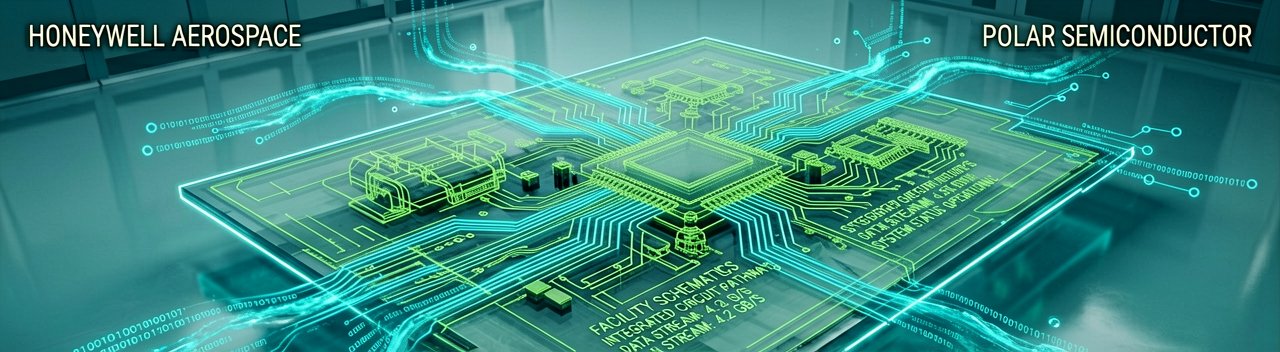
Driving the Spintronics Revolution
At the absolute core of the center’s research roadmap is spintronics—a field where the University of Minnesota has historically punched well above its weight class. Traditional microchips rely on moving an electron's electrical charge, which generates heat and saps power. Spintronics, however, utilizes the inherent "spin" of electrons to store and process data, promising a massive leap forward in both processing density and thermal efficiency.
By pairing the university's deep academic research in magnetic materials with Polar Semiconductor’s manufacturing footprint, the center is positioned to accelerate the deployment of these power-sipping components. These advanced chips are already eyed for high-stakes environments, ranging from autonomous automotive systems to deep-space exploration gear that needs to survive extreme cosmic conditions.
Behind the Silicon Curtain: Minnesota's High-Stakes Gamble on Next-Gen Hardware
What Most Reports Miss: The launch of this center is not a sudden burst of academic inspiration, but rather a calculated defense mechanism against the hyper-concentration of semiconductor manufacturing. For decades, the Midwest has maintained a quiet but vital aerospace and defense silicon footprint, anchored by Honeywell’s secure microelectronics facility in Plymouth and Polar Semiconductor’s automotive-grade fab in Bloomington. By formalizing this ecosystem under a unified academic-industrial umbrella, Minnesota is positioning itself to capture a significant slice of federal funding, turning what was once a disparate regional supply chain into a highly synchronized innovation engine.
The strategic timing of this launch directly mirrors a broader geopolitical push to onshore hardware manufacturing, but the real battle is happening at the atomic level. While giant fabrication facilities in Arizona and Ohio focus on scaling traditional silicon to smaller nodes, Minnesota’s specialized facility is intentionally taking the road less traveled by focusing on heterogenous integration and novel materials. Industry insiders recognize that the physical limits of traditional silicon are rapidly approaching, meaning the next decade of computing gains will not come from making transistors smaller, but from stacking entirely different types of materials together on a single chip.
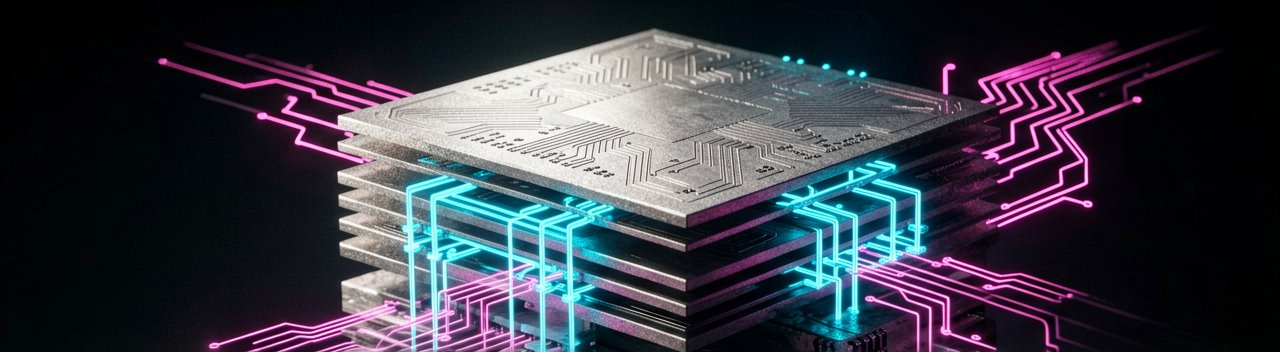
This is where the university’s historic expertise in magnetic materials and spintronics becomes a massive commercial leverage point. By integrating magnetic random-access memory directly onto standard silicon wafers, local engineers are tackling the "memory wall"—the latency and energy penalty that occurs when data travels between a computer's processor and its memory storage. Bridging this gap requires an intense level of collaboration, as academic researchers must tweak their theoretical designs to survive the harsh, standardized chemical and thermal realities of a commercial fabrication line.
Stakeholders from the corporate sector are particularly enthusiastic about the center's role in workforce democratization. The prohibitive cost of cleanroom time and silicon prototyping has historically kept smaller tech startups and regional universities locked out of the hardware design cycle. By acting as an open-access hub with shared equipment and engineering labor, the new center lowers the barrier to entry, allowing local mid-sized enterprises to rapidly prototype specialized sensors and power electronics without having to queue up at overbooked foundries overseas.
Ultimately, the long-term viability of this venture hinges on its ability to turn academic papers into profitable, mass-produced components. While federal grants can jumpstart cleanroom upgrades and fund initial doctoral fellowships, the center's ultimate test will be whether it can foster a self-sustaining startup ecosystem in the Twin Cities. If local spin-offs can successfully commercialize these power-efficient architectures, Minnesota will have built more than just a research center; it will have secured a permanent, indispensable role in the global technology infrastructure.
Reading Between the Lines: The Friction Between Research and Reality
The Reality Check: While the optics of a state-of-the-art microelectronics center make for excellent press releases, the economic reality of the semiconductor industry presents a much steeper hill to climb. The prevailing narrative suggests that pouring millions into university cleanrooms will naturally catalyze a Midwestern tech renaissance. However, this assumption glosses over the immense capital disparity between academic research and commercial fabrication. A single cutting-edge extreme ultraviolet lithography machine can cost upwards of two hundred million dollars—a sum that can easily swallow the entire annual budget of a university initiative, forcing the center to rely on legacy equipment that may not translate to modern commercial needs.
There is also an inherent cultural contradiction between academic discovery and industrial manufacturing that rarely gets highlighted. Universities thrive on open collaboration, intellectual risk-taking, and publishing breakthroughs as quickly as possible to secure peer approval. Conversely, the semiconductor industry is notoriously secretive, bound by strict non-disclosure agreements, and hyper-focused on yield optimization and intellectual property protection. Finding a middle ground where researchers can publish meaningful data without compromising the proprietary manufacturing processes of partners like Honeywell or Polar Semiconductor will require a delicate corporate-academic tightrope walk that often slows innovation to a crawl.
Furthermore, the center’s heavy reliance on spintronics and exotic magnetic materials introduces significant supply chain and integration risks. It is one thing to demonstrate a highly efficient spintronic device in a pristine laboratory environment; it is an entirely different challenge to integrate those materials into standard complementary metal-oxide-semiconductor manufacturing lines without causing cross-contamination. Most commercial foundries are deeply allergic to introducing new elements into their cleanrooms because a single rogue atom can ruin an entire multi-million-dollar batch of wafers, meaning the center's most revolutionary designs face a long, skeptical road before ever seeing a commercial product line.
Even the much-touted workforce development aspect carries a hidden caveat. Training a highly specialized cohort of spintronics engineers is a noble goal, but the domestic semiconductor labor market remains highly volatile and concentrated in a few specific geographies. If the local ecosystem cannot scale fast enough to absorb these highly specialized graduates, Minnesota risks acting as an expensive taxpayer-funded talent pipeline for established silicon strongholds in Oregon, Texas, and California, rather than anchoring the talent locally.
Building a world-class semiconductor ecosystem in the Midwest is a bit like attempting to grow tropical fruit in a Minnesota winter: with enough expensive infrastructure and artificial heat, you can absolutely pull it off, but you still shouldn't expect it to compete with the global market on price per pound anytime soon.
Artūras Malašauskas is an AI Systems Integrator with 20+ years of production-grade web engineering experience. He has designed, shipped, and scaled enterprise Python/PHP systems for logistics, SaaS, and public-sector clients. For the past year, he has focused exclusively on AI integrations: deploying open-source LLMs, building generative media pipelines (image, audio, video), and engineering multi-agent workflows for real production environments. His standard: reproducibility, security, cost-efficient inference—no vaporware. He documents and evaluates emerging AI tooling, separating verified capabilities from marketing noise. Technical editor at: muza-ai.eu, ai-verslas.lt, ai-naujinos.lt Connect on LinkedIn
Comments