Google Is Finally Breaking the 3D Wall to Fix Group Meetings on Beam
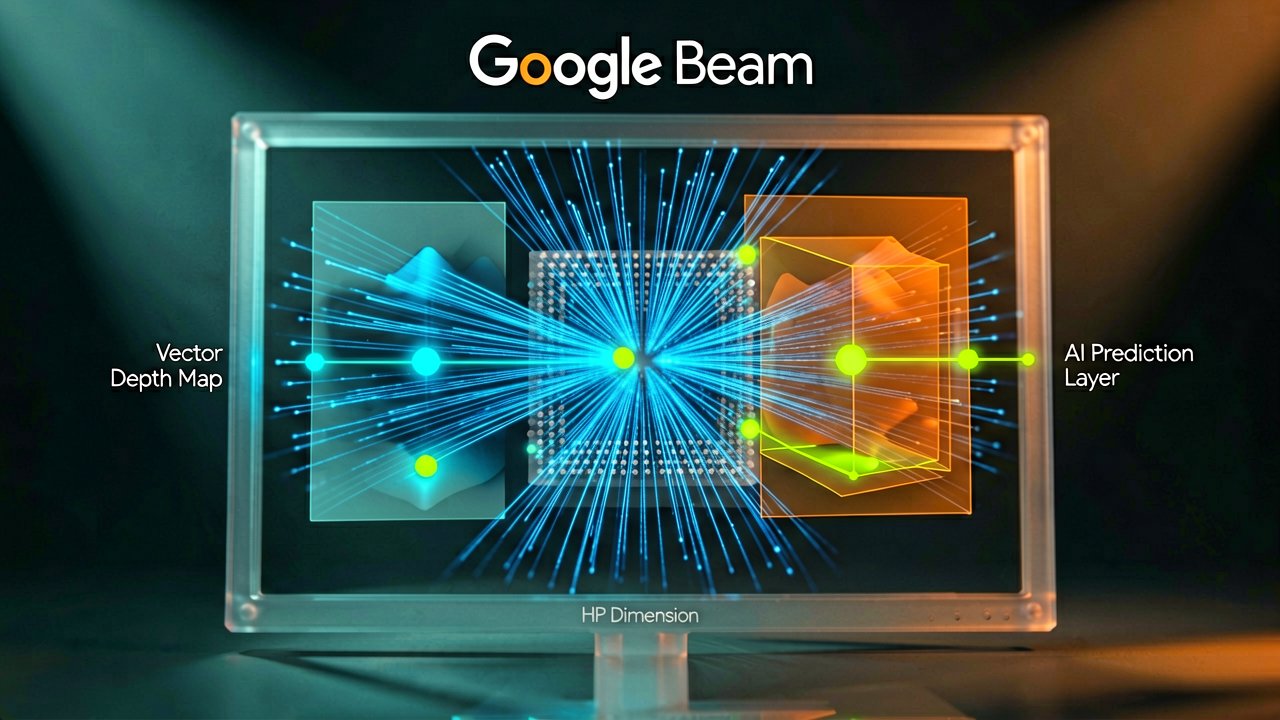
For the past few years, Google has been trying to convince the corporate world that the future of work isn't flat. If you've been lucky enough to sit in front of Google Beam—the hardware-heavy, AI-fueled evolution of what we used to call Project Starline—you know exactly how uncanny the magic trick is. By using an active light field display and an array of tracking cameras, it successfully tricks your brain into seeing a photorealistic 3D representation of whoever is sitting on the other side. It feels like you can reach out and grab whatever they're holding, entirely bypassing the usual pixelated exhaustion of standard video conferencing. But up until now, that sci-fi illusion came with a massive caveat: it was strictly a one-on-one affair, demanding a specialized, room-sized setup that isolated you from the broader, messier ecosystem of everyday group collaboration.
That rigid boundaries system is beginning to crack. In a fresh experiment quietly rolling out from Google's communication labs, the tech giant is testing a new way to pull standard laptops and smartphones directly into the Beam environment. According to recent dispatches from The Verge, this group-focused expansion aims to dismantle the technical wall separating high-end 3D hardware from traditional 2D feeds. Rather than forcing every single meeting participant to sit in a dedicated $25,000 corporate booth, the experimental setup explores how hybrid teams can mingle across platforms, seamlessly blending Zoom or Google Meet participants into a singular teleconferencing session.
The Realities of Hybrid Friction
Bridging this hardware gap isn't just a matter of adding a new gallery view layout. Beam relies on deep integration with Google Cloud and heavy-duty AI rendering to stitch multiple camera angles into a fluid, 60-frames-per-second volumetric model. When you try to drop a flat, compressed 2D video feed from a remote employee’s MacBook webcam into that complex spatial equation, things get technically awkward. Google's current experiment is heavily focused on figuring out the logistics of this multi-format friction, seeking a layout where 3D users don't lose their lifelike spatial awareness while interacting with traditional digital tiles.
A Premium Play for the Modern Office
While the feature remains experimental for now, the underlying strategy makes a ton of practical sense for corporate buyers. When HP officially priced its first commercial Beam hardware—the massive, 65-inch HP Dimension display system—at a steep $24,999, it became abundantly clear that this tech was reserved exclusively for executive boardrooms and elite enterprise clients. Companies aren't going to buy a system that expensive if it forces teams to constantly fragment their workflows into isolated, two-person chats. By building a functional bridge to regular smartphones and standard office laptops, Google is positioning Beam to act as the centerpiece of actual, everyday business operations rather than just remaining a flashy, high-tech novelty.
Behind the Scenes: Inside the Computational Magic Trick
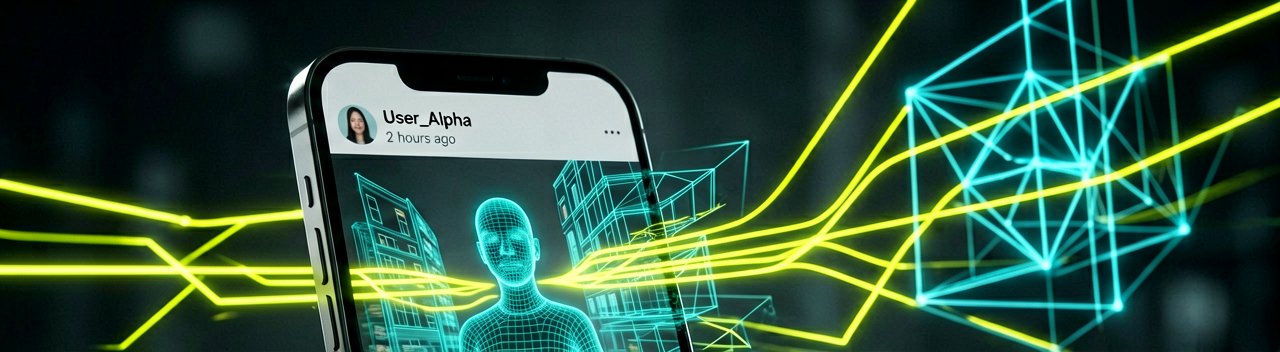
Behind the Scenes: Building a bridge between high-end spatial video and standard flat-screen webcams is a massive logistical nightmare for Google’s software engineers. The hardware that runs Google Beam is essentially a supercomputer wrapped in a premium TV frame, constantly crunching data from depth-sensing cameras to recreate a person’s likeness in three dimensions. When a regular remote worker joins that environment from a standard, 2D smartphone screen, the system can't just slap a flat window into the room. Doing so completely breaks the spatial illusion for the person sitting in front of the Beam display, instantly destroying the immersion that companies are paying twenty-five thousand dollars to achieve.
To fix this platform gap, the engineering teams are relying heavily on advanced machine learning algorithms to artificially predict and generate depth data where it doesn't naturally exist. By utilizing generative AI models trained on thousands of hours of 3D facial scans, the software can actively estimate the contours of a remote participant's face and shoulders using only a standard 1080p webcam feed. It is a brilliant, highly complex compromise that essentially simulates a 3D effect out of thin air, ensuring that the person in the high-tech booth doesn't experience visual whiplash when shifting their gaze from a physical colleague to a virtual one.
The Real Enterprise Battleground
This experimental upgrade also signals a massive shift in how corporate IT departments view the long-term value of immersive technology. Historically, high-end telepresence setups from the early 2000s failed because they operated like closed ecosystems; if a client or an off-site freelancer wasn't using the exact same expensive hardware brand, they simply couldn't connect to the meeting. Google is clearly trying to avoid that historical trap by turning Beam into an open-ended platform that plays nice with existing hardware, ensuring that early enterprise buyers can actually justify the hefty infrastructure investment to their chief financial officers.
There is also a fascinating competitive angle at play here against Apple's enterprise ecosystem. While Apple continues to push its Vision Pro headset as the ultimate corporate tool for spatial collaboration, Google is betting on a completely friction-free, glasses-free alternative that appeals to executives who hate wearing heavy goggles during long, grueling strategy sessions. By expanding Beam's capabilities to include everyday devices, Google is quietly positioning its hardware as the practical, boardroom-friendly anchor for hybrid teams, ensuring that the future of corporate communication remains anchored to a shared physical wall rather than an isolated virtual headset.

The Practical Friction of Perfect Telepresence
Reading Between the Lines: Google’s push to democratize Beam by letting ordinary 2D feeds into the sandbox highlights a glaring contradiction in the tech giant's ultimate hardware vision. The entire value proposition of a platform like Project Starline and Beam rests on the uncompromising quality of its photorealistic, light-field illusion. By systematically lowering the bar to accommodate standard, compressed, and often poorly lit webcams from a remote worker's kitchen table, Google risks diluting the premium experience into a glorified, exceedingly expensive version of Google Meet. It forces us to ask whether corporate boardrooms will actually continue to justify a twenty-five thousand dollar price tag when half of the people in the meeting still look like flat, low-resolution digital blocks.
Furthermore, this experimental group feature exposes a deep cultural divide in how tech companies assume modern professionals actually want to work. Tech executives love to demonstrate these tools using perfectly rehearsed, fully attentive avatars who sit perfectly still and maintain continuous eye contact. In the chaotic reality of everyday corporate life, however, workers rely on the psychological buffer of the flat screen; they turn off their video feeds to grab a coffee, look away to check an urgent email, or slouch out of frame entirely. Forcing workers into a hyper-realistic, three-dimensional gaze-tracking environment removes that comfortable digital distance, potentially trading standard video fatigue for an entirely new flavor of corporate panopticon anxiety.
Ultimately, Google’s willingness to open up Beam to everyday devices looks less like a benevolent gesture of inclusion and more like a necessary pivot to save a luxury product from corporate obscurity. History is littered with magnificent hardware that died on the vine because it required absolute ecosystem purity to function. By turning Beam into a hybrid bridge, Google is attempting to retroactively manufacture a network effect for a device that very few companies can actually afford to deploy at scale. It is a high-stakes gamble that hinges on whether enterprises view this tech as a vital piece of operational infrastructure or just an expensive playground for senior executives who want to feel like they are living in a science fiction movie.
"We are spending millions of engineering hours and billions of dollars just to recreate the exact corporate boardroom dynamic we all desperately tried to escape in 2020—only now, your boss can judge your posture in three glorious dimensions."
Artūras Malašauskas is an AI Systems Integrator with 20+ years of production-grade web engineering experience. He has designed, shipped, and scaled enterprise Python/PHP systems for logistics, SaaS, and public-sector clients. For the past year, he has focused exclusively on AI integrations: deploying open-source LLMs, building generative media pipelines (image, audio, video), and engineering multi-agent workflows for real production environments. His standard: reproducibility, security, cost-efficient inference—no vaporware. He documents and evaluates emerging AI tooling, separating verified capabilities from marketing noise. Technical editor at: muza-ai.eu, ai-verslas.lt, ai-naujinos.lt Connect on LinkedIn
Comments